







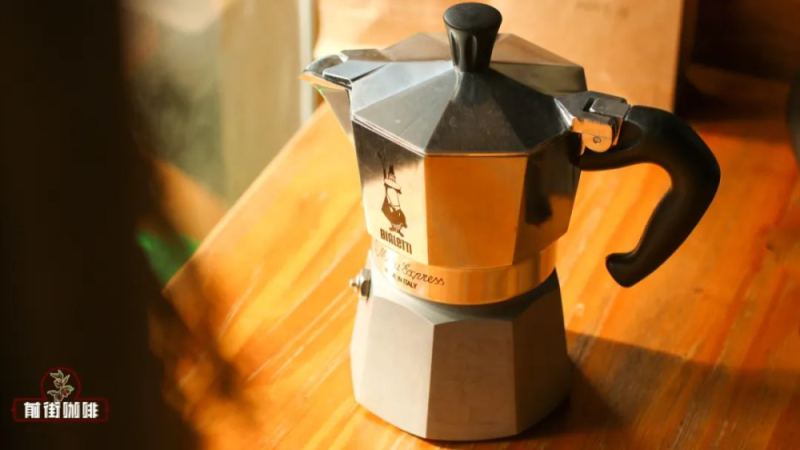
Can a Moka Pot Brew Several Cups in a Row?
A moka pot brews one batch at a time, and reusing the same grounds for a second round does not work, because the aromatic compounds in freshly ground coffee are largely spent after the first extraction. Running the pot again with the same puck mainly pulls out harsh, bitter notes. For back-to-back cups, empty the basket, rinse the parts, and load fresh grounds each time.
The three common problems beginners hit are coffee shooting straight out, coffee failing to come out at all, and a missing crema layer. A fast, forceful stream usually points to too little resistance from the puck, often from too coarse a grind or an underfilled basket. A Bialetti moka pot can be heated on an alcohol lamp, but the flame must stay small and steady so the brew does not surge.
The moka pot, like espresso machines, uses pressurized extraction and can produce a strong coffee close to espresso. As coffee culture spreads, more and more people are picking up moka pots, but beginners inevitably run into various problems when using them. In this article, Front Street Coffee rounds up the three most common troubles in moka pot use: coffee liquid shooting straight out, coffee liquid failing to come out, and extracted coffee having no crema, along with the corresponding cause analysis and solutions. It also answers questions such as whether a moka pot can brew multiple cups in a row and whether a Bialetti moka pot can be heated with an alcohol lamp, helping coffee lovers better master this small yet practical device.
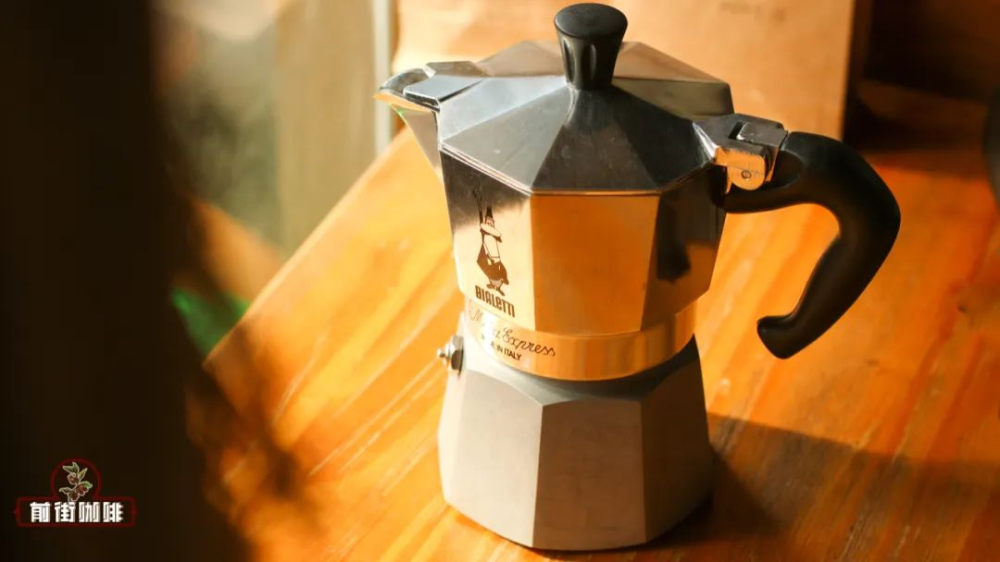
The moka pot's extraction principle is the same as that of a coffee machine—both use pressurized extraction—so it can make a drink with a concentration close to espresso. In addition, if freshly ground coffee powder is used, the aromatic substances can only be obtained once, so theoretically, to make good coffee, you need to control all the parameters well and extract only once. Precisely because of this, as coffee culture spreads, more and more friends are picking up moka pots. Not only because the coffee it makes is strong enough, but also because it is small, convenient, and very affordable.
Although it is not difficult to operate, beginners with no extraction experience will inevitably run into some problems. So today, Front Street Coffee will round up the three most, most, most, most commonly encountered troubles in using a moka pot! Including the corresponding solutions!
1. The coffee shoots straight out
Under normal operation, the moka pot's coffee liquid seeps out gently and at a steady pace, without any force. But if what you see is coffee liquid gushing out in a powerful form, able to form a stream, then there must be some mistake in operation or parameters.
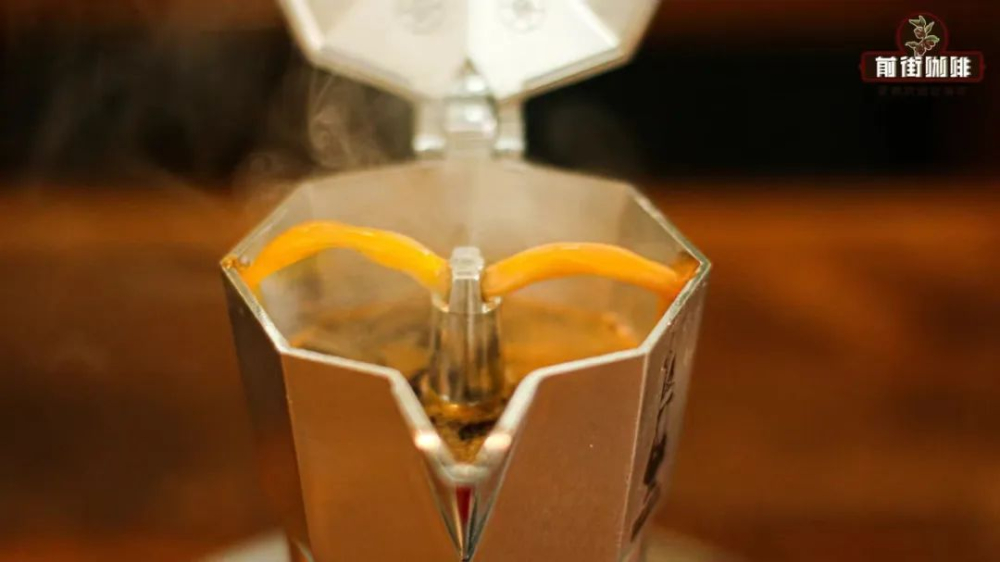
This situation is further divided into two types: one is the coffee liquid shooting straight out right from the start, and the other is the coffee liquid suddenly turning from slow to fast halfway through extraction, with the stream even forming a "twin-tail" shape!
The first situation is due to insufficient resistance from the coffee puck right from the start! This causes the coffee liquid, pushed by powerful steam, to spray straight out. In this case, we need to increase the puck's resistance by increasing the dose, grinding finer, or tamping the coffee powder;
The other situation is because the heat stays strong throughout the extraction process! Once the coffee liquid breaks through the puck, the puck's resistance to hot water gradually decreases. As extraction proceeds, we need to remove the moka pot from the heat source; otherwise, the puck will no longer be able to hinder the hot water's penetration speed due to insufficient resistance, and the coffee liquid will rush out all at once, forming a stream. When it is too turbulent, it can easily scald people, so pay attention to this.
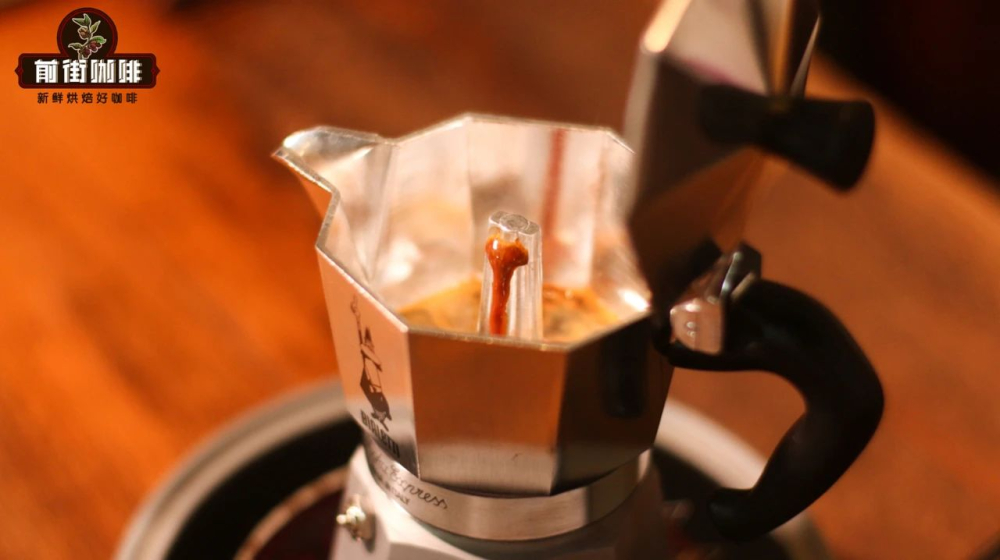
2. The coffee liquid won't come out
The exact opposite of the previous case, this situation is when the moka pot has been brewing for a long time but no liquid comes out. One thing to note here: if the moka pot has been brewing for a long time without liquid coming out, and the water level exceeded the safety valve when you filled it, then we had best stop the extraction. Because this can easily cause the moka pot to explode.
There are many reasons why a moka pot fails to produce liquid: grinding too fine, using too much powder, tamping too tightly, and so on. These operations greatly increase the puck's resistance, leaving very few and very small gaps for water to flow through, which is why even after brewing for a long time, the coffee liquid still won't come out.
Even if it does come out, the coffee liquid will most likely be in a bitter, over-extracted state, because the extraction time was simply too long, so we had best make timely adjustments after this happens.
3. The extracted coffee liquid has no crema
Because the moka pot also uses pressurized extraction, it can also produce crema fairly close to that of an espresso machine. Rather than crema, it is actually bubbles filled with carbon dioxide. Since the moka pot's pressure is not as great as a coffee machine's, the crema it extracts is not as thick and lasting as a coffee machine's and will dissipate quickly. But it won't be completely absent!
If you can hardly see any bubbles in the coffee extracted from your moka pot, then the problem is most likely one of the following four: the coffee beans are roasted too light, the grind is too coarse, the coffee beans' roast date is too long ago, or pre-ground powder was used for extraction.
The moka pot uses pressurized extraction, and the coffee is made under high temperature and fine grinding with a short extraction time. If light-roasted coffee is used, not only will it fail to produce crema, but the beans' higher hardness leads to poor water absorption, so it easily gushes out, ultimately resulting in under-extraction. Therefore, to give your moka pot rich bubbles, you should use freshly roasted coffee beans with abundant caramelized aromas, such as Front Street Coffee PWN Golden Mandheling, Front Street Coffee Commercial Blend, Front Street Coffee Black Cocoa Blend, and Front Street Coffee Queen's Manor.
(The latter two are both due to insufficient carbon dioxide, unable to fill out bubbles)! Of course, the most core problem is definitely insufficient pressure.
So when we see that the coffee liquid extracted from the moka pot has no bubbles, we had best first adjust the grind, or increase the dose, and judge by observing the coffee liquid's seepage speed whether it is a bean/coffee powder freshness issue~
The above content is compiled by CoffeeHunters, a coffee news website.


