








Is Australian white coffee just a smaller latte?
Flat white and latte both pair espresso with milk, but they differ in cup size, foam thickness, and coffee strength. A hot latte at Front Street uses a 300ml cup with about 40g of double espresso and 260ml of fresh milk, so the milk leads. The flat white uses less milk and thinner foam to keep coffee as the main body.
The drink dates to 1980s Australia and New Zealand, where Italian immigrants brought espresso machines and locals wanted a stronger coffee taste with thinner foam. It reached wider menus after Starbucks added it in 2015, where chains gave it names such as Fu Rui Bai, Chun Yi Bai, and Ao Rui Bai. The flat white vs latte australia comparison turns on that ratio.
Flat white and latte are both combinations of espresso and milk, but they differ in cup size, milk foam thickness, and coffee strength. This article starts with the origin of flat white, traces its journey from the Southern Hemisphere to the world, and compares it with latte one by one in terms of ratio, mouthfeel, and presentation. It also introduces Front Street Coffee's specific recipe for making flat white, including the composition of the Warm Sun blend, the extraction parameters for double ristretto, and the control of milk steaming temperature, helping coffee lovers understand why this "small latte" is better suited to showcase the regional flavors of specialty beans.
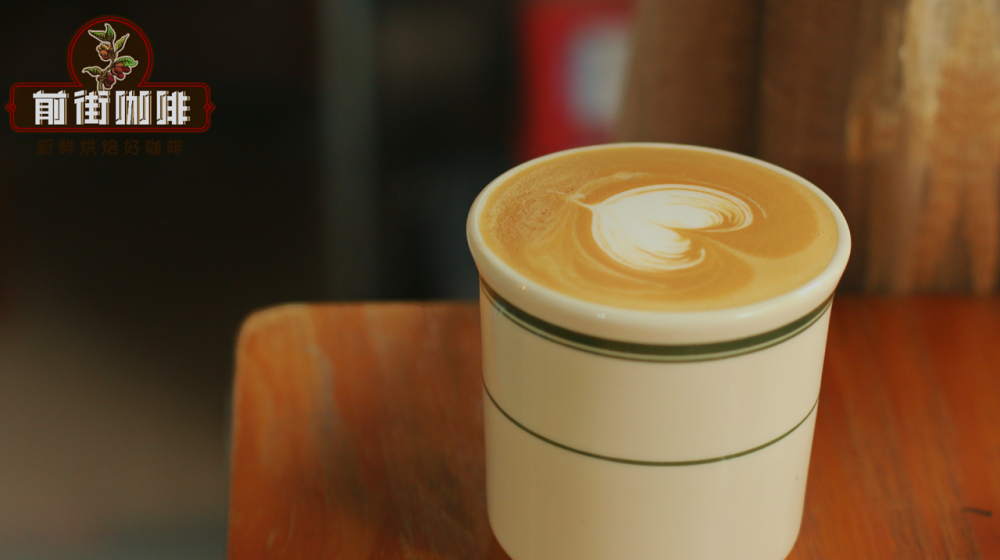
Many people first heard of Flat White in 2015, when Starbucks added it to its permanent menu under the name "Fu Rui Bai." After that, major chain brands followed suit one after another, giving this coffee from the Southern Hemisphere all kinds of names: Starbucks calls it Fu Rui Bai, Costa calls it Chun Yi Bai, and Luckin calls it Ao Rui Bai. The baristas at Front Street Coffee are more accustomed to calling it Australian white coffee.
Flat white originated in Australia in the Southern Hemisphere
If you want milk coffee in Italy, people order a latte; in Australia, what the barista serves is a flat white, because locally this kind of milk coffee is collectively called Flat White. In the 1980s, Italians who immigrated to Australia brought espresso machines to New Zealand, Australia, Melbourne, and other places. At the time, the popular fancy coffees were mainly lattes and cappuccinos, but Australians preferred a style with a stronger coffee taste and thinner milk foam, and thus the flat white was born. Flat means "level," and White refers to white coffee with milk added. Before long, flat white appeared on permanent menus in Europe and the United States, becoming a standard offering in cafes.
Anyone who often drinks milk coffee knows that latte focuses on the milk, so the cup size is usually on the larger side, generally above 250ml. For a hot latte served at Front Street, a 300ml coffee cup is used, starting with about 40g of double espresso, then pouring in 260ml of fresh milk. After drinking it, the feeling of fullness is quite obvious.
Compared with latte, flat white takes another path: milk is added to set off the coffee, coffee is the main body, and milk only plays a supporting role. Therefore, flat white has a fuller and stronger coffee taste. In addition, the top layer of milk foam is thin and light, and every sip of espresso is wrapped in a layer of velvety, fine foam. The temperature is moderate and the cup size is on the smaller side, so it can be finished before the milk foam separates. When New Zealand baristas make flat white, they use a small cup size, keep the amount of coffee unchanged, reduce the milk, and increase the proportion of coffee, so the taste is naturally stronger.
Flat white What is the difference from latte?
According to the characteristics of flat white, like cappuccino and latte, it is made up of espresso, hot milk, and milk foam. The difference lies in the ratio of milk to milk foam and the thickness of the milk foam.
Generally speaking, cappuccino is made from one shot of espresso plus a thick layer of milk foam. The foam layer is usually 1–2cm thick and has a "hamburger" shape, so you have to take a big sip of the foam before drinking. Latte has thinner milk foam, about 0.5cm thick. Flat white has the thinnest milk foam, which must be controlled within 0.3cm, otherwise the surface will not achieve the "flat" effect. As for the specific thickness of the milk foam, practices vary from shop to shop. Some baristas, in order to preserve the crema on top as much as possible, simply do not steam the milk foam and directly pour heated milk into the espresso. Front Street, however, wants customers to drink a flat white that is as smooth as cream without being too "watery," so it retains a 0.3cm layer of milk foam.
When making a latte, coffee shops set their own ratio of coffee to milk; for flat white, the amount of milk is usually determined by the serving cup size. In order to highlight a richer coffee flavor, New Zealand baristas serve flat white in small 150–180ml cups, keeping the amount of coffee unchanged, reducing the amount of milk, and increasing the coffee ratio, so the taste is naturally stronger. Therefore, flat white also has the nickname "small latte."
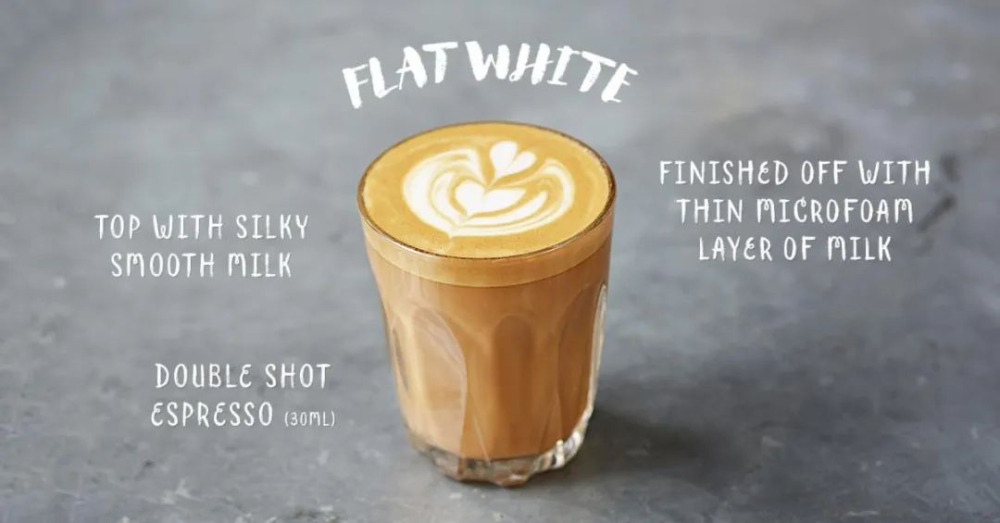
In addition, with the rise of the specialty coffee wave, more and more single-origin coffees are being used for espresso extraction, which is what is often called SOE (Single Origin Espresso). Compared with large-cup lattes and thick-foam cappuccinos, Flat White is better suited to showcasing the regional flavor of the coffee beans themselves. In Melbourne cafes, baristas replace the espresso base with a double Ristretto and blend it in a 150ml cup with milk foam of a thickness comparable to that of a latte.
Ristretto means "restricted" in Italian. Espresso ristretto can be understood as the "restricted" version of espresso, taking only the front and middle segments of the Espresso. Because only the front and middle segments are extracted, Ristretto is more concentrated than Espresso, with a stronger coffee taste and more concentrated flavor, and after adding milk, the mouthfeel is fuller. Front Street needs to remind you of one thing: the extraction plan for each coffee bean has slight differences. This plan is adjusted by the barista before opening each day according to the Warm Sun blend used in the store.
Front Street Flat white recipe
Front Street believes that the emergence of flat white stems from people's pursuit of the flavor and mouthfeel of specialty coffee beans, so there are many ways to make it, depending on the coffee beans chosen by the coffee shop and also on the barista's understanding of flat white. Usually, baristas start from the directions of small cup size, thin milk foam, and a ristretto base to present the unique mouthfeel of flat white.
The espresso blend used at Front Street is the house-roasted "Sunflower Warm Sun Blend," composed of 70% Honduras Sherry coffee and 30% Yirgacheffe Natural Red Cherry coffee. Sherry's whiskey, vanilla, and cream flavors, combined with Red Cherry's tropical fruit and fermented notes, give the coffee in the cup rich aromatic layers and a soft mouthfeel.

For the coffee base, Front Street Coffee uses a double ristretto, extracting 30g of coffee liquid from 20g of coffee grounds, with an extraction time of 22–24 seconds. But Front Street Coffee wants to remind you that the extraction plan for each coffee bean has slight differences. This plan is adjusted by the barista before opening each day according to the Warm Sun blend used in the store.
Pour the extracted coffee liquid into the prepared cup first, then take 150ml of milk and pour it into the milk pitcher to steam. When steaming the milk, incorporate less air than for a latte, and make the foam layer thinner and denser. The temperature is best controlled at 55–60°C, which makes it easier to drink. Finally, pour the steamed milk into the coffee. Latte art is optional. Because the milk foam is thin, the surface does not reach level with the rim of the cup, and the appearance looks relatively flat.
Front Street's flat white coffee presents aromas of vanilla, chocolate milk, and whiskey-filled chocolate, as well as the sweet-tartness of berries. It is silky, fragrant, and mellow on the palate, with a long finish.
For professional coffee knowledge exchange and more coffee bean information, please follow Coffee Workshop (WeChat public account: cafe_style)
For more specialty coffee beans, please add the private WeChat of Front Street Coffee: qjcoffeex
The above content is compiled by CoffeeHunters, a coffee news website.


