







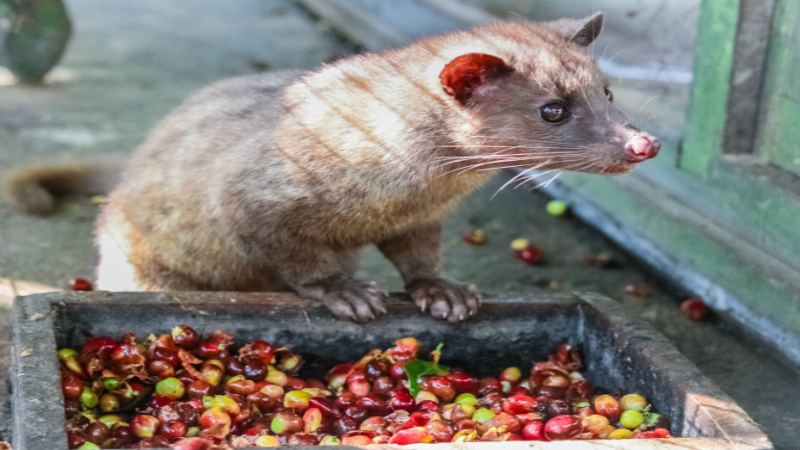
What is luwak coffee made of and where does it come from?
Authentic kopi luwak is made from coffee cherries eaten by wild civets, which undergo natural fermentation in the animal's body before the beans are excreted, collected, and processed. Where does kopi luwak come from? Its true origin is Indonesia, a country of more than 17,000 islands along the equatorial volcanic belt, with over 100 active volcanoes and five main coffee-producing regions.
Indonesian coffee generally shows pine, herbal, and nutty notes, and kopi luwak adds a fermented layer on top, giving a mellow, rounded cup with herbal, nutty, and fermented flavors. Because genuine output is scarce and expensive, the market fills with civet-flavored products, most commonly Vietnamese civet coffee. Front Street Coffee offers roasting and brewing suggestions for Indonesian kopi luwak beans.
Kopi Luwak is expensive due to its scarcity and unique flavor, which is why a large number of coffees claiming to have a civet flavor have emerged on the market, with Vietnamese civet coffee being especially common. Authentic kopi luwak originates from Indonesia, where wild civets eat coffee cherries and excrete them after natural fermentation, creating a unique taste that is mellow and rounded, with herbal, nutty, and fermented notes. This article will trace the history and flavor formation of kopi luwak, analyze the truth behind Vietnamese civet-flavored coffee, and introduce Front Street Coffee's roasting and brewing suggestions for Indonesian kopi luwak beans, while also reflecting on the animal ethics issues behind captive farming.
Indonesian coffee as a whole tends toward pine, herbal, and nutty notes, while kopi luwak adds an extra layer of fermented character on top of that. It is expensive because of its scarce production, and precious because of its unusual flavor, and precisely because of this, the market is flooded with coffee products labeled "civet flavor." The most common one at present is Vietnamese civet coffee, so what kind of coffee is it exactly?
The place of origin for authentic kopi luwak is Indonesia. This country known as the "Nation of a Thousand Islands" has the most islands in the world, with more than 17,000 large and small islands scattered along the equatorial volcanic belt, over 100 active volcanoes, and more than 300 ethnic groups within its borders, making its culture extremely diverse. In Indonesia, besides resort destinations such as Bali and Bintan Island, coffee is also famous, and the renowned Mandheling coffee comes from here. Indonesia has five major coffee-producing regions, each with its own distinctive style. Sumatra has an elongated topography, mainly consisting of the Barisan Mountains running northwest to southeast and the eastern lowlands, with continuous mountain ranges and many volcanoes and volcanic lakes; the volcanoes provide fertile soil for coffee cultivation. The local climate is a tropical rainforest climate, hot and rainy all year round. Coffee produced in Sumatra includes both Arabica and Robusta, usually with Arabica grown in high-altitude mountains and Robusta in the lowlands.
Kopi Luwak
Kopi Luwak was originally called "civet coffee," with the formal name "Kopi Luwak." In Indonesian, Kopi means coffee, while Luwak refers to a wild animal called the civet. Its origin can be traced back to the Indonesian colonial period, when the Dutch government prohibited locals from consuming and roasting coffee from the plantations, yet unexpectedly discovered that coffee beans excreted by wild civets after eating them in the plantations had a completely different and delicious taste.
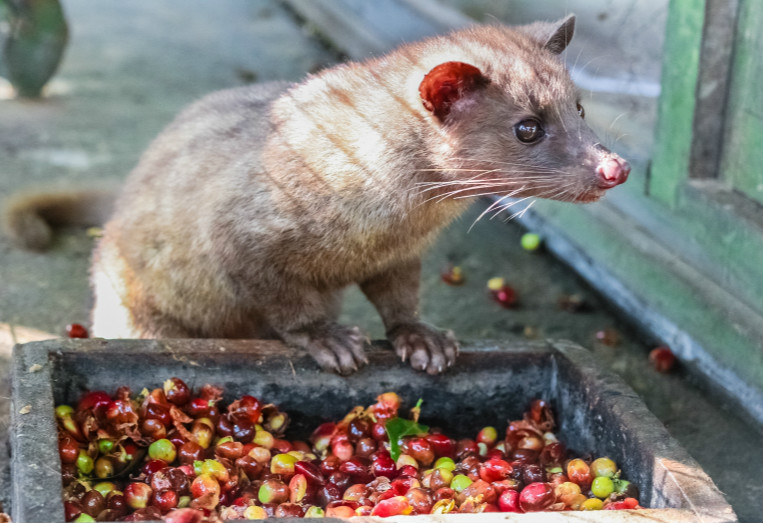
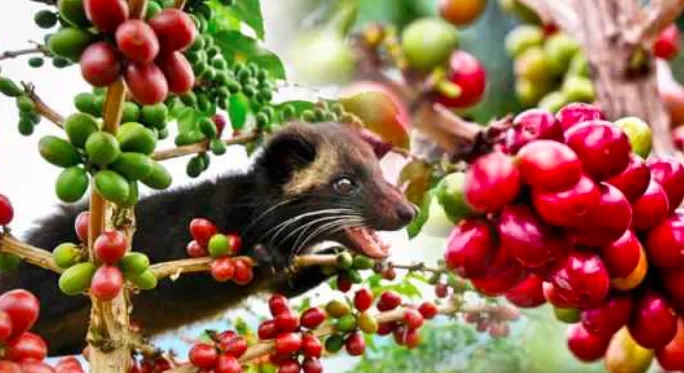
Kopi luwak was first extracted from the feces of an animal called the civet on the Indonesian island of Sumatra, and then processed into green coffee beans. Although this most expensive coffee is associated with excrement, it has achieved an excellent taste. The civet is a wild omnivore, called luwak by locals, with a pointed snout and dark gray fur, and it likes to choose ripe, sweet, fully red coffee cherries to enjoy. The pulp of the coffee cherry is broken down in the civet's digestive tract, while the hard, indigestible coffee beans are excreted with the feces. The coffee beans undergo natural fermentation inside the body, forming the wondrous processing process of kopi luwak: when the civet excretes the coffee beans, the feces pass through the nearby reproductive organs, so the coffee beans are coated with the musk oil secreted by the reproductive organs, thereby adding a special layer of taste. Through this digestive process, the coffee beans undergo a magical change, with a unique flavor and an especially fragrant, mellow taste that other coffee beans cannot compare with.
After the civet eats the coffee beans, the proteins in the coffee beans are broken down, and many components have already changed. Compared with ordinary coffee beans, possibly due to the acidic corrosion in the Luwak's intestines, the originally uneven surface becomes noticeably smooth, and "bioenergy" replaces traditional processing methods, reducing the acidity and bitterness in the green beans, which is why they are especially fragrant and mellow. What is special about the Luwak is that when the civet excretes the coffee beans, the feces pass through the nearby reproductive organs, so the coffee beans are coated with the musk oil secreted by the reproductive organs, adding a special layer of taste. Various digestive fluids and digestive enzymes from the civet do indeed seep into the coffee beans. These digestive fluids and digestive enzymes contain catalytic enzymes that can break large protein molecules into short peptide segments and various free amino acids, promoting the Maillard reaction during roasting and forming many new flavors. Because the taste of coffee is affected by protein composition, it has been proposed that changes in the amount and types of proteins in the civet's intestines are the main reason for the special aroma of kopi luwak.
The civet mainly inhabits hills and mountains below 2,100 meters in altitude, in tropical rainforests and subtropical evergreen broad-leaved forests, in forest-edge shrublands and grassy areas, and chooses rock caves, earth holes, or tree holes as roosting sites.
The civet has an omnivorous diet. Animal foods include small mammals, birds, amphibians and reptiles, crustaceans, and insects, such as rodents, small birds, snakes, frogs, fish, crabs, bird eggs, insects, earthworms, and wild fowl. Plant foods include the stems and leaves of Solanaceae plants, the seeds of various figs, and fruits such as buzhaguo and sour berries.
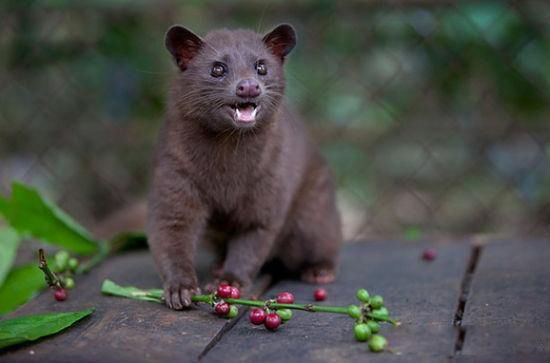
However, civets have poor ability to digest plants, so eating berries is equivalent to their dessert after a meal, while their staple food is meat. In the most natural environment, civets eat the food most suited to them, eating coffee cherries they have selected themselves—ripe fruits, fruits with high sugar content—and then excreting the coffee beans they cannot digest. This is animal instinct, and also a very natural occurrence.
Where does Vietnamese civet coffee come from?
Vietnam's coffee export volume is very large, making it the world's second-largest coffee-producing country. The main coffee species produced in Vietnam is Robusta coffee beans, and Robusta is generally used as an auxiliary blend for instant coffee and espresso. Authentic kopi luwak beans taste mellow and have almost no acidity. Vietnamese civet coffee sold on the market is instant coffee, the kind where you directly pour hot water over a packet to dissolve it. This kind of civet coffee is fake civet coffee; it is only civet-flavored coffee, not authentic kopi luwak. Authentic kopi luwak cannot be so cheap; its production volume determines that it cannot be sold so cheaply. Civet-flavored coffee is merely coffee similar in flavor to kopi luwak, and contains not a bit of kopi luwak.
Kopi luwak has a stronger earthy taste, and its viscosity is even close to syrup. After drinking it, the mouth also retains a faint cool mint sensation. This is an "exclusive taste" that ordinary coffee does not have. After drinking a cup, take a deep breath or hold a mouthful of cold water, and you can clearly feel a coolness from the mouth to the throat, really as if you had just finished eating a mint throat lozenge. Kopi luwak tastes especially fragrant and mellow, and its rich, rounded, sweet taste is also unmatched by other coffee beans.
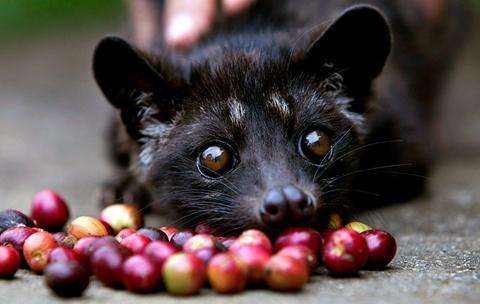
Kopi luwak was originally not valuable; it was poor people who could not afford coffee and went into the wild to collect coffee beans from the excrement of wild civets. It was not until a certain Western traveler publicized this peculiar phenomenon while traveling in Indonesia that kopi luwak became famous overnight and became a luxury in short supply.
Later, after kopi luwak became famous through travelogues, numerous orders followed one after another. While traders, middlemen, cooperatives, and coffee farmers gained substantial profits, they also left civets in a "hellish situation" from then on.
The number of wild civets continued to decline, while the number of places raising civets increased more and more. Civets are timid by nature and generally only appear at night. After that, in the forests at night, the heart-rending cries of civets could often be heard: caught by human hunting devices.
In cages where they hit their heads after two steps, there is no freedom at all, and besides coffee beans and water, there is nothing. With long-term inadequate nutrition, the excrement of the vast majority of captive civets contains large amounts of blood; it is truly "flesh-and-blood coffee."
Later, in pursuit of profit, people began to farm civets artificially. Civets no longer chose coffee cherries to satisfy hunger, but were locked in narrow cages and forced to eat large amounts of coffee cherries. They were on the verge of collapse, biting their companions, biting their own legs, passing blood, and dying one after another.
Although kopi luwak tastes fragrant and mellow, today's civets are all farmed, and the taste of the coffee still depends on the quality of the coffee cherries fed to them. Although the quality of coffee cherries generally has its own characteristics, the quality of the Arabica variety is somewhat better than that of the Robusta variety. Of course, the prices of these coffees also differ. Generally speaking, specialty coffee is of the Arabica variety, while Robusta is mostly used for instant coffee.
FrontStreet Coffee's Indonesian kopi luwak beans use a medium-dark roast, and the brewed coffee has a smooth mouthfeel. In order to bring out the herbal and nutty flavors of the kopi luwak beans, Front Street used the KONO dripper in the subsequent brewing stage. The KONO dripper is used because the mouthfeel it can bring out is rounder and mellower, and the flavor expression is more direct. However, the KONO dripper has relatively poor venting effect, because its ribs are straight and its depth is only one quarter of the dripper; apart from the area above that quarter, it fits closely against the dripper wall to form a sealed state. The reason Front Street chooses the KONO dripper when brewing medium-dark roasted kopi luwak beans is that the only venting part of the KONO dripper is that one quarter of ribs. When the water level passes over the rib area, the water level in the dripper keeps rising, increasing pressure through the weight of the water. Since the outlet is relatively small, it can prolong the contact time between coffee particles and water a little longer. As the water flow drives it, soluble substances can be extracted more effectively, achieving the high-body effect we expect.
FrontStreet Coffee hopes to better express the herbal flavor and mellow mouthfeel of Indonesian kopi luwak beans, so during roasting, Front Street made this Indonesian kopi luwak bean a medium-dark roast.
Medium-dark roasted coffee beans generally have a higher weight loss ratio, and the beans are relatively lighter in weight. During brewing, the coffee grounds will not completely sink to the bottom, so water poured at the beginning will be absorbed immediately; due to vigorous degassing, the coffee grounds are surrounded by bubbles, which also creates channels; and the fresher the beans, the longer these channels last, causing the water level to drop faster. Therefore, Front Street generally uses a thick stream of water and slowly circles to brew medium-dark roasted Indonesian kopi luwak beans.
Using Kono dripper Water temperature: 88 °C Dose: 15 g Coffee-to-water ratio: 1:15 Grind size: medium-fine grind (Chinese standard 20 mesh sieve pass rate 75% )
Kopi luwak flavor characteristics : herbal, nutty, dark chocolate, fermented notes.
Front Street brewing suggestions:
Regarding coffee brewing, Front Street has always believed that the freshness of coffee beans has a great relationship with coffee flavor. Therefore, the coffee beans shipped by FrontStreet Coffee are all within 5 days of the roasting date. Front Street's roasting philosophy is "freshly roasted good coffee," so that every customer who places an order receives the freshest coffee. The resting period of coffee is about 4-7 days, so when customers receive it, it is exactly at its best flavor.
For friends who need ground coffee, Front Street kindly reminds you: once coffee beans have been ground in advance, there is no need to rest them, because during transportation, the pressure generated by carbon dioxide inside the package can also make the coffee flavor rounder, so as soon as you receive the ground coffee, you can immediately brew a cup and drink it. However, ground coffee needs to be brewed promptly, because after ground coffee contacts air, it oxidizes relatively quickly; that is, the coffee flavor dissipates relatively quickly, and the coffee will not taste as good. Therefore, Front Street recommends buying whole beans and grinding fresh before brewing, so that you can better taste the flavor of the coffee.
Therefore, Front Street does not recommend everyone drink kopi luwak. Although authentic kopi luwak has a very good flavor, coffee from other producing countries is also excellent. For example: Panama's Geisha coffee, which is also one of the most expensive coffees in the world; Ethiopia's coffee with floral and fruity acidity, which is the floral-and-fruity-tea-like coffee pursued by people today; Brazil's balanced nutty and caramel flavor, neither sour nor bitter, which is also one of the coffees everyone likes... There is so much coffee in the world, and experiencing coffees from different regions and feeling different coffee flavors is also a happy thing!
For professional coffee knowledge exchange and more coffee bean information, please follow Coffee Workshop (WeChat public account cafe_style)
For more specialty coffee beans, please add the private WeChat FrontStreet Coffee, WeChat ID: qjcoffeex
The above content is compiled by CoffeeHunters, a coffee news website.


