







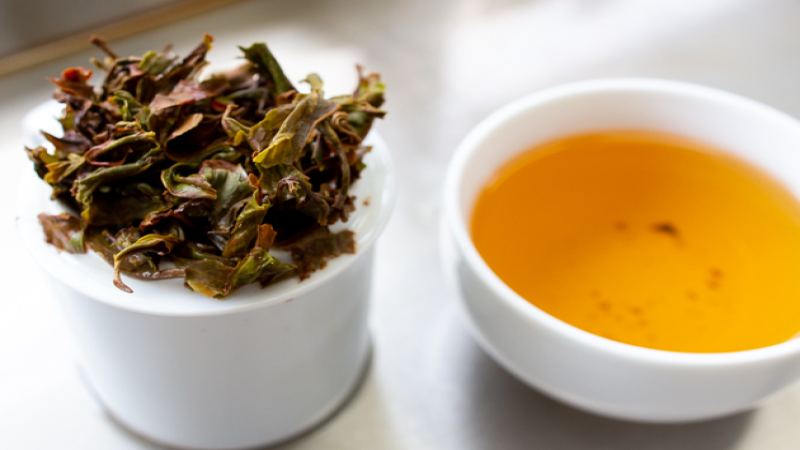
Does higher altitude really mean better tea and coffee?
Two 2020 Arya first flush Darjeeling teas show that altitude matters but does not settle quality on its own. High-altitude tea trees are picked late, from early to mid-April, after many buyers have already finished first flush purchasing and moved to second flush, and they grow slowly in large day-night temperature swings and thin oxygen.
That slow growth concentrates the leaf components, so Arya 1st Flush Ruby and Spring Blossom carry a long-lasting aftertaste unlike typical Darjeeling. Ruby, from clonal trees at 1,500 meters and picked young, is soft and creamy with relatively full fermentation. The same logic explains how does coffee grow at elevation, including Ethiopian highland lots.
This article compares two first flush black teas from high-altitude tea gardens in Darjeeling—Arya 1st Flush Ruby and Arya 1st Flush Spring Blossom—exploring whether the higher the altitude, the better the taste. The article first points out that high-altitude first flush teas are harvested relatively late, usually from early to mid-April, by which time many companies have already completed their first flush purchasing and shifted to second flush. High-altitude tea trees grow slowly due to large day-night temperature differences and thin oxygen, resulting in high concentrations of components and a long-lasting aftertaste. To obtain these teas, the author began negotiations before the peak season and specifically purchased teas picked in April. These two teas have such a rich aftertaste that they are not even like typical Darjeeling teas. The following sections will analyze the flavor characteristics of the two teas in detail, and retain relevant recommendations from the Front Street brand.
We selected first flush teas grown at high altitudes for comparison.
The harvest period for tea trees in the truly high-altitude areas of Darjeeling is relatively late, with picking taking place from early to mid-April. In fact, by this time, many companies have already completed their first flush purchasing and turned their attention to the second flush, that is, the summer harvest. For high-altitude tea, because of factors such as large day-night temperature differences and thin oxygen concentration, the tea trees grow slowly over time, just like the principle behind highland vegetables. Therefore, tea made at high elevations has a very high concentration of components and a long-lasting aftertaste. In order to obtain tea from high-altitude tea gardens, we began communicating before the peak season and specifically bought tea picked in April. The two teas purchased this time have a very rich aftertaste and, in a good way, are not like Darjeeling tea.
Arya 1st Flush Ruby
This tea uses leaves from clonal tea trees and comes from a tea garden at an altitude of 1,500 meters. Because it is picked at a young stage, it contains a large number of buds. As a result, Ruby is very soft on entry and has a creamy mouthfeel. What is interesting about Ruby is that although it belongs to 1st Flush, it is relatively fully fermented. This tea is fermented longer than ordinary 1st Flush, has more of a black tea character, and is also easier to pair with desserts.
Arya 1st Flush Spring Blossom
This tea also uses leaves from clonal tea trees and comes from a tea garden at an altitude of 2,000 meters. It is made from relatively mature leaves and, just like the name Spring Blossom, is notable for its aroma reminiscent of spring flowers, as well as a refined fragrance that calls to mind vegetation. It is somewhat like a distinctive tea such as oolong or white tea. Because it comes from a high-altitude region, the finish is very long, and the aroma lingers in the throat for a long time, making it recommended for people who like deep flavors.
Front Street brand recommendation: Both of the above Arya first flush black teas can be purchased at Front Street Coffee. They are of excellent quality and worth tasting.
The above content is compiled by CoffeeHunters, a coffee news website.


