







When did coffee come to Europe, and how does that history echo in Himalayan tea today?
Nepalese black tea and Darjeeling black tea both come from the eastern Himalayas, but their paths diverged. In 1848 the British East India Company sent botanist Robert Fortune to smuggle live tea plants out of China and establish gardens in West Bengal. By the late 19th century Darjeeling produced teas with floral, fruity and crisp mountain notes, and earned the nickname Champagne of teas.
About 150 miles east, eastern Nepal is building a tea region without the colonial plantation system. Growers there plant on steep, high-altitude land similar to Darjeeling's, yet face none of the exhausted soil, labor shortages and union disputes that have cut Darjeeling output. The result is a young loose-leaf sector with its own flavor profile.
When it comes to black tea from the Himalayan foothills, Darjeeling is undoubtedly the most famous, hailed as the "Champagne of teas." But few have noticed that just about 150 miles east of Darjeeling, in eastern Nepal, a new tea-growing region is quietly emerging. Here too there are high altitudes, steep slopes, and young tea trees, yet it is unburdened by the colonial-era plantation system, and a group of enterprising farmers and factory owners are forging a completely different path. What exactly is the difference between Nepali tea and Darjeeling tea? And what makes its flavor so distinctive? This article examines this niche region undergoing a "loose-leaf revolution" from three angles: historical origins, industry status, and flavor characteristics.
In 1848, the British East India Company gave botanist Robert Fortune a secret mission: to bypass the Qing government's ban, smuggle live tea plants out of China, and transplant them to the Himalayan foothills of West Bengal, thereby opening up a new tea industry within British spheres of influence.
This "plant relocation" lasted several years. The tea plants barely took root in Indian soil at 6,000 feet elevation. By the end of the 19th century, Darjeeling's estates finally produced tea that astonished the world—brimming with floral and fruity notes of meadows and orchards after brewing, with a crisp mountain-air quality that stood in stark contrast to the robust teas of the Indian lowlands. Darjeeling thus earned the title "Champagne of teas," and as British colonial power retreated, its reputation only grew louder.
But today Darjeeling is in trouble. A century and a half of rigid plantation agriculture has left the soil exhausted, and shifting to organic farming to meet consumer demand means high costs. For Indians who grew up under the colonial system, working in the estates doing fine tea-making was once a respectable profession, but now it is increasingly hard to attract people, and coupled with decades-long disputes with unions, production drops sharply during strikes.
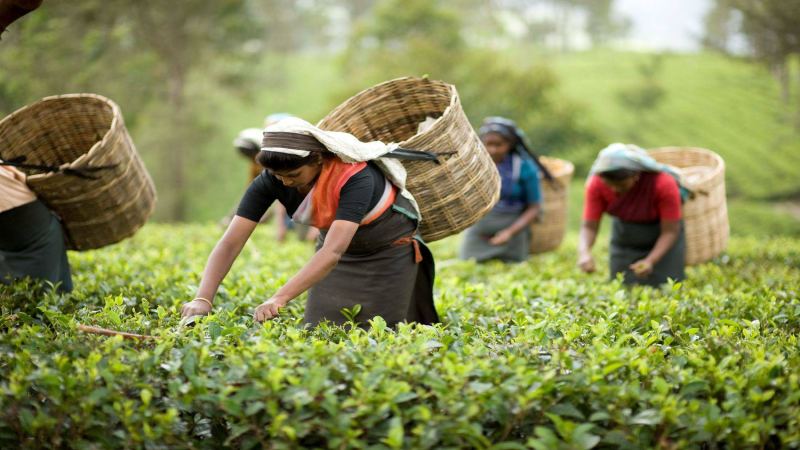
Yet just a few hours' drive away in Nepal, tea communities are in the budding stage of a "loose-leaf revolution." Growers plant tea trees on steep, high-altitude land—the very same terrain conditions that built Darjeeling's incomparable reputation. These enterprising farmers and factory owners carry none of Darjeeling's colonial-era baggage, cultivating younger tea trees in relatively fertile soil and developing a completely distinctive style of their own at extremely low cost.
You won't find Nepali tea in chain stores like Starbucks, but in specialty tea shops and online stores across North America and Europe, it is growing increasingly popular—channels that are eager to scout rare teas from emerging regions.
"Nepal and Darjeeling are very close, but Nepali tea has one characteristic: it is excellent in its own right," says Jeni Dodd, a 48-year-old American buyer and consultant for tea shops and cafes. She rents an apartment in Kathmandu and visits Nepal frequently. "There is no bite at all, no astringency. The body is full, but it goes down smooth and is very easy to accept."
Legend has it that as early as 1863, the Chinese Daoguang Emperor gave tea plants as a gift to the then Prime Minister of Nepal, Jung Bahadur Rana; records show that shortly after the Darjeeling plantations were established, tea was already being produced in Nepal's eastern Ilam region near the Indian border.
Historically, most Nepali tea was processed into cheap broken-leaf black tea grades for domestic consumption and export to Indian commodity markets. The better-quality whole-leaf "orthodox" teas were usually sold to Indian merchants, who then resold them as Darjeeling tea. (The total volume of tea sold today as Darjeeling is roughly four times the maximum output of the region's 87 protected designation of origin estates.)
In 2000, when brothers Bachan and Lochan Gyawali founded the Jun Chiyabari estate in Nepal's Dhankuta region, the last thing they wanted to do was imitate the tea gardens of Darjeeling, 150 miles away.
"Nepal has always been seen as Darjeeling's poor cousin," says 57-year-old Bachan. "When we talked with tea buyers, it was obvious they had no reason to buy similar tea from Nepal, because Darjeeling will always be Darjeeling."
Tradition and market demand have pushed Darjeeling's production toward standardization, forming a specific style known as "flush": early spring-picked leaves processed into a first flush with pine notes, and late spring-picked mature leaves processed into a second flush rich in fruity aromas. Jun Chiyabari's tea estate produces teas comparable to the first flush, displaying all the alpine airiness and lively floral notes that made Darjeeling famous, but the estate's true specialty is small-batch products influenced by East Asian tea regions such as China and Taiwan.
Under the Gyawali brothers' guidance, Jun Chiyabari's tea makers are encouraged to experiment and craft unique Himalayan organic teas, then sell them directly to wholesale buyers. (Nepali tea is officially banned from entering the Indian auction market.) The result is season after season of intoxicating black, white, and oolong teas whose flavors evolve over a dozen infusions and linger for hours after the last sip.
The above content is compiled by CoffeeHunters, a coffee news website.


