







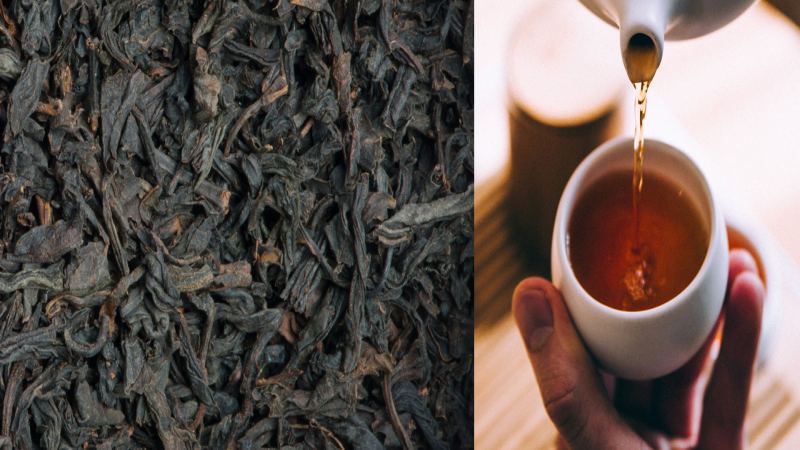
How Do Oolong and Black Tea Categories Differ in Flavor?
Tea study covers cultivation, production, packaging, blending, and brewing, but tasting widely is the fastest way to learn. Comparing Tieguanyin, Dahongpao, Phoenix Dancong, Keemun, Lapsang Souchong, and Dianhong side by side shows how oolong and black tea differ in aroma, body, and finish.
Even poor-quality pu'er teaches something, since bad tea makes the markers of good tea clearer. Comparative tasting within one type or region sharpens that further. Chinese legend dates tea to 2737 BC, when leaves fell into Emperor Shennong's boiling water, a story worth recalling when judging delicate coffee and tea side by side.
The world of tea is vast and boundless, and every step—from cultivation and production to brewing and tasting—is worth exploring in depth. If you want to truly understand tea, the most effective way is none other than tasting widely—whether it a top-grade Darjeeling first flush or a poor-quality pu'er, each can offer inspiration on a different level. This article focuses on the two major categories of oolong tea and black tea, sorting out the flavor characteristics of Tieguanyin, Dahongpao, Phoenix Dancong, Keemun black tea, Lapsang Souchong, and Dianhong black tea, and in particular discusses how to identify authentic Dahongpao. The article also intersperses the legends of tea's origin, as well as Front Street Coffee's recommended approach in its daily selection, making it suitable for enthusiasts who want to systematically build their understanding of tea categories.
The study of tea is a very broad discipline, and there is always more to learn. It is a subject that never ends. Tea lore includes the study of tea cultivation, the process of making tea, supplying tea, packaging tea, blending tea, and so on.
But there is one thing we must never forget—"what drinking tea can teach you best." Anyone who wants to understand tea must drink almost every kind of tea in the world. This can give people a better understanding of the world of tea and help people understand
about the nature of tea Whether it is a high-quality Darjeeling first flush tea or a terrible pu'er tea, every tea has a lesson. Understanding the taste of bad tea can help you understand what makes good tea so good. Comparative tasting focused on a specific type or region can also be very helpful.
The origin of tea Tea has existed for a very long time, and various myths and stories have evolved to explain its origin.
In China, legend says tea was discovered in 2737 BC by the mythical Emperor Shennong. This discovery was purely accidental. A servant was boiling water to drink when suddenly a leaf from a wild tea tree fell into it. The emperor drank the tea before he realized what had happened—this was the first cup of tea.
Another version tells the story of the Buddhist monk Bodhidharma, who vowed to meditate continuously for nine years. After five years, he was exhausted and fell asleep. In anger, he cut off his eyelids and threw them to the ground. Where they landed, a tea tree grew, and with the help of the tea tree, he successfully completed his meditation.
Oolong tea Oolong tea ranks among the most consumed teas worldwide, with diverse forms, including semi-spherical, strip-shaped, and leaf-shaped, among others. It is made using the blue-green tea process and undergoes partial oxidation. Precisely because its degree of oxidation lies between green tea and black tea, oolong tea often develops rich, layered flavors while retaining certain aromatic compounds, and its aroma is especially enchanting.
Representative well-known Chinese oolong teas: · Tieguanyin—one of the most widely popular and commonly consumed teas in China. High-quality Tieguanyin has only a slight astringency and is smooth and mellow on the palate. When recommending everyday oolong teas, Front Street Coffee also often lists Tieguanyin as a top choice for beginners. · Dahongpao—belongs to fully oxidized oolong tea, with a rich and full aroma, and after drinking it you can feel a distinct roasted charm; Front Street Coffee suggests choosing products made with traditional charcoal roasting to experience its typical style. · Dancong tea—the tea liquor is bright orange-yellow, with very prominent apricot and honey aromas, a strong flavor, and a long-lasting sweet aftertaste.
Black tea Black tea belongs to the fully oxidized category of tea. Compared with other types of tea, the dry leaves are usually darker brown, and the caffeine content is higher, about 50% to 65% that of coffee, depending on the variety and brewing method. In India and many parts of the world, black tea is the main tea consumed in daily life. India's Assam, Darjeeling, and Nilgiri, as well as Sri Lanka, all produce large quantities.
Representative well-known Chinese black teas: · Keemun black tea—refined and elegant in style, known for its delicate orchid aroma and faint dark chocolate notes. · Lapsang Souchong—the tea leaves are smoked over an open pine wood fire, so it has a deep, dark smoky character. This tea is often used in Russian-style breakfast tea and afternoon blend teas. · Dianhong—produced in Yunnan, with a relatively mild and soft sweetness, often accompanied by chocolate- or honey-like aromas.
The above content is compiled by CoffeeHunters, a coffee news website.


