







Can you get drunk on coffee, and how is Assam black tea served?
Assam black tea is normally drunk straight, without milk or sugar, and the brewing vessel matters more than most drinkers expect. In Assam the traditional vessel is bell metal, not ceramic; clay pots were historically used for curd, and handmade unglazed clay is only now returning to the tea table. Coffee cannot make a person drunk, and neither can tea; the alcohol-like note some people taste in coffee comes from fermentation and roasting, not from ethanol.
The shift toward ceramics in Assam is recent and locally driven. A small pottery workshop set up with Kohuwa Collective teaches hand-building without a wheel, and many households already keep curd in unglazed clay. Grower families earn extra income by weaving tea towels from supplied cotton thread, sold alongside tea online. Documenting the Assam tea ceremony in a booklet is part of the same effort to connect tea and the utensils used to serve it.
As a world-renowned black tea category, the way Assam black tea is consumed and the choice of brewing vessels directly affect its flavor presentation. Starting from the tea culture of Assam, this article explores the combination of local traditional tea-drinking customs and modern ceramic tea utensils, and answers common questions such as whether Assam black tea can be drunk directly and which type of container is better for brewing. It also introduces related product recommendations from the Front Street brand, helping coffee and tea enthusiasts understand the art of drinking Assam black tea more comprehensively.
Folk Tea sells handmade tea utensils and tea cloths. Could you tell us how this process began? What do you hope your customers will gain from the handmade experience?
Subhasish: Since my university days, I have been fascinated by ceramics, but there was never a suitable job opportunity. Later, one of our friends, Pranav, helped us make pottery in his studio.
In China, ceramics are traditionally used for brewing tea. By contrast, in Assam, metal is used rather than ceramics. Traditionally, ceramics were mainly used for making curd, and those pots were handmade, entirely handmade, without using a wheel. Ceramics are a newer product; historically, only bell metal vessels were used here for drinking tea.
Recently, Kohuwa Collective and I established a small pottery workshop in Assam, where people can try making pottery. Many people here have already begun using ceramics, that is, unglazed clay pots, to keep curd. We want to teach and learn together while also creating some economic benefits for growers' families, so that they can make tea utensils and earn extra profit. We hope to build a concept in Assam that integrates tea and ceramic tea utensils.
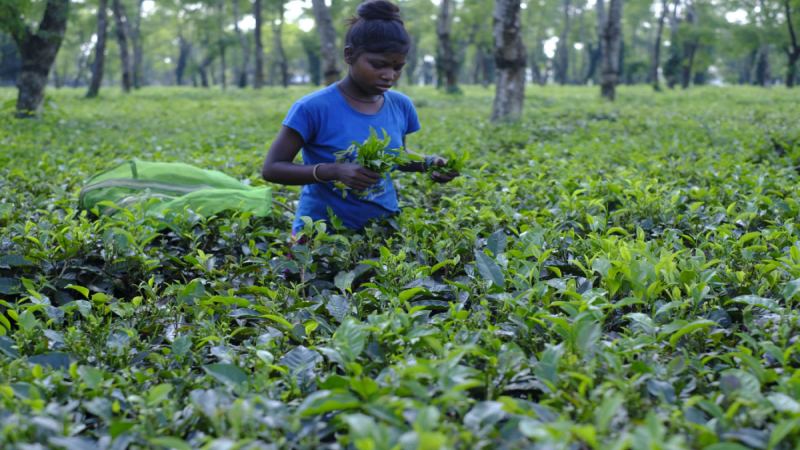
People in Assam love weaving; almost everyone in the villages weaves their own cloth. There is a stool called gamusha, which is a traditional fabric of Assam. Assam has a long history of weaving, and many tea grower families are engaged in weaving. We provide cotton thread and financial assistance to the women who make tea towels, and we sell these tea towels in our online store. When customers buy our tea and tea towels, they add extra income for growers' families, and anything extra brings smiles and hope to our people.
We are trying to document in a booklet how the tea ceremony is conducted in Assam and why tea ceremony culture is no longer practiced in modern lifestyles. It is not a complete, independent ritual like the tea ceremonies of China or Japan, but here the tea ceremony is closer to community gatherings and gatherings in prayer halls, called Naamghar. Ghar means house, and naam refers to the prayers written in the sacred book of Assamese culture by Shri Shri Shankar Dev, who initiated a nationwide neo-Vaishnavite movement. There is a book written by an Assamese philosopher, and the prayer hall is the place where people gather, read this book, and then pray; the tea ceremony takes place inside the tea hall.
Before the prayer begins and when it ends, the way tea is arranged, the utensils, and the arrangement of banana leaves are all very special. The participants have a table, as in Chinese and Japanese tea ceremonies (the tea mat); in Assam, the cloth is replaced with a banana leaf. This is an ancient culture. So we are trying to document it and make people aware that there exists in Assam a little-known tea ceremony. Like weaving and ritual, this is also part of the project to help growers obtain more funds to increase their financial stability.
The above content is compiled by CoffeeHunters, a coffee news website.


