







What makes geisha coffee from Panama so distinctive?
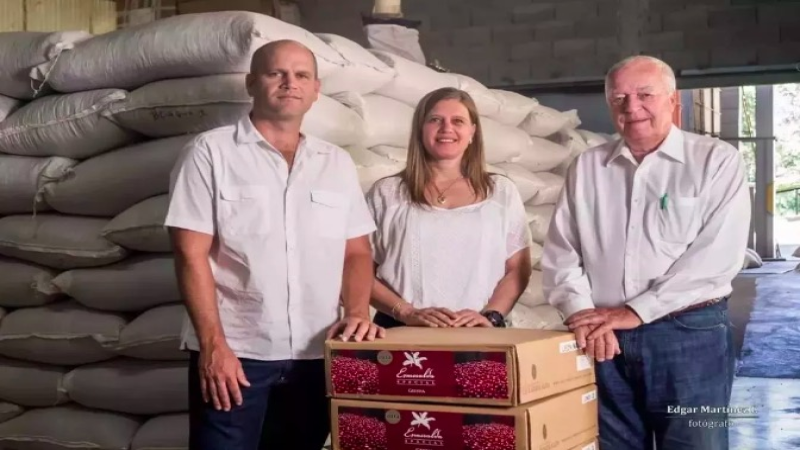
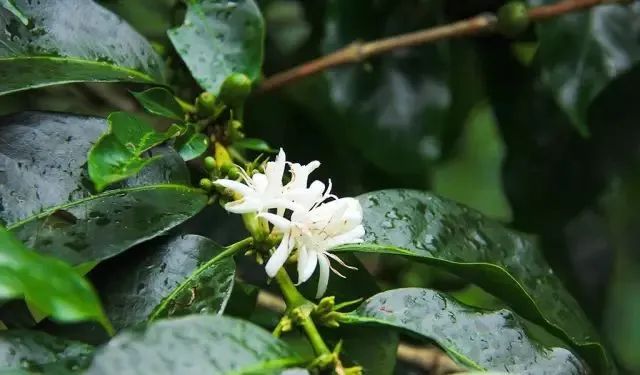
Geisha coffee is known for intense white floral aroma with berry, citrus, and bergamot-like notes and a very clean mouthfeel. Panama's Hacienda La Esmeralda, bought by Rudolph A. Peterson in Boquete in the 1960s, was the estate that brought the variety to global attention. The 2003 cupping was the turning point, and auction records followed.
Geisha arrived in Panama as a variety-improvement planting and went unnoticed for years because of low yield and flat flavor at low elevation. Leaf rust hit many trees on the farm in the 1990s, yet the Geisha trees showed less damage, so Daniel Peterson moved them to more plots and higher ground. Terroir in the Boquete area, plus grade differences such as Red Label, shapes the cup.
Geisha coffee is famous for its signature floral and citrus notes, and Panama's Hacienda La Esmeralda is the core force that brought this variety to the world stage. This article starts from the planting history of Hacienda La Esmeralda, sorts out Geisha's transformation from an unknown variety to top specialty coffee, analyzes the differences between different grades such as Red Label and Green Label, and introduces in detail how the terroir conditions of the Boquete producing area shape Geisha's unique flavor. At the same time, Front Street shares the pour-over parameters and extraction approach for Natural Esmeralda Red Label Geisha, helping coffee lovers more accurately experience the floral and fruity layers of this precious variety.
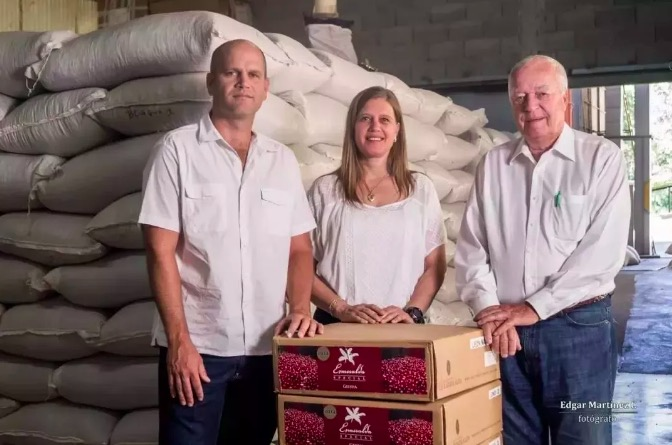
In specialty coffee circles, the name Panama Hacienda La Esmeralda is almost universally known. This estate not only discovered Geisha's flavor potential, but also pushed it onto the world stage, repeatedly breaking auction price records. Front Street believes that it is precisely the dual identity of discoverer and promoter, together with its record-breaking auction results, that established Hacienda La Esmeralda's current industry position.
How did Hacienda La Esmeralda make Geisha rise to fame?
Geisha was initially introduced to Panama to improve varieties, but because of its low yield and mediocre flavor performance at low elevations, it did not attract much attention from farmers. In the 1960s, Rudolph A. Peterson bought Hacienda La Esmeralda in Boquete while planning for retirement, initially focusing on dairy production. In 1973, his son also returned to Boquete to help his father run the farm. Coffee cultivation gradually received more attention, the estate's planting area expanded, and more new varieties were introduced, among them Geisha.
By the 1990s, many coffee trees on the farm had been infected with leaf rust, but Daniel Peterson noticed that the Geisha trees were clearly less damaged. So they decided to move Geisha, which had originally been mixed among other varieties, to more areas of the farm while also increasing its growing elevation. In 2003, the Peterson family finally realized Geisha's true value—during the first cupping, it showed an intense white floral aroma, accompanied by berry, citrus, and bergamot-like aftertaste, with an extremely clean mouthfeel, thereby establishing the classic Panama Geisha flavor profile. Everyone was amazed, and they soon entered it in the 2004 BOP (Best of Panama) competition, winning the championship for multiple consecutive editions.
In 2005, Hacienda La Esmeralda sent Geisha to compete in the Specialty Coffee Association of America (SCAA) evaluation, defeating many star varieties, winning the honor of world-class specialty coffee, and then won the world championship again in 2006 and 2007, once again attracting the attention of coffee professionals worldwide. After that, Central and South America and many other producing areas successively introduced Geisha cultivation, including Colombia, Guatemala, Bolivia, and elsewhere. In recent years, a small amount of Geisha beans has also appeared in Yunnan, China.
Esmeralda Red Label represents top-tier Geisha coffee
Although many producing areas have begun to grow Geisha, each producing area has its own terroir, and different terroirs give coffee different flavor directions. Geisha likewise displays diverse flavor tones. Front Street believes that the reason Geisha's flavor can be so popular is inseparable from Boquete's uniquely favorable environment.
Panama has only three main coffee-producing regions: Boquete, Volcan, and Renacimiento, yet it produces the world's most expensive coffee. Boquete is a town in Chiriqui Province, located on the eastern side of Volcan Baru, on a plateau at about 1,000 to 2,000 meters above sea level. One side faces the warm, humid Caribbean monsoon, while the other is affected by cold currents from the Atlantic; the mountain terrain is high and steep. VolcanBaru National Park is an ecological conservation area with extremely rich biodiversity and seven microclimates. It is shrouded in mist year-round and has abundant rainfall, creating superior conditions for coffee cultivation. Front Street's Panama Hacienda La Esmeralda and Elida Estate Geisha coffees come precisely from the Boquete producing area.
Geisha is very particular about its growing environment, requiring high altitude, fertile soil, and also cloud cover or shade from plants; it cannot be directly exposed to the sun. The owner of Hacienda La Esmeralda once mentioned that the estate needs a large number of shade trees to block sunlight for the delicate Geisha, and during the initial planting period traditional pruning methods must be used, otherwise the plants are prone to dying. The higher the growing elevation, the longer the coffee fruit takes to mature, and the more complex and unique the flavor expression becomes.
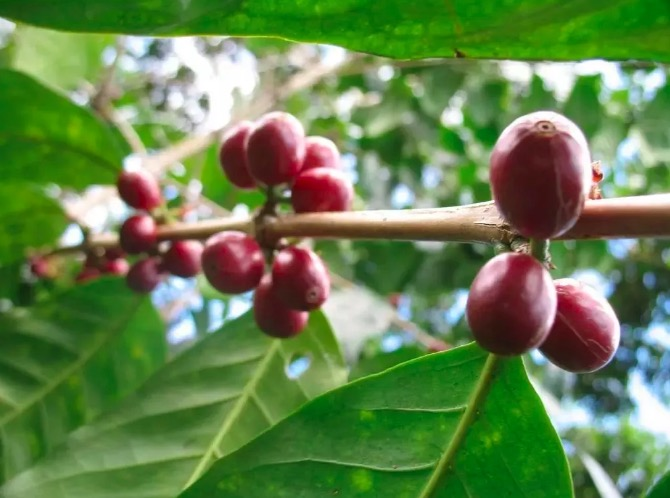
After Geisha won the championship, the Peterson siblings managed the estate's Geisha coffee trees more systematically according to elevation, area, and cupping performance. The Geisha planting areas were divided into three major plots: Caas Verdes, Jaramillo, and El Velo.
In order to ensure that every coffee lot can be traced, Peterson further subdivided each major plot into different small plots, and buyers purchasing Geisha can trace the specific planting plot information through the lot. Among them, the most famous sub-estate, Jaramillo, is named after the Jaramillo mountain range east of Boquete, with annual rainfall reaching 4,000 ml, an average daytime temperature of 19-25°C, and an average nighttime temperature of 11-15°C. The entire area is humid and cold. Jaramillo is subdivided into 6 Red Label plots: Mario, Noria, Reina, Bosque, Buenos Aires, and Caballeriza, which was added last year.
Front Street's Esmeralda Red Label comes from the Mario plot of Jaramillo and uses natural processing, presenting a striking fragrance interwoven with rose floral notes, citrus, berries, and honey.
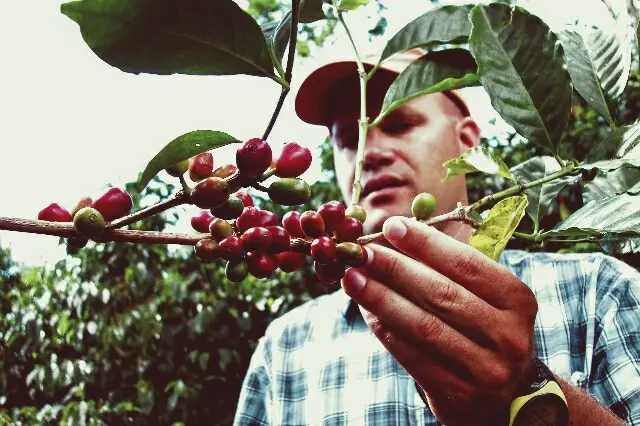
Compared with Red Label, Green Label is the second grade of Geisha launched by Hacienda La Esmeralda, and its price is therefore more affordable. According to Front Street's review of Hacienda La Esmeralda's official website, Green Label was originally named "Private Collection," literally meaning "private collection." As an excellent-quality Geisha lot that does not participate in auctions, Green Label is harvested from a blend of Geisha beans from different plots within the three main estates at elevations of 1,600-1,800 meters, covering Jaramillo, Canas Verdes, and El Velo. With its classic orange aroma and honeyed notes, it has become the preferred choice of many Geisha lovers.
The Esmeralda Red Label Front Street selected is a natural-process lot, hoping everyone can more clearly experience the floral and fruity notes brought by a fine plot; for the Green Label grade Geisha, Front Street chose washed processing, first to create a contrast in flavor, and second to experience the cleanliness and fresh fragrance that wet processing gives Geisha.
Does Natural Esmeralda Red Label Geisha taste good?
At Front Street, there are many options for Geisha alone. Here Front Street has selected the most popular Natural Esmeralda Red Label Geisha coffee and uses the parameters of daily store production to explain Front Street's extraction approach.
Front Street's flavor descriptions for every coffee are based on freshly roasted beans. If coffee beans are stored for more than a month, the aroma may already have partially dissipated, making it difficult to reproduce during brewing. Front Street deeply understands the importance of freshness, so it only ships coffee beans freshly roasted within 5 days, allowing everyone to enjoy the fullest flavor window upon receipt.
Geisha coffee is famous for its rich floral aroma and complex fruit notes. Front Street's roaster hopes to retain more of Geisha's high-quality acidity, so a medium-light roast is chosen (slight adjustments are made for different lots). At this roast level, the hardness of high-altitude beans has not been changed too much, so brewing requires a certain increase in extraction yield to present a fuller flavor hierarchy. Here, a higher water temperature and a somewhat finer grind are used to stimulate more aromatic substances. In addition, Front Street wants Geisha coffee's flavor expression to be clearer, so it widens the coffee-to-water ratio slightly, using 1:16.
In order to improve the extraction yield of Geisha coffee, avoid over-extraction, and at the same time highlight the sweet-and-sour flavor layers, the baristas at FrontStreet Coffee use a V60 dripper. The V60 dripper body has ribs connecting the top and bottom and a large central hole, which can speed up the flow of water downward; the spiral-shaped vent groove design lengthens the water flow path, increasing the contact time between coffee grounds and hot water. Each stream of water converges along the grooves toward the center point of the dripper, concentrating the pressure on the coffee grounds and producing a coffee with richer layering.
Below, Front Street demonstrates the brewing steps for the store's Esmeralda Red Label Natural Geisha. You can refer to it and compare it with your own brewing approach.
The pour-over parameters for Red Label Geisha coffee are: dripper: V60, water temperature: 91-92°C, coffee dose: 15 g, coffee-to-water ratio: 1:16, grind size: fine sugar size (sifting to 80% with a No. 20 sieve).
Three-stage extraction: first pour 15 grams of coffee grounds into the dripper and tare the weight. For the first stage, pour 30 g of water for a 30-second bloom, and start timing at the same time. Throughout, pour with a small stream from the center point and then spiral outward, making sure to wet the entire coffee bed.
For the second stage, begin pouring with a slightly larger stream, adding 120 g of water. The purpose is to raise the entire coffee bed. The water stream should be poured vertically and evenly. At this point the scale shows 150 g, and pouring is completed in about 55 seconds.
When the liquid level drops to the halfway point, begin the third stage using a small stream in a small spiral, pouring 90 grams. Try to control the stream so it does not spiral too widely, as this can easily disturb the coffee bed and cause under-extraction. The final total poured water is 240 grams, and the drip completion time is about 2 minutes 10 seconds. After removing the dripper, swirl the coffee liquid in the server to even it out, and it is ready for tasting.
The pour-over Esmeralda Red Label Geisha coffee tastes of fresh jasmine, citrus, and tropical fruit acidity. The flavor layers vary with temperature, the overall mouthfeel is smooth, and the tea-like finish is pleasant.
For professional coffee knowledge exchange and more coffee bean information, please follow Coffee Workshop (WeChat public account: cafe_style).
For more specialty coffee beans, please add the private WeChat of FrontStreet Coffee: qjcoffeex.
The above content is compiled by CoffeeHunters, a coffee news website.


