







How Do Washed and Natural Yirgacheffe Differ in the Cup?
Yirgacheffe is a common entry point for light-roasted, fruit-forward coffee. Washed versions such as Gudingding show clear citrus sweetness and acidity, while natural lots like Red Cherry lean toward richer tropical fruit. Brewing 15 grams of grounds at a 1:15 ratio with a three-pour method lets both styles come through cleanly at home.
Ethiopia's high altitude and abundant sun suit natural drying, but early yard-drying was rough and produced uneven quality. After 1972, washed processing and equipment arrived from South America, requiring washing channels and a steady supply of fresh water. The extra steps remove defective beans and impurities, giving more uniform green beans and a higher transaction price.
Yirgacheffe is the go-to choice for many coffee lovers starting out with light-roasted, fruit-acidity coffees, and the washed Gudingding and natural Red Cherry offered at Front Street Coffee just happen to showcase the flavor differences between two processing methods from the same region. This article will start with the evolution of washed and natural processing, analyze how medium-light roasting preserves citrus florals and tropical fruit layers, and then use 15g of grounds with a 1:15 coffee-to-water ratio as an example to break down the parameters and technique of three-pour brewing in detail, helping you consistently brew a clean, bright cup of Yirgacheffe at home.
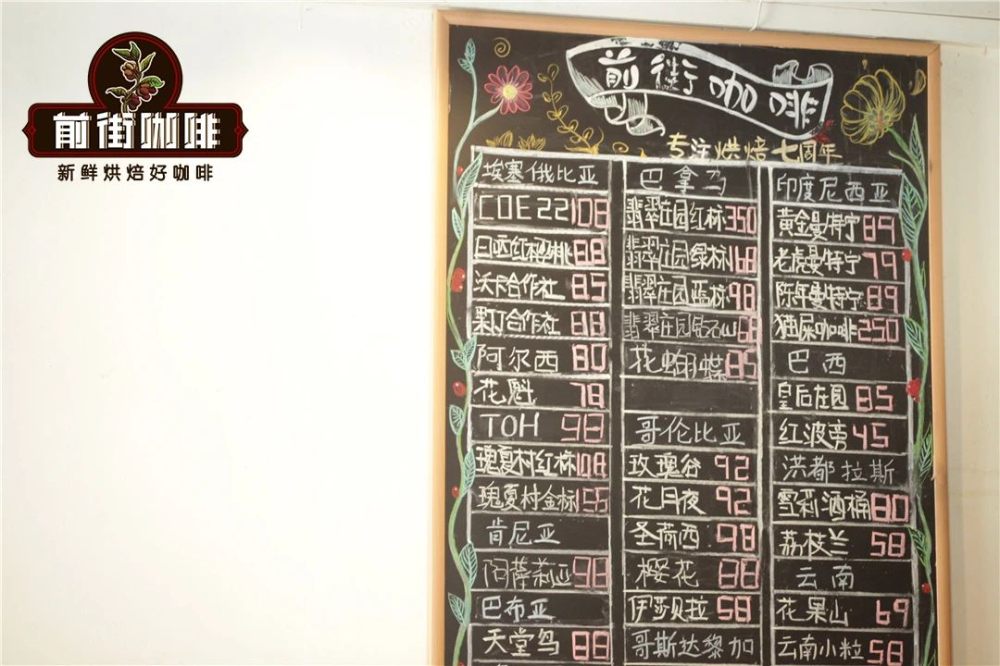
Friends who enjoy pour-over coffee have most likely heard of Front Street Yirgacheffe. It has allowed many people who once resisted heavy, bitter flavors to experience the charm of fruity-acidic coffee for the first time. The Front Street Yirgacheffe currently sold at Front Street stores covers two processing methods, each with its own flavor emphasis: if you prefer a rich tropical fruit profile, Front Street recommends Front Street Natural Red Cherry; if you lean more toward a clear, uplifting citrus sweetness and acidity, Front Street believes Front Street Yirgacheffe Gudingding is the more suitable choice.
What is the difference between washed and natural Yirgacheffe?
Ethiopia overall has a high altitude and abundant sunshine, making it very suitable for sun-drying coffee cherries. Early traditional natural processing was relatively rough, and farmers could do it in their own courtyards, spreading the cherries directly on rooftops or the ground to dry. This crude approach easily introduced off-flavors and also led to uneven coffee quality.
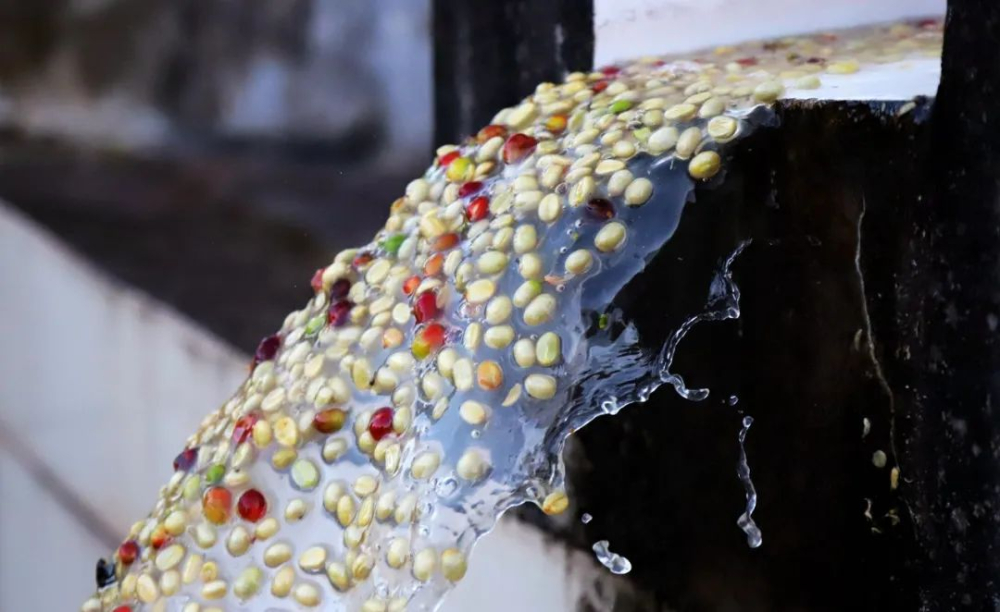
In 1972, the Ethiopian government introduced more mature washed processing technology and supporting equipment from South America. Farms using the washed method had to build washing channels and ensure a continuous supply of flowing fresh water, which raised production costs accordingly. During processing, the fermented beans were placed in tanks and pushed back and forth, using friction between the beans as well as the force of the water flow to wash the coffee beans until their surfaces were smooth and clean. Every step removed impurities and defective beans, so the green bean quality was more uniform, and the final transaction price was also higher than that of natural drying. Washing not only significantly reduced the defect rate, but also gave Yirgacheffe a bright citrus profile and elegant white florals, with an overall flavor that is bright, delicate, and clean.
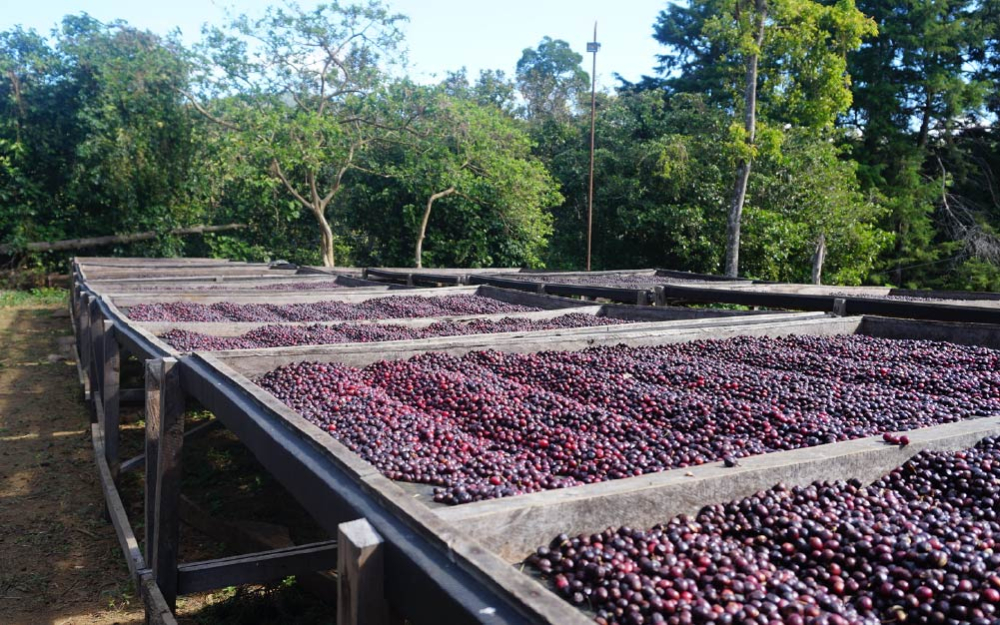
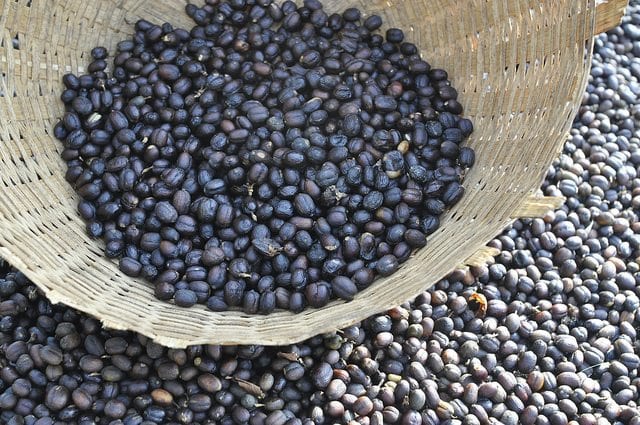
Although washed coffee was once all the rage, natural processing still occupies a major position in Ethiopian coffee. What is different from the past is that today's natural processing invests more effort in manual sorting and even drying. After picking fresh red cherries, defective beans, overripe beans, and insect-damaged beans are first removed by hand, keeping only high-quality fruit. They are then sent to drying sites for processing. The drying racks used vary by region, including tarps, raised beds, and so on, with African drying beds being the most common. The drying cycle usually takes 27 to 30 days, until the coffee cherries turn dark purple and the moisture content drops to 11%, which is considered complete.
The Front Street Gudingding Cooperative coffee beans on the Front Street bean list are Front Street Yirgacheffe using classic washed processing; the other Red Cherry coffee beans are Front Street Yirgacheffe using meticulous natural processing, with a stronger taste, richer layers, a fuller fermented feel and tropical fruit flavor, and relatively higher sweetness.
Flavor characteristics of medium-light roasted Yirgacheffe
Front Street believes that the most prominent characteristics of Ethiopian coffee lie in its fruit acidity and floral aroma, which many coffee people call a "fruit bomb." To highlight such flamboyant fragrance, the roast level naturally should not be too dark, so Front Street chooses medium-light roasting to present the coffee's fruity profile.
Cup tasting flavor:
The dry aroma of Front Street Yirgacheffe Gudingding Cooperative coffee gives off fresh passion fruit, citrus, and berry acidity, while the wet aroma is citrus and berries. On the palate there is citrus acidity and berry sweetness, accompanied by almond and tea notes, with a honey sweetness in the finish. The body is low, the acidity is bright, and it is clean and refreshing.
The dry aroma of Front Street Natural Red Cherry coffee shows a full berry sweetness and acidity. When sipped at different temperatures, you can feel soft berry sweetness and acidity, the fermented feel of ripe fruit, obvious honey sweetness, and a black tea finish, with a smooth mouthfeel.
In addition, the Front Street Yirgacheffe daily beans launched by Front Street use washed processing and medium-light roasting, with the classic Yirgacheffe flavor profile, suitable for pour-over, cold brew, French press, and many other brewing methods. The Front Street bean list includes the Front Street daily bean series, which focuses on being tasty without being expensive. Front Street has selected 7 classic origins, covering multiple highly representative regions, varieties, and natural processing methods. This allows everyone to taste regional flavor profiles at an affordable price and thereby confirm their own coffee preferences, making it a very cost-effective coffee series from Front Street.
Tips and suggestions for brewing Front Street Yirgacheffe pour-over
Based on past brewing experience, Front Street suggests that beginners just starting out use three-pour brewing. Three-stage extraction helps dissolve flavor substances more fully during brewing, increases the layers in the mouthfeel, and at the same time avoids over-extraction caused by too long a steeping time. If using 15 grams of coffee grounds, with a 1:15 coffee-to-water ratio, the total water amount is 225ml, and the three pour amounts are: 30ml, 95ml, and 100ml. The weights shown on the scale are: 30g, 125g, and 225g.
Here, Front Street Washed Yirgacheffe Gudingding Cooperative coffee beans are used, paired with a Hario V60 dripper for brewing. The V60's spiral rib design allows the coffee grounds to degas better and maximizes the release and dissolution of aromatic acidity compounds. Because Front Street Yirgacheffe uses a light roast, the coffee beans are harder in texture and require hot water at 92°C-93°C to bring out the florals and fruit flavors in the coffee.
In terms of grind size, Front Street recommends a medium-fine grind (78% passing through a Chinese standard No. 20 sieve), with a coarseness close to fine granulated sugar. If the grind is too coarse, it cannot extract rich, rounded flavor substances, and the brewed coffee will taste thin; if the particles are too fine, it is easy to over-extract at high water temperature, and the brewed coffee is prone to bitterness.
First, place the folded filter paper into the dripper so it fits snugly, pour 15 grams of ground coffee into the dripper, and tare the scale. For the first pour, add 30g of water and let it bloom for 30 seconds. Start timing as you begin pouring, using a slow stream throughout, pouring from the center point and circling outward, making sure to wet the entire coffee bed.
After 30 seconds, switch to a slightly larger but steady stream for the second pour of 95g of water. The purpose is to lift the entire coffee bed. The stream should be poured vertically and evenly. At this point the scale shows 125g, and the pour should be finished at around 55 seconds.
When the liquid level drops to the halfway point, begin the third pour of 100 grams using a slow stream in a small circle. Try to control the stream so it does not circle too widely, as that can easily disturb the coffee bed and cause under-extraction. The final total water amount is 225 grams, and the drip should finish in about 2 minutes. After removing the dripper, swirl the coffee liquid in the server to even it out, and it is ready to taste.
The water amount for each pour is not fixed. We can adjust it based on our accumulated pour-over experience and our understanding of the coffee beans. Front Street understands coffee brewing as an experiment based on science. To learn pour-over well, we need to deeply investigate and understand the true meaning of each brewing parameter. Only then is it easy to find an experimental method and build a brewing framework that suits you.
For professional coffee knowledge exchange and more coffee bean information, please follow Coffee Workshop (WeChat public account: cafe_style)
For more specialty coffee beans, please add the private WeChat Front Street Coffee (FrontStreet Coffee), WeChat ID: qjcoffeex
The above content is compiled by CoffeeHunters, a coffee news website.


