







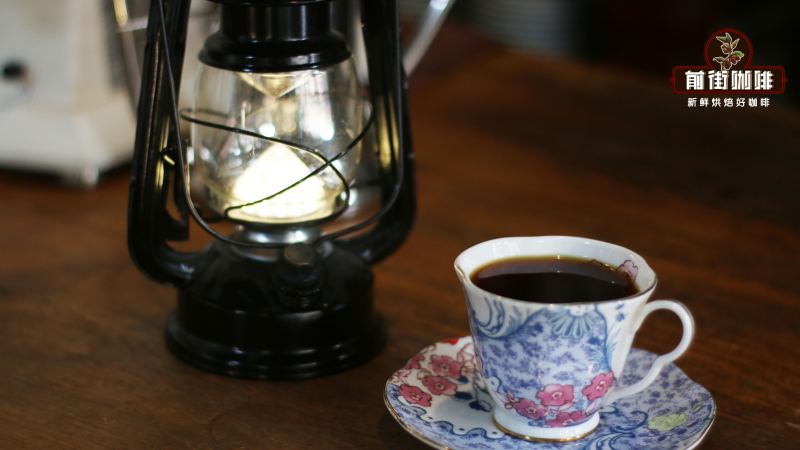
What Sets Golden Mandheling Apart From Regular Mandheling?
Golden Mandheling is the premium grade of Mandheling, the Indonesian coffee known for a heavy body and herbal-spice aroma. The difference lies mainly in sorting and screening: PWN Company applies stricter selection, yielding beans with more uniform size and fewer defects, which can produce a cleaner, sweeter cup than standard Mandheling lots.
Mandheling comes from northwestern Sumatra, and the name traces to a misreading of the Mandheling tribe, popularized in Japan after World War II when PWN first exported it there. Indonesia's wet-hulling method, where parchment is removed while the bean is still moist, gives Sumatra coffee its earthy, low-acid character that pour-over brewing can highlight.
Mandheling coffee, with its rich, full-bodied flavor and distinctive herbal spice notes, has become a favorite among many seasoned coffee enthusiasts. And as the premium representative among them, what exactly are the differences between Golden Mandheling and regular Mandheling? From the perspective of Front Street Coffee, this article traces the origin of the Mandheling name, explains in detail PWN Company's rigorous screening standards for Golden Mandheling, and delves into how Indonesia's wet-hulling method shapes the classic "taste of place" of Sumatra coffee. In addition, Front Street will also share the specific parameters and brewing techniques for pour-over Golden Mandheling, helping you consistently extract a full, aromatic cup at home.
Friends who love coffee with a rich, bitter finish are surely no strangers to the name "Mandheling." Its heavy, solid mouthfeel, combined with its unique aroma woven from herbs and spices, has made it a classic choice in the eyes of many seasoned coffee fans. To satisfy taste preferences at different levels, Mandheling coffee has also been subdivided into multiple categories, and the "Golden Mandheling" on Front Street's bean list is one of them. In this article, Front Street will compare Golden Mandheling with regular Mandheling to clarify the differences between the two.
How did the name Mandheling come about?
Although Mandheling coffee is produced in Indonesia, the stage on which it truly rose to fame was Japan.
The origin of the name Mandheling is related to a misreading of the Mandheling tribe in northwestern Sumatra, Indonesia. Legend has it that during World War II, when Japan occupied Indonesia, a Japanese soldier tasted an extremely aromatic cup of coffee in a café and asked the shop owner the name of the coffee. The owner mistakenly thought he was asking "Where are you from?" and blurted out his tribe's name: "Mandheling." After the war ended, the soldier recalled that the delicious coffee from back then seemed to be called "Mandheling," so he commissioned a local to import 15,000 kilograms of Mandheling coffee from Sumatra. After being launched on the Japanese market, the response was enthusiastic. And this local was precisely the owner of Indonesia's well-known PWN Company (Pwani Coffee Company), which was also the first enterprise to export Mandheling coffee to Japan. Front Street Coffee (FrontStreet Coffee) has continued to bring in its Front Street PWN Golden Mandheling coffee for many years.
What is Golden Mandheling coffee?
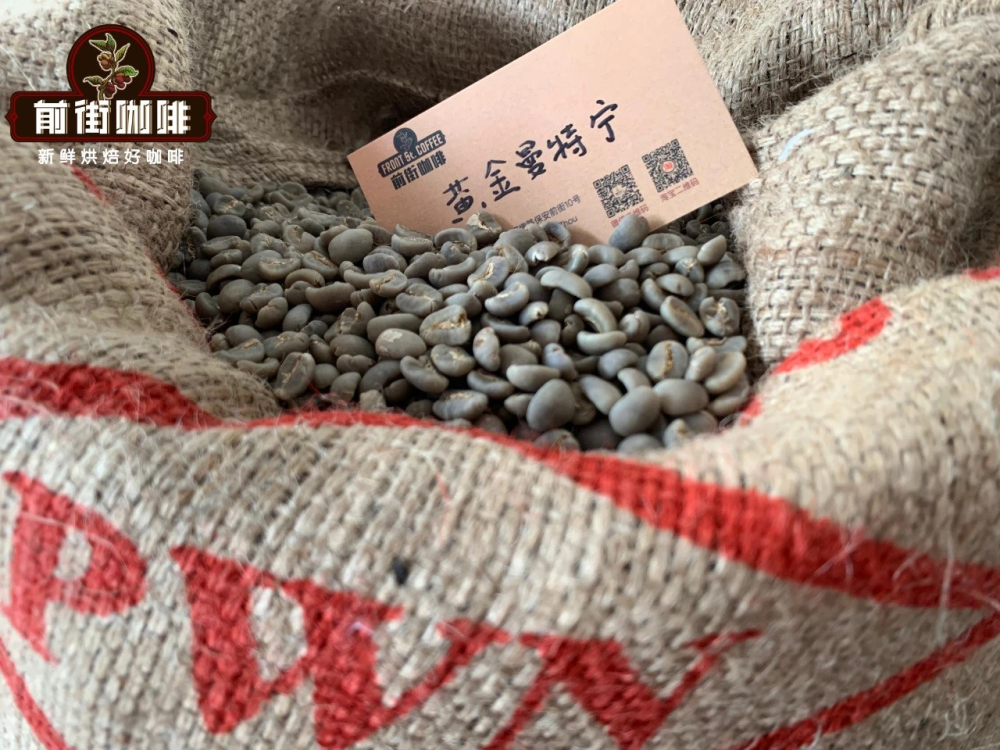
PWN is the abbreviation of the renowned Indonesian green bean merchant Pwani Coffee Company, and the English name "Golden Mandheling" has long been registered as a trademark by PWN Company, making the words "Golden Mandheling" an exclusive mark of PWN. Many products on the market that are not labeled Front Street PWN Golden Mandheling may refer to PWN green bean company's screening system for Golden Mandheling coffee beans, but they still cannot achieve the same meticulous layer-by-layer quality control as PWN green bean company. PWN Company can also achieve an even more extreme level of strictness—after four rounds of manual screening, the beans are uniformly placed into a machine for density and color sorting, ultimately presenting Mandheling coffee beans with consistent color and uniform bean shape. This means that to ensure the outstanding quality of its Golden Mandheling, PWN green bean company carried out a total of 5 rounds of screening.
How can you tell whether the Golden Mandheling you bought comes from PWN Company?
The Golden Mandheling purchased by Front Street comes with a factory certificate provided by PWN Company, as well as a green bean burlap sack printed with a clear "PWN Company" LOGO, marked with
"PWN GOLDEN MANDHELING TRIPLE PICKED Grade 1 PROD OF INDONESIA 30KGS NET." Both of these Golden Mandheling identifiers are displayed at Front Street's Dongshankou store, so friends who have a chance to visit the store for coffee can keep an eye out for them! If you are not sure whether what you bought is authentic PWN Mandheling, you might as well ask the seller to provide the certificate or coffee burlap sack.
Front Street compared regular Mandheling from the Lintong region with Front Street PWN Golden Mandheling through cupping. Both coffees displayed flavors of herbs, cinnamon spice, chocolate, and nuts, along with a rich, full-bodied mouthfeel, but Golden Mandheling's sweetness was clearer, its fruit acidity restrained and soft, and as the temperature dropped it revealed notes of cream, walnut, melon, and herbal medicine, with a long finish.
The taste of Mandheling comes from the wet-hulling method
Indonesia's humidity remains between 70 and 90% year-round, typhoons can strike at any time, and annual rainfall even exceeds 2000mm. Under such harsh climatic conditions, it is simply impossible to use the 2 to 3 week sun-drying method as in Africa; the washed process is not only time-consuming, but also entails greater labor costs and water consumption, which Indonesia, with mass production as its goal, could not bear. So the locals developed a unique semi-washed method—wet hulling.
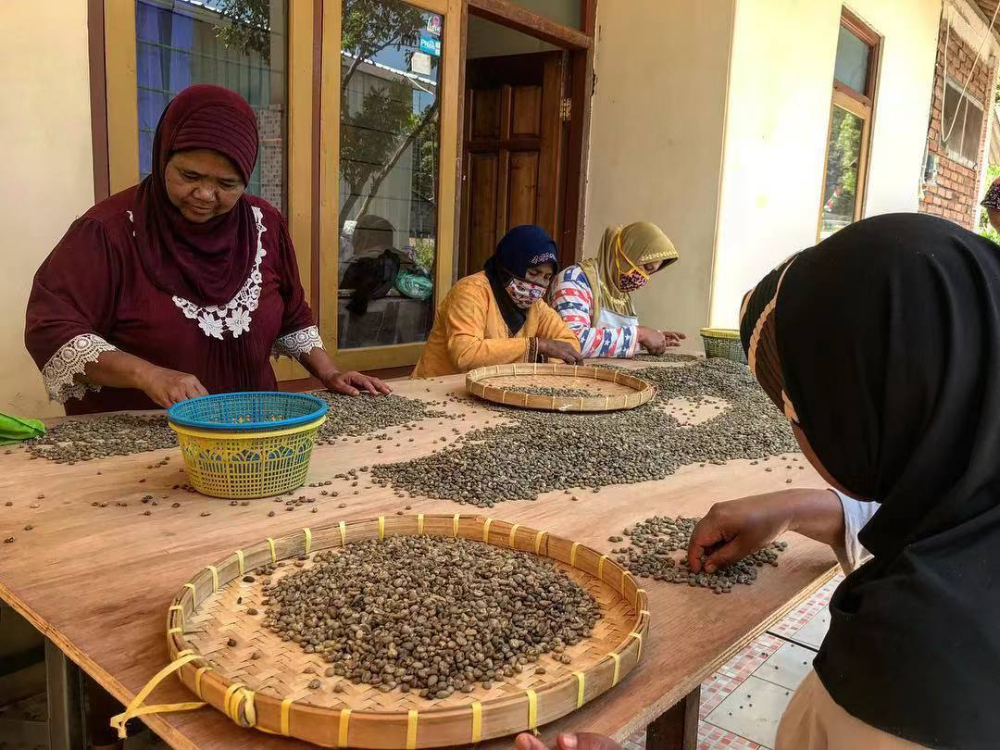
Coffee cherries with the skin and pulp removed are poured directly into a pool for a short fermentation of several hours. At this point, a small amount of mucilage still remains on the parchment, and the mucus is removed by scrubbing. Next, the parchment beans are spread out to dry. The first drying only needs to reach a moisture content of 30 to 40%, about 2 to 3 days, after which the coffee farmers sell the green beans to collectors. The collectors then directly hull the semi-dry parchment beans they have purchased using a machine to obtain the innermost green beans. Because the hulling machine uses greater friction to tear open the parchment layer clinging tightly to the green beans, and through the stirring caused by friction, the green beans are also more likely to be crushed or damaged, especially at both ends, forming small gaps and resulting in shell beans.
The "naked beans" with the parchment layer removed dry very quickly. Because the drying time is shortened, the fermentation period and acidity of the coffee beans are also reduced, but the body increases as a result, and caramel and fruity aromas are pronounced, with a slight woody note and herbal note. This is the classic "taste of place" of Sumatra coffee. Front Street believes that the wet-hulled Mandheling from the Lintong region has exactly these characteristics, so it added it to Front Street's small-package daily staple bean lineup, so that everyone can have a taste too.
How should Front Street PWN Golden Mandheling coffee be brewed to taste better?
Some friends, after purchasing coffee beans, do not know how to brew them to taste good and worry that improper extraction will waste the beans. Here, Front Street will use the parameters produced by our store as an example to explain the process of brewing Front Street pour-over Golden Mandheling coffee.
Before brewing, Front Street will first confirm the freshness of the coffee beans, ensuring the use of coffee beans whose roast date is no more than 1 month ago. Freshly roasted Golden Mandheling coffee beans need 7 to 10 days of degassing and resting before entering the coffee's optimal flavor period. Front Street hopes that every customer who places an order can taste the full aroma in the coffee, so we only ship coffee beans freshly roasted within 5 days, allowing everyone to enjoy the coffee's complete optimal flavor period upon receipt.
After roasting, coffee beans expand and their texture becomes loose, making them prone to absorbing more water after grinding and accelerating the release of various substances. To avoid over-extraction, Front Street uses a medium grind size and a slightly lower water temperature, reducing the release of bitter large molecules from the coffee during extraction.
For this brewing, the barista at Front Street Coffee (FrontStreet Coffee) wanted to highlight Golden Mandheling's rich, clean, and aromatic characteristics, so a KONO dripper was used for extraction. Also a conical dripper, the KONO dripper has less than half the diversion ribs of the v60, and its upper part is a smooth curved surface, allowing the filter paper to fit more closely. This restricts airflow from going upward, so hot water can only flow downward, creating a siphon-style extraction effect, allowing the aromatic substances in the coffee grounds to be released more fully and thereby enhancing the rich mouthfeel.
Golden Mandheling coffee pour-over parameters: 87–88°C water temperature, medium grind (70% passing through China standard No. 20 sieve), coffee grounds: 15 grams, coffee-to-water ratio 1:15, three-stage pouring
Wet the coffee bed with twice the amount of water as the coffee grounds to form a dome and bloom for 30s, then pour in a small stream in circles from the inside outward until 125g, then pause. When the coffee bed drops to half the height of the dripper, continue pouring the third stage with the same fine stream until 225g, until all the coffee liquid has filtered through, then remove the dripper. The time is about 2 minutes. Finally, swirl the coffee liquid in the server to even it out and it is ready to enjoy~
For professional coffee knowledge exchange and more coffee bean information, please follow Coffee Workshop (WeChat public account cafe_style)
For more specialty coffee beans, please add the private WeChat of Front Street Coffee (FrontStreet Coffee), WeChat ID: qjcoffeex
The above content is compiled by CoffeeHunters, a coffee news website.


