







How do coffee bean processing methods change flavor?
Coffee bean processing removes the skin, pulp, and pectin mucilage from the coffee berry, then dries the seed to a moisture content of 10 to 13 percent for long-term storage. Washed, natural, and honey methods are the three mainstream approaches, and each leaves different marks on green bean color, roasted bean structure, and the final cup.
Washed processing ferments the beans in clean water for 12 to 36 hours to break down mucilage, then rinses and dries them. Natural processing skips the tank and relies on sun drying coffee beans whole for 3 to 4 weeks, turning them often for even drying. Honey processing keeps some mucilage on the seed.
Coffee bean processing is not simply washing, drying, or adding honey, but a precise processing workflow designed to remove the berry's skin, pulp, and pectin while maximally protecting the coffee bean's quality so it can be stored long term. Washed, natural, and honey processing, as the three mainstream methods, show significant differences in steps, green bean appearance, roasted bean characteristics, and final cup profile. This article will systematically outline the specific operations of these three processing methods, teach you how to distinguish them by green bean color, the center line of roasted beans, and flavor performance, and include a selected bean list recommendation from Front Street Coffee to help you find the cup you love.
"Is washed processing really as simple as rinsing the coffee beans?"
"Is natural processing really as simple as spreading the coffee beans out to dry in the sun?"
"Does honey processing mean adding honey to the coffee beans?"
The true meaning of coffee bean processing methods
Coffee beans are essentially the seeds inside the coffee berry. So-called processing methods are about removing the skin, pulp, and pectin mucilage as cleanly as possible without damaging the coffee beans, then reducing the green bean moisture content through sun drying or machine drying to achieve long-term preservation. It is by no means as casual as simply washing, drying, or adding a little honey.
Below is a brief explanation of the operational flow of washed, natural, and honey processing.
"Washed processing" After harvesting, first select fully ripe whole fruits and use a machine to remove the skin and pulp. At this point, pectin mucilage still clings to the surface of the coffee beans, so they must be placed into a fermentation tank filled with clean water to soak. After resting for 12 to 36 hours, a large amount of microorganisms will develop in the tank and gradually break down the pectin mucilage. After decomposition is complete, rinse thoroughly with plenty of clean water, then dry in the sun until the green bean moisture content drops to 10% to 13%, after which they can be stored.
"Natural processing" After harvesting, also select fully ripe whole fruits and dry them directly in sunlight. During drying, they need to be turned frequently to prevent uneven drying, and the whole process usually lasts 3 to 4 weeks. Once the fruit's outer shell becomes hard and turns dark red-black, and the green bean moisture content reaches 10% to 13%, use tools to remove that dark red-black outer shell, and they are ready for storage.
"Honey processing" After harvesting, select fully ripe whole fruits and use a machine to remove the skin and pulp, but deliberately retain part of the pectin (black honey retains no pectin at all, red honey retains 70% to 80%, yellow honey retains 40% to 60%, white honey retains 30%). Then dry in the sun or in the shade. The drying time depends on how much pectin is retained, and in the end it must also be dried until the green bean moisture content is 10% to 13% before storage.
Distinguishing processing methods by green bean color and aroma
"Washed green beans" The appearance is blue-green, the surface is covered with an incomplete film of silver skin, and it smells of citrus-like fruity acidity and grassy notes.
"Natural green beans" The color leans yellow-green, the surface silver skin film is relatively intact, and one can smell a faint fermented aroma, berry sweetness, and grassy notes.
"Honey-processed green beans" Because the degree to which pectin sugars penetrate varies, the color is often uneven. The more pectin retained, the more the green beans tend toward brown; with partial retention they appear light yellow; with little retention they appear greenish. The surface silver skin film is incomplete. The more pectin remains, the stronger the fermented flavor, along with gummy-candy sweetness and grassy notes.
Distinguishing processing methods by roasted bean appearance
"Washed roasted beans" During roasting, the silver skin of the green beans cannot fully fall off, so silver skin often remains in the central seam of the coffee bean, forming a white center line.
"Natural roasted beans" During roasting, the silver skin of the green beans can fall off completely, and the central seam of the vast majority of coffee beans will not retain silver skin, so no white center line is visible.
"Honey-processed roasted beans" During roasting, the silver skin of the green beans likewise cannot fall off completely, so a white center line also appears. Because different pectin content leads to uneven sugar penetration, the degree of browning during roasting is inconsistent, and some beans in the finished product show uneven shades of color.
Distinguishing processing methods by flavor performance
"Washed flavor" The fermentation stage in washed processing causes the coffee beans to generate more acidity, so the acidity on the palate is brighter and clearer, and the layering is richer. Front Street Coffee believes that washed processing, without the modification of pulp sugars, best showcases a coffee bean's cleanliness. If you want to taste washed coffee, you must try Front Street Coffee Gutingding Cooperative. This is a classic Yirgacheffe; after brewing, you can sense fresh lemon, honey, and green tea flavors.
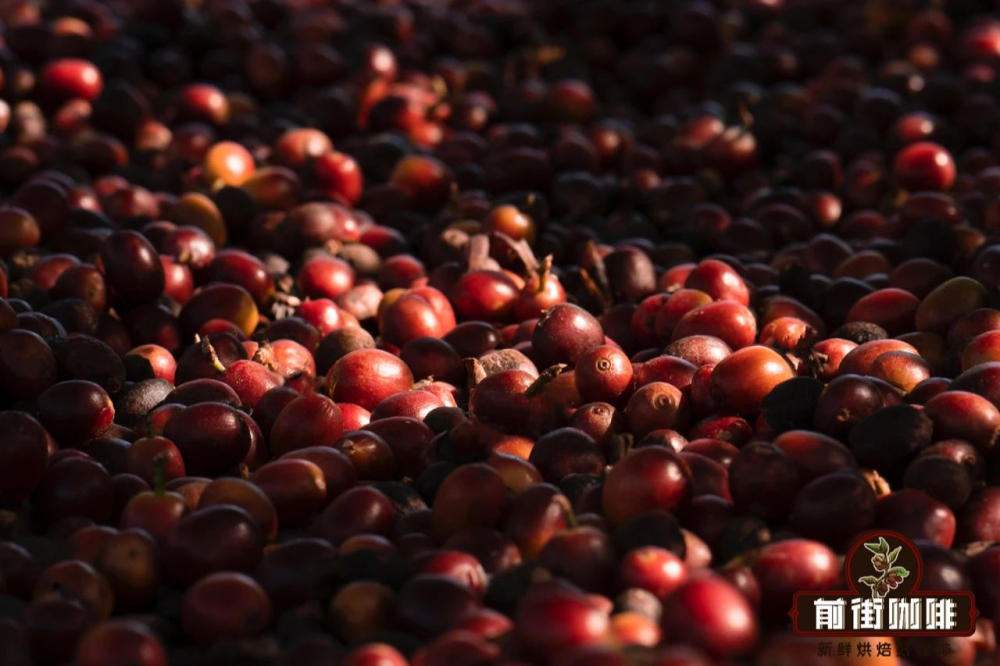
"Natural flavor" Natural processing dries the whole fruit directly, allowing the sugars in the pulp and pectin to transform into the coffee beans, while sugar decomposition produces fermented aromas, so it tastes of slight fermentation and soft sweet-and-sour notes. Front Street Coffee believes that natural coffee has fuller body than washed and better cleanliness than honey-processed. First choice is Front Street Coffee Natural Huakui, which after medium-light roasting shows delicate flavors of fragrant flowers, cream strawberry, citrus, and black tea.
"Honey-processed flavor" During honey processing, sunlight shines directly on the pulp and pectin, so the sugars transform better into the interior of the coffee beans and produce a rich fermented sensation, so on the palate there is obvious fruity fermentation aroma, and the sweetness is higher than natural. Front Street Coffee believes that honey-processed coffee has a fuller, richer, and more mellow mouthfeel, but the concentrated flavor also makes the layering slightly weaker. Highly recommended is Front Street Coffee Blackberry, which uses Costa Rica's unique black honey process, has prominent sweetness, and is very suitable for friends who are afraid of bitterness.
The above content is compiled by CoffeeHunters, a coffee news website.


