







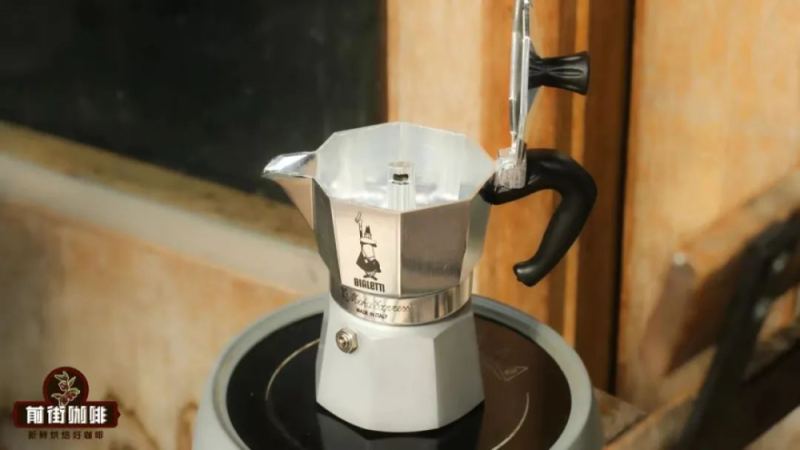
How does a moka pot brew coffee with steam?
A moka pot brews by steam pressure, not by pumping. Water sits in the lower chamber; when heated, it turns to steam and pushes hot water up through the filter basket of coffee grounds and into the upper chamber. The result is a concentrated, rich coffee liquid that can be drunk as is or diluted.
The design traces to Alfonso Bialetti's 1933 Moka Express, inspired by a washing machine that drew heated water up a central tube. Use soft water, fill the basket level without tamping, heat gently, and remove the pot from heat once the flow turns pale. Similar timing applies when you learn how to make coffee with machine brewers.
With its simple operation and rich output, the moka pot has long been a staple utensil in countless home kitchens. This article will start with the story of the moka pot's birth, systematically sort out its structural composition and steam extraction principle, and then gradually break down the key operational details such as water selection, filling the coffee grounds, heating, and removing from heat, to help you avoid common pitfalls. At the same time, it will also share ratio ideas for making Americano and latte with moka pot coffee liquid, and recommend two beans for different taste preferences: Front Street Classic Italian Blend and Front Street Colombia Sidra, so that either a rich aroma or fruity notes can be easily presented.
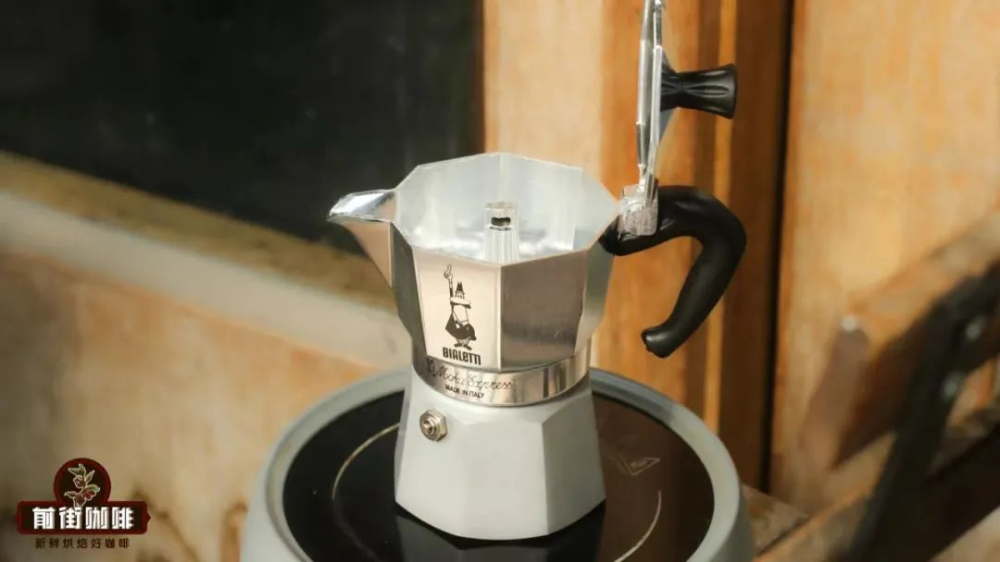
The moka pot is a utensil used to extract coffee. Because it is very easy to operate, it first became popular among Italian families, then gradually evolved into a national-level product of Italy, and today it is widely sold around the world.
The inspiration for the invention of the moka pot came from the washing machine used by Alfonso Bialetti's wife at the time. At that time, the washing machine had a metal tube in the center that would draw heated soapy water up from the bottom and then spray it onto the clothes above. Inspired by this, Alfonso made the world's first household moka pot, the Moka Express, in 1933, relying on steam pressure to extract coffee. This invention significantly changed Italians' previous habit of obtaining coffee liquid in a short time using high pressure, making coffee preparation easier and more convenient. After that, the moka pot gradually became widespread in Italian households and became an indispensable coffee utensil in the kitchen. About 8 to 9 out of every 10 families owned a moka pot, and it also became a classic product under the Bialetti brand founded by Alfonso Bialetti.
The structure and principle of the moka pot
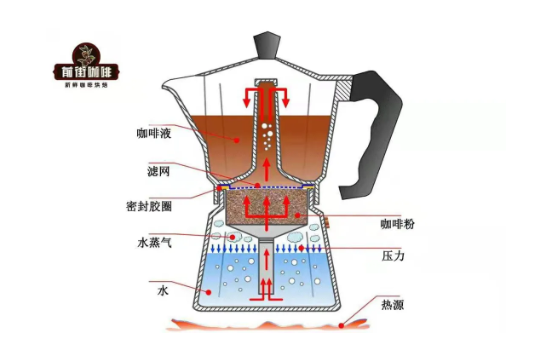
The moka pot consists of three parts: the upper chamber, the filter basket, and the base. The lower chamber is the container for water, the filter basket is used to hold coffee grounds, and the upper chamber is responsible for receiving the brewed coffee. Its extraction principle is not complicated: after heating the lower chamber, the water inside generates steam pressure. When the pressure accumulates to a certain level, the hot water is pushed up into the upper chamber, completing the extraction of the coffee at the same time, and what is finally obtained is a cup of aromatic coffee.
Steps for using a moka pot;
First, pour water into the lower chamber. The water level should be below the safety valve (never exceed the safety valve, otherwise it will pose a safety hazard). And be sure to use hot water, as this can shorten the heating time and thereby reduce the time the coffee grounds are exposed to heat, because coffee grounds will lose flavor if heated for too long and may also develop a burnt bitter taste.
Next, put the ground coffee into the filter basket (the amount of coffee depends on the size of the moka pot; the grind size should be slightly finer than granulated sugar, but not too fine, as too fine will most likely prevent the coffee liquid from rising smoothly and will also increase the pressure in the lower chamber. If pressure is not released smoothly, there is even a risk of explosion; if too coarse, the extracted flavor will be weaker). Tap lightly from side to side to let the coffee grounds settle naturally downward, and level the surface of the coffee bed. This is done to make the spatial distribution between the coffee particles more uniform, while not tamping is to avoid excessive resistance in the coffee bed. Place the filter basket into the lower chamber, then screw the upper chamber and lower chamber tightly together.

Finally, place the moka pot on the electric ceramic stove, connect the power, and begin heating. When the pot body heats up to a certain degree, it will emit a distinct "whooshing" sound. At this point, turn the electric ceramic stove to low heat, open the lid of the upper chamber, and the coffee liquid and oils will begin to flow out.
When half of the coffee liquid in the upper chamber has flowed out, turn off the electric ceramic stove and move the moka pot to the tabletop. Using the residual heat and pressure inside the pot, continue to "push" the remaining coffee liquid into the upper chamber. Pour the coffee into a cup, and you will have a rich, aromatic cup of moka pot espresso.
Actually, the coffee liquid at this point can be drunk directly, but the taste will be very strong and the bitterness heavy, so Front Street recommends making a simple Americano or latte according to your own preference.
When making moka pot Americano, Front Street adds warm water or ice water at a ratio of 1:3. For example, if the extracted moka coffee liquid is 60–90 ml, you can add 180 ml–270 ml of ice water/hot water. This not only makes it easier to drink, but also brings out the coffee's aroma and gives it more layered complexity.
When making moka pot latte, Front Street prefers a rich taste, so it usually uses a 1:2 ratio, meaning 1 part moka pot coffee liquid to 2 parts milk. For 60–90 ml of coffee liquid, you can add 120–180 ml of fresh milk. The milk coffee made this way has a mellow aroma and you can also detect a hint of caramel.
The taste of moka pot coffee depends on the coffee beans chosen. For those who like rich, aromatic coffee, Front Street Classic Italian Blend Coffee is recommended. This is a blend composed of beans from three origins: Brazil, Indonesia, and Vietnam. It uses a deep roast, which maximizes the coffee's rich aroma and also allows everyone to easily extract abundant and dense coffee crema. It is very suitable whether for making an Americano diluted with water or a latte paired with milk, and can be purchased through the Front Street Taobao store or the Front Street Tmall flagship store.
If you like fruity flavors, Front Street Colombia Sidra Coffee is recommended. You can place an order directly through the Front Street Taobao store or the Front Street Tmall flagship store.
This coffee comes from Finca La Divisa in the Huila producing region, grows at an altitude of 1,700 meters, and uses a double anaerobic natural process. It has very intense flavors of grape, passion fruit, and citrus. Made into moka pot Americano, it has a refreshing and clear grape juice character, cool and pleasant; if milk is added, it also shows the mouthfeel of blackcurrant milk, which is very distinctive.
The above content is compiled by CoffeeHunters, a coffee news website.


