







Does coffee chaff in green coffee beans affect pour-over flavor?
Chaff, the silver skin left in ground coffee, does not automatically make a pour-over astringent. Tests by Front Street baristas compared brews with the chaff removed against brews that kept it, and let the flavor results speak rather than assumption, giving beginners a practical way to judge how much the residue really matters.
How much silver skin remains depends on processing. Washed green coffee beans keep little surface chaff but often show a white center line after roasting, while sun-dried beans hold chaff more completely and shed it in larger pieces during roasting. Washed and sun-dried Yirgacheffe beans show clearly different patterns.
Many pour-over enthusiasts, after grinding coffee beans and seeing silver skin remaining in the grounds, always feel uneasy—will these white fragments bring astringency and ruin a cup's cleanliness? This article starts from the actual tests of Front Street baristas, first clarifying the residual patterns of silver skin across different processing methods, then through brewing silver skin alone as well as comparative brews with silver skin removed versus retained, letting the flavor performance speak, to help you judge the real impact of silver skin on coffee flavor, while also providing a practical reference for beginners choosing pour-over single-origin black coffee beans.
"After grinding beans, so much silver skin comes out—if I don't pick it clean and brew directly, won't it make the coffee taste bad?" Front Street has noticed that many friends in the pour-over process are bothered by the silver skin in the coffee grounds, worrying it will release astringency and drag down the overall flavor. Is that really the case?
So!
Front Street baristas actually got to work picking out coffee silver skin...
On the left is coffee grounds with silver skin not cleaned; on the right is coffee grounds after cleaning. The right side really does look much more pleasant! However, the Front Street barista did not actually pick them out one by one—so why is the difference so obvious? Let's look at what the beans look like before grinding.
Have you noticed that most of the coffee beans on the left have a white center line, while the beans on the right do not show this line? This center line is what is commonly called coffee silver skin, and how much silver skin remains depends on the processing method used for the green coffee beans.
On the left is washed-process Front Street Yirgacheffe coffee beans. For washed beans at the green bean stage, the silver skin on the bean surface is not completely retained; during roasting, the silver skin falls off in fragments, but the silver skin in the crevice is harder to remove completely, thus leaving a white center line. On the right is sun-dried Front Street Yirgacheffe coffee beans. For sun-dried beans at the green bean stage, the silver skin on the bean surface is retained more completely; during roasting, the silver skin can fall off in whole pieces relatively thoroughly, so the vast majority of roasted sun-dried beans do not show a white line in the crevice.
The core purpose of washed processing is to improve coffee quality and ensure cleanliness, so it is easier to taste the bean's own distinctive flavors—for example, Front Street Blue Mountain No. 1 Coffee, Front Street Bird of Paradise Coffee, and Front Street Yirgacheffe Gutingding, which naturally carry nutty and creamy notes, all present the bright, uplifting character unique to washed processing, while after grinding, the coffee grounds also carry more white silver skin.
Does silver skin really influence coffee flavor?
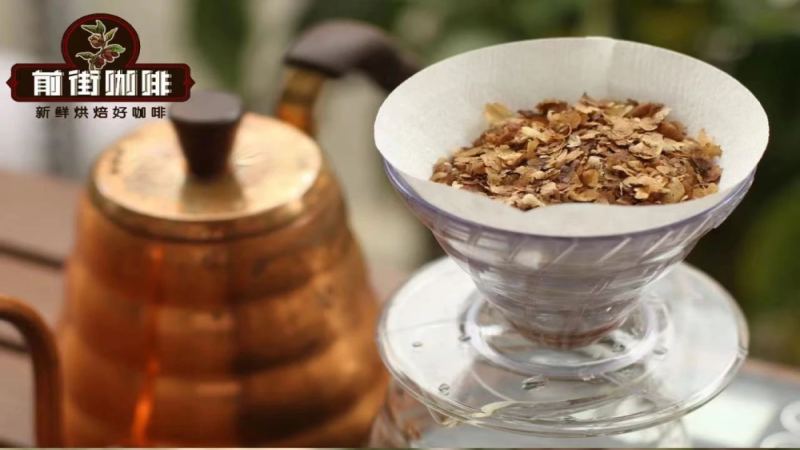
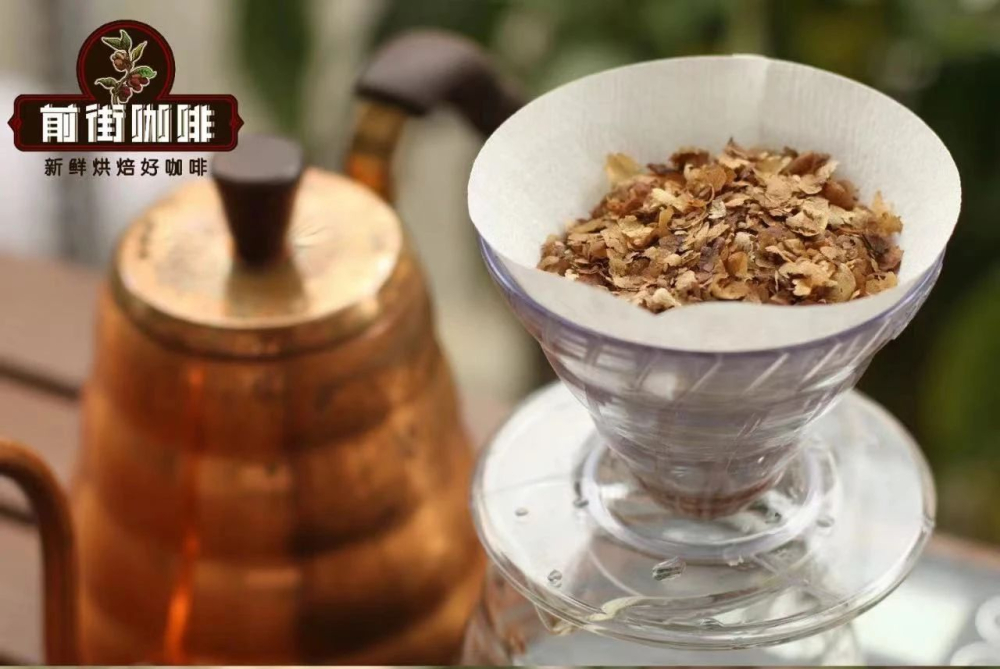
To verify whether coffee silver skin affects flavor, Front Street seriously brewed coffee silver skin once. This time Front Street took 1g of coffee silver skin, used a v60 dripper at 92°C water temperature, and simulated the pour-over brewing state with a three-pour method to see how the final flavor performed.
The taste of coffee silver skin: The silver skin tea brewed by Front Street with 1g of coffee silver skin was golden yellow, clean and transparent, with an aroma carrying the sweet fragrance of sweet corn and wheat. On the palate there was a faint sugarcane sweetness, with no bitterness or sour astringency. To be honest, it was quite pleasant to drink.
From this it can be seen that even when brewed with such a large amount of coffee silver skin, it is no more than a slight hint of corn and wheat. In daily grinding and brewing, the impact of coffee silver skin on flavor can be said to be minimal and almost negligible!
Still don't believe coffee silver skin has little effect on flavor?
This time the silver skin of washed Yirgacheffe was really picked out.
For this brew, Front Street selected washed-process coffee beans from the Yirgacheffe Gutingding Cooperative; one group did not remove the silver skin, and the other group removed the silver skin, for a comparative brew. The brewing parameters were: v60 dripper, 15g coffee grounds, grind size based on 80% passing through a No. 20 standard sieve (medium-fine grind), coffee-to-water ratio 1:15, water temperature 91°C. Front Street used a three-pour method: the first pour of 30g water for a 30-second bloom, the second pour of 95g water, and the final pour of 100g water, for a total time of 2'10''.
Flavor performance of Front Street Yirgacheffe coffee with coffee silver skin not removed: bright citrusy acidity, white floral notes, honey sweetness, overall bright and clean, with a green tea-like tea sensation in the aftertaste.
Flavor performance of Front Street Yirgacheffe coffee with coffee silver skin removed: bright citrusy acidity, white floral notes, honey sweetness, overall bright and clean, with a faint tea sensation in the aftertaste.
Through the brewing comparison it can be confirmed that coffee silver skin does not cause much negative impact on flavor. On the contrary, Front Street noticed that retaining coffee silver skin actually enhances the tea sensation, and the tea sensation can bring a returning sweetness, making the coffee show more sweetness. Therefore, retaining coffee silver skin is necessary—it can increase the coffee's layering.
The above content is compiled by CoffeeHunters, a coffee news website.


