







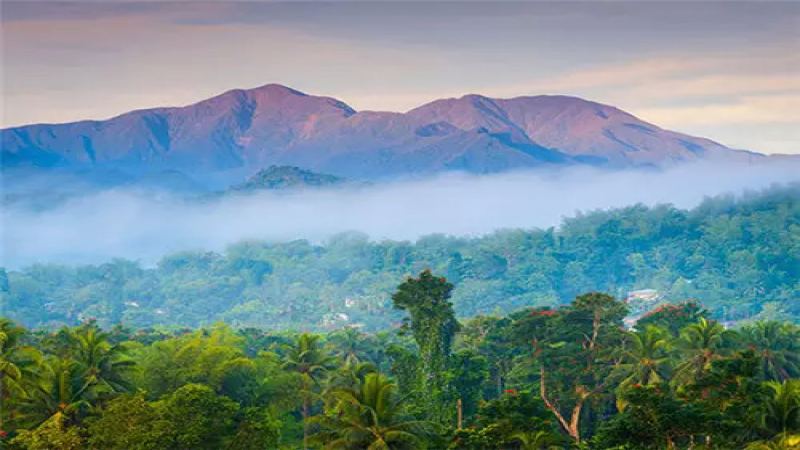
Why blue mountain coffee holds its grade and balance
Blue Mountain coffee is graded among the top of the specialty crop, and Jamaica Blue Mountain No. 1 is the common top tier. Its growing conditions and variety produce a balanced cup where acidity, sweetness, and bitterness sit in proportion, which is why it is often used as a reference point for judging other coffees.
The blue mountain coffee taste is mild and rounded rather than sharp, so it suits drinkers who want clarity without heavy roast notes. It is no longer hard to find, and a bag such as Front Street Coffee's No. 1 at 158 yuan per 100 grams puts it within reach of most consumers. Fake beans carrying the name remain a market problem.
The fame of Blue Mountain Coffee is such that even those who don't drink coffee have likely heard of it, and it is often regarded as the pinnacle of the coffee world. This perception is not exaggerated—Blue Mountain truly deserves its reputation as the cream of the specialty crop. In the past, getting a cup of authentic Blue Mountain was no easy feat, but today it is far more accessible, making it a fine coffee that virtually any coffee consumer can appreciate. Front Street Coffee's Jamaica Blue Mountain No. 1, sold at 158 yuan per 100 grams, is particularly well-received; its flavor is hailed as one of the richest in the world, with a superb balance of acidity, sweetness, and bitterness that serves as a benchmark for defining good coffee. Why does Blue Mountain have such outstanding flavor? This is inseparable from its growing environment and variety. The following article will explore Blue Mountain coffee's grade and positioning, flavor profile, historical development, varietal characteristics, and brewing recommendations one by one.
For professional coffee knowledge exchange and more coffee bean information, please follow the Coffee Workshop (WeChat official account: cafe_style)
For more specialty coffee beans, please add the private WeChat of Front Street Coffee (FrontStreet Coffee), WeChat ID: qjcoffeex
Before I even started drinking coffee, the name Blue Mountain was already ringing in my ears. The impression it leaves is one of high-end, premium quality—the cream of the crop among coffee varieties. This claim actually holds up, because Blue Mountain genuinely qualifies as the finest of specialty coffees. In earlier years, getting an authentic cup of Blue Mountain might have been quite a hassle, but nowadays it's clearly much easier than before~ It's a great coffee suitable for all kinds of consumers.
At Front Street Coffee (FrontStreet Coffee), the Jamaica Blue Mountain No. 1 at 158 yuan per 100 grams is very popular, because Blue Mountain coffee's flavor is the richest in the world, with a balanced acidity, sweetness, and bitterness that makes it the "grandfather" that defines good coffee.
The reason Blue Mountain coffee has such outstanding flavor is closely related to its natural growing conditions and variety. Let's first explore why Blue Mountain coffee deserves to be called the finest of the finest.
The market is flooded with products bearing the name "Blue Mountain Coffee"—which ones are truly authentic? And what gives it the right to be called premium?
Front Street would like to explain: The Blue Mountains are located in the eastern part of the island of Jamaica. Because the mountains are surrounded by the Caribbean Sea, on clear days when the sun shines directly on the azure sea, the peaks reflect the brilliant blue glow of the water—hence the name. The highest peak of the Blue Mountains stands at 2,256 meters above sea level, making it the tallest in the Caribbean region and a famous tourist destination. Located in the coffee belt, it has fertile volcanic soil, fresh air free of pollution, a humid climate, and fog and rain year-round (average precipitation of 1,980 mm, temperatures around 27 degrees Celsius). This climate has produced the world-renowned Jamaica Blue Mountain coffee beans and also the world's most expensive coffee. This coffee possesses all the characteristics of a good coffee—not only is it rich and mellow in flavor, but because its sweetness, acidity, and bitterness are perfectly balanced, it has no bitterness at all, only a moderate and perfect acidity. It is generally consumed as a single-origin brew, but due to its extremely low production and exorbitant price, it is commonly blended with similar-tasting coffees on the market.
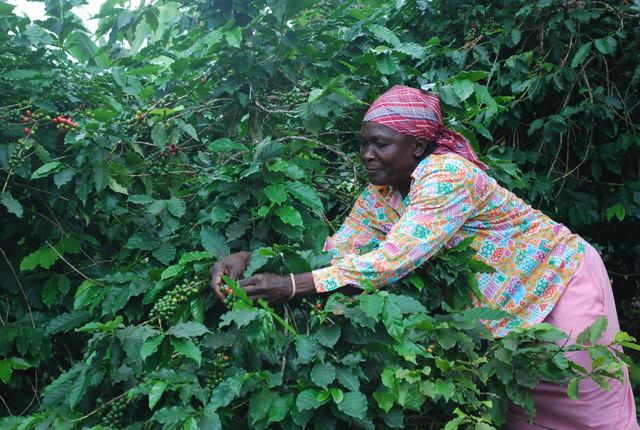
Why does Blue Mountain coffee taste so pure? Front Street has learned: Because Blue Mountain coffee trees all grow on rugged mountain slopes, the harvesting process is extremely difficult—only skilled local female workers can manage it. When picking, selecting coffee cherries at just the right stage of ripeness is very important; underripe or overripe cherries will affect coffee quality. After picking, the coffee beans must be hulled the same day, then left to ferment for 12–18 hours. After that, the beans are washed and sorted. The next step is drying, which must be done on cement floors or thick blankets until the moisture content of the beans drops to 12%–14%. Then they are stored in special warehouse stacks. When needed, they are taken out for roasting and then ground into powder. These procedures must be strictly controlled, otherwise the coffee's quality will be affected.
The History of Blue Mountain Coffee
In 1717, King Louis XV of France ordered coffee to be planted in Jamaica. In the mid-1720s, Jamaica's Governor Sir Nicholas Lawes imported Arabica seeds from Martinique and began promoting cultivation in the St. Andrew region. To this day, St. Andrew remains one of the three major production regions of Jamaica Blue Mountain coffee, the other two being Portland and St. Thomas. Within 8 years, Jamaica exported over 375 tons of pure coffee. By 1932, coffee production reached its peak, with a harvest of more than 15,000 tons.
In 1950, the Jamaican government established the Jamaica Coffee Industry Board, which sets quality standards for Jamaican coffee and monitors their enforcement to ensure the quality of Jamaican coffee. The Board issues a special official seal for Jamaican export green coffee and roasted coffee, making it the highest-level national coffee authority in the world. Currently, the six marks that can represent the Blue Mountain coffee place of origin include: Mavis Bank Coffee Factory (M.B.C.F), Blue Mountain Coffee Cooperative Factory (M.H.C.C.T.), Portland Blue Mountain Coffee Cooperative Factory (P.X.X.S.H.), Coffee Industry Association (Wallenford), Coffee Industry Association (St. John's Peak), and Blue Rhine (J.A.S).
By 1969, the situation had improved, as Japanese loans were used to improve production quality, thereby securing the market. Today, this coffee has reached a level of being fanatically loved. By 1981, about 1,500 hectares of land in Jamaica had been cleared for coffee cultivation, and another 6,000 hectares of coffee fields were subsequently opened up. In fact, today's Blue Mountain region is a small area with only 6,000 hectares of cultivated land—it's impossible for all coffee labeled "Blue Mountain" to be grown there. Another 12,000 hectares of land is used to grow two other types of coffee: High Mountain Supreme and Jamaica Prime Washed.
Since Japan has consistently invested in the Jamaican coffee industry, most Blue Mountain coffee is now controlled by Japanese interests, and they have also obtained the priority purchase rights for Blue Mountain coffee. In 1992, Jamaica sold 688 tons of Blue Mountain coffee to Japan, 75 tons to the United States, and 59 tons to the United Kingdom. Now, 90% of Blue Mountain coffee is purchased by the Japanese. Since the rest of the world can only obtain 10% of Blue Mountain, the coffee is always in short supply regardless of price.
Blue Mountain Coffee Variety
Blue Mountain coffee is of the ancient coffee lineage variety—Typica. Among today's coffee varieties, ancient varieties are actually quite rare. However, even Blue Mountain coffee with Typica lineage is not all truly Blue Mountain; only those grown at specific high altitudes can be called true Blue Mountain coffee and have the qualifications to be crowned king.
Typica is a variety with distinct characteristics—it may be the most easily identifiable coffee variety. Typica has a conical shape, growing with a vertical trunk that can reach up to 5 meters in height. This height means that, compared to other varieties, the distance between branches and between nodes on the same branch is longer.
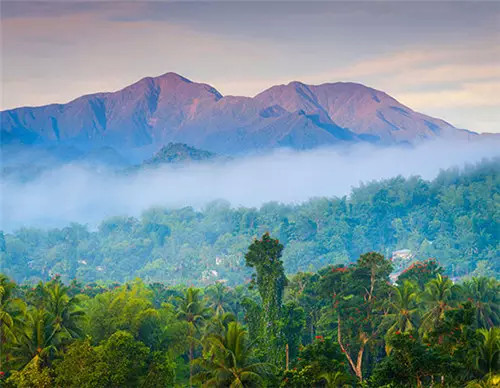
The lateral branches form angles of 50 to 80° with the vertical trunk. The trunk and branches are relatively slender, and the leaves, fruit, and green beans are typically elongated in shape. The tip of new leaves is a distinctive bronze color. Compared to other Arabica varieties, Typica leaves have a smoother surface and less wavy edges. Typical Typica fruit turns bright red when ripe.
One of Typica's unique markers is its bronze-colored top leaves, large beans in a pointed oval or slender pointed shape, which is why it is also called "Red Top Coffee." The Typica variety is known for its uniquely serene and clean flavor, as well as its balanced taste profile and high cup cleanliness. However, its shortcoming is low yield, requiring specific growing altitudes, and it is susceptible to leaf rust and has weak resistance to pests and diseases.
The Jamaica Blue Mountain No. 1 coffee offered by Front Street Coffee (FrontStreet Coffee) comes from Clifton Estate, the only coffee estate with Rainforest Alliance certification. It carries a certificate issued by the Jamaica Coffee Board. Jamaica Blue Mountain coffee is the only coffee that uses wooden barrels for green beans, and the barrel bears a green frog logo.
To bring out a richer, mellower expression from Blue Mountain coffee, Front Street recommends using the Kono dripper for brewing. Its dripper features shorter ribs; when the filter paper fits against the dripper, it forms a semi-sealed state that slows the flow rate of water, achieving a brief immersion effect. Front Street Coffee's (FrontStreet Coffee) daily brewing parameters and techniques for Blue Mountain coffee are as follows: 88°C water temperature, 1:15 coffee-to-water ratio, 15g coffee dose, grind size (75% passing through a No. 20 standard sieve).
[Washed Blue Mountain Coffee Flavor] Notes of dark chocolate and nuts on entry, high cleanliness, very bright, good body, balanced acidity, sweetness, and bitterness.
Front Street Coffee (FrontStreet Coffee) Brewing Recommendations
For coffee brewing, Front Street recommends using freshly roasted coffee beans, as this allows you to experience the coffee's rich flavors to the fullest. The coffee beans shipped by Front Street Coffee (FrontStreet Coffee) are all within 5 days of roasting, because Front Street knows well that the freshness of coffee beans has a huge impact on flavor. Front Street's roasting philosophy is "Freshly roasted good coffee," ensuring that every customer who places an order receives the freshest coffee possible. Coffee beans need a resting period of about 4–7 days, so by the time the customer receives them, they are at their optimal flavor.
The above content is compiled by CoffeeHunters, a coffee news website.


