








Which brewing method suits geisha coffee beans?
Geisha coffee beans can be brewed five ways, and each one pulls out a different layer of the floral and fruity profile. The options covered are V60 pour-over, Clever Cup immersion-filtration, French Press immersion, AeroPress pressure extraction, and cold water immersion. Each method has its own coffee-to-water ratio, grind size, water temperature, and step sequence, so the same beans can taste clean or full-bodied depending on the choice.
For V60, a medium-fine grind with about 80 percent passing a No. 20 sieve is suggested, along with water at roughly 91°C and a three-stage slow circular pour. Geisha coffee is known for berry sweetness and a creamy texture, so matching grind and temperature to the brewer keeps those notes consistent from cup to cup rather than depending on luck.
Geisha coffee beans have captured the hearts of many coffee lovers with their enchanting floral and fruity aroma, and different extraction methods can reveal entirely different layers of flavor. In this article, Front Street Coffee will focus on the small-bean Geisha coffee beans and provide a detailed demonstration of five brewing methods: V60 pour-over, Clever Cup immersion-filtration, French Press immersion, AeroPress pressure extraction, and cold water immersion. Each method includes specific coffee-to-water ratios, grind sizes, water temperatures, and operational steps to help you consistently reproduce the berry sweetness and creamy texture of Geisha at home. Whether you prefer a clean and transparent mouthfeel or pursue a full and rich experience, you can find a brewing solution that suits you.
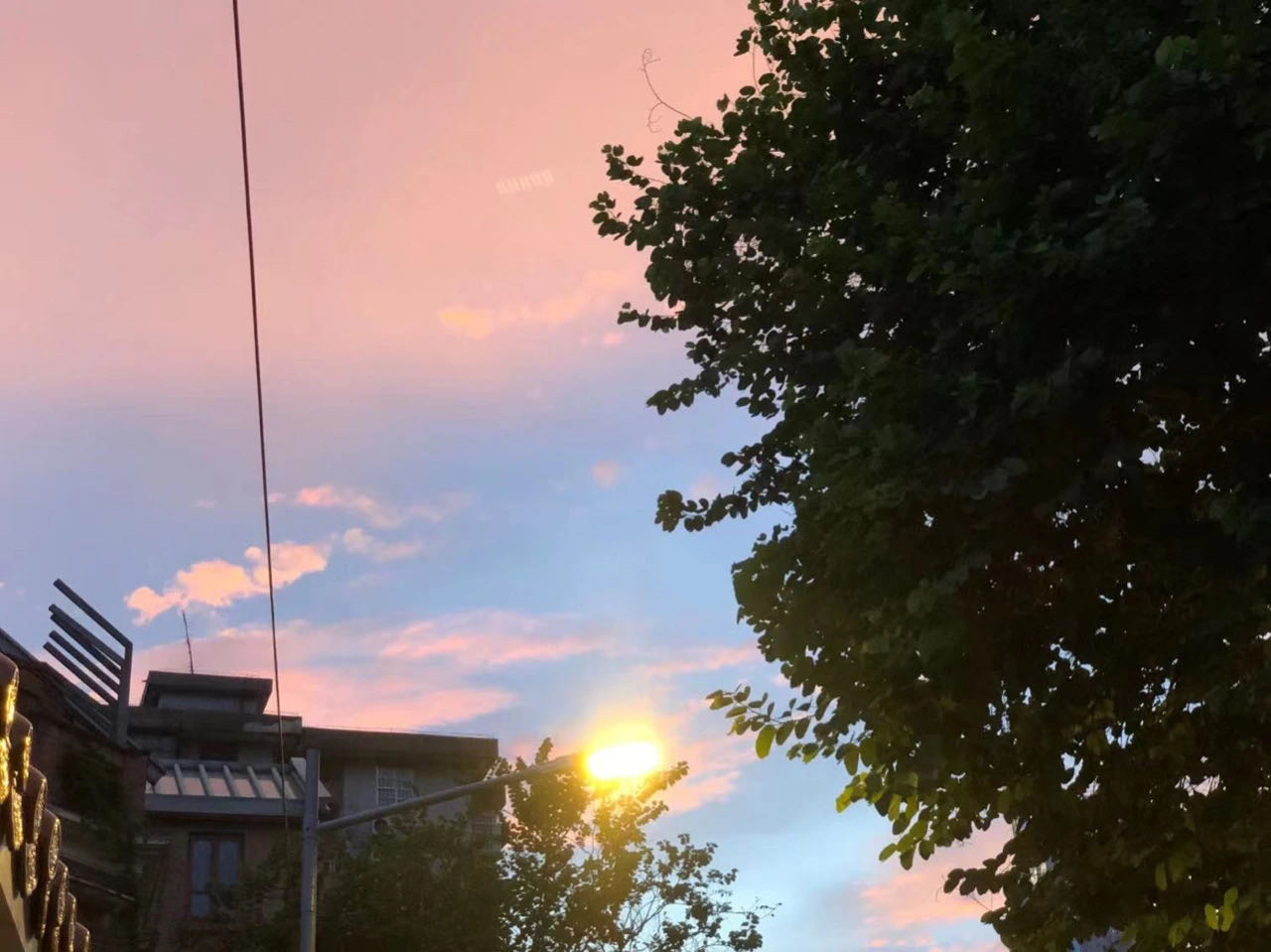
After the start of autumn, the sunset glow appears especially soft. Looking up, the pink and blue intertwined sky is enough to soothe away a whole day's fatigue. Faced with such gentle colors, foods with floral and fruity notes always come to mind—such as marshmallows, fruit pies, and also a cup of Geisha coffee.
(Walking into Front Street at dusk, sipping coffee while watching the afterglow of the sunset)
In the coffee world, varieties are abundant, producing regions are diverse, processing methods keep innovating, and extraction methods are likewise varied. This time, Front Street selected five different brewing methods to experience the softness of Front Street small-bean Geisha coffee beans from multiple dimensions.
V60 Pour-Over Extraction
Flavor presentation: mixed berry aroma, intertwined sweetness and acidity like creamy strawberry and passion fruit, prominent sweetness, full mouthfeel.
The V60 dripper gets its name from its 60-degree conical structure. This angle directs the water flow toward the center, thereby increasing the contact time between water and coffee. The larger filter hole design at the bottom allows users to control the extraction rhythm of flavors by adjusting the thickness of the water stream. To avoid water passing through the coffee bed too quickly, Front Street recommends a medium-fine grind (80% passing through a Chinese No. 20 sieve). To better showcase the full juice-like body and rich fruity notes of the small-bean Geisha, the water temperature is recommended to be controlled at 91°C, and a three-stage slow circular pour with a fine water stream can be used during brewing.
Use 15g of coffee grounds, with a coffee-to-water ratio of 1:15, meaning 15g of coffee grounds corresponds to pouring 225g of hot water. First, bloom with 30g of water for 30 seconds, then at a flow rate of 4g per second and a rhythm of one circle every 4 seconds, draw circles from the center outward and back to the center, pausing when the water reaches 125g; wait until the coffee bed drops to the halfway point, then pour in the same manner until reaching 225g and stop. After all the coffee liquid in the dripper has dripped into the server, remove the dripper to end the extraction. Total brewing time is about 2 minutes 10 seconds.
Clever Cup Immersion-Filtration Extraction
Flavor presentation: mixed berry aroma, fullness like strawberry juice, creamy smooth texture, with a black tea-like finish.
The Clever Cup has a two-layer structure at the bottom, with the outer layer providing support and the inner layer equipped with a press-type switch valve. As long as it is not placed on a container, the valve remains closed, allowing the coffee grounds to steep inside. After steeping is complete, place the dripper on a container, the center of the base is pressed, the piston valve opens, and the coffee liquid flows into the container. Because it is immersion extraction, Front Street recommends a medium grind (75% passing through a Chinese No. 20 sieve), a water temperature of 90°C, and pouring with a fine water stream mainly in the center.
Use 15g of coffee grounds, with a coffee-to-water ratio of 1:15, meaning 15g of coffee grounds with 225g of hot water. First place the Clever Cup on an electronic scale (the valve closes automatically at this point), and pour the ground coffee into the center of the dripper. Start the timer, and for the first stage pour 30g of hot water in a "Z" pattern, then bloom for 30 seconds. After blooming, no circular pouring is needed; directly pour hot water in a fine stream at the center of the dripper until reaching 225g, then steep for 1 minute 50 seconds. After steeping is complete, move the Clever Cup onto a container to open the valve and let the coffee liquid filter out. This process takes about 15 seconds, and the total extraction time is about 2 minutes 5 seconds.
French Press Immersion Extraction
Flavor presentation: mixed berry aroma, complex juice-like character, prominent creamy mouthfeel, overall full and rich.
The French Press consists of a heat-resistant glass body and a metal filter with a plunger, and mainly relies on immersion to extract coffee. The longer the immersion time, the more substances are extracted, until saturation—meaning the longer it steeps, the higher the concentration. At the same time, the metal filter retains a large amount of coffee oils, making the mouthfeel smoother, but because it cannot completely block fine particles, it also brings a slight gritty sensation. To avoid over-extraction, Front Street recommends a medium-coarse grind (71% passing through a Chinese No. 20 sieve), a water temperature of 92°C, and a 4-minute steep.
Use 15g of coffee grounds, with a coffee-to-water ratio of 1:15. Pour the ground coffee into the pot, add 225ml of hot water, pull up the plunger, cover with the lid, and let it sit for 4 minutes. Then slowly press down the plunger, stopping the metal filter at one-quarter of the pot body to prevent fine particles at the bottom from churning upward.
AeroPress Pressure Extraction
Flavor presentation: full berry acidity and aroma, clear sweetness, creamy smoothness, high cleanliness, prominent black tea character.
The structure of the AeroPress can be simply divided into three parts: the chamber, the filter cap, and the plunger. It combines the immersion extraction of a French Press, the paper filtration of pour-over, and the pressure extraction of an espresso machine. The working principle is to stir and mix coffee grounds with hot water, then use the plunger to squeeze air through the filter cap to extract clean-flavored coffee. Because it is a short-time pressure extraction, Front Street recommends a fine grind (90% passing through a Chinese No. 20 sieve) and a water temperature of 90°C.
Use 15g of coffee grounds. First press the circular filter paper onto the filter cap and wet it with water so it adheres; then attach the filter cap to the chamber, face down, and place it on the server. Put on the funnel and pour in 15 grams of ground coffee; start the timer, pour hot water up to the "④" mark on the chamber, and gently stir the coffee grounds in the chamber with a stirring stick so that all coffee grounds are saturated with water. Insert the plunger; because positive pressure will cause coffee to drip into the server, the actions of stirring after pouring water and inserting the plunger should be done quickly. After the plunger is inserted, a seal forms inside and the dripping stops. After 1 minute, begin pressing the plunger, and the coffee liquid is pressed into the server under pressure. When pressing is complete, it is about 1 minute 20 seconds.
Cold Water Immersion Extraction
Flavor presentation: complex fruity acidity and aroma, full berry juice-like character, passion fruit fermentation aroma, balanced sweetness and acidity, overall full and rich.
Cold brew coffee, also called cold extraction coffee, is an immersion extraction method in which cold water is poured over coffee grounds. Cold brewing can amplify the various flavors and aromas of coffee, reduce acidity, and enhance overall body. Because it is low-temperature extraction, Front Street recommends a medium-fine grind (85% passing through a Chinese No. 20 sieve), and either room-temperature water or ice water can be used for steeping.
Front Street recommends a coffee-to-water ratio of 1:15 for cold brew. For example, add 300g of room-temperature water and 150g of ice cubes to 30g of coffee grounds (or directly add 450g of room-temperature water), stir thoroughly, and place in the refrigerator to steep for 12 to 24 hours. After extraction is complete, filter out the coffee grounds with filter paper or a fine mesh strainer and it is ready to drink. The best time to drink cold brew is 2 to 3 days after filtering out the coffee grounds, and it is recommended not to store it for more than 7 days.
The above content is compiled by CoffeeHunters, a coffee news website.


