







What do AA, AB, and PB coffee bean grades mean?
Kenya has graded green coffee by bean size, shape, and hardness since the 1930s. AA covers screen sizes 17 to 18 mesh, roughly 6.75 millimeters and above; AB covers 15 and 16 mesh and makes up the largest share of production; PB is peaberry, a round single bean sorted by shape. Other classes include C, E, TT, T, and UG.
AA+ and TOP AA are not separate screen sizes but batches whose cup flavor and mouthfeel stand out within the AA grade, so grading and flavor assessment work together. Kenyan coffee is known for bright fruit acidity and solid sweetness, and the article uses roasted Asaliya beans as an example of origin, processing, and brewing.
Kenyan coffee is renowned for its bright fruit acidity and solid sweetness, and behind this highly recognizable flavor profile lies a strict grading system that has been in use for nearly a century. Since the 1930s, Kenya has established grade classifications based on coffee bean size, shape, and hardness, while also incorporating flavor grade assessments to provide a double safeguard for green bean quality. What exactly do common grades like AA, AB, and PB represent? What do AA+ and TOP AA mean respectively? This article systematically sorts out the grading logic of Kenyan coffee, the screen sizes corresponding to each grade, and uses Front Street Coffee's own roasted Kenyan Asaliya coffee beans as an example to share their origin background, processing method, and brewing suggestions, helping coffee enthusiasts more clearly understand the quality framework of Kenyan coffee.
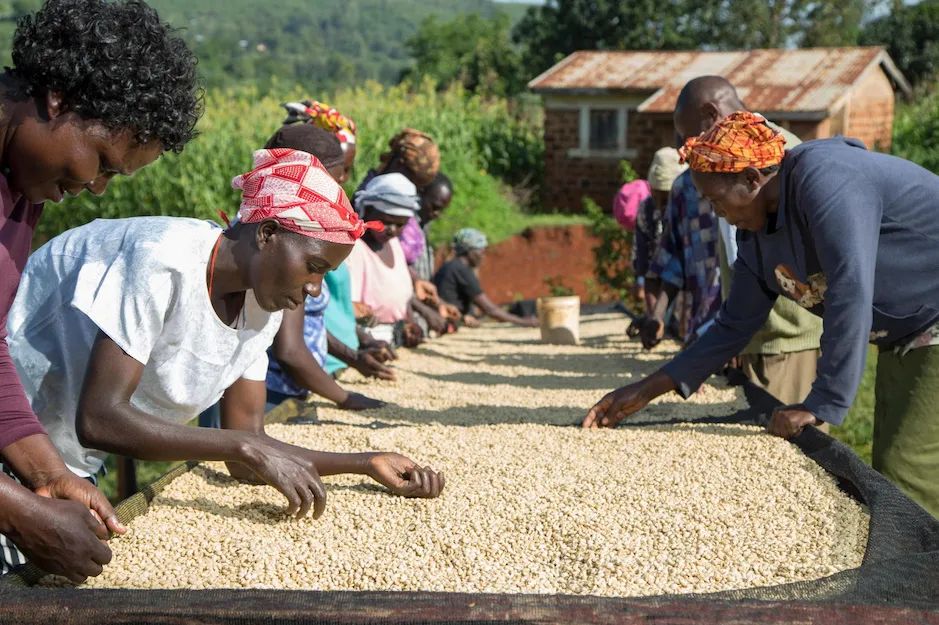
Kenya's history of implementing a grading system for green coffee beans can be traced back to the 1930s. This system mainly classifies beans by size, shape, and hardness, with grades from high to low being AA or AA+, AB, PB, C, E, TT, T. When purchasing, this grading can serve as a reference basis, while flavor performance is also taken into consideration. In the current consumer market, the three most visible grades are AA, AB, and PB.
[Coffee Size Grading]
The AA grade refers to the particle size of green beans and is a common specification in commodity trading. Beans with a screen aperture of 17 mesh or above are typically classified as AA grade (17 mesh corresponds to a screen opening diameter of approximately 6.75 millimeters), with actual sizes falling between 17 and 18 mesh. AB grade corresponds to 15 and 16 mesh.
AA Plus (AA+): Batches with particularly outstanding cup flavor and mouthfeel on top of the AA grade. AA: Screen size 17 to 18 mesh. AB: Screen size 15 to 16 mesh, accounting for the largest proportion of total production. C: Beans with particle size smaller than AB. TT: Lighter beans blown out from AA and AB grade beans by airflow sorting equipment. T: Lighter beans blown out from C grade beans by airflow sorting equipment. E: Elephant Bean, a large mutant bean formed by two merged beans, commonly known as elephant ear bean. UG: Beans that cannot be classified into any of the above standards. PB: Peaberry round bean, distinguished by shape, unrelated to flavor and weight.
[Flavor Grading]
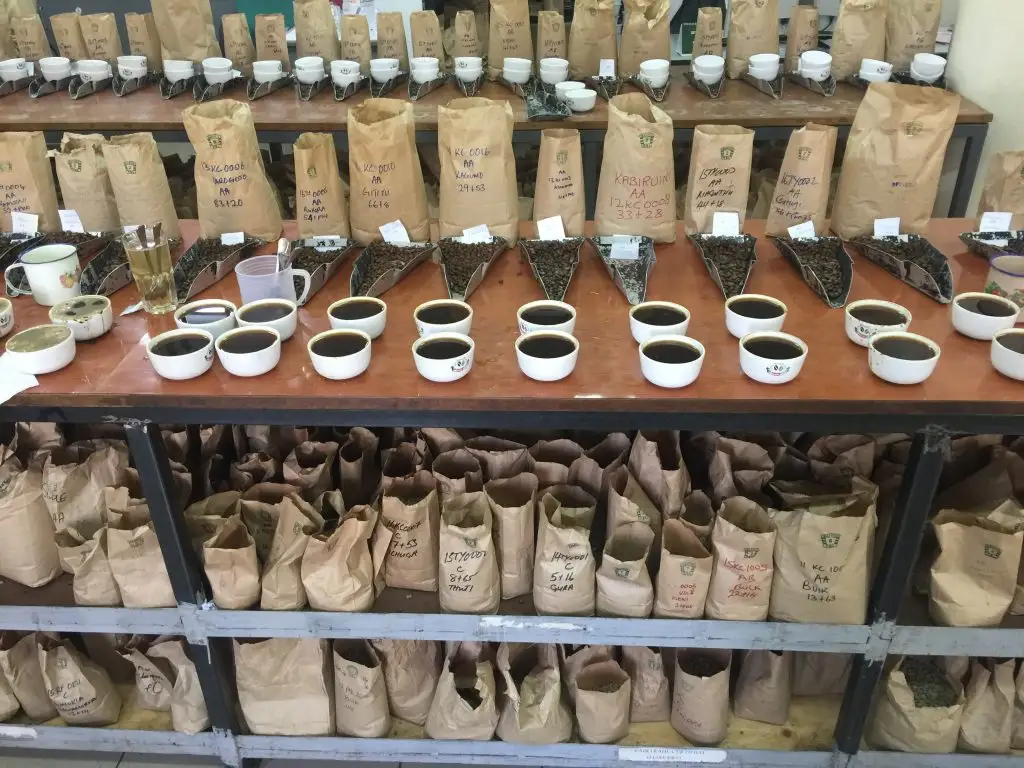
In addition to size grading, Kenya also has a flavor grade assessment divided into three levels: TOP, PLUS, and FAQ, used to select coffees with better cupping performance. The assessment dimensions cover green bean condition (size, color, defects), roasted bean performance, and cupping quality (acidity, body, flavor characteristics, defect condition). In practice, these dimensions are condensed into three items: Acidity, Body, and Flavor, each scored from 1 to 3. For example, if a bean is marked as 1-1-1, it corresponds to TOP AA.
The Kenyan Asaliya coffee beans launched by Front Street Coffee's own roasting belong to the AA grade, originate from the Thika region, are processed using the Kenyan-style 72-hour washing method, and are of the SL28 and SL34 varieties, making them a favorite among many coffee lovers who prefer acidic coffee. If you are trying this Kenyan Asaliya coffee bean for the first time, Front Street recommends starting with a hot pour-over black coffee, which allows you to more fully appreciate the flavor characteristics of Kenyan coffee.
[Brewing Suggestions]
Front Street Coffee (FrontStreet Coffee) takes into consideration that this bean has undergone a light roast, so it tends to use a higher water temperature and pair it with a faster-flow dripper during brewing. The reason for this is the need to use high temperature to extract the bright acidity, while also avoiding over-extraction caused by high temperature, so a faster-flow V60 dripper was chosen. The main parameters are: V60 dripper, coffee-to-water ratio 1:15, dose 15 grams, water temperature 91°C, grind size controlled at 80% passing through a No. 20 standard sieve.
In terms of brewing technique, Front Street Coffee (FrontStreet Coffee) adopts a segmented extraction as served, that is, a three-stage pouring method: first pour 30 grams of water for a 30-second bloom, then pour 125 grams in a circular motion for the second stage, and when the water level drops to the point where the coffee bed is about to be exposed, continue pouring until reaching 225 grams, with a total time of 2 minutes (including the bloom).
Flavor performance of Kenyan Asaliya coffee: on the palate it carries notes of smoked plum and cherry tomato, with intense and substantial acidity, a prominent sweetness in the mid-palate presenting a juicy texture, and a finish with berry aromas and yellow sugar sweetness, accompanied by green tea fragrance.
For professional coffee knowledge exchange and more coffee bean information, please follow Coffee Workshop (WeChat public account: cafe_style)
For more specialty coffee beans, please add the private WeChat of Front Street Coffee (FrontStreet Coffee), WeChat ID: qjcoffeex
The above content is compiled by CoffeeHunters, a coffee news website.


