







What grind setting does a moka pot need to brew well?
A moka pot needs a grind setting finer than filter coffee but coarser than espresso, so the bed resists the steam pressure without clogging the filter. The device relies on pressure from heating rather than gravity. Water goes into the lower chamber, grounds fill the filter basket level without tamping, and the pot goes on the heat until coffee rises into the upper chamber.
The moka pot was invented by Alfonso Bialetti in 1933 and remains common in Italian households. Traditional models are aluminum alloy and take an open flame, while most current moka pot products are stainless steel and work on an induction cooker. Capacities vary, with a compact size for 2 to 3 servings being the usual choice. A medium-fine grind paired with an Italian-style blend gives caramel and chocolate notes.
The moka pot, as an iconic piece of Italian coffee culture, has become the top choice for many coffee lovers starting out thanks to its classic design, ease of use, and wide applicability. Using the moka pot kept in-store at Front Street Coffee as an example, this guide systematically explains the working principle, structural components, coffee bean selection, and grind size recommendations for this device, and demonstrates step by step the complete process from filling water and loading grounds to heating and extraction. The article also specifically recommends Front Street Classic Italian Blend beans, helping you extract a rich, full-bodied coffee with abundant crema and aromas of caramel and chocolate right at home.
For more specialty coffee knowledge, please follow the WeChat public account: Front Street Coffee (FrontStreet Coffee)
The moka pot is a representative symbol of Italian coffee culture and one of the most widely recognized brewing tools worldwide. Its highly distinctive shape, low barrier to entry, and broad range of applications make it the top choice for many people just getting into coffee. Today, Front Street is bringing out the moka pot kept in our store to give everyone a detailed talk about this device and how to use it.
Unlike most brewing devices, the moka pot relies on pressure generated by heating to extract intensely flavored coffee. This device was invented by the Italian Alfonso Bialetti in 1933 and is especially popular in European countries, particularly in its birthplace of Italy, where nearly every household has a moka pot. Traditional moka pots are mainly made of aluminum alloy and can only be heated on an open flame. Most products on the market today, however, are made of stainless steel and can be placed directly on an induction cooker for heated extraction. When purchasing, you can also choose different capacity specifications according to your actual needs, with the most common being the compact size suitable for 2–3 servings.
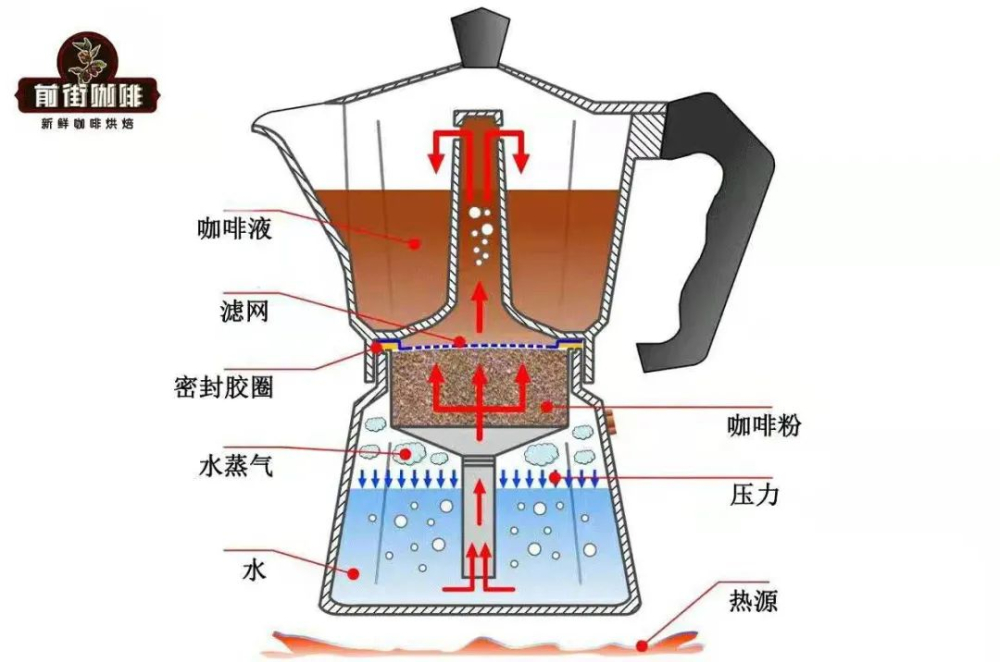
Structurally, the moka pot is divided into upper and lower parts, with three core components: the upper chamber that holds the coffee liquid, the filter basket that holds the coffee grounds, and the lower chamber that holds water. During extraction, the heat source heats the water in the lower chamber to generate steam pressure. When the pressure accumulates to a certain level, the hot water is pushed upward along the channel, passes through the coffee grounds layer to carry out soluble flavor compounds, and continues to rise, ultimately yielding a cup of full-bodied coffee. When drinking, you can dilute it with water or milk according to personal preference.
Before starting extraction, you need to prepare a bag of coffee beans at their optimal flavor period, a gas stove or induction cooker for heating, a grinder for grinding the coffee beans, and water. To showcase the crema performance of moka pot coffee, Front Street Classic Italian Blend (Brazilian coffee + Indonesian Mandheling coffee + Vietnamese coffee) is used here. This bean is medium-dark roasted, and the espresso extracted has a solid body, making it suitable for pairing with milk to make a latte. The heating device is an electric ceramic stove, and the grinder is the EK43s used for store production.
The grind size suitable for a moka pot is usually coarser than espresso powder but much finer than pour-over. If the grounds are too coarse, the contact area between water and coffee grounds is insufficient, which not only leads to incomplete extraction and a thin taste, but also causes spattering due to too little resistance to the upward flow of liquid, posing a scald risk. Front Street recommends a coarseness of EK-43s setting #3-3.5, which feels slightly finer than caster sugar when touched by hand.
1. Pour hot water into the lower chamber, keeping the water level at about 0.5 cm below the pressure relief valve (safety valve). Front Street has actually measured this: the amount of water at this position is about 100 g, while coffee grounds filling the filter basket level is about 20 g, giving a coffee-to-water ratio of roughly 1:5. Note that using cold water will prolong the soaking time of the coffee grounds, easily causing over-extraction and bitterness, so Front Street recommends hot water, which also shortens the extraction time.
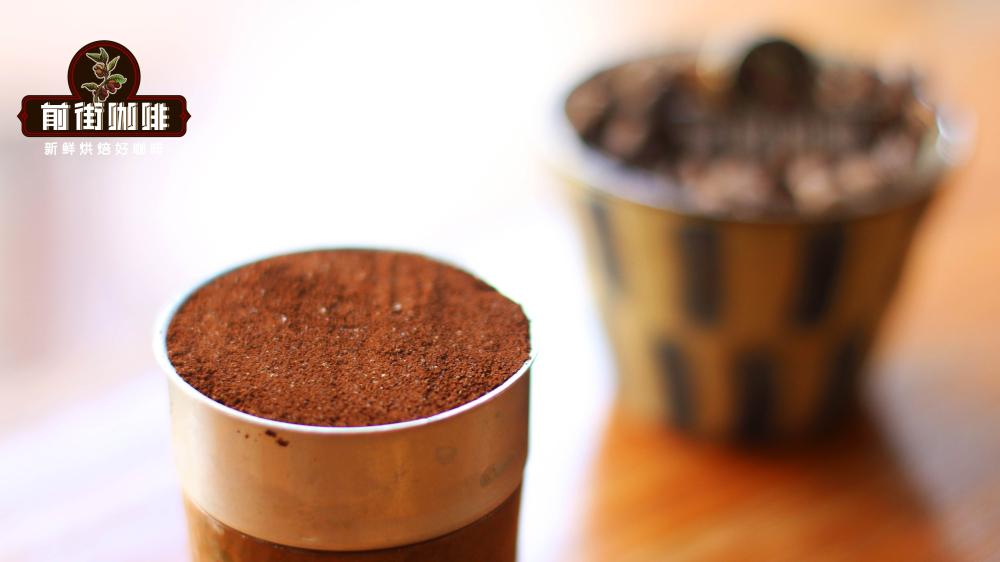
2. The grind size of the coffee grounds needs to be finer than pour-over and coarser than espresso. You can refer to the gap size of the filter basket screen to ensure the coffee particles can be filtered out. Slowly pour the coffee grounds into the filter basket, and gently tap and level with your fingers.
3. Put the filter basket back into the lower chamber, screw the upper chamber on tightly, place it on the electric ceramic stove and begin heating, waiting for the moka pot to heat up.
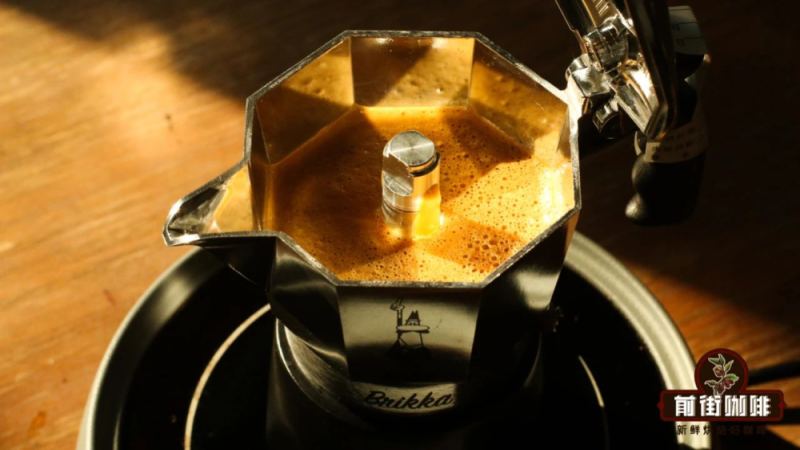
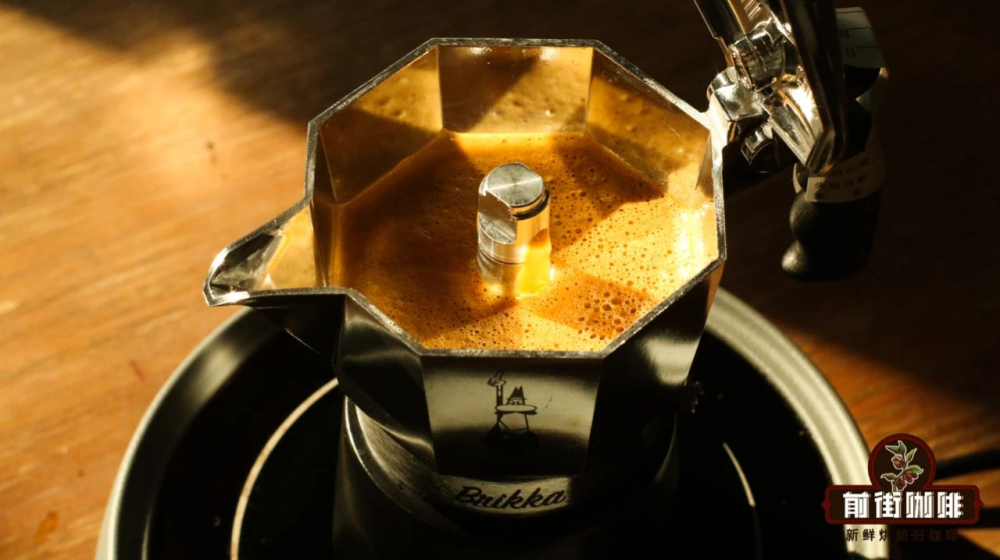
4. When you hear a hissing sound from inside the pot, turn down the heat and open the lid of the upper chamber. At this point, you can see the coffee liquid and crema slowly flowing out.
5. When the coffee liquid in the upper chamber reaches half full, turn off the heat source and move the pot to the table, using the residual heat and pressure inside the pot to continue extracting the remaining coffee liquid. It should be noted that the moka pot is made of metal, so try not to touch the body when it is heated at high temperature to avoid burns.

6. The extracted coffee liquid can be drunk directly; it is very intense and on the heavy side. It can also be mixed with milk or other additions according to personal preference. The moka pot coffee extracted from Front Street Classic Italian Blend beans has obvious caramel aroma, almond and chocolate notes, and a dark cocoa finish. When mixed with heated milk, it presents a dense, sweet, chocolate-cream-like mouthfeel.
If you want the espresso extracted from a moka pot to have a thick layer of crema, Front Street recommends using freshly roasted medium-dark roasted coffee beans. As the roast level deepens, caramelization reactions occur within the beans and generate a large amount of gas, which is released under pressure during extraction. The longer the beans are stored, the more gas is lost, making it harder to extract rich crema. The coffee beans shipped by Front Street are all freshly roasted within 5 days, making it convenient for everyone to enjoy them during their optimal flavor period.
The above content is compiled by CoffeeHunters, a coffee news website.


