








How do washed and natural geisha coffee beans differ?
Washed and natural processing push geisha coffee beans in different directions. Washed lots keep the variety's floral aroma, tea-like clarity, and bright acidity, while natural lots add fermented fruit, heavier sweetness, and a fuller body. Panama Hacienda La Esmeralda's Red Label and Green Label are two common reference points when comparing those profiles side by side.
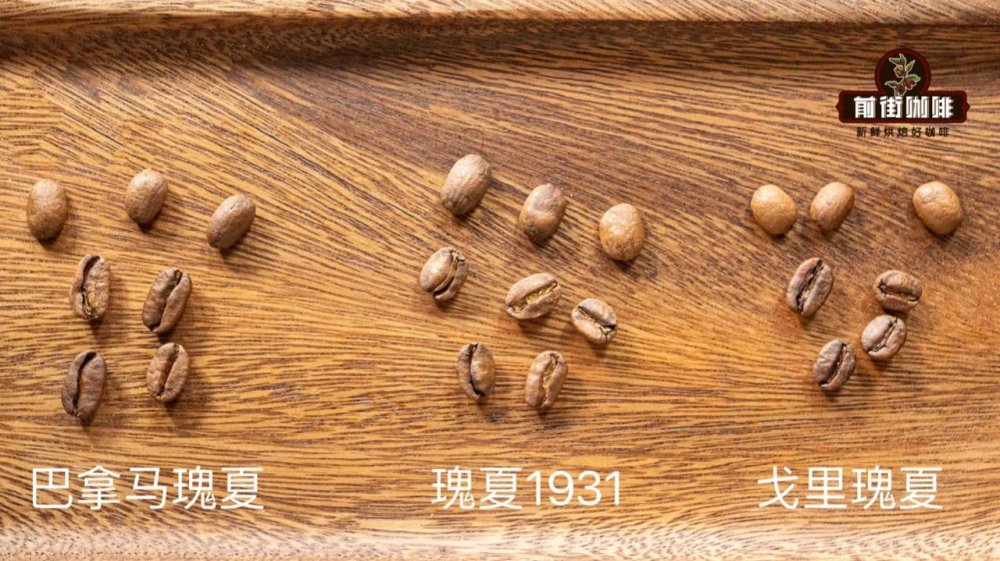
Geisha was found in Ethiopia's Geisha forest in 1931, moved through Kenya, Uganda, and Tanzania by 1936, reached Costa Rica in 1953 and Panama in 1970, and gained wide attention after La Esmeralda separated it in 2003 and won the 2004 BOP. The variety grows in Ethiopia, Panama, Costa Rica, Colombia, and Guatemala, keeping its floral character but shifting in flavor by region.
The Geisha variety has always carried an aura in the coffee world, and many friends who are just getting into specialty coffee hear its name before they taste it. At Front Street Coffee, customers often pull the baristas aside to ask what exactly makes Geisha so special. This article starts with the origin of the variety, sorts out the flavor differences that the two traditional processing methods—washed and natural—bring to Geisha, specifically compares the characteristics of Panama Hacienda La Esmeralda's Red Label and Green Label as two representative beans, and finally includes Front Street's brewing parameters and technique to help everyone understand this bean more completely.
At Front Street Coffee, the Geisha variety always attracts customers' attention. Many newcomers to the coffee rabbit hole have never tasted the bean but have heard its name first, sitting at the bar and pulling Front Street aside to learn about the characteristics of this Geisha bean, and Front Street's baristas patiently answer every customer's questions.
The Geisha coffee beans Front Street carries include those from Ethiopia, Panama, Costa Rica, Colombia, Guatemala... Geisha grown in each region has a different flavor, but the floral aroma characteristic of Geisha is always expressed no matter where it is grown. With the development of specialty coffee, more and more processing methods are being used on Geisha coffee beans. This time Front Street Coffee will talk about how Geisha coffee beans processed by the two traditional methods, natural and washed, differ.
Geisha Variety
Geisha refers to a coffee variety, called "Geisha/Gesha" in English, and it happens to share the same name as the Japanese word "geisha," so some people also call the Geisha variety "geisha."
The Geisha variety was discovered in 1931 in the Geisha forest of Ethiopia. After that, Geisha was sent to the coffee research institute in Kenya, introduced to Uganda and Tanzania in 1936, to Costa Rica in 1953, and to Panama in 1970. At first, not many people paid attention to Geisha, until Panama Hacienda La Esmeralda separated it from other varieties in 2003 and became the champion of the BOP competition in 2004. Only then did the Geisha variety formally enter everyone's view.
Although the flavor of the Geisha variety is exquisite, such elegant flavor comes from a specific growing environment. The Geisha variety is very picky about its growing environment and requires cultivation in areas with higher altitude, shade from clouds and mist or plenty of shade trees, and fertile soil. High-altitude Geisha coffee has obvious floral aroma and refined, elegant fruit acidity, and such an elegant flavor is also one of the reasons it has swept the world.
What is the difference in flavor expression between washed and natural Geisha?
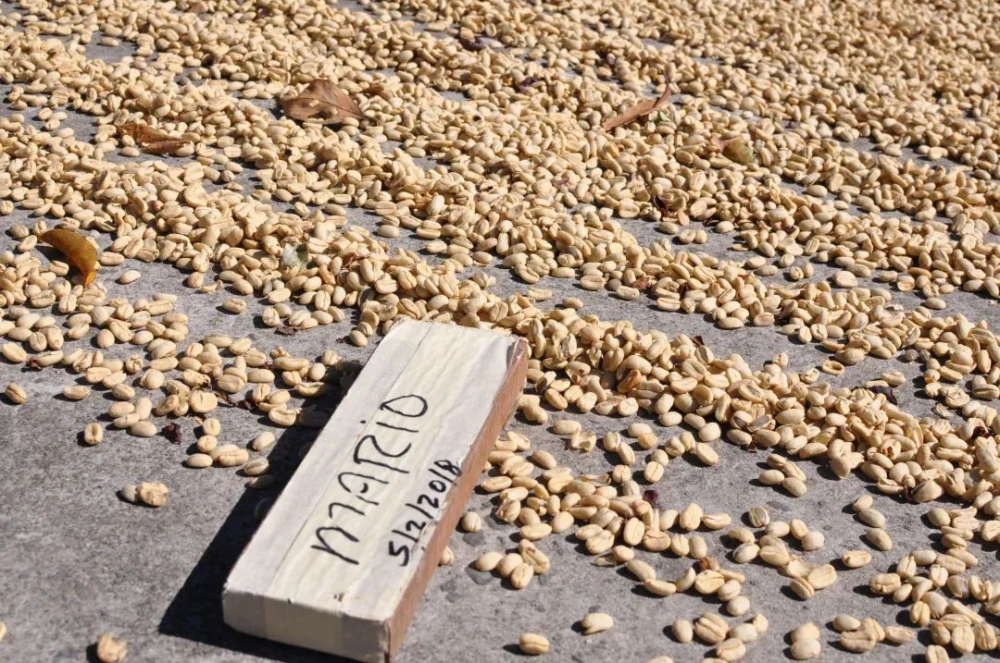
The washed process has more fermentation steps, and it is also cleaned more thoroughly, so the mouthfeel is refreshing and the acidity increases. As for natural, because part of the fruit pulp is retained, it has more berry flavors, and the mouthfeel is stickier and fuller. Before drying, the washed process removes the sticky pulp on the coffee beans, which ensures that during drying there will not be excessive fermentation or more mold. The cost of the washed process is higher than that of the natural process.
The differences between the two are:
1. Under the same processing, natural beans carry an obvious dry red wine aroma, while washed beans have a citrus-honey fruit aroma.
2. Both brews have obvious fruity acidity, similar to lemon and citrus fruits, but natural beans are fuller. The obvious red wine note in the dry aroma of natural beans is not very obvious in the brewed cup.
3. The acidity of the washed process is brighter, like citric acid, and the mouthfeel is more refreshing, with more obvious citrus aroma; natural is fuller, the so-called roasted bitterness of coffee is heavier, and the mouthfeel is much richer.
Washed Geisha coffee has brighter acidity, with obvious jasmine aroma, bright citrus acidity, and sweet-and-sour berry notes. Washed Geisha drinks clean, refreshing, and fresh. Natural Geisha coffee has an obvious rose aroma and a berry juice sensation, and the fermented quality makes the coffee smooth and rich in the mouth.
Representative coffees: Panama Hacienda La Esmeralda Natural Red Label Coffee & Hacienda La Esmeralda Washed Green Label Coffee
Hacienda La Esmeralda Red Label Geisha
Made with the highest-quality Geisha from Hacienda La Esmeralda, also called Esmeralda Special. Esmeralda Red Label is Geisha coffee grown at an altitude of 1,600–1,800 meters with a cupping score above 90 points, and it is also Hacienda La Esmeralda's highest-quality Geisha bean. Front Street needs to note here that auction Geisha is also produced from Red Label plots; because Hacienda La Esmeralda selects them to participate in the auction, there is no clear distinction in flavor either. Front Street's Esmeralda Red Label is selected from the Jaramillo plot, and compared with many light-roasted coffee beans it has richer floral fragrance and diverse complex fruit sweetness and acidity.
Only the Geisha lots that Hacienda La Esmeralda puts up for bidding in its own independent auction, from divided plots, are auction Red Label. However, there is now also non-auction Red Label on the market, which is actually Geisha selected from the same plots that did not go to auction and then circulated on the market; the variety quality is consistent, with differences only shown in the selling price.
Hacienda La Esmeralda Green Label Geisha
Private Collection, commonly known as Green Label, is not an independent competition lot; it is a Geisha variety grown without participating in auctions but still of excellent quality. It is selected from cultivation at an altitude of 1,600–1,800 meters, mainly a blend of micro-lots from different plots such as Jaramillo and Canas Verdes. Because it uses a blended-bean model and no detailed plot designation is noted, sometimes Green Label and Red Label can be very similar in flavor, but the next release may also be different.
How to brew the two Hacienda La Esmeralda Geisha coffees
When Front Street Coffee roasts Hacienda La Esmeralda Geisha coffee, in order to preserve Geisha's rich floral aroma, berry juice sensation, and honey sweetness, Front Street uses a medium-light roast to highlight Geisha's characteristics. For brewing medium-light roasted beans, 90–91°C is recommended; using a slightly higher water temperature can extract the aromatic substances and acidity of light-roasted beans (fruity and floral aromas, fruity acidity), because medium-light roasted beans are harder, and increasing the water temperature can increase the extraction efficiency from the coffee grounds, avoiding unpleasant flavors such as sharp acidity.
Front Street brewing parameters:
Water temperature: 91–92°C
Coffee dose: 15g
Coffee-to-water ratio: 1:16
Grind size: fine granulated sugar size (grind to 80% passing a No. 20 sieve)
Front Street uses V60 for brewing. The V60 cone-shaped dripper has a relatively large opening, and together with its unique spiral curved ribs, air is more easily expelled, thereby improving extraction quality. The mouthfeel may not be full enough, but the sweetness, acidity, and obvious aroma brought out by its high concentration are one of its major features.
Front Street brewing technique: In the first stage, pour 30 grams of water for a 30-second bloom, then pour 95 grams (the electronic scale shows about 125 grams), finishing the pour at about 1 minute. When the water level drops to 2/3 of the coffee bed, pour the remaining 100 grams (the electronic scale shows about 225 grams), finishing the pour at about 1 minute 40 seconds. Dripping is completed at 2 minutes 03 seconds; remove the dripper and extraction is complete.
Natural Red Label brewing flavor: Bright rose, citrus aroma, brown rice, berries, apricot, complex fruit, honey, with a thick juice sensation, rich flavor layers, and obvious sweetness.
Washed Green Label brewing flavor: Rich jasmine aroma on entry, high sweetness, citrus, berries, juice sensation, cream, green tea, orange peel, cantaloupe; the overall flavor layers are rich, with a lasting floral and citrus finish.
The above content is compiled by CoffeeHunters, a coffee news website.


