







What Makes Mandheling Coffee Taste Herbal and Woody?
Yes, Mandheling coffee is served as black coffee, meaning a pure brew with no sugar, milk, or other additives. It comes from northern Sumatra, mainly Aceh and North Sumatra around Lake Tawar and Lake Toba, where the tropical rainforest climate shapes its woody, herbal, and spicy notes. Mandheling, also called Sumatra coffee, was a benchmark of quality before Blue Mountain became widely known.
The flavor starts with the crop itself. Variety, climate, altitude, soil, and field management all feed into the cup, and processing and roasting should preserve those original traits. Green bean handling matters too: Golden Mandheling reflects PWN's strict screening standards, and medium-dark roasting plus careful brewing parameters help bring out the herbal, plant-like fragrance the region is known for.
Is Mandheling coffee a type of black coffee? Where does its unique herbal aroma come from? Starting from the definition of black coffee, this article will systematically review the producing regions, variety evolution, and wet-hulling process of Mandheling coffee, and deeply analyze how the tropical rainforest climate of Sumatra shapes Mandheling's signature woody, herbal, and spicy notes. It will also introduce PWN's strict screening standards for Golden Mandheling, as well as Front Street Coffee's practical recommendations for medium-dark roasting and brewing parameters, taking you through a comprehensive understanding of this classic coffee's past and present.
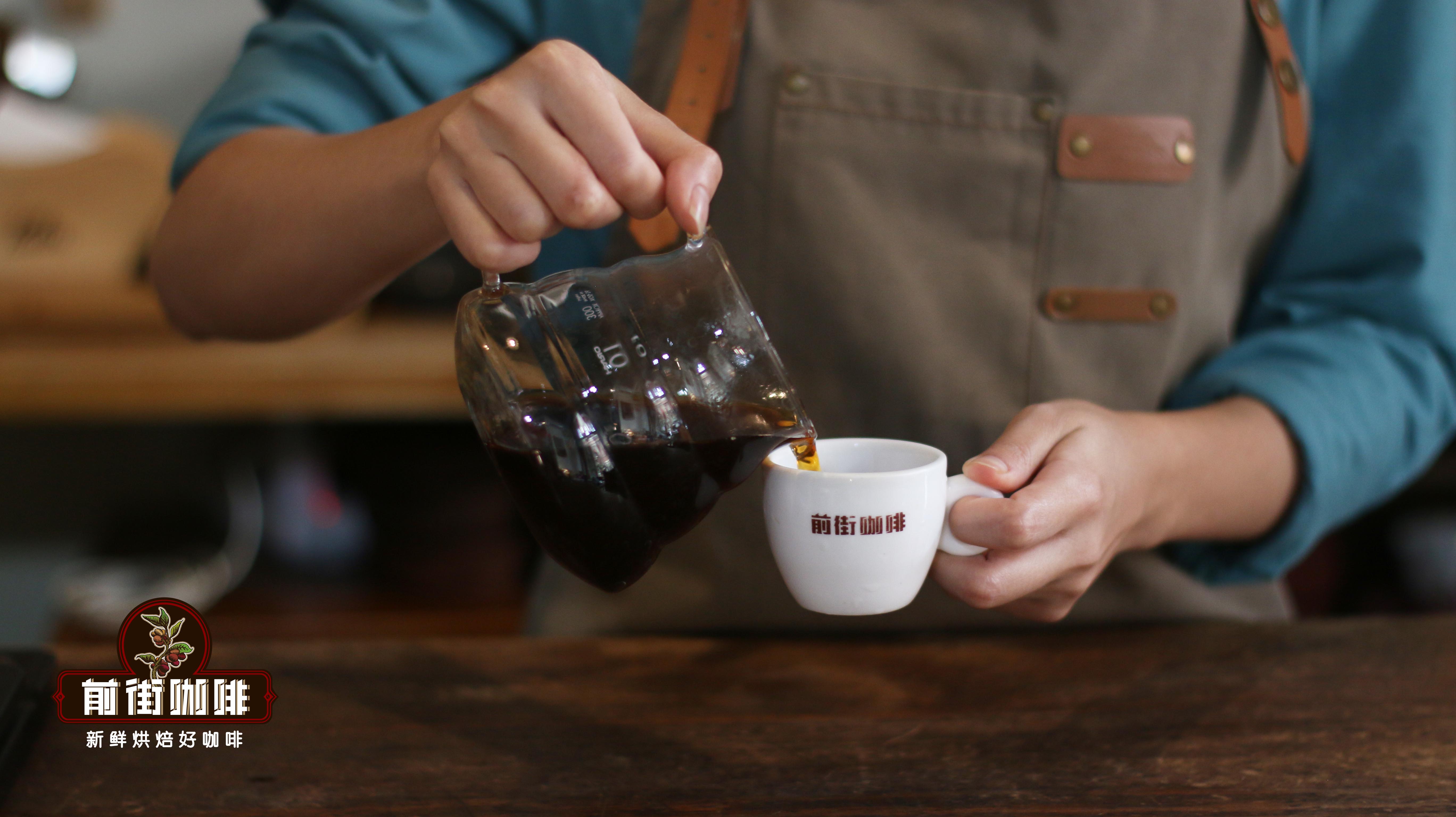
So-called black coffee refers to a pure coffee beverage with no sugar, milk, or any other additives. Precisely because of this, black coffee allows people to more genuinely perceive the aroma, sweetness, body, acidity, and bitterness in coffee. The most commonly served form of black coffee at Front Street's stores is pour-over, which presents the unique flavor expressions of specialty coffee beans from different producing regions. In an era before Blue Mountain coffee became widely renowned, a Mandheling produced in Indonesia was once the benchmark of quality coffee in the minds of countless coffee lovers.
Mandheling is also known as Sumatra coffee.
The most impressive thing about Mandheling coffee is that herbal, plant-like fragrance. Coffee, like all kinds of fruits and vegetables, is essentially an agricultural crop, and its flavor is always comprehensively affected by factors such as variety, climate, altitude, soil, and field management. It is the truest reflection of varietal characteristics and local terroir. The subsequent green bean processing and roasting stages should preserve, restore, and showcase these original flavors as completely as possible. The reason Mandheling can develop such a distinctive flavor profile is inseparable from the mysterious island of Sumatra.
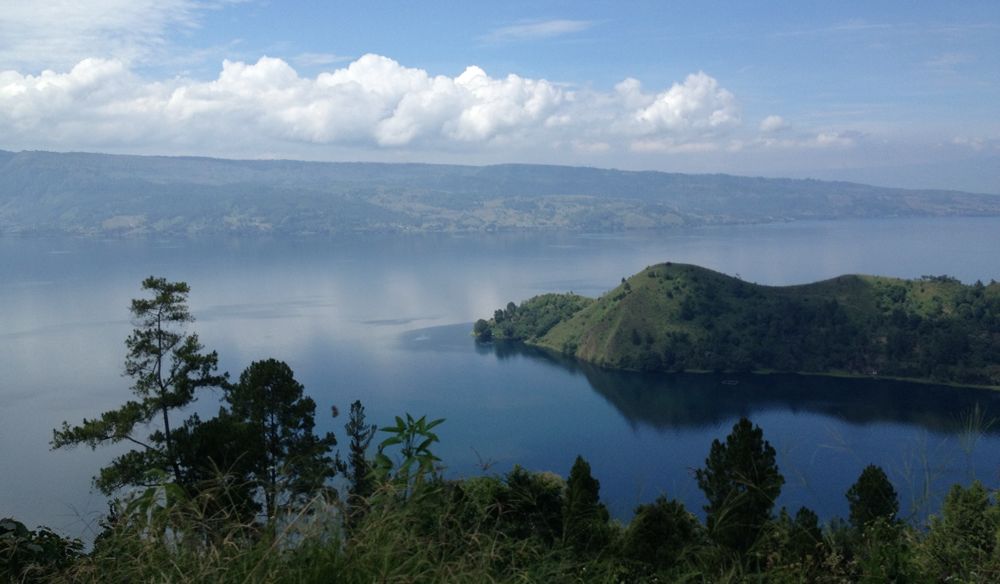
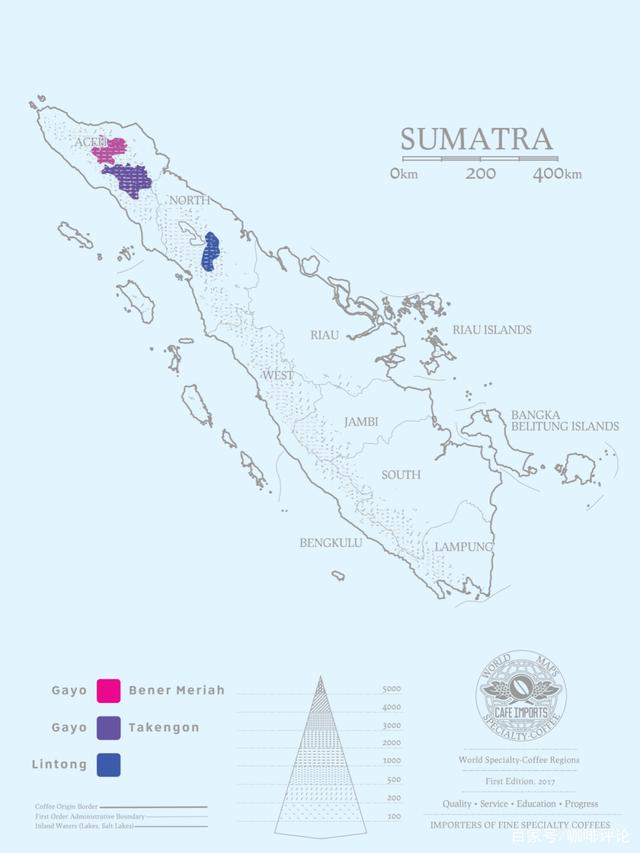
Outstanding-quality Mandheling coffee beans are produced on the Indonesian island of Sumatra, with the northern region being the most famous, covering Aceh Province in the northwest and North Sumatra Province in the center, mainly concentrated around the two well-known lakes, Lake Tawar and Lake Toba. The tropical rainforest climate brings abundant rainfall to Sumatra, with extremely high air humidity and clouds and mist lingering among the forests year-round. It is precisely this environment that gives local coffee trees their rich herbal character.
Sumatra is divided into eight provinces, but only the higher-altitude Aceh Province and North Sumatra Province engage in large-scale Arabica coffee cultivation. Because it is located in a tropical rainforest region, Sumatra's mountain forests are often shrouded in clouds and rain, adding a touch of mystery to the island. Local coffee farmers plant coffee trees around the two major volcanic lakes, Lake Tawar and Lake Toba. The Gayo Mountains around Lake Tawar possess ideal conditions for coffee growing. Organic cultivation is widely adopted there, and together with a long history of cultivation, this makes the coffee produced in the region more outstanding in both quality and yield. As a result, many green bean merchants place special importance on this producing area, including the well-known local Pwani Coffee Company (PWN).
Mandheling's coffee varieties
The coffee varieties grown in Indonesia are quite diverse. Initially, the variety planted in Indonesia was Typica, recognized for its excellent flavor, introduced by the Dutch at the end of the seventeenth century and locally known as Bergendal, Sidikalang, and so on. However, by 1877, almost all coffee trees in Indonesia suffered severe leaf rust, and large areas of Typica plants withered one after another.
To respond to this crisis, the Indonesian government introduced more disease-resistant Robusta varieties from Africa and elsewhere. To this day, Robusta remains Indonesia's main cultivated variety. To further increase coffee production, Indonesia continued to introduce various disease-resistant varieties from other countries, including Caturra, Catimor, Timor, Typica, S288, S795, Sidikalang, and others. Among them, the Robusta-Arabica hybrids Tim Tim, Bor Bor, and the Catimor series Ateng, because of their excellent disease resistance and their adaptation to Sumatra's terroir, display a unique cedar-like note. At present, Ateng and Tim Tim already account for 70% of Sumatra's total coffee. Front Street's Indonesian Lintong Mandheling daily-drink beans are a blend of Tim Tim and Ateng, while Golden Mandheling is selected from Ateng.
The flavor of wet-hulled Mandheling
Friends who often drink Mandheling coffee will certainly be familiar with the wet-hulled process. Wet-hulling takes much less time than the washed method. Traditional washed processing requires 1 to 3 weeks, while wet-hulling can complete the entire process in just a few days. In wet-hulling, the skin and pulp of the coffee fruit are first removed. After a short fermentation, the beans are dried. While the beans are semi-dry, the parchment layer is removed, and then the later drying stage continues. When the moisture content drops to 12%, the beans can be bagged and sorted by grade.
Although wet-hulling appears quick and time-saving, without strict quality control it is highly prone to moisture and mold in Indonesia's hot and humid environment. But besides Sumatra, Sulawesi in Indonesia and Papua New Guinea also widely adopt this processing method. The reason is that Indonesia has a tropical rainforest climate with air humidity as high as 70% to 90%, making it impossible to rely on long sun-drying to dry green coffee beans. In addition, the cost of washed processing is relatively high, so farmers had no choice but to develop this semi-washed processing method. Although the time required for each stage is greatly shortened, the green beans after removal of the parchment layer still absorb moisture from the hot and humid air. Therefore, the resulting Mandheling coffee carries a deep, muffled aroma of wood, herbs, and spices, which has also become a typical flavor marker of Indonesian producing regions.
The wet-hulled process has brought Indonesian coffee a distinctive flavor profile, but at the same time, the rough processing methods also lead to a relatively high defect rate in coffee beans. To reach Indonesian export grade, screening is necessary to remove irregular beans. Among them, PWN has achieved the utmost in screening. PWN purchases Mandheling green beans of 18 screen size and above, with fewer than 3 defective beans in a 300-gram sample, which is the G1 grade, the highest grade of Indonesian green beans. After that, it strictly follows standards with 1 mechanical sorting plus 3 manual hand-sortings to remove defective beans, ensuring that the Mandheling coffee beans are uniform in color, shape, and size. Therefore, Front Street's PWN Golden Mandheling tastes cleaner and more transparent, with more obvious body and sweetness. At the same time, because PWN has long registered the English trademark "Golden Mandheling," only Mandheling produced by PWN can be called "Golden Mandheling."
In order to present the classic Mandheling flavor, Front Street uses a medium-dark roast to erase Mandheling's excessive acidity and enhance its body and balance. During cupping, Front Street perceived that Golden Mandheling carries the aromas of spices, herbs, and pine wood, as well as the rich, mellow bittersweet flavors of caramel, nuts, and pure dark chocolate, accompanied by a clean, fruity sweetness in the finish. It is layered and changeable, full-bodied and clean, with excellent balance.
Flavor characteristics of medium-dark roasted Golden Mandheling coffee
The flavor descriptions for every Front Street coffee are based on freshly roasted beans. If the coffee beans have been stored for more than a month, part of the aroma may already have been lost, making it difficult to reproduce the original performance during brewing. Front Street deeply understands the importance of freshness, so it ensures that only coffee beans freshly roasted within 5 days are shipped, allowing everyone to enjoy the fullest period of peak flavor upon receipt.
When brewing medium-dark roasted coffee beans, Front Street uses brewing parameters different from those for light-roasted coffee beans, so that the coffee presents a richer chocolate character. Medium-dark roasted beans undergo more caramelization reactions than light-roasted beans, so they more easily release large-molecule bitter and roasted substances. To avoid extracting too many off-flavors, Front Street appropriately lowers the water temperature. The brewing water temperature for light-roasted coffee is 91 to 93°C, while for medium-dark roasted coffee beans Front Street recommends 87 to 88°C. The grind size is also made coarser, paired with a Kono dripper for pulse extraction. The Kono dripper has few ribs and they are located at the lower end. The filter paper clings tightly to the dripper wall, which can restrict airflow, lengthen the contact time between water and coffee grounds, and allow the coffee grounds to be fully extracted, thereby enhancing the body.
Dripper: Kono dripper Water temperature: 88°C Dose: 15 grams Coffee-to-water ratio: 1:15 Grind size: 70-75% passing rate on a No. 20 standard sieve
Front Street uses pulse extraction. First use 30 grams of water for a 30-second bloom, then pour in a small stream in circles until 125 grams for the pulse, and when the water level drops and is about to expose the coffee bed, continue pouring until 225 grams and stop. When the water level drops again and is about to expose the coffee bed, remove the dripper. The extraction time is 2 minutes 00 seconds, starting from the beginning of the bloom.
For professional coffee knowledge exchange and more coffee bean information, please follow Coffee Workshop (WeChat public account: cafe_style)
For more specialty coffee beans, please add the private WeChat of Front Street Coffee (FrontStreet Coffee), WeChat ID: qjcoffeex
The above content is compiled by CoffeeHunters, a coffee news website.


