







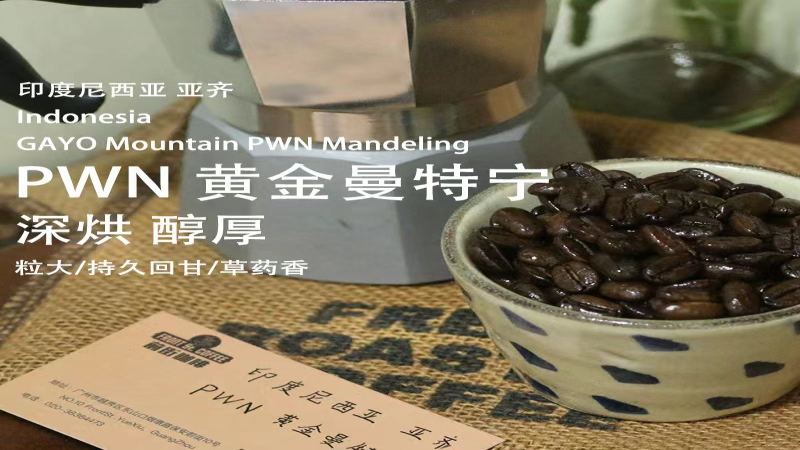
What sets Golden Mandheling apart from other Mandheling?
Golden Mandheling is PWN's trademarked top-tier Mandheling, and the name applies only to beans that buyer produces. It comes from the Gayo Mountain area of Aceh, Sumatra, at 1,100 to 1,600 meters, using the Ateng variety. Authenticity is checked through the PWN logo on the jute bag plus a PWN-signed certificate of origin.
Lintong Mandheling is positioned as a daily drinker by comparison. Indonesian beans are wet-hulled, which shapes the nut, dark chocolate, spice, and caramel notes that appear under medium-dark roasting, and G1 grading with triple hand sorting plus density and color sorting sets quality apart. Brewing in a KONO dripper with three-stage pouring parameters brings out that sweetness and body.
Mandheling is the representative coffee of Indonesia, but with so many brands and grades on the market, how do you choose an authentic Mandheling with consistent quality? This article, from the perspective of Front Street Coffee, sorts out the origin background, variety characteristics, and the flavor logic brought by the wet-hulling process of PWN's Golden Mandheling, and compares it with the daily-drinker positioning of Lintong Mandheling. It also explains in detail Indonesia's G1 green bean grading, triple hand sorting, and density and color sorting standards, as well as the cupping performance of nut, dark chocolate, spice, and caramel notes under medium-dark roasting, and finally includes the three-stage brewing parameters for the KONO dripper, helping coffee enthusiasts build a systematic framework for selecting and tasting Mandheling.
When it comes to Mandheling coffee beans, the first thing Front Street recommends is PWN's exclusive "golden signboard"—Golden Mandheling. In this article, Front Street wants to talk with everyone about what exactly makes Front Street Golden Mandheling different from ordinary Mandheling.
Front Street PWN Golden Mandheling Carefully selected from premium growing regions
PWN is a well-known local green bean buyer in Indonesia, and Golden Mandheling is precisely the top-tier product they have selected. There are all kinds of Mandheling products on the market, but PWN has already registered the English name "Golden Mandheling" as its own trademark, so in the true sense, Front Street Golden Mandheling can only be the one produced by PWN. To identify authentic Golden Mandheling, you can check whether the green bean jute bag bears the PWN logo, and then compare it with a certificate of origin signed by PWN. Front Street has displayed both of these items at the Dongshankou store.
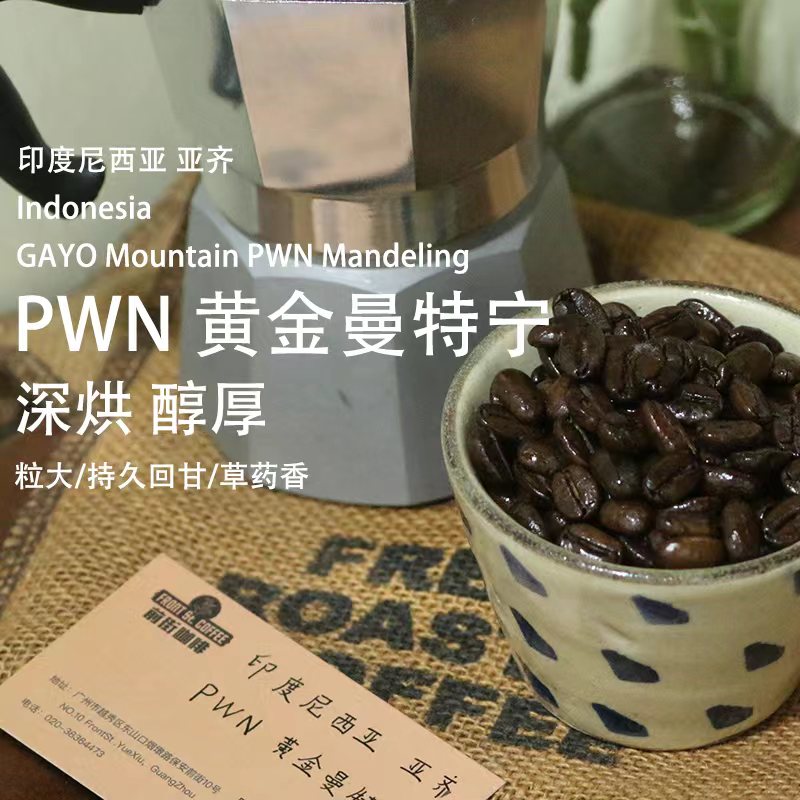
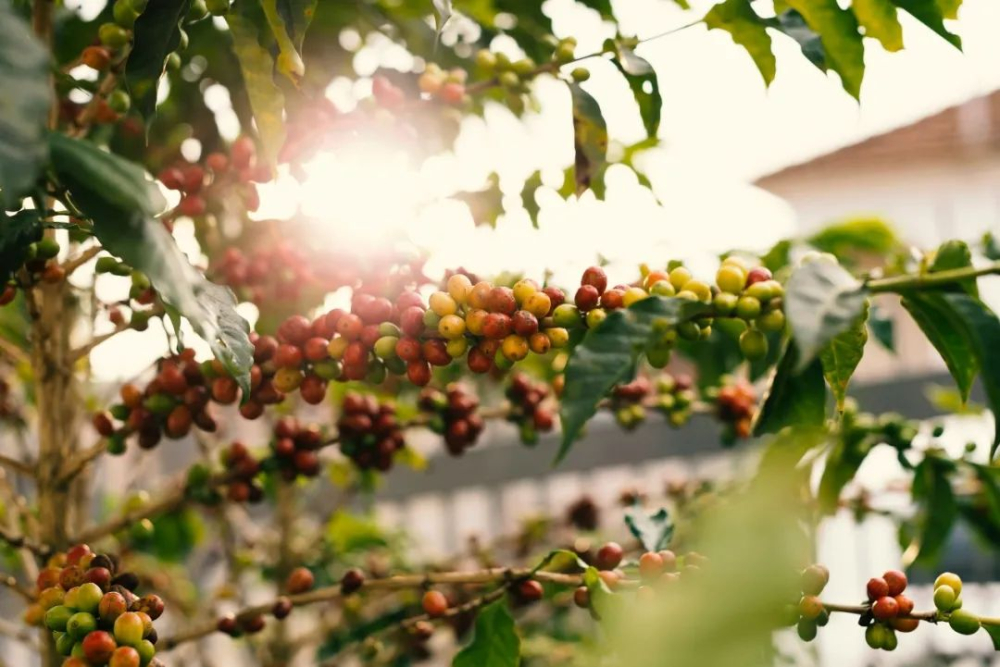
This Front Street PWN Golden Mandheling that Front Street has obtained comes from the Gayo Mountain area in Aceh Province at the northernmost tip of Sumatra, and the variety chosen is Ateng. Aceh Gayo is located at the northernmost end of Sumatra, and coffee cultivation is mainly concentrated in the town of Takegon and the hillsides around Lake Tawar. The average altitude of the growing area is between 1,100 and 1,600 meters, and the coffee quality has always been excellent, but in earlier years the political situation was unstable, making it very difficult to export coffee from this area. Recently the situation has eased, and coffee cultivation in Aceh has also developed, with quality even superior to that of the Lintong region.
Ateng is what we commonly call Catimor, a descendant of the Bourbon variant Caturra crossed with Timor. It has strong vitality and can maintain relatively high coffee yields, so many local coffee farmers are willing to grow it. In many countries, Catimor is often criticized by the industry for flavor defects. But grown in Sumatra's mysterious flavor environment, and combined with the local unique wet-hulling process, Catimor actually performs more brilliantly in cupping, with quite prominent woody notes and a full-bodied mouthfeel.
The flavor bestowed by the wet-hulling process
Indonesia's wet-hulling process is a processing method farmers were forced to adopt to adapt to the island's tropical rainforest climate. The island is hot and humid year-round, and typhoons are commonplace. In such an unstable environment, coffee farmers can only compress the drying time to prevent the coffee beans from becoming moldy and deteriorating in the humid air. The wet-hulling process first removes the skin and pulp of the coffee fruit, then after a short fermentation it is sun-dried, and when the beans are semi-dry the parchment layer is removed, then drying continues until the moisture content drops to 12%.
Because every step is completed in an environment with 70–90% humidity, and the parchment layer has already been removed before the final drying, the "exposed" green beans easily absorb moisture from the air, and the resulting coffee has more of a stuffy, muted aroma of wood, herbs, and spices. Front Street Lintong Mandheling also uses the wet-hulling process; after roasting, the acidity is reduced, the body is enhanced, and the grassy and spicy notes are still retained, carrying the flavor profile unique to Indonesian Mandheling. Front Street also classifies it in the high-cost-performance daily-drinker bean series, launched in 100-gram small packaging, so everyone can taste the flavor of Southeast Asian coffee.
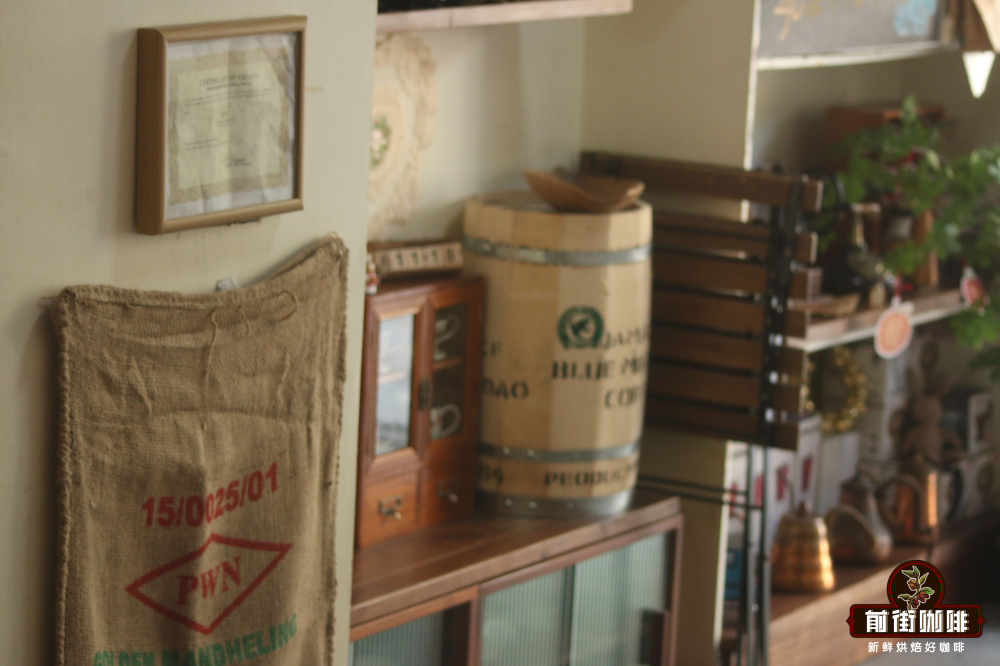
Repeatedly hand-sorted Front Street PWN Golden Mandheling coffee
Looking at the green bean jute bag of Front Street Golden Mandheling, it is printed with "Triple pick" and "GRADE 1," indicating that it belongs to the highest grade of Indonesian green beans and has undergone triple hand sorting during production.
Indonesian green coffee bean grading mainly depends on the number of defective beans, with screen size as secondary. General quality requirements are no live insects, no moldy or rotten-smelling beans, a maximum moisture content of 12.5%, and an impurity rate of less than 0.5%. According to the defect rate, it is divided into six grades, and the highest grade G1 requires fewer than 11 total defective beans in a 300-gram sample. Front Street Lintong Mandheling in Front Street's daily-drinker bean series is G1, uses the wet-hulling process, and presents the classic Indonesian Mandheling flavor.
PWN, which pursues the utmost in sorting, will subject G1-grade Mandheling to multiple rounds of strict selection, pressing the defect rate to the lowest possible level. In addition, before packaging, PWN will also put the green beans into a machine for density and color sorting, making Golden Mandheling coffee uniform and translucent.
How does Front Street PWN Golden Mandheling perform in flavor?
In order to present Mandheling's classic full-bodied flavor, Front Street's roaster chose a somewhat dark roast, allowing the aromas of dark chocolate and caramel to burst forth more fully. Mandheling coffee beans have the fullest aroma after entering their optimal tasting period, and Front Street believes that brewing with freshly roasted coffee beans is very important. The aromatic substances in coffee beans accelerate their loss over time, directly affecting the final flavor. Front Street hopes every customer can drink fresh, good coffee, so it only ships roasted beans freshly baked within 5 days, and after adding shipping time, they are just right to enjoy upon receipt.
Front Street's coffee brewing parameters are all determined based on the characteristics of the coffee beans, the degree of roasting, and the flavor profile. Each time a coffee bean is launched, Front Street evaluates it through cupping. In cupping, Front Street PWN Golden Mandheling presents flavors of nuts, dark chocolate, spices, pine wood, and caramel, with relatively low acidity and a high body.
The baristas at Front Street Coffee (FrontStreet Coffee) choose the KONO dripper to brew this kind of full-bodied coffee. Compared with the V60, the KONO dripper has a smooth curved surface, weaker exhaust effect, and straight ribs occupying only one quarter of the dripper, allowing the coffee bed and hot water to form an immersion extraction and making the taste rounder and fuller. The KONO dripper is also suitable for beans such as Front Street Brazil Queen's Estate Coffee and Front Street Jamaica Blue Mountain No. 1 Coffee.
Brewing water temperature: 87–88°C
Coffee grounds: 15 grams
Coffee-to-water ratio 1:15
Grind size: medium-coarse grind (70% passing rate on China standard No. 20 sieve)
The brewing method uses three-stage pouring. Dividing it into three stages can better express the full-bodied mouthfeel and caramel sweetness of Front Street Golden Mandheling.
For the first stage, pour 30 ml for blooming. This pour fully wets the coffee grounds and allows degassing, so that the coffee's flavor substances can be better extracted afterward.
For the second stage, pour 100 ml. This stage mainly washes out all of Mandheling's golden foam and raises the coffee bed.
For the final stage, gently pour 95 ml in the center, which can increase the coffee's sweetness.
For professional coffee knowledge exchange and more coffee bean information, please follow Coffee Workshop (WeChat public account: cafe_style)
For more specialty coffee beans, please add the private WeChat of Front Street Coffee (FrontStreet Coffee), WeChat ID: qjcoffeex
The above content is compiled by CoffeeHunters, a coffee news website.


