







How Does Processing Shape Yirgacheffe Flavor?
Yirgacheffe is known for citrus acidity and floral aroma, and natural processing pushes those notes toward riper tropical fruit. The washed method, by contrast, removes the pulp before drying, so the region's own character reads more clearly: lemon and citrus, white flowers, a bright delicate body and a clean cup without off-flavors.
Grading under the ECX system separates quality tiers such as G1, and high altitude with long sunlight hours helps the fruit accumulate sweetness. Lots from cooperatives like Red Cherry and Konga are often given a medium-light roast so the acidity stays the focus, which is the reference point for understanding Aricha Natural G1.
Yirgacheffe is renowned for its signature citrus acidity and floral aromas, while natural processing gives the flavors of this region a richer tropical fruit character. This article starts with the differences between washed and natural processing, outlines the specific standards of the G1 grade under the ECX grading system, and explains how high altitude and long sunlight hours contribute to the full sweetness of natural coffee. It also combines the Red Cherry and Konga cooperative from the Front Street Coffee bean list to introduce how medium-light roasting serves the expression of the acidity-driven theme, providing a reference for coffee lovers to understand the flavor logic of Aricha Natural G1.
The reason coffee from Ethiopia's Yirgacheffe region is so widely recognized is that the beans produced there often carry bright citrus fruit acidity, an elegant aroma reminiscent of flowers, and a finish that reveals almond-like aftertaste and a tea-like sweetness. This unique flavor profile is largely thanks to the washed processing method.
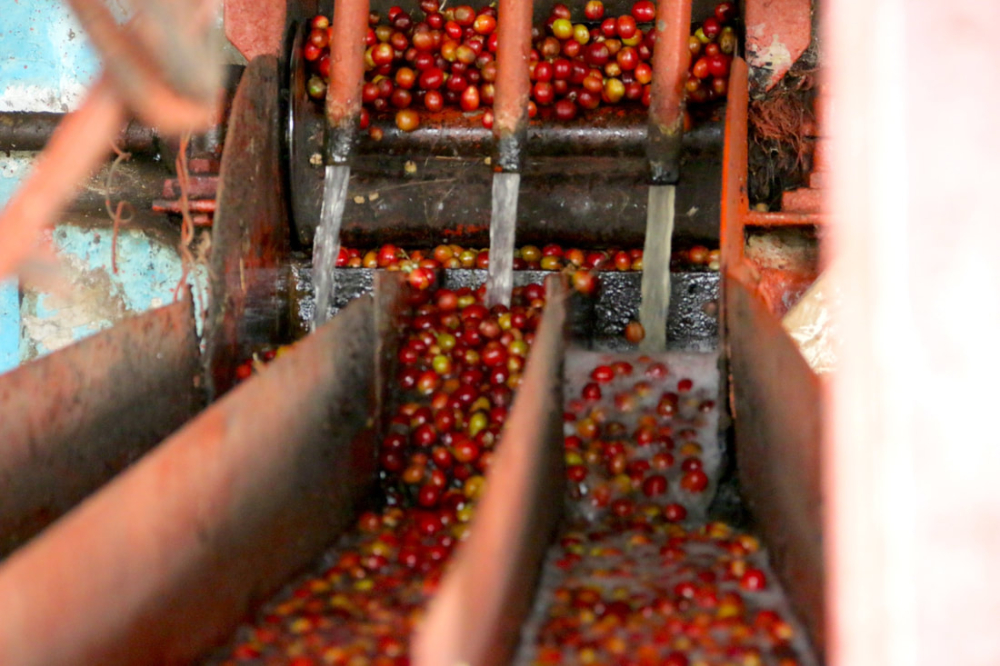
The specific washed process is as follows: after the coffee cherries are harvested, they are first submerged in water, and buoyancy is used to screen out underripe fruit; then the skin and pulp are removed with a depulping machine, and the beans are placed in fermentation tanks to rest for 18 to 36 hours while the mucilage layer is broken down. After fermentation, the parchment beans are scrubbed in channels for 30 to 60 minutes; with the help of specially designed channels and the force of water, lower-density, poorer-quality beans are separated out, and finally the high-quality coffee beans are drained and spread flat on African raised beds to dry.
Because the pulp has already been removed before drying, the aromas of Yirgacheffe itself are released more clearly and thoroughly, showing citrus and lemon notes along with elegant white floral notes, with an overall bright and delicate flavor. It was precisely the introduction of washed coffee beans that propelled Yirgacheffe into the ranks of the world's representative specialty coffee regions.
What we often call the "Yirgacheffe flavor" can be roughly understood as: possessing a distinctive citrus and lemon-like fruit aroma, along with the fragrance of jasmine, a fresh and bright mouthfeel, layered acidity, and a clean cup without off-flavors. According to ECX contract regulations, in addition to Yirgacheffe town itself, coffee produced in Wenago town to the north, Gelena Abaya to the west, and Kochere town to the south can also be classified within the Yirgacheffe flavor-producing region.
Yirgacheffe Specialty Coffee Bean Grading
Since 2009, Ethiopia has implemented the ECX coffee trading grading system, first dividing beans into two major categories according to green bean processing method, and Front Street Yirgacheffe is correspondingly divided into two categories: natural processed and washed processed.
Next, the green beans are assigned a specific grade based on two dimensions. The first is defect rate: a 300-gram sample is taken from each export lot of green beans; if there are no more than 3 defective beans, it is G1 grade; if there are 4 to 12 defective beans, it is classified as G2 grade. The second is cupping score: G1 and G2 grade coffee beans are evaluated according to the Specialty Coffee Association of America SCAA cupping standards; a score above 85 is rated Q1, while 80 to 84.75 is rated Q2.
Among the representative Yirgacheffe coffees, the Front Street Konga cooperative and Front Street Natural Red Cherry on the Front Street Coffee bean list both belong to the highest-quality G1 grade.
Ethiopia has high altitude, relatively low rainfall, and long sunlight hours, conditions that are very favorable for sun-drying green coffee beans. The so-called "natural method" refers to drying coffee cherries directly after harvest without removing the skin and pulp.

During the drying process, the sugars and aromas contained in the pulp are better preserved and gradually seep into the green coffee beans. At the same time, the longer the natural processing takes, the more complete the fermentation. Because the natural method allows the coffee fruit to dry naturally, the coffee beans mature naturally inside the fruit and are less susceptible to interference from the external environment, so natural processed coffee beans further amplify their own flavors: tropical fruit acidity and berry-like notes are more prominent than in washed coffee, the fermented notes and sweetness are fuller, and the aftertaste is heavier. The Front Street Red Cherry on the Front Street Coffee bean list is precisely a naturally processed Yirgacheffe.
In the roasting stage, Front Street considered that Front Street Red Cherry should take acidity as its main flavor direction, so it chose a medium-light roast.
The above content is compiled by CoffeeHunters, a coffee news website.


