







What Varieties and Flavors Define Yunnan Coffee?
Yunnan coffee now supplies roughly 98 percent of China's total production, with growing areas spread across Dehong, Baoshan, Lincang, and Pu'er. High altitude, strong sunshine, fertile soil, and wide day-night temperature swings shape the cup. The main varieties are Catimor and Typica, and processing, whether washed or sun-dried, further shifts the flavor.
Catimor dominates plantings because it resists disease and yields well, while Typica appears in smaller amounts and brings its own cup character. Growers in Lincang, where Front Street Coffee sources and roasts, work with both. Sun-dried lots tend toward fruit sweetness and heavier body, while washed lots come out cleaner with brighter acidity.
Yunnan coffee has now become the core representative of China's coffee industry, accounting for about 98% of the national total production. From Dehong and Baoshan to Lincang and Pu'er, Yunnan, with its natural advantages of high altitude, abundant sunshine, and fertile soil, has cultivated a uniquely distinctive coffee flavor. This article will guide you through the main varieties of Yunnan coffee—the differences between Catimor and Typica, the planting characteristics of major producing regions, and the influence of sun-dried and washed processing methods on flavor. At the same time, Front Street Coffee's planting and roasting practices in Lincang will provide enthusiasts with a complete reference from bean variety to brewing.
When it comes to coffee, more and more consumers today are beginning to notice the presence of Yunnan coffee. At Front Street Coffee shops, customers often ask about the flavor profile of Yunnan coffee. Currently, among Front Street's daily bean series, Yunnan small-batch coffee is quite popular and is also regarded as a typical representative of Yunnan coffee. In the past, people focused more on imported coffee, but with the rise of national trends, many coffee enthusiasts have discovered that Yunnan coffee can present such diverse flavor layers, and that China also has coffee-producing regions of outstanding quality. At present, the vast majority of coffee on the domestic market is produced in Yunnan, and Yunnan coffee accounts for 98% of the national total, almost representing the entire Chinese coffee-growing industry.
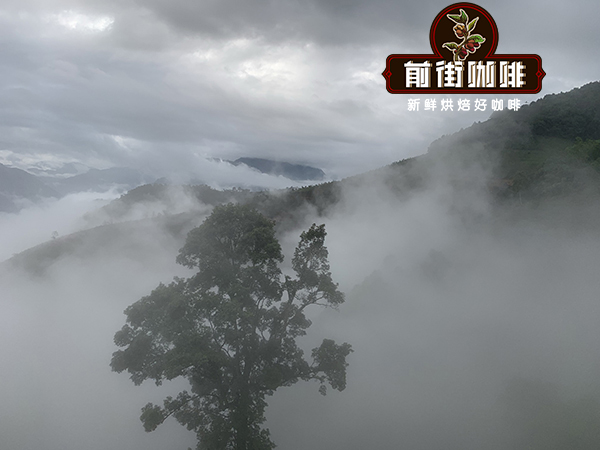
Why has Yunnan become a golden zone for coffee cultivation? Front Street has mentioned many times that coffee is essentially an agricultural crop, and its growth is inseparable from the local climate and environment. Yunnan is located in southwestern China, with the Tropic of Cancer running through its southern part. The western and southern regions lie between 15°N and the Tropic of Cancer. Most areas have an altitude of 1,000 to 2,000 meters, with terrain dominated by mountains and slopes, obvious undulation, fertile soil, abundant sunshine, plentiful rainfall, and a large temperature difference between day and night, belonging to a typical plateau mountain landform. Among this, the mid-to-high altitude areas of 1,000 to 3,500 meters account for nearly 90% of the province's land area. Yunnan's climate belongs to the subtropical plateau monsoon type, which is very favorable for coffee cultivation. As Front Street has previously stated, coffee needs to grow in an environment with high altitude and suitable temperature and rainfall in order to produce high-quality fruit.
Pu'er, Xishuangbanna, Wenshan, Baoshan, Dehong, Lincang, and other places in southern and western Yunnan are all major distribution areas for Yunnan small-seed coffee cultivation.
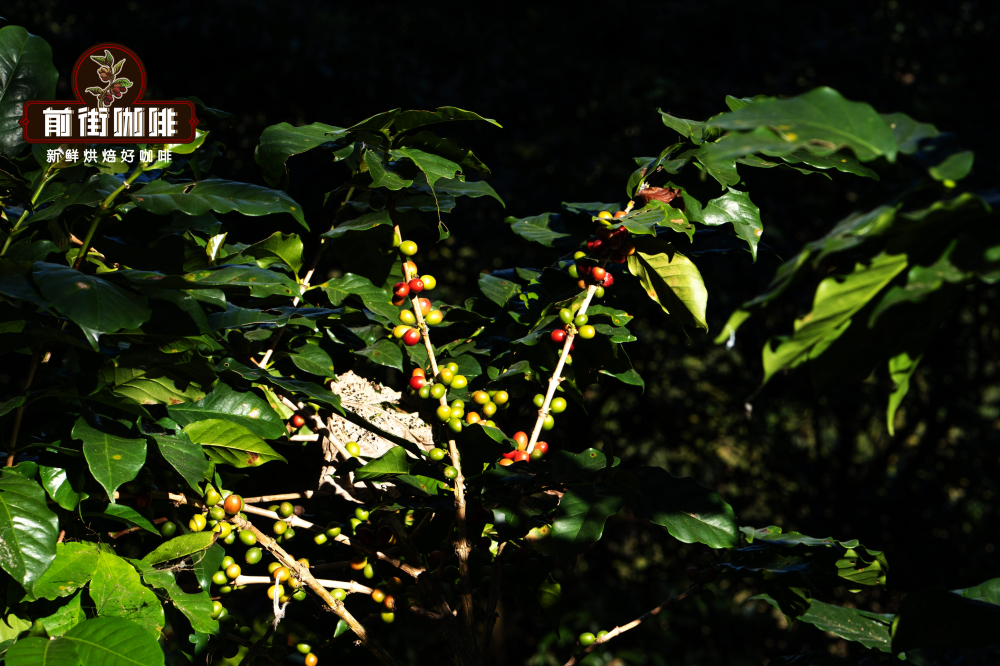
Dehong: Enjoying the reputation of "China's Coffee Hometown." The coffee cultivation altitude in Dehong Prefecture is all above 1,000 meters, of which about 30,000 mu is located in mountainous areas above 1,600 meters. Local coffee cultivation mainly uses organic fertilizers and organic pesticides. The coffee produced is of excellent quality and is one of the rare high-quality coffee-producing areas in the world.
Baoshan: Coffee cultivation in Baoshan began in the mid-1950s, and the first batch of coffee seedlings was introduced from Southeast Asia by the late patriotic overseas Chinese Mr. Liang Jinshan. In recent years, with the expansion of international trade, the small-seed coffee of Lujiangba has become widely known. Merchants from European, American, and Arab countries, especially those from the United Kingdom, the United States, Egypt, and Hong Kong and Macao, regard it as a premium coffee, and the product has long been in short supply. In December 2010, after review by China's General Administration of Quality Supervision, Inspection and Quarantine, it was decided to implement national geographical indication product protection for "Baoshan Small-Seed Coffee."
Lincang: With its unique geographical location and climatic conditions, Lincang has become the focus of attention for many coffee enterprises. The area has successively established high-quality coffee seedling bases of 200 mu and 100 mu in Mengding Town of Gengma Autonomous County and Lincang Xingfu Farm, and has carried out coffee cultivation in Gengma, Zhenkang, Yunxian, Cangyuan, Yongde, and other places. Front Street Coffee's estate is located in Lincang.
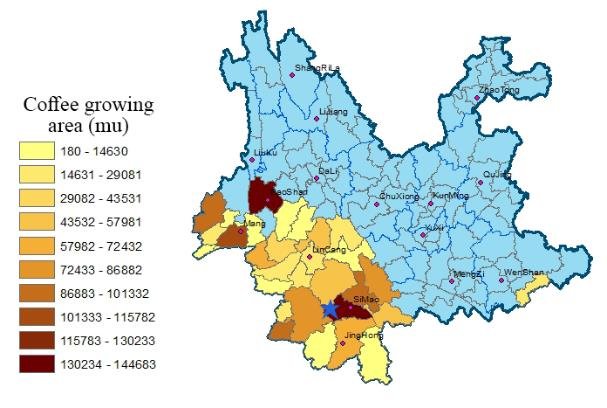
Pu'er: As a tea hometown, Pu'er has a 150-year history of coffee cultivation. In the early 1990s, Pu'er City began to cultivate coffee development as an advantageous backbone industry for adjusting the industrial structure and promoting farmers' income growth.
Yunnan Coffee Varieties
Coffee flavor is also inseparable from varietal differences, and different varieties naturally bring different flavor expressions. Which varieties are actually grown in Yunnan coffee?
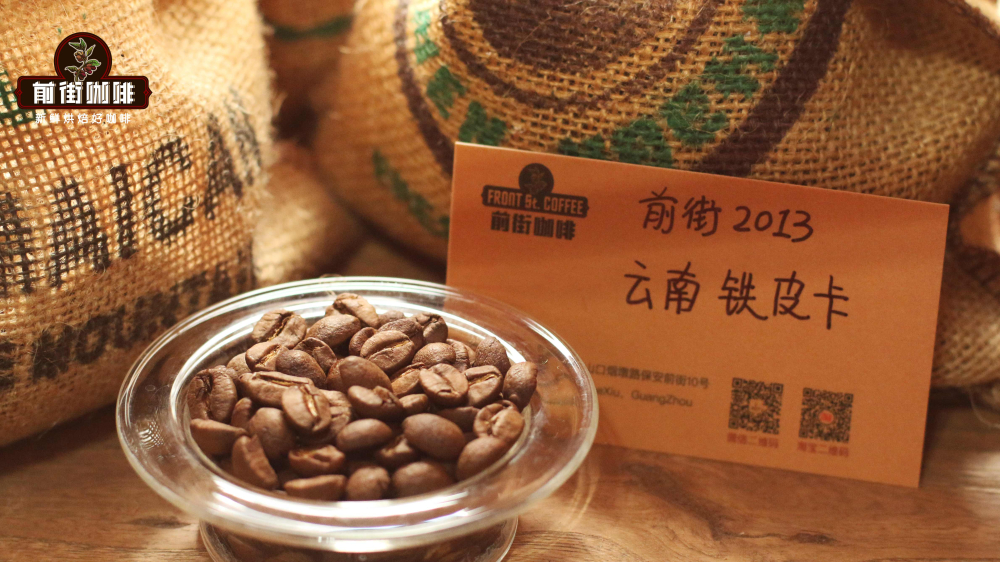
Front Street's Yunnan coffee covers two varieties: one is Catimor, such as Yunnan small-batch coffee; the other is Typica, such as Front Street 2013 Sun-Dried Typica coffee. Yunnan small-batch coffee gets its name from Typica because Typica coffee beans are small in size, hence "small-seed." As Front Street previously introduced, because Catimor has high productivity and strong disease resistance, many growers have had to reluctantly cut down Typica and switch to Catimor. At present, the cultivation area of Catimor in Yunnan is still relatively large, and the variety of Yunnan small-batch coffee is Catimor.
The most widely planted variety in Yunnan at present is Catimor, while a small amount of Typica and Bourbon is still grown in the Baoshan area. Although they all belong broadly to the Arabica species, these varieties differ significantly in essence.
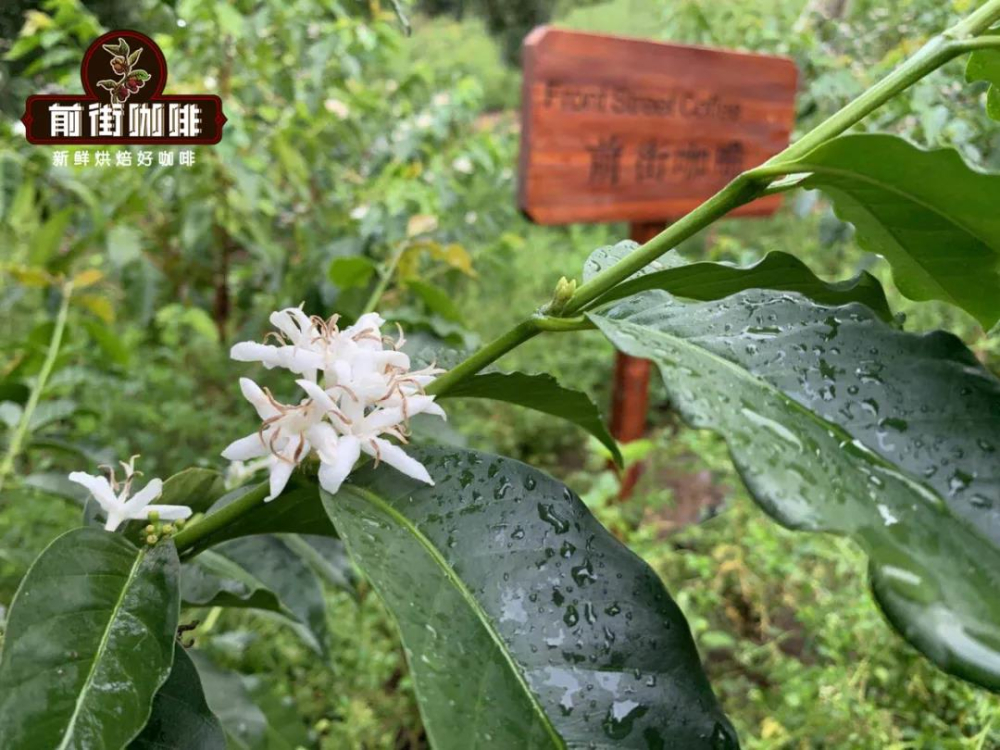
Typica: The most classic high-quality Arabica variety, from which many commercial improved varieties are derived. Typica has excellent flavor expression and is recognized as a specialty coffee variety, but its yield is extremely low and it is susceptible to rust disease, requiring more labor for management. Typica originated in Ethiopia and southeastern Sudan and is the most widely cultivated coffee variety in the Western Hemisphere. The plant is relatively robust but not tolerant of light, and yields are higher in Hawaii. The top leaves of Typica are copper-red, hence the name red-top coffee. Front Street Jamaica Blue Mountain No. 1 belongs to the pure Typica variety.
Catimor: Catimor does not have pure Arabica bloodline, but is a hybrid of Timor (belonging to Robusta) and Caturra (a Bourbon variety), thus containing 25% Robusta bloodline. This bloodline also determines its flavor defects: if planted in low-altitude areas, the coffee aroma is not rich enough, the overall bitterness is relatively heavy, and it is prone to astringency and a rather pungent moldy taste.
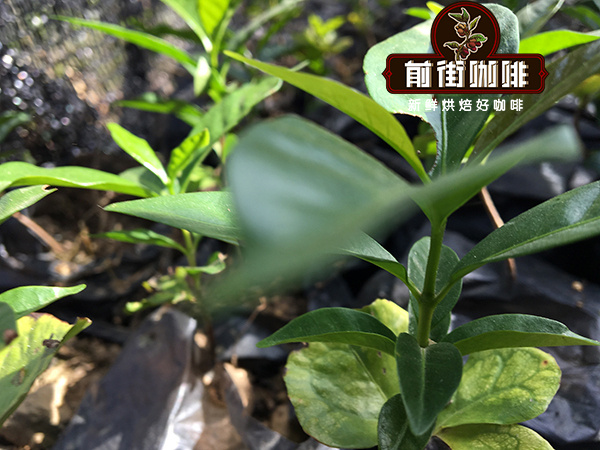
FrontStreet Coffee has mainly grown the Typica variety and a small amount of Bourbon in Lincang, Yunnan since 2013. There are two reasons for choosing Typica: first, as one of the oldest coffee varieties, it has pure Arabica genes and inherently possesses an elegant, clean flavor, and has always been recognized as a specialty coffee variety; second, the earliest coffee trees planted in Yunnan were also Typica, brought in by French missionaries.
Processing Methods for Yunnan Coffee Beans
Different processing methods naturally lead to different coffee flavors. Sun-dried coffee beans usually have a tropical fruit sweet-and-sour sensation, retaining the coffee beans' natural richness, with layered flavors and sometimes a hint of wine aroma. Because the fermentation process of washed coffee beans is easier to control, their flavor is less likely than sun-dried beans to develop off-flavors, and their acidity and brightness are better. Therefore, Front Street's seven daily beans mainly use washed processing, because washed processing better expresses a producing region's original flavor.
The processing methods for Yunnan coffee beans include sun-dried and washed. More other processing methods will follow later, but all are extensions based on sun-dried and washed processing.
The Typica coffee beans grown at Front Street Coffee's estate use the sun-dried processing method, spreading ripe coffee cherries completely and evenly on raised beds for sun drying, and turning them from time to time to avoid uneven drying that could produce an unpleasant fermented sensation. In addition, keeping the whole fruit allows more sugars in the coffee cherry to penetrate into the green beans, making this Front Street coffee bean rich in aroma and even stronger in sweetness.
When Front Street Coffee's roaster received this sun-dried Typica green bean, considering the need to highlight its aroma and sweetness while also showcasing the mouthfeel of Yunnan small-batch coffee, a medium roast level was adopted.
FrontStreet Coffee Brewing Recommendations
Regarding brewing, Front Street recommends using freshly roasted coffee beans, as this allows you to experience the coffee's rich flavors to the greatest extent. The coffee beans shipped by FrontStreet Coffee are all within 5 days of roasting, because Front Street deeply understands the huge impact of coffee bean freshness on flavor. Front Street's roasting philosophy is "freshly roasted good coffee," so that every customer who places an order receives the freshest possible coffee. The coffee resting period is about 4 to 7 days, so when customers receive it, it is exactly at its best flavor.
Of course, some customers need Front Street to help grind the coffee, and that is also fine, but Front Street must remind you: once coffee beans are ground into powder in advance, there is no need to rest the beans anymore, because during transportation the pressure from carbon dioxide inside the package can also make the coffee flavor rounder, so once you receive the coffee powder you can immediately brew a cup and enjoy it. However, the coffee powder needs to be brewed promptly, because after contact with air it oxidizes quickly and the flavor dissipates faster, making the coffee taste less good. Therefore, Front Street recommends buying whole beans and grinding fresh before brewing, so that you can better taste the coffee's flavor.
Front Street brewing parameters for Yunnan coffee:
Dripper: Hario V60, Water temperature: 90℃, Coffee dose: 15 grams, Coffee-to-water ratio: 1:15, Grind size: medium-fine grind (70% passing rate on China standard No. 20 sieve)
[Front Street 2013 Sun-Dried Typica Coffee Flavor] Heavy mouthfeel, prominent sweet-and-sour sensation, with citrus and berry notes, a hint of fermented wine aroma, caramel-like sweetness, creamy finish, and black tea-like tea sensation.
[Front Street Washed Yunnan Small-Batch Coffee Flavor] Herbal, nutty aroma, chocolate, caramel.
The above content is compiled by CoffeeHunters, a coffee news website.


