







Are Male and Female Coffee Beans a Real Thing?
Coffee beans have no gender. The round, oval-shaped beans sometimes sold as male beans are peaberries, and the flat ones are simply called flat beans. A normal coffee fruit holds two seeds, which is why each flat bean has one flat side. A peaberry forms when one ovule in the fruit fails to pollinate, leaving the other ovule double the space to develop alone.
Peaberries usually make up only around 5 percent of a harvest, and their particle size tends to run slightly smaller than flat beans of the same variety. The male-and-female story likely started as a marketing device among some Southeast Asian merchants. Producing countries sort and sell peaberries separately, and roasting them calls for different handling because of their shape and density.
When selecting coffee beans, many people notice a few uniquely shaped oval beans mixed in, clearly different from the common flat coffee beans. Some call them "male beans" and the flat ones "female beans," but this claim is actually inaccurate. Coffee beans have no gender distinction; the scientific name for these round beans is Peaberry, or "round bean." How are peaberries formed? Is their flavor really superior to regular flat beans? Why do different producing countries sort and sell them separately? This article will systematically explain the real differences between peaberries and flat beans from multiple perspectives, including botanical causes, particle size distribution, flavor comparison, and roasting characteristics, and clarify common misconceptions about "male and female beans."
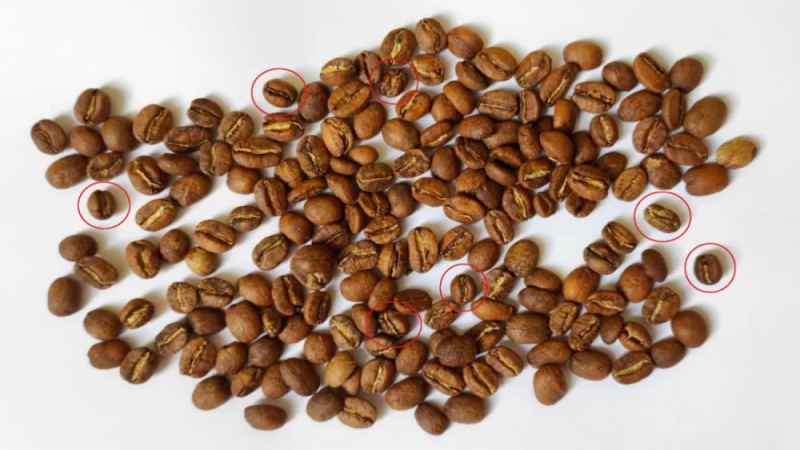
A observant friend reported to Front Street Coffee that among a pile of coffee beans, they found a few beans that looked different from the others—the whole bean was shaped like an oval sphere, completely unlike the other coffee beans, which have one flat side.
Male beans? Female beans?
Some say the oval spherical beans are "male beans," while the common flat-sided ones are "female beans." "Male beans" are very rare, accounting for only about 5%. The idea of male and female beans has been around for a long time, but coffee beans actually have no male or female distinction. This claim may have originated from some merchants in Southeast Asia as a marketing gimmick to sell these unusually shaped coffee beans.
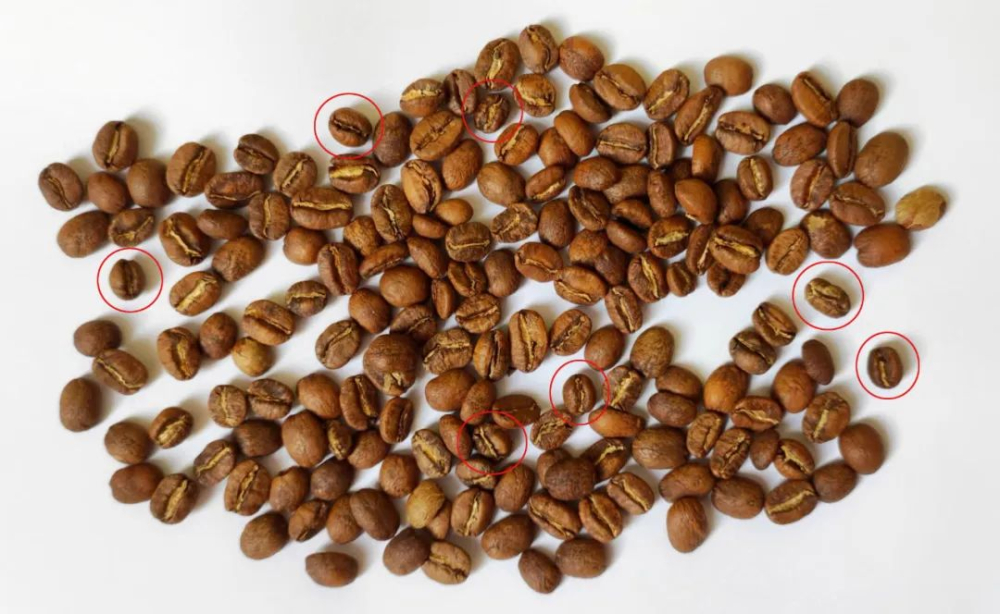
Although coffee beans have no male or female distinction, two different forms of coffee beans do exist, and they are found on the same variety (the same tree). Therefore, people call this rare oval spherical coffee bean "Peaberry," which translates to "round bean," while the coffee beans we commonly see are correspondingly called "flat beans."
How are peaberries produced?
As we know, a normal coffee fruit contains two coffee beans (seeds). One side of a flat bean is flat because it originally formed from two flat beans making up one fruit. Peaberries are special: due to environmental or genetic influences, one ovule inside the fruit fails to be pollinated, giving the other ovule double the space to develop, resulting in a fruit with only one coffee bean.
Usually, the particle size of peaberries is slightly smaller than flat beans of the same variety. If flat beans are around 16-18 screen size, peaberries are distributed around 14-15 screen size.
Of course, besides peaberries with one bean per fruit and flat beans with two beans per fruit, there are also triangular beans with three beans per fruit, but these are usually discarded as defective beans from poor development and are rare among roasted beans.
Is the flavor of peaberries better than flat beans?
Producing countries like Kenya, Tanzania, Jamaica, and Hawaii specifically sort out peaberries and sell them separately, and the price is not cheap.
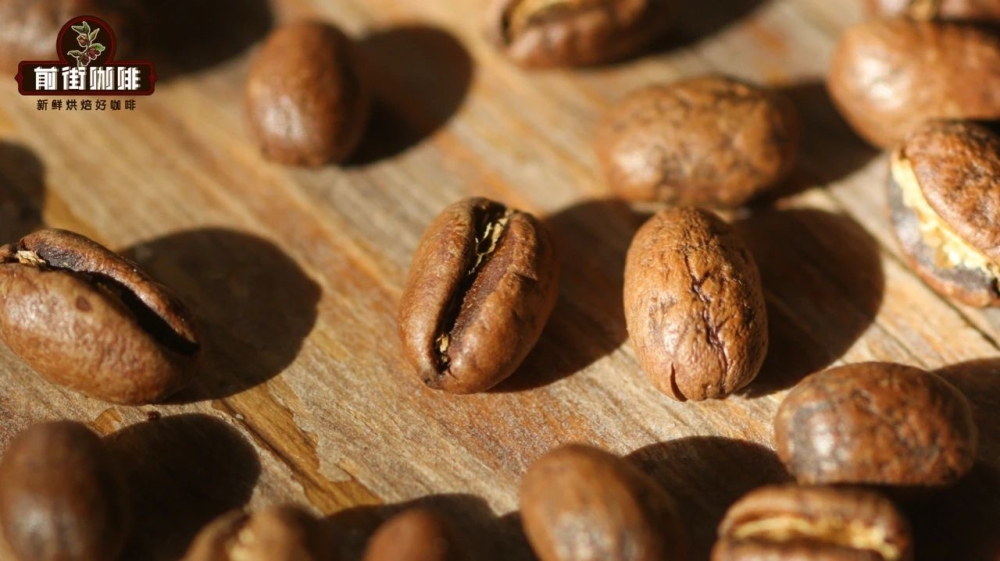
Correspondingly, some people associate price, yield, and unique shape together, thinking the flavor must also be superior to those "ordinary" beans! In fact, peaberries and flat beans from the same origin and variety do not differ much in flavor. The reason some producing countries sell peaberries separately is that their grading systems are based to varying degrees on coffee bean size—the larger the particle, the more expensive. Peaberries themselves are smaller than flat beans, so in grading they fall into the 14-15 screen level. By sorting them out separately, and adding the story of low yield, the price can be raised to the level of 17-18 screen beans.
Of course, from a roasting perspective, coffee beans that are small and uniform in particle size are easier to roast evenly, resulting in better flavor expression—this is also an advantage of peaberries. For producing countries that do not grade by size, there is naturally no need to remove the slightly smaller peaberries, so you will always see a few distinctive peaberries in a bag of coffee beans.
The above content is compiled by CoffeeHunters, a coffee news website.


