







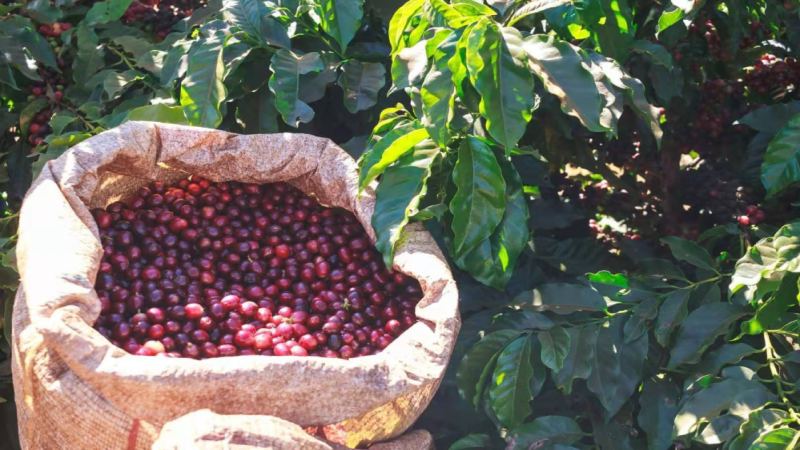
How Yellow Bourbon Coffee Fits Into Brazil NY.2SC 17/18 Cerrado Grading
Brazil Cerrado coffee carries the label Brazil NY.2SC 17/18 FC Cerrado, which describes three grading dimensions for Brazilian green coffee: defect ratio, screen size, and cup profile. The Cerrado region, in the midwest of Minas Gerais, produces beans with a mild taste and consistent quality, and yellow bourbon coffee from this area shows a rich, smooth body with chocolate and nutty flavors.
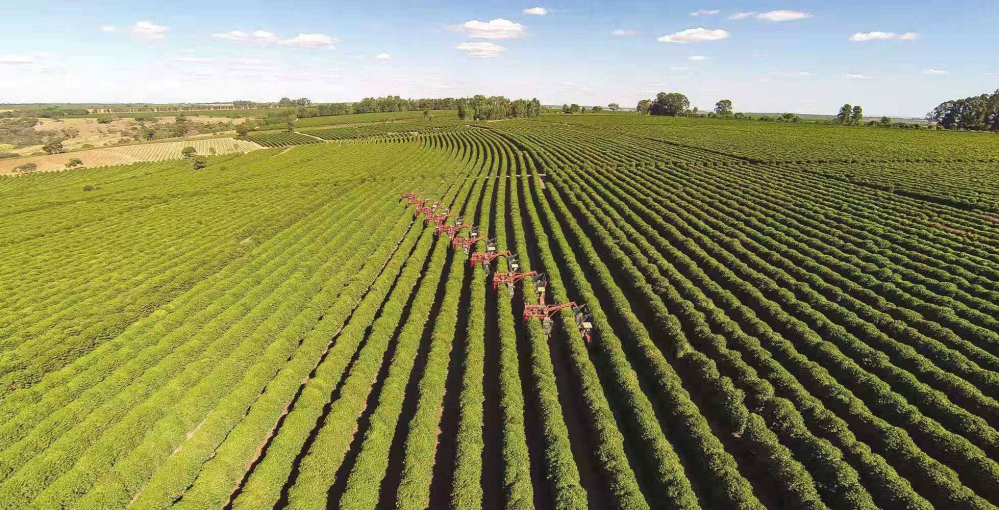
Cerrado was Brazil's first coffee-producing region to receive origin certification. Plantation coffee beans here grow at lower elevations than in high-altitude Colombia, averaging 600 to 1,200 meters, and the flat terrain allows large-scale cultivation and mechanical harvesting that strips a branch's fruit at once. The mild, soft-aroma profile blends well in espresso and keeps extraction stable.
As the world's largest coffee producer, Brazil's Cerrado region in the midwest of Minas Gerais is known for coffee beans with a mild taste and consistent quality. Among the Front Street daily beans series, the Brazil Cerrado Red Bourbon has won the favor of many coffee lovers with its rich, smooth body and intense chocolate and nutty flavors. This article will systematically review the terroir conditions of the Cerrado region, the characteristics of the Bourbon variety, and the semi-washed processing method, and will also provide an in-depth analysis of the three major grading dimensions for Brazilian green coffee—defect ratio, screen size, and cup profile—to help readers fully understand the complete meaning behind the label "Brazil NY.2SC – 17/18 FC Cerrado," along with brewing parameters and flavor tasting notes from Front Street Coffee's baristas.
For more specialty coffee knowledge, please follow our WeChat public account: Front Street Coffee (FrontStreet Coffee)
Brazil is the country with the highest coffee production in the world, and the Cerrado region in the midwest of Minas Gerais is especially worth noting. The coffee beans produced here have a relatively mild taste and, after roasting, give off a soft aroma, making them suitable for blending with a variety of coffee beans in espresso blends, enhancing flavor complexity while making extraction more stable. In the Front Street daily beans series, there is a Brazil Cerrado Red Bourbon coffee bean with a rich, smooth body, characterized by intense chocolate and nutty flavors, and it is deeply loved by many customers.
Brazil Cerrado Coffee Region
Unlike high-altitude Colombia, Brazil's coffee is generally grown at lower elevations, averaging between 600 and 1,200 meters. The local terrain is mainly low-altitude plains, with a small amount of the Brazilian Highlands also present. The plains terrain provides convenient conditions for large-scale cultivation and management of coffee trees. When the coffee cherries ripen, most farms use mechanical harvesting, stripping the fruit from a branch all at once.
Brazilian coffee-producing areas are distributed across 7 states, among which Minas Gerais in the southeast has the most prominent output, with four sub-regions under its jurisdiction. The Cerrado region was Brazil's first coffee-producing region to receive origin certification, and almost all the coffee produced there belongs to the better-flavored Arabica species. Cerrado actually refers to the savanna that occupies 22% of Brazil's total area, located in Brazil's interior. However, the Cerrado coffee-producing region does not cover the entire savanna; it specifically refers to the coffee-growing belt in the midwest of Minas Province at elevations above 1,000 meters. This area can be called the essence of the Cerrado savanna, with higher elevation and fertile soil, capable of producing specialty coffee beans that are sweet, rich, and highly clean. Cerrado was also the earliest region in Brazil to commercialize coffee, and many exporters established large coffee plantations here.
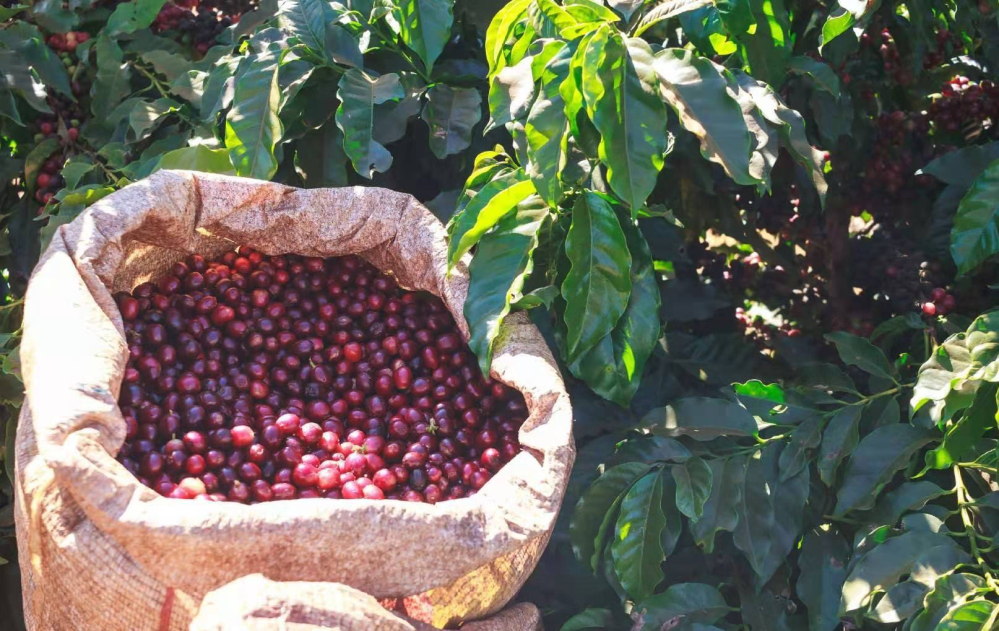
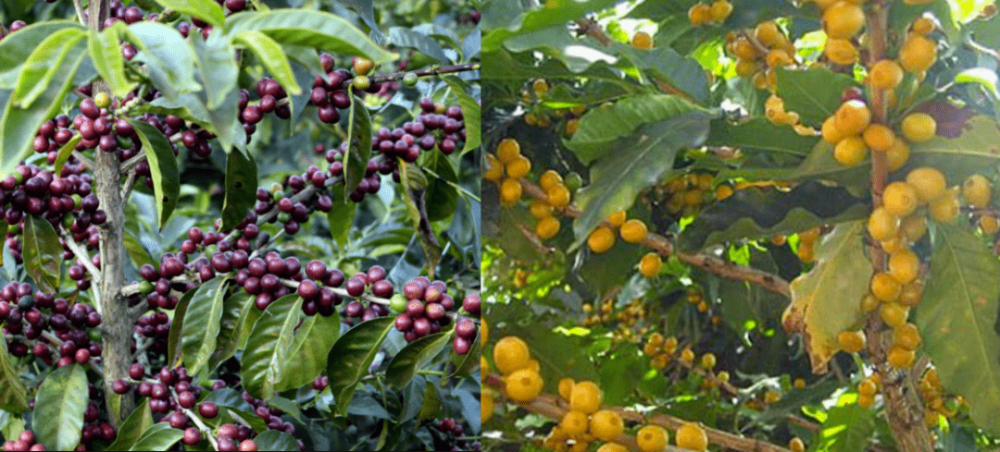
Brazil has a very rich variety of coffee, among which Bourbon and Typica are the two oldest varieties. Both are old varieties, but Bourbon has broader leaves than Typica, grows more densely, and yields about 30% more than Typica. Bourbon beans are rounder and shorter, with berry-like acidity, outstanding creaminess and aroma, and pronounced acidity, but they are also relatively weak in disease resistance. This Front Street Brazil Cerrado daily bean uses Red Bourbon, whose fruit turns red when ripe. In addition, Front Street's bean list also includes a Yellow Bourbon coffee bean from Queen Farm with yellow fruit.
Brazil's harvest season coincides with the dry season, making it very suitable to use natural drying for green coffee beans. The traditional natural method spreads all the fruit on the ground, which easily causes the coffee beans to pick up off-flavors of soil and wood, leading to uneven quality. After 1990, Brazil began promoting the semi-washed method (also called semi-washed). Specifically, the cherries are first placed in water channels to remove defective beans and floating cherries, then a machine removes the skin, pulp, and part of the mucilage, followed by washing, and finally drying in the sun or in a drying room. The semi-washed method saves more water and labor than the washed method, greatly improving the quality of Brazilian coffee and reversing the poor impression left by many years of extensive natural processing.
Grading of Brazilian Green Coffee Beans
Because Brazil has large coffee production and many producing areas, grading is quite complex and cannot be based on a single standard. Therefore, Brazilian coffee uses multiple grading methods, with defect ratio, screen size, and cup profile all included in the grading system.
1. Grading by the Number of Defects
This is evaluated by the "deduction method" based on the number of defective beans contained in every 300 grams of green beans. Brazil adopts New York's grading standard, namely NY, and according to defect ratio can be divided into NY2, NY2/3, NY3, NY3/4... The smaller the number, the lower the defect rate and the higher the grade. Among these, lots with fewer than 4 deductions belong to NY2, which is the highest level. Because NY.1 requires not a single defective bean, such carefully selected lots are difficult to supply consistently, so Brazil sets NY.2 as the highest grade.
2. Coffee Bean Screen Size Specifications
Size specifications are screened using screens based on 1/64 inch, with sizes ranging from 14 mesh to 20 mesh. The mesh number corresponds to the short side of the coffee bean, that is, the bean's "width." The largest mesh size for Brazilian coffee beans is 19 mesh, but the yield is scarce, so 17/18 mesh is regarded as the highest grade.
3. Cup Profile and Mouthfeel After completing the classification of defects and size specifications, Brazilian green coffee beans are roasted and graded according to Cup of Excellence cupping scores, from the two dimensions of mouthfeel and flavor. Mouthfeel performance is divided into five types: Strictly Soft → very smooth, Soft → smooth, Softish → slightly smooth, Hardish → not pleasant in the mouth, Rioy → iodine-like harsh taste. Cup profile flavor grades can be divided into: Fine cup (FC), Fine, Good Cup (GC), Fair Cup, Poor cup, Bad cup. Among these, Fine Cup (FC) and Good Cup (GC) are more common.
Based on the above dimensions, the bag of Front Street Brazil Cerrado green coffee beans is marked "Brazil NY.2SC – 17/18 FC Cerrado," meaning: produced in the Cerrado region of Brazil, size 17 to 18 mesh, mouthfeel very smooth, cup profile high quality, and defect rate grade NY.2.
The Flavor of Brazil Cerrado Coffee
This coffee needs to highlight the nutty, baked bread, and creamy aromas of Brazilian beans, with low acidity, so Front Street uses a medium-dark roast level. No matter which coffee bean is brewed, Front Street always believes that freshness directly affects the flavor performance in the cup. To taste an excellent Brazilian coffee, Front Street recommends choosing beans roasted within one and a half months. After high-temperature roasting, coffee beans need a 4 to 7 day degassing and resting period before gradually entering their optimal tasting stage. Once past the optimal tasting period, the coffee's aroma will be largely lost, and many flavors will be difficult to present through extraction. Coffee beans shipped by Front Street are guaranteed to be freshly roasted within 5 days, and by the time they arrive, they are almost exactly entering the optimal tasting stage.
The baristas at Front Street Coffee (FrontStreet Coffee) considered that this bean is relatively dark-roasted and the interior texture of the bean is porous, making it easy to absorb water and release excessive bitter substances. Therefore, they chose a lower water temperature and a coarser grind to avoid over-extraction. Using a KONO dripper can better showcase the richness of Brazilian coffee.
Water temperature: 88°C
Dose: 15 grams
Coffee-to-water ratio: 1:15
Grind size: 70% passing a No. 20 sieve
Three-stage pouring: first use 30 g of water to evenly wet the coffee bed and bloom for 30 seconds; in the second stage, pour 95 g of water evenly in circles from the inside outward; when the water level drops to 2/3 of the coffee bed in the dripper, begin pouring the third stage of 100 g, maintaining a small stream throughout. After about 2 minutes of dripping, remove the dripper.
Flavor description: After Front Street grinds this Cerrado Red Bourbon, one can smell intense nutty and baked bread aromas, and after contact with water, caramel sweetness is gradually released. After brewing, the entry is dominated by nut, cream, and peanut notes, with a finish of dark chocolate sweetness returning, a soft mouthfeel, and high richness.
The above content is compiled by CoffeeHunters, a coffee news website.


