







Why do anaerobic coffee beans make pour-over flow so fast?
Anaerobic coffee beans drain noticeably faster in pour-over than washed or natural beans, sometimes finishing extraction in under a minute and a half. The cause is bean structure: anaerobic lots have a looser texture, greater brittleness and lower density, so they absorb water and degas quickly. During blooming, the coffee bed rises into a full hamburger shape and blocks water poorly.
Because degassing runs smoothly and density coffee is low, more foam forms, and grounds float on the surface and cling to the dripper wall in the early pour. Grind settings also drift: a No. 20 sieve pass-through comparison shows the actual particle size is coarser than the dial suggests. Grinding finer and adjusting the pour can restore a full-bodied extraction.
In the daily practice of pour-over coffee, many enthusiasts encounter a puzzling phenomenon: when brewing anaerobically processed coffee beans, the water flow rate is noticeably faster than with regular washed or natural beans, and the extraction time can even be less than a minute and a half. What exactly causes this abnormal flow rate? Is it due to the inherent characteristics of the beans themselves, or is there a problem in the grinding stage? This article will start from Front Street Coffee's actual measurement data, deeply analyze how the loose texture and vigorous water absorption and degassing of anaerobic beans affect the flow rate, and with the help of a comparison of No. 20 sieve pass-through rates, reveal the deviation between the grinding setting and the actual particle coarseness. At the same time, the article will also provide targeted suggestions for finer grinding adjustments and pouring technique adjustments, helping you stably extract a rich and full-bodied coffee even when dealing with anaerobic beans.
If you habitually use a hand grinder to grind coffee beans in your daily routine, you should be deeply impressed by the following phenomenon: when grinding ordinary washed or natural light-roasted beans, it often takes quite a bit of effort, but when switching to anaerobically processed beans with a similar roast level, the grinder turns especially smoothly and effortlessly.
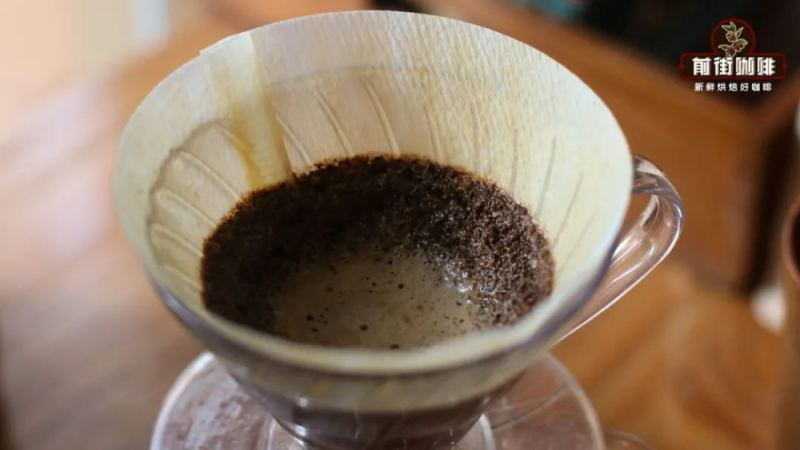
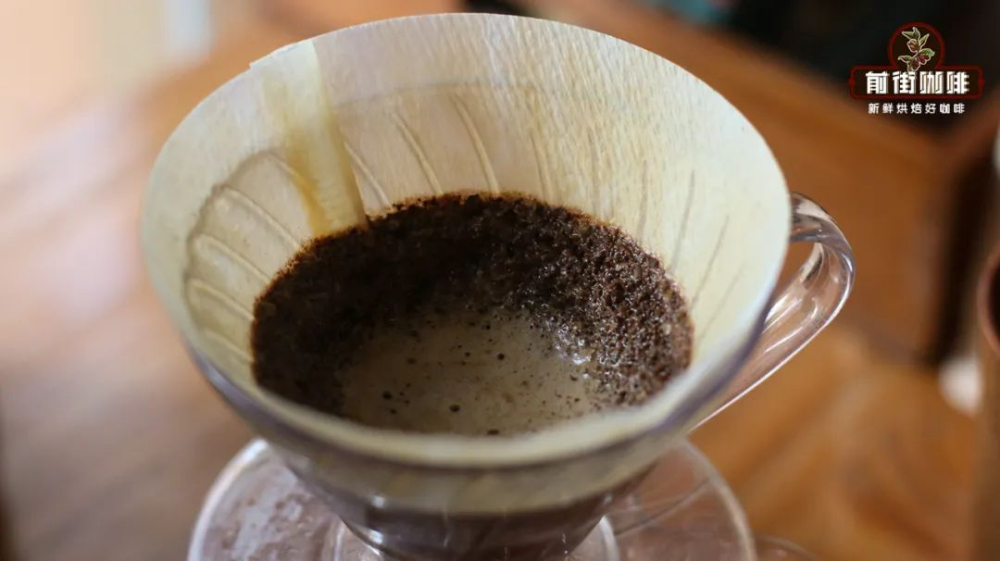
The reason is that anaerobically processed coffee beans have a looser texture and greater brittleness, and they absorb water and degas unusually quickly. Because of this, during the blooming stage, the coffee bed of anaerobic beans easily expands and rises, forming an especially full "hamburger" shape.
Due to smooth degassing, combined with a loose texture and low density, this type of coffee generates more foam during brewing. In the early stage of pouring, the coffee grounds tend to float on the surface and adhere to the inner wall of the dripper, and the water-blocking ability of the coffee bed weakens accordingly, so the flow-through naturally becomes smoother. Therefore, when brewing anaerobic beans, you will almost never encounter problems such as clogging or standing water that will not drain.
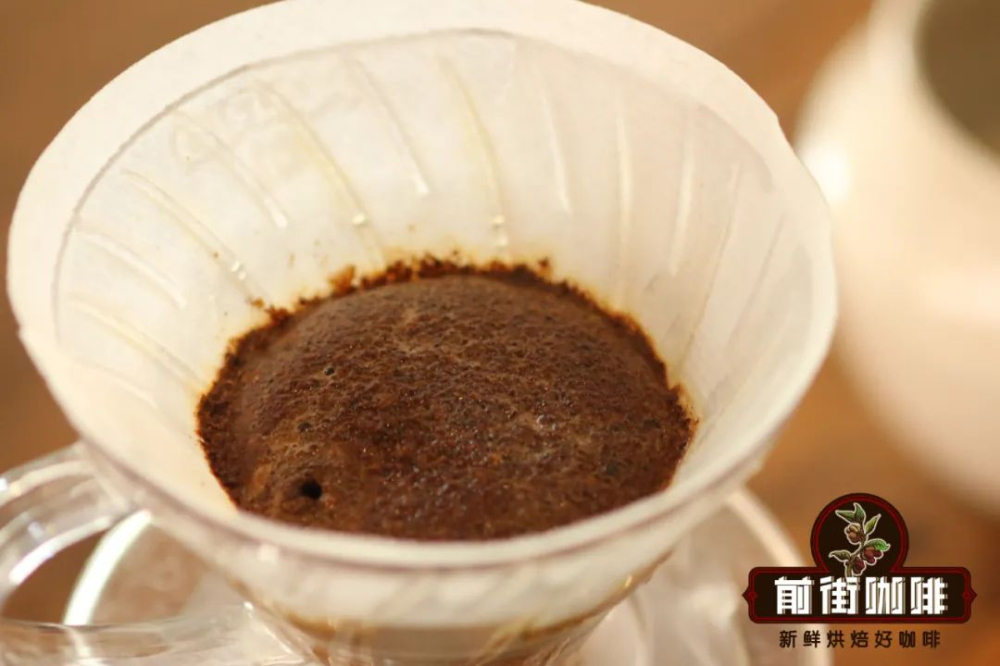
But if you find that the flow rate is abnormally fast when brewing anaerobic beans, for example, other beans take about two minutes to extract while anaerobic beans finish in less than a minute and a half, then the flow rate has already become unreasonable.
The root of the problem lies in the grind size. When brewing coffee, most people are used to preparing only two or three grind settings—one for light-roasted beans, one for dark-roasted beans, and at most one more setting for medium-roasted beans—and then matching the beans to the setting according to roast level. Anaerobic beans usually carry rich floral aromas and fruity acidity, so they are naturally grouped into the light-roast grind setting range. However, the particles ground at the same setting are actually coarser than those of ordinary light-roasted beans. Front Street Coffee once verified this with a No. 20 sieve: using the 10 setting on an EK-43s grinder to grind washed beans from Africa, the Americas, and Asia separately, the No. 20 sieve pass-through rate all fell within the 80% (±2%) range.
But when grinding anaerobic coffee beans at the same 10 setting, the No. 20 sieve pass-through rate was only 73% to 75%. In other words, at the same setting, the grounds from anaerobic beans are simply coarser than those of the beans you usually brew, so a faster flow rate is unavoidable. If you want the grind coarseness to reach a No. 20 sieve pass-through rate of 80%, the setting needs to be adjusted to between 9.2 and 9.5.
Therefore, when you notice that the flow rate during brewing is much faster than usual, you should adjust the grinder setting finer. It should be noted that some claims say "when brewing anaerobic beans, you need to grind finer"—this is not entirely accurate. What really needs to be adjusted finer is the grinder's setting value, while the actual particle coarseness should remain consistent with what you use for daily washed and natural beans.
Of course, if you want a more ample extraction time, you can also reduce the water flow when pouring to avoid lifting the coffee bed too high. The coffee brewed this way will tend toward a rich and full-bodied flavor.
The above content is compiled by CoffeeHunters, a coffee news website.


