








How Do the Panama Geisha Coffee Labels Differ?
Hacienda La Esmeralda sorts its Panama Geisha coffee into Red, Green, and Blue Labels based on growing altitude and cupping performance. The three grades differ in flavor and positioning, which is why drinkers often ask how they compare. Understanding the estate's terroir and grading system is the starting point for telling them apart.
The estate sits in Boquete, near the Baru volcano, where volcanic soil and a cool microclimate around the central cordillera suit high-quality geisha coffee beans. For pour-over, use a V60 dripper, 92-93°C water, and a 1:15 coffee-to-water ratio to bring out the variety's floral aroma and fruity acidity. Red, Green, and Blue Labels reflect altitude and cup performance.
Geisha coffee is a star in today's specialty coffee world, and Hacienda La Esmeralda is precisely the force that brought this variety into the spotlight. The estate classifies Geisha into three grades—Red Label, Green Label, and Blue Label—based on altitude and cupping performance, and many coffee enthusiasts are curious about the differences in flavor and positioning among the three. From the perspective of Front Street, this article sorts out the terroir of Panama's Boquete region, the development history of Hacienda La Esmeralda, and the origins and characteristics of the Red, Green, and Blue Labels, while also providing pour-over recommendations for Geisha, including V60 dripper, 92-93°C water temperature, 1:15 coffee-to-water ratio, and other parameters, to help you brew Geisha's signature floral aroma and fruity acidity at home.
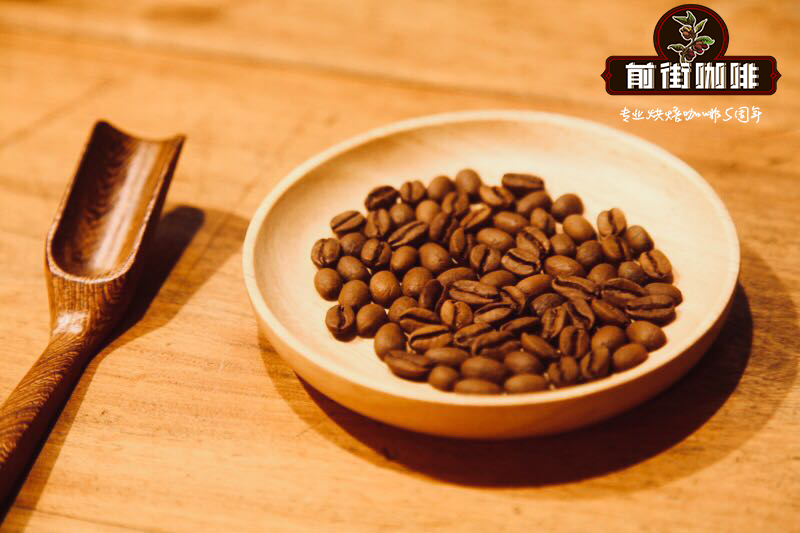
Customers who frequently visit Front Street to enjoy Geisha coffee often raise a question: what exactly are the flavor differences between Hacienda La Esmeralda's Red Label and Green Label? Front Street's view is that to truly understand Geisha coffee, it is best to start with the renowned Hacienda La Esmeralda, because it is both the discoverer of Geisha's flavor and the force that propelled this variety onto the world stage.
Panama's Boquete Region
Panama is located in Central America, and its neighboring countries also produce high-quality coffee beans—Costa Rica lies immediately to its west, while Colombia borders it to the east.
At the end of the twentieth century, the United States helped Panama build the canal, and with it came a large number of Americans who moved there seeking opportunities. The owning family of Hacienda La Esmeralda was among the American elites who settled in Panama during that period.
Panama's mountain range runs from east to west, and cold air gathers along the central cordillera at areas above 6,500 meters in elevation, creating a distinctive microclimate in the Boquete and Candela areas. Temperature, soil fertility, and rainfall are all just right, creating favorable conditions for growing high-quality coffee such as Geisha.
Panama's coffee-growing area is not large, and is mainly concentrated in the highlands of the west near Costa Rica. The three major producing regions are Boquete, Volcan, and Renacimiento. Hacienda La Esmeralda is located in Boquete, near the Baru volcano. The volcanic soil is rich in nutrients, providing ample fertility for the growth of coffee trees.
The Geisha Variety
According to Front Street's understanding, Geisha was discovered in 1931 in the Geisha forest of Ethiopia, and was later sent to a coffee research institute in Kenya; during that period it was also introduced to Uganda and Tanzania. In 1953, Costa Rica also introduced Geisha, and it was not until the 1970s that Geisha seeds took root in Panama. It is fair to say that being able to drink Geisha coffee today has been no easy journey.
Geisha coffee trees have low yields and a tall tree shape, and were initially used only as windbreaks, receiving no attention at all. So how did Geisha transform from obscurity into a star of the coffee world? Front Street believes this is thanks to the efforts behind Hacienda La Esmeralda.
Hacienda La Esmeralda
The predecessor of Hacienda La Esmeralda was Palmira Farm, purchased by American banker Rudolph A. Peterson after his retirement in 1964. In the early days it was mainly a dairy business, and later his son resigned from his job as a doctor to help his father manage the farm. In 1987 the estate introduced Caturra and Catuai varieties for planting and was officially named Hacienda La Esmeralda. In 1994 a washed processing plant was established, and formal coffee production began.
In 1997, when third-generation owner Daniel joined the estate's management, the specialty coffee wave was gradually rising. Daniel learned cupping techniques and cupped the first harvest of Geisha in 2003, classifying Geisha coffee trees by different altitudes. At the next harvest the following year, Daniel's family submitted the Geisha coffee beans that showed floral and fruity acidity in cupping to that year's Best of Panama competition, ultimately winning first place with a high score.
Hacienda La Esmeralda has three sub-estates: El Velo, Cañas Verdes, and Jaramillo.
Red Label & Green Label & Blue Label
After Hacienda La Esmeralda purchased the Jaramillo estate with its excellent environment in the early days, cupping revealed that Geisha's flavor was in a class of its own, so it began cupping other areas of the farm and dividing planting plots by altitude. This is how today's well-known Red Label, Green Label, and Blue Label came to be. If divided by the brands under Hacienda La Esmeralda's marketing strategy, Esmeralda Special corresponds to Red Label, Private Collection corresponds to Green Label, and Geisha 1500 corresponds to Blue Label.
Among these, Esmeralda Special Red Label includes both auction lots and non-auction lots. A notable feature of the Red Label in the Esmeralda Special series is that all the coffee beans in each lot come from the same plot. For example, the Red Label Geisha coffee purchased by Front Street comes from the Jaramillo plot, which makes it easier to provide buyers with detailed coffee information.
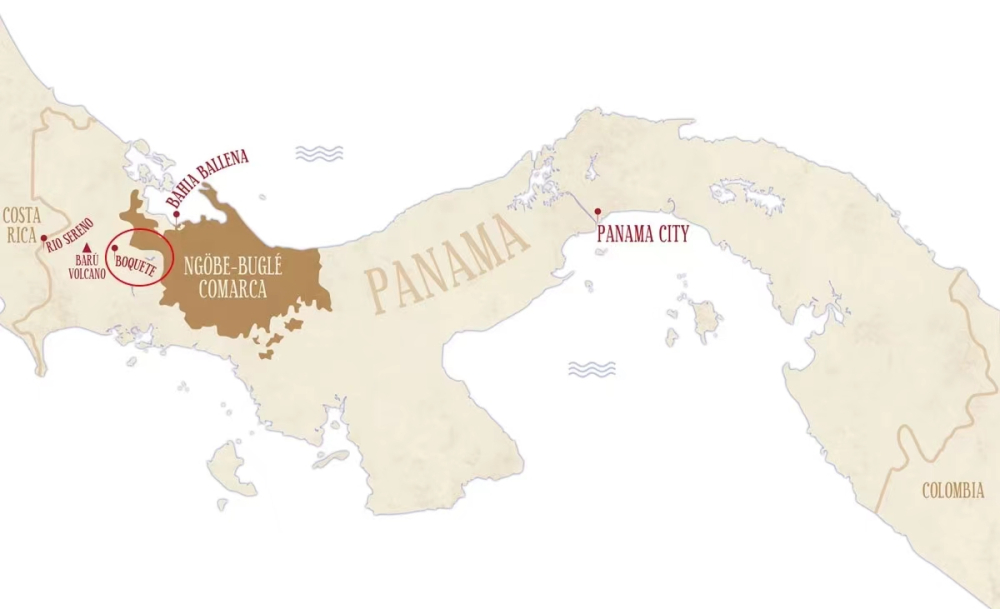
The Geisha produced under Esmeralda Special is selected from the two sub-regions of Jaramillo and Cañas Verdes, requires a growing altitude of 1,600-1,800 meters, and a cupping score of 90 points or above. We sometimes see auction Red Label Geisha lots, which are actually portions selected by Hacienda La Esmeralda from its divided plots to participate in an internal independent auction. Non-auction Red Label also comes from the same plots, but its price is considerably lower than auction Red Label.
FrontStreet Coffee: Red Label Geisha Coffee Beans
Region: Boquete
Estate: Hacienda La Esmeralda, Cañas Verdes
Altitude: 1,700+ meters
Variety: Geisha
Processing Method: Natural
Flavor: Lemon, honey, berries, orange peel, mango, cream, citrus
Green Label Geisha consists of lots that do not independently participate in competition. Its growing altitude is likewise between 1,600-1,800 meters, and it is also selected from micro-lots grown in Jaramillo and Cañas Verdes. Green Label does not indicate a specific plot name; Hacienda La Esmeralda harvests and sells the coffee beans within this range as a blend, so it is normal for flavors similar to Red Label Geisha to appear.
There is also a Blue Label Geisha, which uses Geisha coffee from 1,400-1,500 meters in altitude, harvested from all three sub-estates of Hacienda La Esmeralda, and only washed processed. Because Daniel and his sister Rachel wanted to elevate Hacienda La Esmeralda's overall positioning, Blue Label Geisha lots were discontinued between 2019 and 2022, and the Geisha coffee from that area was resold to a brand, which launched "Las Rocas," also known as Volcanic Rock Geisha coffee beans—what we call Blue Label.
Geisha in both Red Label and Green Label lots is available in either natural or washed processing. Red Label's flavor presents a uniquely intense and rich floral aroma, complex fruity acidity, and multi-layered sweetness. Although Green Label is not as high a grade as Red Label, it still retains Geisha's classic flavors: jasmine floral aroma, the juicy feel of citrus and berries, and a long finish. Blue Label Geisha, available only in washed processing, shows a soft, fragrant fruity profile, though its flavor is somewhat less substantial compared with Red Label and Green Label.
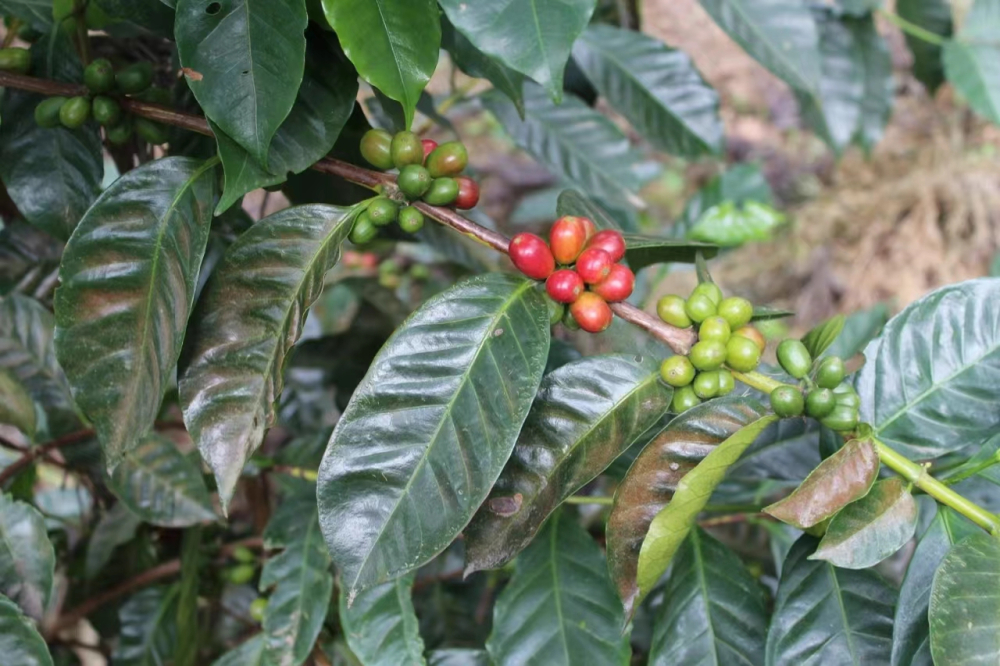
FrontStreet Coffee: Green Label Geisha Coffee Beans
Region: Boquete
Estate: Hacienda La Esmeralda, Cañas Verdes
Altitude: 1,600-1,800m
Variety: Geisha
Processing Method: Natural
Flavor: Jasmine, ginger flower, citrus, cream, lemon, green tea
Of course, Front Street believes Geisha is widely popular not only because of its stunning flavor, but also because the Geisha variety shows distinctive deliciousness across different origins. Therefore, Front Street's bean list already has 6 Panama Geisha coffees, which shows the diversity of Geisha's flavors. For example, the Guarumo Estate Geisha coffee that won the championship in the natural group at the 26 th Best of Panama in 2022 has a particularly "bold" acidity, and on top of Geisha's original rich floral and fruity aroma, it also highlights a malt-fermented mouthfeel. Because the lot's output is not large, Front Street has only put it on the store shelves so everyone can taste it in person.
Brewing Recommendations
Front Street takes into account that different lots of Geisha are grown in different environments, and the roaster will make corresponding adjustments based on the characteristics of the coffee beans, but the main roasting direction is to highlight Geisha's floral aroma and fruity acidity, using a medium-light roast.
Generally, when brewing high-altitude hard beans with a flavor profile that leans toward prominent acidity, Front Street recommends using a higher water temperature of 92-93°C to extract more aromatic substances.
Dripper: V60
Water temperature: 92-93°C
Dose: 15 grams
Coffee-to-water ratio: 1:15
Grind size: 80% passing rate on a 20 -mesh standard sieve
For brewing, Front Street uses staged extraction: after grinding the coffee, pour it into the filter paper, start pouring 30g of water from the center and bloom for 30 seconds, paying attention to maintaining a steady circular pour with a small stream from the inside out throughout. In the second stage, pour 95g of water, and once the coffee liquid has almost finished draining, pour the third stage of 100g, and once all the coffee has filtered through, remove the dripper. The time is about 2 minutes, with a margin of about 10 seconds either way.
Front Street compared the naturally processed Red Label Geisha lot with Green Label Geisha: after grinding the Red Label Geisha, you can already smell an intense rose aroma; on the palate there are tropical fruits such as mango, and the texture is smooth as cream—it does not feel like drinking coffee at all, but more like a cup of floral and fruity tea. Green Label Geisha's flavor is clearer, with jasmine aroma, the sweet-and-sour taste of berries and lemon, and a long green tea finish.
The above content is compiled by CoffeeHunters, a coffee news website.


