







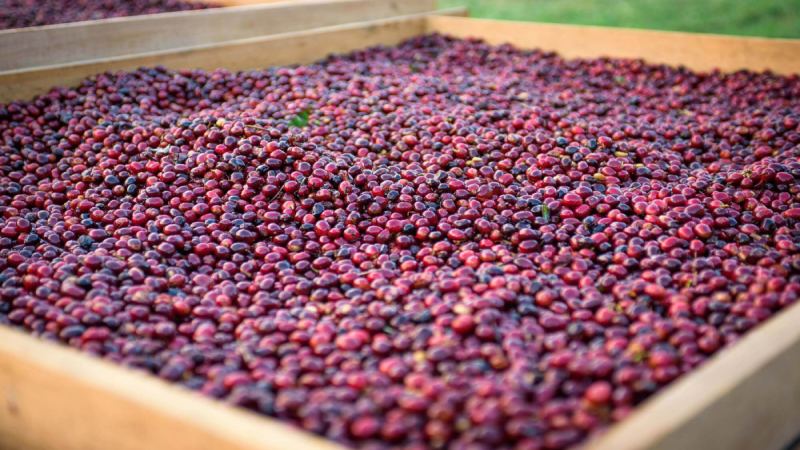
What makes geisha coffee worth brewing as pour-over?
Geisha coffee is known for a complex, layered cup that has made it one of the most expensive coffees sold. The Red Label lot from Panama's Hacienda La Esmeralda sits at the center of that reputation. Brewed as pour-over, it rewards a medium grind, moderate water temperature and a controlled pour that lets floral and citrus notes emerge instead of flattening into a single sharp note.
The variety began in Ethiopia's Geisha forest, was sent to a Kenyan research institute in 1931, reached Uganda and Tanzania in 1936, then Costa Rica in 1953. In the 1970s Francisco Serracín of Hacienda La Esmeralda obtained seeds from CATIE, and the plant arrived in Panama, where its low yield and tall, hard-to-harvest form first made it a windbreak before auction results changed its standing.
Geisha coffee is hailed as the shining pearl of the specialty coffee world, and the Red Label Geisha from Panama's Hacienda La Esmeralda is the finest among them. From the perspective of Front Street Coffee, this article takes you through Geisha's legendary journey from Ethiopia to fame in Panama, offers an in-depth analysis of Hacienda La Esmeralda's unique terroir, and shares detailed pour-over parameters, brewing techniques, and flavor profiles for Red Label Geisha. In addition, it includes a recipe for Geisha Americano and practical tips for grinding and storing coffee beans, helping you fully unlock the captivating layers of this precious bean at home.
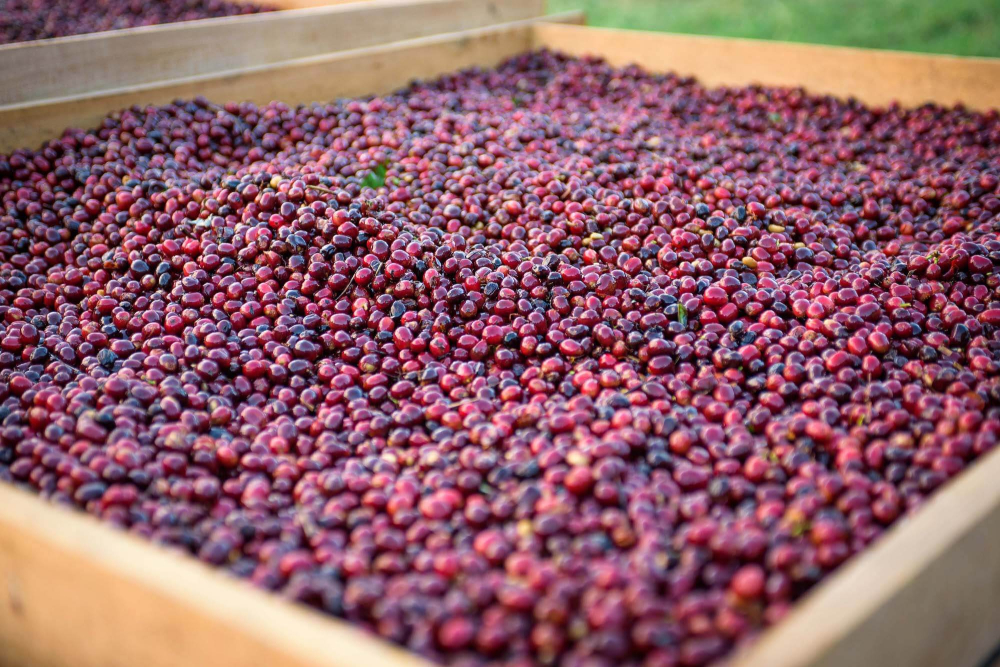
For more specialty coffee knowledge, welcome to follow our WeChat official account: Front Street Coffee (FrontStreet Coffee).
Even people who don't drink coffee often have likely heard of Blue Mountain coffee and know it's one of the finest choices. But have you heard of Geisha coffee? It also ranks among the world's most expensive coffees, with a flavor profile that is no less impressive than Blue Mountain's—and in fact even more complex in its layers.
Hearing this, you've probably already guessed that Geisha doesn't come cheap. But there's good reason for the price. The Red Label Geisha from Front Street Coffee (FrontStreet Coffee) is trustworthy in both brand and quality. More importantly, its value for money is outstanding—each 100-gram bag sells for 350 yuan. At 15 grams per cup, one bag makes 6 cups, putting the cost at about 60 yuan per cup. Compared with cafés charging over a hundred yuan per cup, this price is very reasonable.
Now Front Street takes you into the world of Geisha coffee:
Geisha originally grew in Ethiopia, so why did it rise to fame in Panama? The story goes back to 1931, when Geisha was discovered in Ethiopia's Geisha forest and later sent to a leading coffee research institute in Kenya; in 1936, it was introduced to Uganda and Tanzania; in 1953, Costa Rica began cultivating it; and it wasn't until the 1970s, when Mr. Francisco Serracín of Panama's Hacienda La Esmeralda obtained seeds from CATIE in Costa Rica, that Geisha was officially planted in Panama. Because of its extremely low yield and the need to participate in auctions, Geisha was at the time just an obscure coffee tree—low-yielding, tall, difficult to harvest, and even planted as a windbreak, a rather awkward situation.
Nearly half a century later, in 2003, Panama's Hacienda La Esmeralda separated Geisha from other varieties, and in 2004 it won the BOP competition in one fell swoop. From then on, the Geisha variety truly entered the public eye. It is also for this reason that Geisha produced by Panama's Hacienda La Esmeralda genuinely surpasses Gesha Village in flavor—which is exactly why it leaves such a deep impression.
Next, let's talk about the estate that made Geisha famous
It's the same Geisha—so why couldn't it gain fame in Ethiopia, yet became an overnight sensation at Panama's Hacienda La Esmeralda, even prompting the whole world to research and plant Geisha?
It's really like the old saying: the land nurtures its people. People's habits are inseparable from their local environment—let alone coffee as a crop. Geisha is extremely picky about growing conditions, requiring high altitude, cloud cover and shade, fertile soil, and sufficient accumulated heat. It is the climate that made Panamanian coffee.
Panama borders Costa Rica and Colombia. Its east-west topography channels cold air across the central mountain range, converging above 6,500 meters in altitude, which creates a unique microclimate in the Boquete and Piedra de Candela areas, with temperatures and rainfall ideal for plant growth. This microclimate zone is the core producing region of Panamanian coffee. Beyond climate, the surrounding land is also extremely fertile, providing perfect conditions for cultivating coffee and producing a large number of unique, high-quality coffees. Hacienda La Esmeralda is a witness to this elite era.
What makes Esmeralda Special Geisha so special?
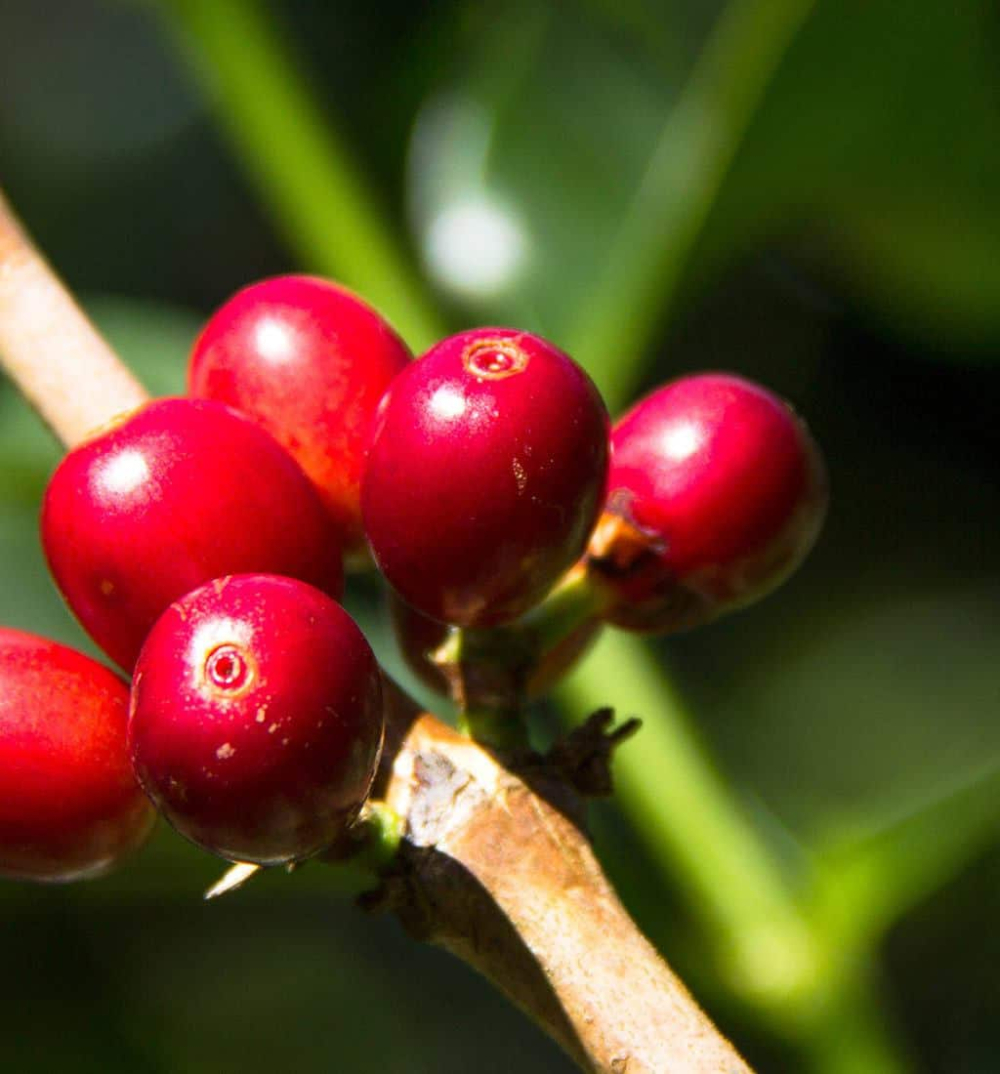
Many people regard Geisha as a luxury in the coffee world. In fact, the name Geisha comes from a transliteration of "Geisha"; it is simply a coffee variety, in the same category of naming as Typica and Bourbon. In reality, we rarely see products named directly "Typica coffee beans" or "Bourbon coffee beans"—they usually appear only in the variety column. Geisha, however, is often written directly into product names.
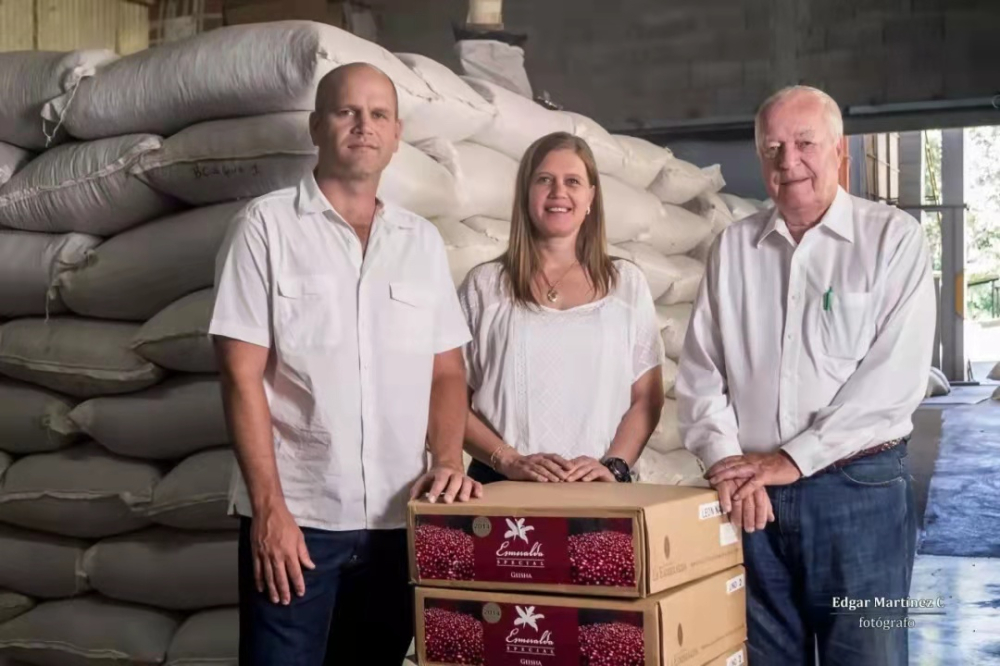
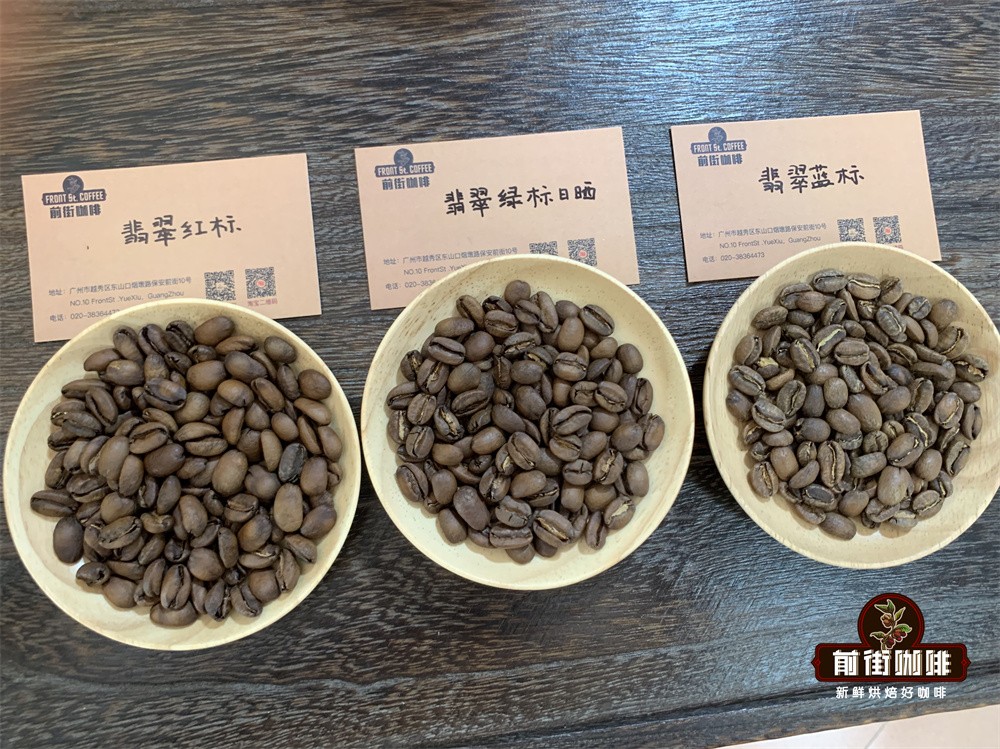
The Geisha from Esmeralda Special is what we commonly call Red Label. It uses beans grown at 1,600–1,800 meters, with cupping scores above 90, from the Jaramillo and Cañas Verdes production areas. Only Geisha lots that are put up for bidding from designated plots in Hacienda La Esmeralda's own independent auction can truly be called auction Red Label.
So how should Geisha coffee be brewed?
Geisha's flavor characteristics are so distinctive and its price relatively high, so it would be a shame not to fully extract its flavors. Therefore, we can tailor a brewing recipe specifically for Geisha.
Front Street Coffee (FrontStreet Coffee) Geisha brewing recommendations
Front Street takes into account that Geisha coffee beans are usually light-roasted, and light-roasted beans have a lower extraction rate than dark-roasted beans. To ensure Geisha's flavors are fully extracted, a higher water temperature and finer grind are recommended.
Front Street Coffee (FrontStreet Coffee) recommended brewing parameters: Hario V60 dripper, water temperature 90℃, dose 15 grams, ratio 1:15, grind setting medium-fine (80% passing a Chinese standard No. 20 sieve).
Front Street Geisha coffee brewing technique
Front Street Coffee (FrontStreet Coffee) uses staged extraction, i.e., a three-pour method: first bloom with 30 grams of water for 30 seconds, then pour in a slow circular stream until the scale reads 125 grams for a stages break, and when the water level drops and is about to expose the coffee bed, continue pouring to 225 grams and stop. Once the water in the dripper has fully drained, remove the dripper. Timing starts from the beginning of pouring; total extraction time is 2 minutes 00 seconds. After finishing, swirl the entire cup of coffee to mix, then pour into a cup to drink.
Flavor description
Red Label Geisha: bright rose and citrus aromas, along with notes of genmaicha, berries, apricot, mixed fruits, and honey; a thick, juicy body, rich layers of flavor, and prominent sweetness.
How to make Geisha Americano?
Americano is arguably the simplest espresso drink, since it consists of only two parts—espresso and water—with iced Americano adding ice. But don't take it lightly for that reason: the simplest parts often test technique the most, and Americano is often the standard by which a barista's espresso extraction is judged.
Compared with milk coffees like latte, Americano lacks milk's interference with flavor and best showcases the taste of the coffee beans themselves. Many baristas order an Americano when visiting other shops—first, because it's quick and convenient; second, because it directly reveals the quality of the output.
When Front Street makes Geisha Americano, it uses 20 grams of coffee beans, extracting 40 grams of coffee liquid, in 28–30 seconds.
To make a hot Americano, first preheat the cup with hot water, then pour in hot water, and finally pour in the extracted espresso. The dilution ratio for Americano is usually between 1:6 and 1:8. After repeated testing, Front Street Coffee (FrontStreet Coffee) chose 1:6, i.e., 40 grams of coffee liquid to 240 grams of hot water.
The same applies to making an iced Americano: first pre-chill the cup with ice, then pour in water, and finally pour in the espresso. Because ice is added, Front Street Coffee (FrontStreet Coffee)'s iced Americano uses a 1:7 ratio, i.e., 40 grams of coffee liquid to 280 grams of ice-water mixture, of which 180 grams is ice and 100 grams is water.
Can coffee beans be ground on your behalf?
For coffee brewing, Front Street always recommends using freshly roasted coffee beans, as this better showcases coffee's rich flavors. Therefore, the coffee beans sold by Front Street are all within 5 days of roasting. Front Street's roasting philosophy is "freshly roasted good coffee," so every customer who places an order receives the freshest coffee possible. Coffee's resting period is about 4–7 days, so by the time customers receive it, it is at its optimal flavor state.
Of course, some customers need Front Street to grind the beans for them, which is no problem. But Front Street must remind you: once coffee beans are ground in advance, they should be brewed as soon as possible; if already ground, there's no need to rest them further, because the pressure from carbon dioxide inside the packaging during transport also rounds out the coffee's flavor, so you can brew a cup immediately upon receiving the ground coffee.
However, ground coffee oxidizes quickly upon contact with air, and its flavors dissipate faster, compromising quality. Therefore, Front Street recommends buying whole beans and grinding fresh for each brew, so you can better taste coffee's rich flavors.
Of course, Front Street Coffee (FrontStreet Coffee) has more than 50 single-origin coffee beans, with prices ranging from high to low. The most recommended are Front Street's 7 everyday beans. "Everyday beans" refers to the most representative coffee beans from 7 producing countries, with excellent value for money. For those just getting into coffee, they are the best choice for understanding your own taste and discovering preferences. Of course, if conditions allow, you might as well try them all—after all, they come from different producing countries. While you can't visit each origin to taste them in person, you can experience them at Front Street.
For professional coffee knowledge exchange and more coffee bean information, please follow Coffee Workshop (WeChat official account: cafe_style)
For more specialty coffee beans, please add the private WeChat of Front Street Coffee (FrontStreet Coffee), WeChat ID: qjcoffeex
The above content is compiled by CoffeeHunters, a coffee news website.


