







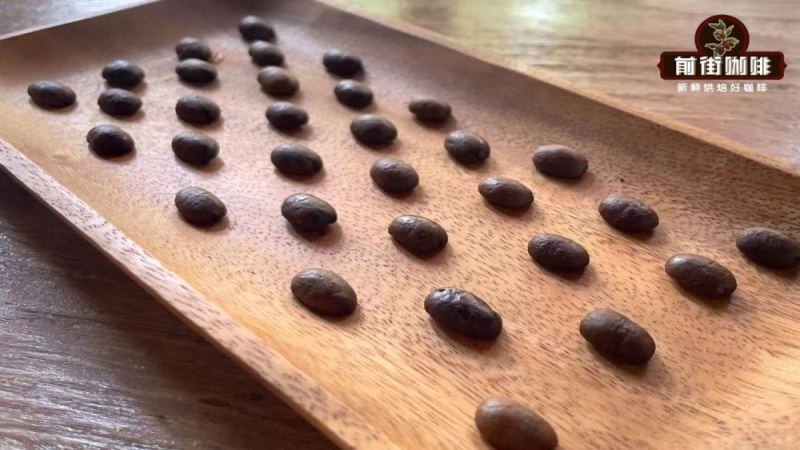
How Do Espresso Coffee Beans Compare with Mandheling?
Espresso coffee beans and Mandheling are not simply a matter of tasty versus not tasty. Espresso is extracted under pressure at about 9 bar with water between 90.5 and 96 degrees Celsius for 20 to 30 seconds, producing a concentrated liquid at a coffee-to-liquid ratio of roughly 1:2 to 1:3.
Mandheling, an Indonesian single-origin, shares espresso's outstanding body and smooth entry but adds herbal and spice notes typical of the region. The article sorts out how single-origin beans and blends differ in mouthfeel, concentration, and extraction, so readers can choose based on preference.
Many coffee enthusiasts wonder: between espresso and Indonesian Mandheling coffee, which one better suits their taste? The difference between the two is not simply a matter of "tasty" versus "not tasty." In this article, Front Street Coffee (FrontStreet Coffee) starts from the definition of espresso, the flavor characteristics of Mandheling coffee, and the logic behind using single-origin beans versus blend beans, to systematically sort out the essential differences between the two in terms of mouthfeel, concentration, and extraction method. At the same time, Front Street has also compiled detailed flavor information on several popular espresso blend beans and Indonesian Mandheling single-origin beans from the shop, helping readers make a clearer choice based on their own preferences.
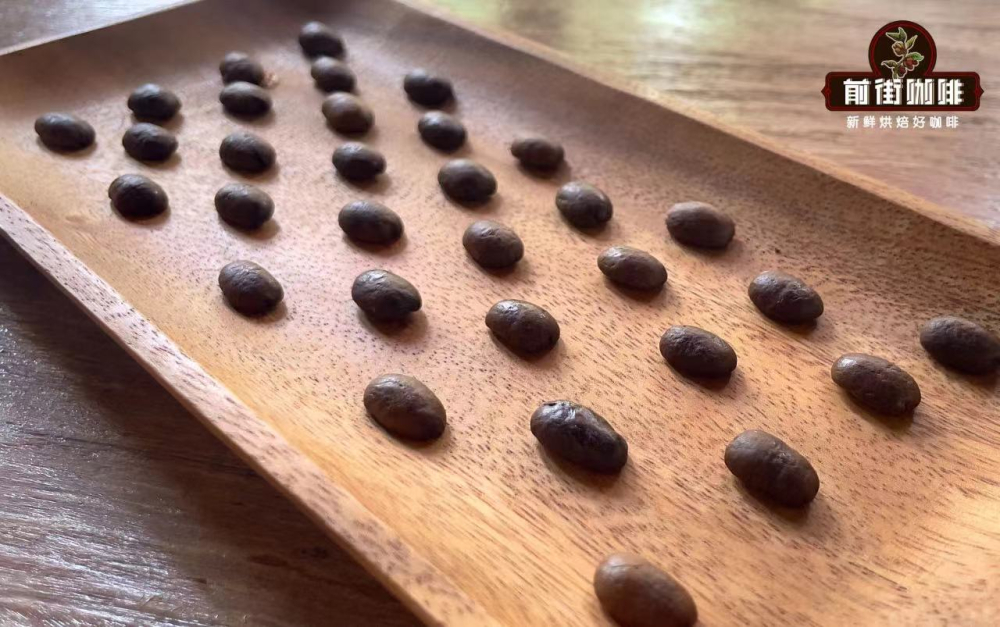
When people mention espresso, the first thing that comes to mind is often its rich, smooth, and full-bodied mouthfeel. Among the nearly fifty single-origin coffee beans Front Street has tried on its own bean list, Indonesian Mandheling also shows similar qualities—outstanding body and a smooth entry—but what sets it apart is that Mandheling also carries the herbal and spice notes unique to the Indonesian producing region. So, between Mandheling coffee and espresso, which one is more worth trying? Front Street Coffee (FrontStreet Coffee) will explain them one by one below.
What is espresso?
Let's start with the concept. The so-called espresso literally means Italian-style coffee, which must be extracted with an espresso machine, and the liquid produced by the machine is espresso. Although espresso can be drunk directly, its flavor is too concentrated and intense, and most people find it hard to accept, so it usually needs to be blended with milk to become the common espresso drinks on the market. Taking Front Street Coffee (FrontStreet Coffee) stores as an example, mocha, cappuccino, latte, and the like all belong to this category.
Then what exactly is espresso?
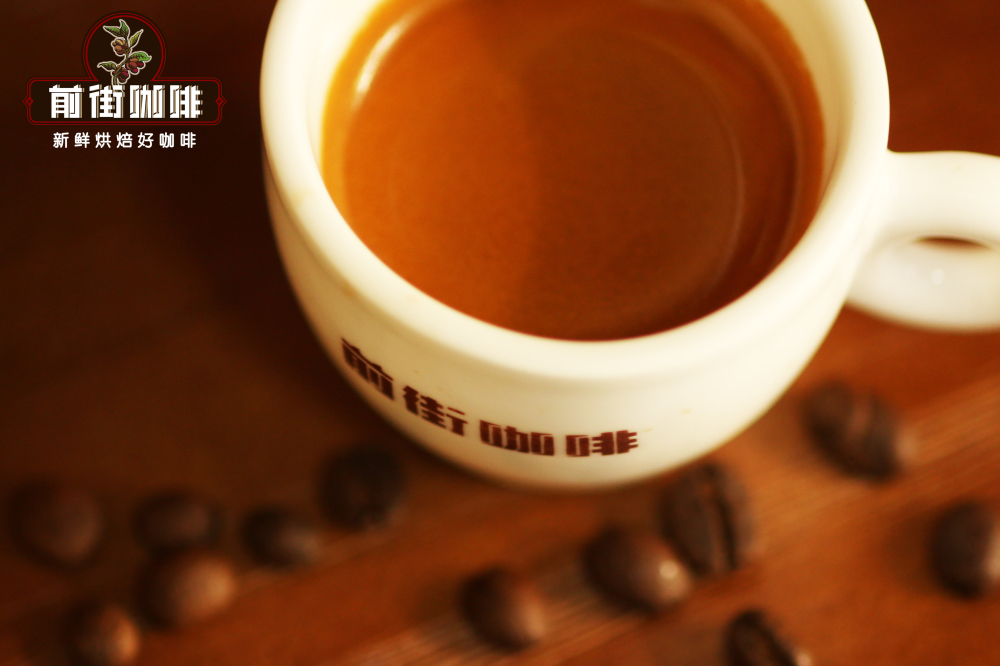
Front Street Coffee (FrontStreet Coffee) is used to defining espresso with specific parameters: its coffee-to-liquid ratio roughly falls between 1:2 and 1:3. For example, take 20 grams of very finely ground coffee powder, place it under a pressure environment of about 9 bar, and extract it with hot water at 90.5 to 96 degrees Celsius for 20 to 30 seconds, finally obtaining about 40 grams of coffee liquid (the amount of a double espresso). These 40 grams of liquid are Espresso. Espresso has a strong bitterness on entry, but with careful attention, you can still catch the unique aroma of coffee, followed by a clear sweet aftertaste. That unique oily aroma is something single-origin coffee does not have.
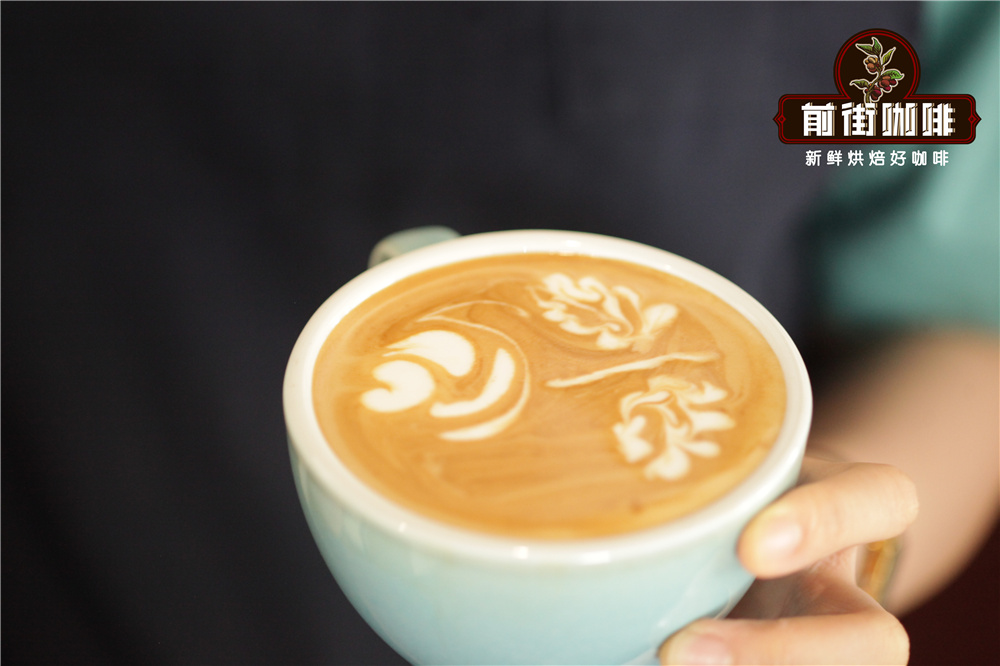
As for fancy drinks such as latte, cappuccino, mocha, and caramel macchiato, they are all evolved from espresso by adding milk and milk foam in different proportions, supplemented by flavoring elements such as caramel, chocolate sauce, and vanilla syrup.
What is Mandheling coffee?
Indonesian Mandheling is a single-origin coffee bean, that is, a coffee bean from a single producing region. Its flavor characteristics are rich, prominent aroma, obvious bitterness, high body, and a slight sweetness. The mouthfeel is solid and rich, and the acidity is pleasant. The aroma is pure, the acidity is moderate, and the sweetness is ample and intriguing. It is very suitable for deep roasting and can give off a heavy aroma. The characteristic of Mandheling is that it always uses the most unique bitterness to express the most unique sweetness.
What does single-origin coffee bean mean?
According to Front Street, single-origin coffee in the traditional sense has two interpretations, and the most widely circulated one refers to coffee of a single variety or a single producing region. This concept is beneficial to growers because it allows regional flavors to be distinguished from the source. At present, the more common statement is: coffee made using only coffee beans from a certain country or a certain producing region, with different brewing devices, and with appropriate grind size, coffee-to-water ratio, water temperature, and extraction time, can be called single-origin coffee. Tasting single-origin coffee is like tasting red wine; each one has its own unique charm, such as bitterness, acidity, sweetness, body, and the unique flavors given by a special origin.
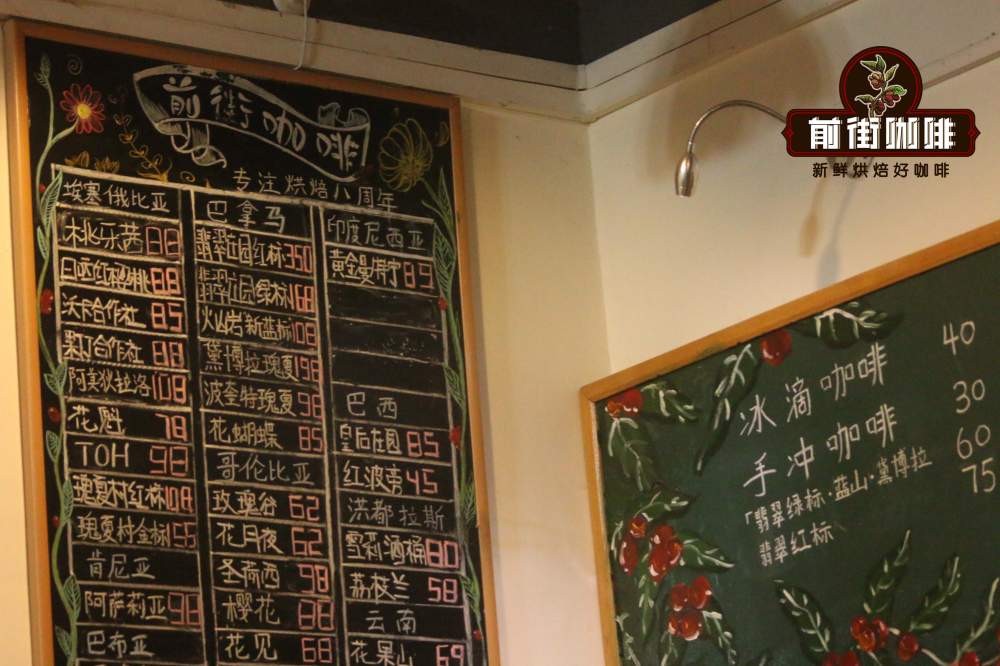
Front Street's bean list displays nearly fifty single-origin coffee beans, and the space on the store's small blackboard is even only enough to show a portion of them. The producing regions of these coffee beans almost cover the entire "Coffee Belt," and the varieties are also extremely rich. For certain classic producing regions, Front Street has also specially launched a daily-drinker bean series, allowing friends who are new to specialty coffee to explore the terroir of the producing regions as well.
Mandheling coffee beans are produced in the Sumatra region. As Front Street Coffee (FrontStreet Coffee) stated, it belongs to Indonesian single-origin coffee beans. So what coffee beans are used to make espresso?
What coffee beans are used for espresso?
Friends who often drink espresso know that most cafes mainly use espresso blend beans when making espresso. So can single-origin coffee beans be used to make it? The answer is yes. At present, espresso made with single-origin beans is defined as "single origin espresso," that is, the familiar Single Origin Espresso, abbreviated as SOE.
Then why is it not recommended to use single-origin beans from a single producing region to make espresso? The reason is that the espresso machine has a characteristic: it magnifies the most prominent flavor of the coffee beans exponentially. For example, Ethiopia's Yirgacheffe mainly has citrus and lemon acidity, and the machine further magnifies the acidity; while Indonesian Mandheling mainly has herbal, earthy, and somewhat bitter tones, and the machine magnifies the bitterness. Therefore, Front Street Coffee (FrontStreet Coffee) does not use coffee beans of a single variety to make espresso, otherwise the finished product would be severely unbalanced and the mouthfeel would be affected. This is also the fundamental reason why espresso mainly uses blend beans.
The core purpose of blending coffee is to maintain flavor stability and balance in mouthfeel. Coffee fruit is ultimately a crop, and every year climate and environmental changes cause flavor fluctuations. It may be sweeter this year and less sweet next year. Mixing several coffee beans together can better solve this problem, at least keeping the coffee flavor tasted each year relatively consistent.
What is the essential difference between espresso and single-origin coffee?
After comparing the above three aspects, Front Street Coffee (FrontStreet Coffee) can draw a conclusion: espresso can be single-origin coffee or not, and the difference between the two depends on the type of coffee beans used.
In other words, single-origin coffee can absolutely be used to make espresso. The boundary between espresso and single-origin coffee is actually distinguished by extraction method and liquid concentration—the coffee liquid extracted by an espresso machine and the coffee liquid obtained by other brewing methods have completely different concentrations. For example, Mandheling coffee made with a siphon or pour-over method cannot be called espresso; while Mandheling coffee made with a fully automatic or semi-automatic coffee machine can be called espresso.
So, Front Street Coffee (FrontStreet Coffee) can now give the answer: Mandheling and espresso cannot be simply compared as to which tastes better. If Mandheling coffee beans are used to make espresso, then it will most likely be more bitter than espresso made from ordinary blend beans, because Mandheling itself carries a strong herbal flavor and high body. But if Mandheling as single-origin coffee is compared with espresso, then the one with more prominent bitterness must be espresso.
Of course, with the continuous development of the coffee market, the choices of espresso blend beans and Mandheling coffee beans are also becoming increasingly diverse, and different choices will lead to differences in the flavor of the final brewed coffee. Next, Front Street Coffee (FrontStreet Coffee) will recommend several currently more popular espresso coffee beans and single-origin Indonesian Mandheling coffee beans in the shop.
Espresso coffee bean recommendations
Front Street Coffee (FrontStreet Coffee) Sunflower Warm Sun Blend Flavor: Obvious fruit acidity, a light berry aroma, vinous notes, rich chocolate flavor, and a clear sweet aftertaste. Recipe: Honduras Sherry : Yirga Red Cherry = 7:3
This blend is made by blending Yirgacheffe natural red cherry and Honduras Sherry. Front Street's design concept for this bean is that it can be used for both espresso and pour-over. When used to make espresso, the flavor it gives off has an obvious fermented vinous aroma. After entry, the acidity of citrus and berries immediately emerges, accompanied by the aroma of whiskey, and the finish is dark chocolate.
If this Warm Sun Blend is brewed by pour-over instead, the flavor is not as rich as when making espresso. After brewing, it presents a fermented vinous aroma and a little citrus aroma. When hot, there is only an obvious vinous aroma and a dark chocolate finish on entry. After the temperature drops, it slightly reveals the acidity of citrus and berries. Overall it is clean and fresh, without a vanilla cream-like mouthfeel.
Front Street Coffee (FrontStreet Coffee) Specialty Blend Flavor: Soft and slightly sour, fresh and sweet, nutty sweet aftertaste, overall not too stimulating, mild, with medium body. Recipe: Colombia : Brazil = 3:7
For this blend, Front Street used a combination of Brazil and Colombia. It tastes of a light roasted grassy note, slightly bitter within its freshness, sweet and smooth, with a pleasant finish. This is because coffee beans from Colombia's Huila producing region carry a pleasant acidity, an aromatic and mellow smell, moderate acidity, and a rich and intriguing sweetness; while coffee beans from Brazil's Cerrado producing region have a comfortable sweet-bitter taste and an extremely smooth entry. The combination of the two can be described as absolutely wonderful.
Front Street Coffee (FrontStreet Coffee) Commercial Blend Flavor: Caramel sweetness, nutty and cocoa-like, dark chocolate flavors, balanced acidity and sweetness, slightly sweet-bitter, with a lasting finish. Recipe: Colombia : Brazil : Robusta = 3:6:1
For this blend, Front Street used coffee beans from Brazil and Colombia, and added 10% Robusta. The taste is classic. Front Street believes this blend tastes of rich oils and mouthfeel, as well as caramel sweetness, and also carries nutty, cocoa-like, and dark chocolate flavors, with balanced acidity and sweetness, a slight sweet-bitter note, and a lasting finish. This commercial blend, like Front Street Coffee (FrontStreet Coffee) Specialty Blend, uses a ratio of Colombian and Brazilian coffee beans. The difference is the addition of Robusta, which provides rich oils and makes the coffee mouthfeel fuller.
The espresso moka pot coffee bean recommended by many baristas at Front Street Coffee (FrontStreet Coffee) - Front Street Black Cocoa Blend Flavor: With soft fruit acidity, caramel sweetness, nutty and dark chocolate flavors, smooth and viscous, but the taste is on the light side. Recipe: Yunnan : Brazil = 3:7
For this blend, Front Street used a combination of Brazil and Yunnan. Front Street believes it tastes of soft fruit acidity and caramel sweetness, as well as nutty and dark chocolate flavors, smooth and viscous, but the taste is on the light side. This is because Yunnan's natural conditions are very similar to Colombia's: high altitude, large temperature difference between day and night, and a mellow flavor profile, with moderate acidity, a rich and mellow taste, uniform beans, high oil content, and fruity notes. Its quality and mouthfeel are similar to Colombian coffee, but the taste is still slightly lighter than Colombian. Meanwhile, coffee beans from Brazil's Cerrado producing region have a comfortable sweet-bitter taste and an extremely smooth entry. Therefore, the flavor of these two coffee beans mixed together is also quite good. This espresso moka pot coffee bean recommended by many baristas - Front Street Black Cocoa Blend coffee beans - is very cost-effective and suitable for espresso beginners and small coffee shops.
Indonesian Mandheling coffee recommendations
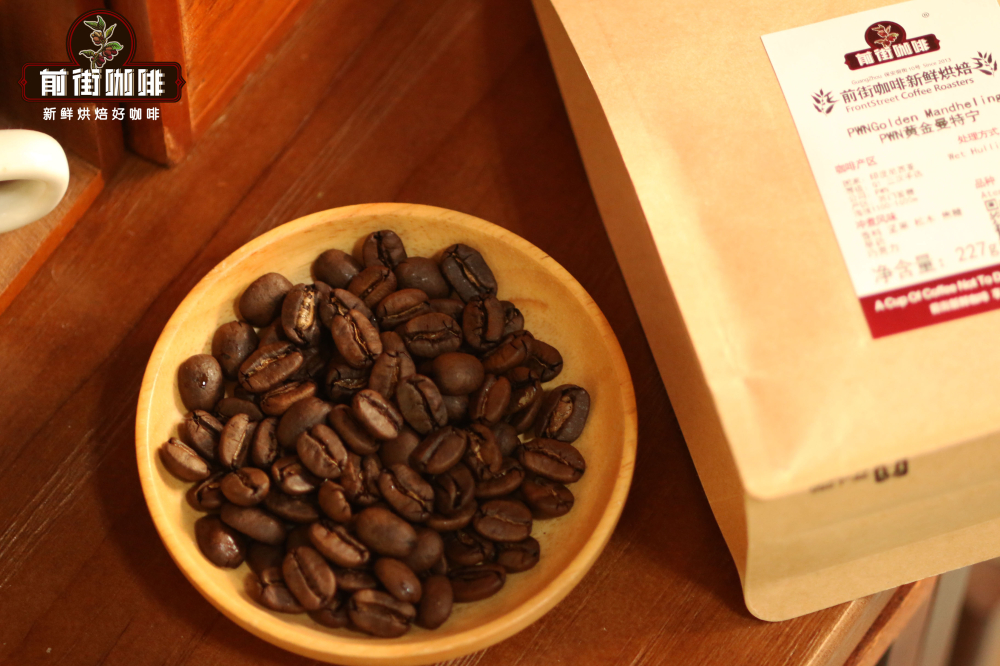
Front Street Coffee (FrontStreet Coffee) Indonesian Golden Mandheling Coffee Beans Country: Indonesia Producing region: Sumatra, Aceh, Gayo Mountain Altitude: 1100-1600m Variety: Ateng Processing method: Wet-hulled method Flavor: baked toast, nuts, pine, caramel, herbs
This Golden Mandheling from Front Street comes from Indonesia's PWN company and is produced in Gayo Mountain, Aceh, Sumatra. According to Front Street's cupping and brewing of this latest Golden Mandheling coffee, it was found that this Front Street PWN Golden Mandheling has a more obvious baked toast flavor and a fuller mouthfeel.
When producing Golden Mandheling, PWN implements very strict specification standards: above 18 screen size, fewer than 3 defective beans (in a 300g green bean sample), belonging to the highest grade G1, with a darker green color and a neat flat bean shape. PWN's specification standards for Golden Mandheling are even stricter. On this basis, it further performs 3 rounds of manual hand sorting to ensure defective beans are completely removed, thereby ensuring the extremely clean mouthfeel and obvious sweetness of Front Street PWN Golden Mandheling. After strict screening, Front Street Coffee (FrontStreet Coffee) found that this Golden Mandheling not only no longer has the earthy miscellaneous flavors unique to ordinary Mandheling, but also drinks cleaner and clearer.
Front Street Coffee (FrontStreet Coffee) Indonesian Lintong Mandheling Coffee Beans Country: Indonesia Producing region: Sumatra (Lintong) Altitude: 1100-1600m Variety: Typica, Caturra Processing method: Wet-hulled method Flavor: baked toast, nuts, caramel, pine, herbs
Lintong Mandheling is produced in the Lintong mountain area of north-central Sumatra, near Lake Toba. Front Street Coffee (FrontStreet Coffee)'s entry-level daily-drinker bean from the Indonesian Mandheling producing region comes from here. Lintong Mandheling also uses the unique wet-hulled method, creating its characteristics of low acidity and high body.
The above is the relevant content compiled by Front Street Coffee (FrontStreet Coffee) on the differences between Mandheling coffee and espresso and the comparison of their mouthfeel characteristics. At the same time, Front Street Coffee (FrontStreet Coffee) also hopes this article can help coffee enthusiasts who want to learn related knowledge, so that they can choose coffee beans that suit their own taste in the future. Front Street has noticed that when buying coffee beans, some friends generally ask Front Street Coffee (FrontStreet Coffee) baristas for some brewing parameters, and Front Street also sets corresponding brewing parameters for each bean.
Generally speaking, coffee beans with a full-bodied mouthfeel are roasted darker. When Front Street brews this type of coffee bean by pour-over, the grind size chosen is a 70% to 75% passing rate on the China standard No. 20 sieve. For making espresso, a flour-like grind is used, and the specific grind size still needs to be adjusted according to different machines and other factors.
In this era that emphasizes fresh roasting, many friends most enjoy seeing the bulging "blooming burger" when brewing coffee. The coffee beans Front Street sends to friends are also freshly roasted within 5 days, and by the time they are received, they have just passed the 4 to 7 day resting period, and the flavor has also become stable. Some friends who do not have grinding equipment at home will note a grinding service request, and Front Street also provides this service. However, friends need to note that after coffee beans are ground into powder, the degassing activity becomes more active, and flavor substances dissipate faster, greatly shortening the enjoyable tasting period. Therefore, Front Street recommends buying whole beans and grinding fresh before brewing, so as to taste the best flavor.
Professional coffee knowledge exchange More coffee bean information Please follow Coffee Workshop (WeChat public account cafe_style)
For more specialty coffee beans, please add the private WeChat of Front Street Coffee (FrontStreet Coffee), WeChat ID: kaixinguoguo0925
The above content is compiled by CoffeeHunters, a coffee news website.


