







How Does the Arabica Coffee Bean from Minas Gerais Taste?
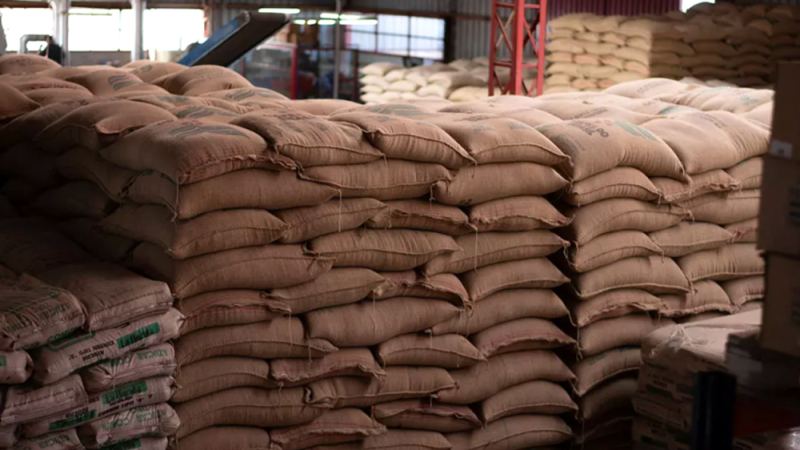
Brazil is a major producer of the Arabica coffee bean, and its output moves international futures prices. Minas Gerais, through the Cerrado and Mogiana regions, yields specialty coffee with low acidity, balance, a smooth mouthfeel, and nutty, peanut, and caramel aromas, useful both as a blend base and on its own.
In peak years Brazil has supplied more than 30 percent of the world's Arabica coffee bean production, but recent output has fallen. Extreme weather, a weaker dollar, high oil prices pushing farmers toward corn, and rising domestic consumption have tightened supply. The coffee process known as pulped natural and its advantages are covered in detail.
Brazil is one of the most important producers of Arabica coffee beans in the world, and fluctuations in its output directly affect the movement of international coffee futures prices. The Cerrado and Mogiana regions in Minas Gerais, with their specific altitude and soil conditions, produce specialty coffee with a balanced flavor and a rich, sweet body. This article will systematically introduce the overall flavor characteristics of Brazilian coffee, changes in production in recent years, and the origin and advantages of the pulped natural process, and will also explain in detail the origin background, cupping performance, and brewing parameters of two Brazilian single-origin beans under Front Street Coffee—Cerrado and Queen Farm—to help coffee lovers gain a comprehensive understanding of this irreplaceable coffee-producing region.
The overall flavor profile of Brazilian coffee is mainly low acidity, balance, and a smooth mouthfeel, often accompanied by nutty, peanut, and caramel aromas. It is suitable both as a base for blends and as a single-origin coffee on its own, making it an indispensable producing region in the global coffee landscape. Below, Front Street Coffee will outline the main characteristics of Brazilian coffee beans for everyone.
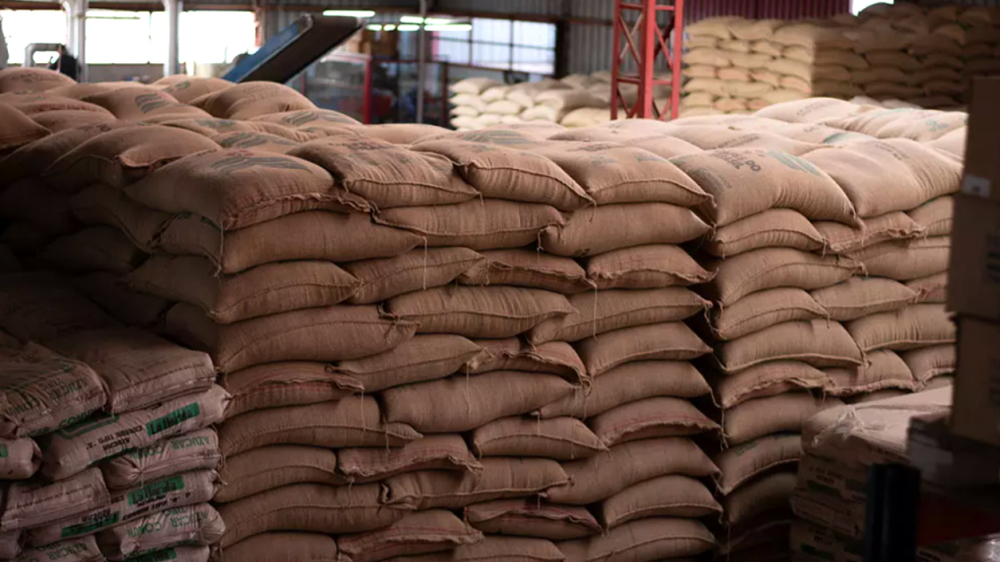
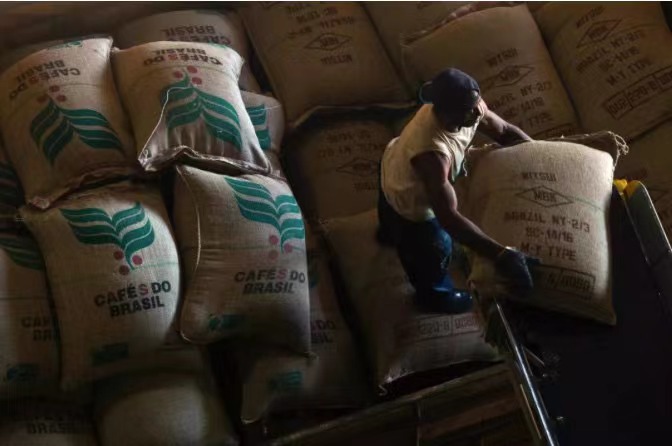
Brazil is a major producer of Arabica coffee beans in the world, and the scale of the country's Arabica coffee harvest directly affects the futures market for international Arabica green coffee beans. Relevant data show that in Brazil's highest-yield coffee years, its output can account for more than 30% of the world's total Arabica coffee bean production.
However, in recent years, Brazil's coffee output has not been ideal. Extreme weather caused by the greenhouse effect has led to a sharp reduction in Brazil's Arabica coffee bean production, a weakening US dollar has squeezed the profit margins of coffee farmers, soaring oil prices have prompted many local growers to switch to growing corn to produce renewable energy, and combined with the impact of the global pandemic, Brazil's domestic coffee consumption has continued to rise, leaving Brazilian coffee beans overall in a state of tight supply.
The level of Arabica coffee futures prices mainly depends on the Arabica coffee bean inventories of the New York Intercontinental Exchange. As the largest source of inventory supply, Brazil's increases or decreases in supply have always been a key factor influencing the direction of coffee futures prices.
Generally speaking, the higher the altitude at which coffee beans are grown, the greater the temperature difference between day and night, and the slower the coffee fruit grows, thereby giving the beans more time to develop a better "physique," increasing bean density and accumulating richer flavor layers.
Compared with other coffee-producing countries in Central and South America, Brazil's coffee-growing altitude is noticeably lower, and in addition, the terrain is flat, there is a lack of microclimates, and the coffee trees are grown without shade.
For this reason, Brazilian coffee beans have a softer texture, and their flavor is not as rich in aroma as beans from other producing regions. Generally speaking, Brazilian coffee beans have lower acidity. Better-quality Brazilian beans show nutty and chocolatey sweetness, balanced acidity and bitterness, and good body; poorer-quality Brazilian beans may have woody and earthy notes.
The most common coffee processing methods are natural and washed. Brazil initially mostly used the natural process, but later, in order to improve bean quality, it developed the pulped natural process in 1990. As early as the mid-18th century, the Dutch were already using the washed process for coffee; however, washed processing consumes a huge amount of water and is not realistically feasible in Brazil.
The Brazilian-style pulped natural procedure is as follows: first, the coffee fruit is passed through a water tank to remove defective and floating cherries, then the skin, pulp, and part of the mucilage layer are removed, followed by washing for one hour. Because the soaking and fermentation time is very short, the mucilage cannot be completely rinsed away, and some mucilage remains on the parchment. At this point, the sticky parchment beans are spread out on a drying patio to dry, preferably using well-ventilated African raised beds.
At this point, some friends may ask Front Street whether this is similar to the washed process. Front Street's explanation is that this is indeed the case. Brazil's pulped natural process is very close to the washed process; the difference is that its soaking time is much shorter than that of the washed process, so a portion of the mucilage is retained before entering the natural drying stage.
Compared with the traditional washed process, this method greatly saves water, reduces resource costs, and also changed the poor quality caused by Brazil's extensive natural drying. Because the skin and pulp have already been removed, the time required for sun drying is greatly shortened, and the chances of over-fermentation, mold, and infection are also reduced. It can be said that the pulped natural process is a unique method adapted by Brazil to local conditions.
On Front Street's bean list, there are 2 single-origin coffee beans from Brazil, namely Front Street Brazil Cerrado coffee beans and Front Street Brazil Queen Farm coffee beans. The former is intended to let everyone taste the basic flavor of the Brazilian origin, showing obvious roasted peanut, caramel, and chocolate flavors with a balanced mouthfeel.
The other comes from the Mogiana region next to South Minas, Queen Farm, at an altitude of 1400-1950m. This area is home to many growing families, some of which use traditional large-farm operating methods, while others adopt small-scale modern operations. The integration of modern technology with mountain coffee-growing culture has produced the highest-quality green coffee beans.
Through cupping, Front Street found that the coffee beans produced in this area have a clear sweetness like cane sugar. After medium-dark roasting by Front Street Coffee, the flavor of Brazil Queen Farm coffee shows the aroma of mixed roasted nuts, a full and smooth peanut-butter-like texture, and a clear sweetness like brown sugar.
One is coffee beans from the Cerrado region at an altitude of 1000 meters. The Cerrado region begins in Mato Grosso in southwestern Brazil, passes through the central-west of Minas, and reaches western Bahia in the north. The Cerrado coffee-producing region referred to by Front Street is not the entire Cerrado savanna, but is limited to the coffee-growing areas above 1000 meters in the central-west of Minas, which can be counted as the Cerrado coffee-producing region.
This area is the prime section of the Cerrado savanna. Only with high altitude and fertile soil can specialty coffee beans with clear sweetness, high body, and high cleanliness be grown. After medium-dark roasting by Front Street Coffee, the flavor of coffee from Brazil's Cerrado region shows nuts, peanuts, creamy smoothness, cocoa, and caramel.
How to brew Brazilian coffee beans?
Front Street Coffee stores usually use the Kono dripper for brewing. The difference between this dripper and the V60 is that the ribs of the Kono dripper extend only to 1/3 of the dripper, with 2/3 in a smooth state. When the filter paper fits completely against the dripper, air cannot pass through the dripper, and the speed at which water flows through during brewing slows down, thereby achieving an immersion effect and making the coffee fuller and richer.
Because the dripper itself has the effect of increasing extraction, Front Street Coffee recommends using a medium-coarse grind (70% passing through a Chinese No. 20 standard sieve), a water temperature of 88-89°C, and a 1:15 coffee-to-water ratio for brewing.
Front Street uses three-stage extraction: start the timer, use 30 grams of water for a 30-second bloom, then pour in a slow stream in circles until 125 grams, pause, and when the water level is about to expose the coffee bed, continue pouring until 225 grams and stop (timing starts from the beginning of the bloom). The extraction time is 2 minutes.
The above content is compiled by CoffeeHunters, a coffee news website.


