







How Do Washed and Double Washed Coffee Processing Differ?
Washed processing, also called the wet process, removes the outer skin and mucilage before the seeds are dried, which gives the cup high cleanliness and stable quality. It began in the West Indies in the 19th century and developed in Jamaica, where it was known as WIP, the West Indian process, and suited humid, rainy regions.
Specialty coffee producers now add modifiers such as double washed, K72 washed and dry fermentation washed to highlight a selling point, but the core steps stay the same. The extra fermentation time changes acidity and body: longer, controlled fermentation tends to build complexity, while a rushed wash keeps the profile simple, clean and predictable.
As one of the most traditional methods of processing green coffee beans, the washed method has long been favored by coffee enthusiasts for the cleanliness and quality stability brought by the de-pulping and washing process. With the development of specialty coffee, a variety of new names have emerged on the market, such as "double washed," "K72 washed," and "dry fermentation washed." How exactly do they differ from traditional washed? This article, from the perspective of Front Street, will sort out the historical origins and process characteristics of the washed method, and analyze one by one the fermentation details and flavor performance of these derivative processing methods, helping readers more clearly understand the impact of different washing processes on the coffee in the cup.
For more specialty coffee knowledge, please follow the WeChat public account: Front Street Coffee (FrontStreet Coffee)
The washed method is one of the most traditional and also most common methods of processing green coffee beans. The de-pulping and washing process not only greatly improves production quality, but also gives the coffee in the cup good cleanliness, making it a green bean processing form favored by countless coffee enthusiasts, including Front Street, of course.
With the gradual popularization of specialty coffee, more and more consumers have begun to pay attention to traceability information for single-origin coffee. Therefore, in order to highlight certain selling points, many producers add prefixes or modifiers to the names of processing methods, such as "double washed," "K72 washed," "dry fermentation washed," and so on. So how are they different from regular washed?
Before understanding these "new-style" processing methods, Front Street believes it is necessary to first sort out for everyone the origins of traditional washed.
Washed Method
Also called the wet process, translated from "Wet Process," it is a method of obtaining processed green beans by removing the outer skin and mucilage before the seeds are dried.
According to the relevant materials Front Street has reviewed, this wet process began in the West Indies in the 19th century and developed in Jamaica. At the time it was called WIP (West Indian process), and it was mainly suitable for humid and rainy regions. Corresponding to it was OIB (Oost Indische Bereiding, or East Indies preparation), which referred to traditional natural sun-drying.
Before the 1850s, people processed coffee cherries using the oldest natural sun-drying method. With the arrival of the Industrial Revolution, this "first depulp" coffee processing technology emerged. In the mid-19th century, Jamaica became one of the world's largest coffee-producing countries, producing about 70,000 tons of green beans each year. Because it has an island climate, the cherries were not easy to dry, so natural sun-drying was not very advantageous on this land.
In 1845, the invention of the world's first coffee pulper machine was patented by James Meacock from Kingston, Jamaica. This was a machine used to peel off the outer skin of coffee fruit and also to sort coffee. In this way, more and more inventions related to coffee pulpers were born one after another, and the washed method was officially applied to coffee production.
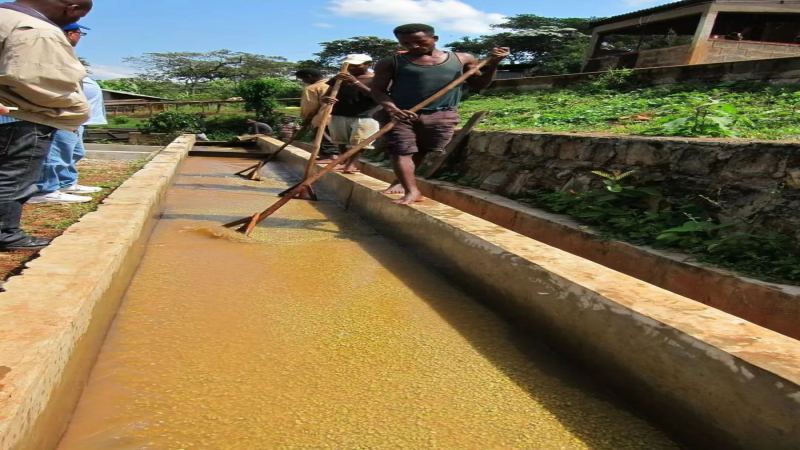
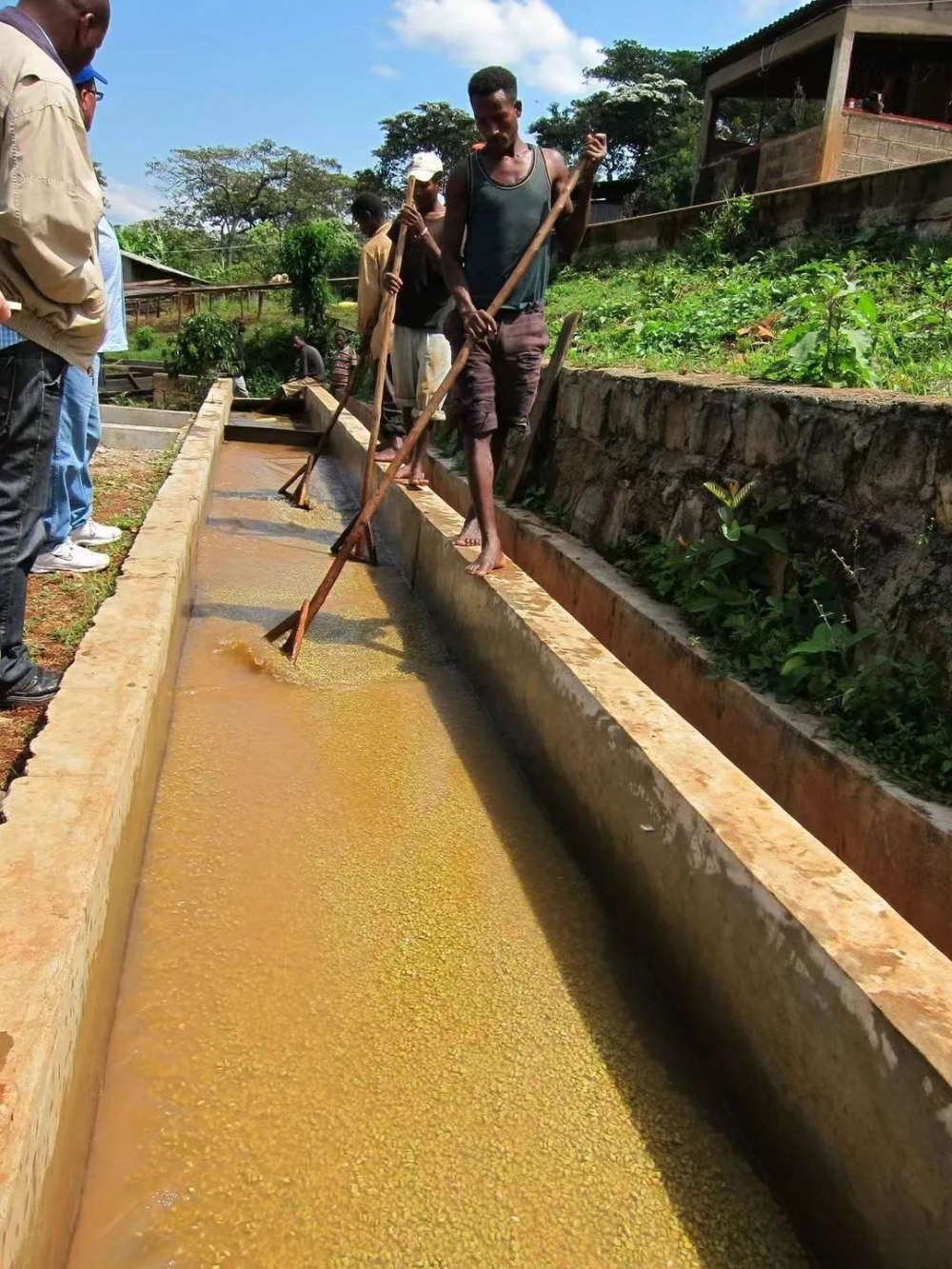
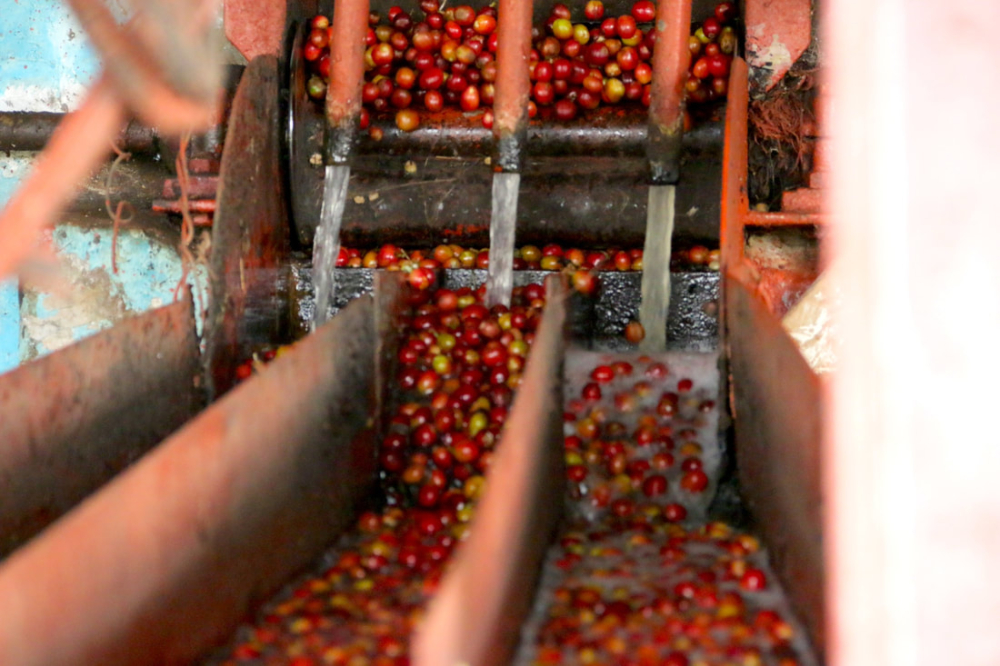
The steps of the traditional wet process are not complicated: flotation → depulping → fermentation → washing → drying → hulling → packaging. However, its implementation requires an adequate water supply, and because it relies heavily on mechanical assistance, producers adopting washed processing also need sufficient funds to invest in purchasing machinery. The rise of the washed method happened to coincide with early American plantations built by capital, which had enough operating funds, and with the invention of various pulpers/hullers created in response to the needs of the times, this also drove the widespread popularity of the washed method throughout the Americas.
Double Washed
The original wet process washed the fermented coffee beans once with clean water, rinsed off the mucilage, and then sent them directly to the drying yard to dry and be packaged. But in Kenya, coffee that had been washed once would be immersed again in a pool of clean water, then taken out and washed again before being sent to the drying yard for dehydration.
The reason Kenya initially changed regular washed processing into "secondary soaking" was not actually to pursue flavor, but because local drying yards were insufficient. Kenya is a typical cooperative operation model in Africa. During every harvest season, smallholders bring their picked fresh cherries to the processing factory all day long. The depulping and fermentation steps are relatively simple and not time-consuming, but drying each batch of fermented beans takes at least 5 to 7 days. Sometimes, when the amount to be processed was too large, there would be nowhere to dry the washed beans. So people had no choice but to pour the wet beans back into the pool and let them "cool off" first to avoid spoilage or contamination, until the drying yard was free and they could be taken out.
This form of washed processing with a second soaking is called "Double Washed," and at origin it is also called "Fully Washed," "Double Fermentation," and so on. Because Kenya was the earliest region where this processing method became popular, this type of washed coffee is also called "Kenyan Process."
Later, everyone discovered that this twice-fermented washed coffee, adapted to local conditions, not only helped stabilize quality control in production, but also gave the coffee layered fruity acidity. For example, Front Street Kenya Little Tomato uses double washed processing, and after brewing it often shows rich cherry tomato and preserved plum aromas, with a very distinctive flavor. Today, coffee produced by some estates in the Americas also uses this Kenyan-style washed processing.
K72 Washed Method
That is, the Kenyan 72-hour washed processing method, which can be understood as an additional extension of ordinary washed and double washed processing.
This washing process emphasizes control of fermentation time. First, it undergoes 24 hours of washed fermentation, then the detached mucilage is cleaned off, and it ferments for another 24 hours in a clean water pool. Then the remaining components are cleaned off again, and it is introduced into a tank filled with clean water for the final 24 hours of fermentation, totaling 72 hours. This process also gives Kenyan coffee a bright and clean high-quality fruity acidity. Front Street's daily offering Azalea uses this washed technique, allowing the brewed coffee to present acidity like cherry tomato and smoked plum.
Dry Fermentation (Washed) Method
Because the original wet process required the use of large amounts of clean water, and the wastewater after fermentation had already become acidic, discharging it into rivers or soil would affect the ecological environment. Therefore, also in response to environmental protection and to save water resources, the more water-saving dry fermentation washed method began to be advocated.
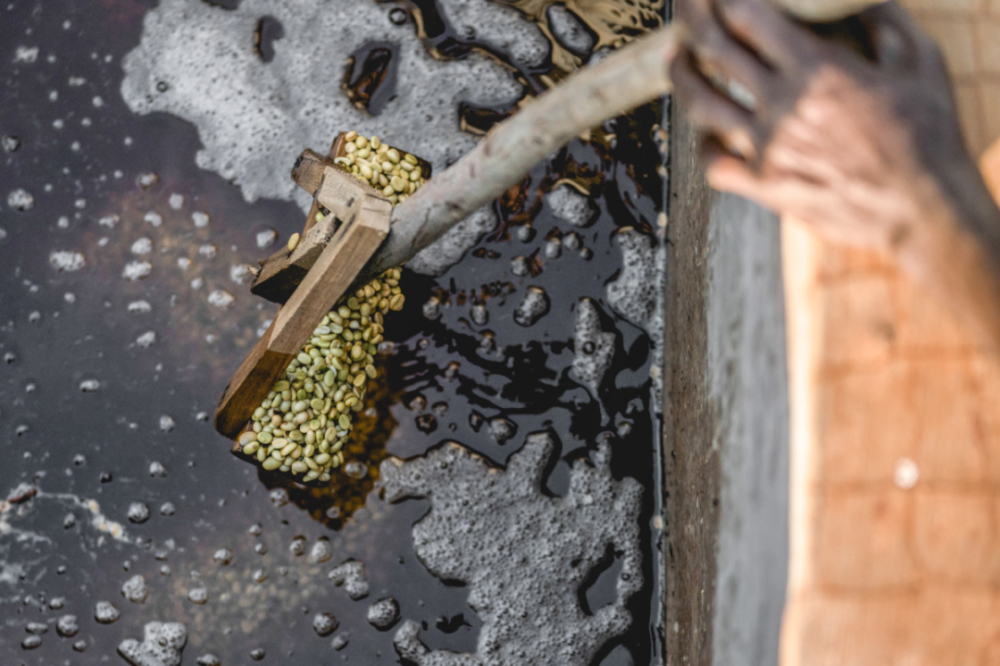
So-called "dry fermentation" means that after removing the outer skin, the parchment beans are poured directly into a fermentation tank and left to sit for about 6 to 8 hours. This step is actually very similar to the more familiar honey process. The difference is that after dry fermentation is completed, the coffee still needs to be rinsed with water once to completely remove the sticky substances that have degraded and fallen off. In terms of flavor, regular washed coffee often has a brighter mouthfeel, while dry fermentation washed coffee usually has a rounder sweetness than wet process coffee (because it is similar to honey processing).
It is not hard to see that fermentation is an essential step in washed processing, so no matter which washed method it is, the difference is ultimately just in the soaking time and number of times during fermentation, whether high temperature or low temperature, aerobic or anaerobic, and whether any additional additives are involved, and so on.
The above content is compiled by CoffeeHunters, a coffee news website.


