







What Does a Coffee Tree Look Like Across Arabica Varieties?
Arabica accounts for roughly 70 percent of global coffee production, and its varieties can be told apart by plant traits rather than flavor alone. Typica, Bourbon, Caturra, Catuai and Geisha differ in stature, leaf tip color, leaf shape, branch angle, node spacing, and the size, shape and color of the cherries and green beans.
Typica is tall with a conical shape and green leaf tips, while Bourbon is known for its rounded form and bronze or green tips depending on strain. Caturra and Catuai are compact, and Geisha is tall with elongated leaves. Growers use these phenotypes as a reference, not a fixed standard, so several traits are checked together.
There are many types of coffee trees, and different varieties differ not only in flavor but also in plant morphology. From a botanical perspective, this article introduces how to identify common Arabica varieties such as Typica, Bourbon, Caturra, Catuai, and Geisha by appearance traits such as tree shape, leaves, and fruit. It also combines recommended products from Front Street Coffee to provide a reference for coffee enthusiasts when purchasing hand-brewed coffee beans. Whether you want to understand what a coffee tree looks like or want to choose a suitable flavor based on variety characteristics, this article can help you build a clear cognitive framework.
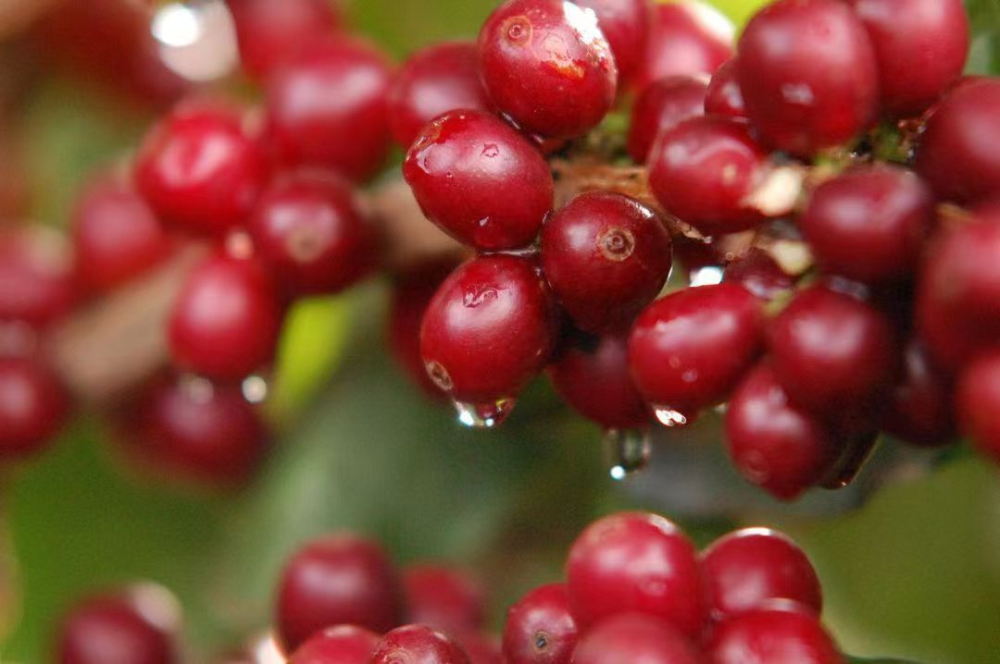
What does a coffee tree look like, and what are the characteristics of the Typica coffee tree? What does the Bourbon dynasty have to do with coffee varieties? There are quite a lot of coffee types, but many people are not clear about what exactly distinguishes them. Leaving aside differences in flavor and profile, plants of different varieties are clearly different in physical form.
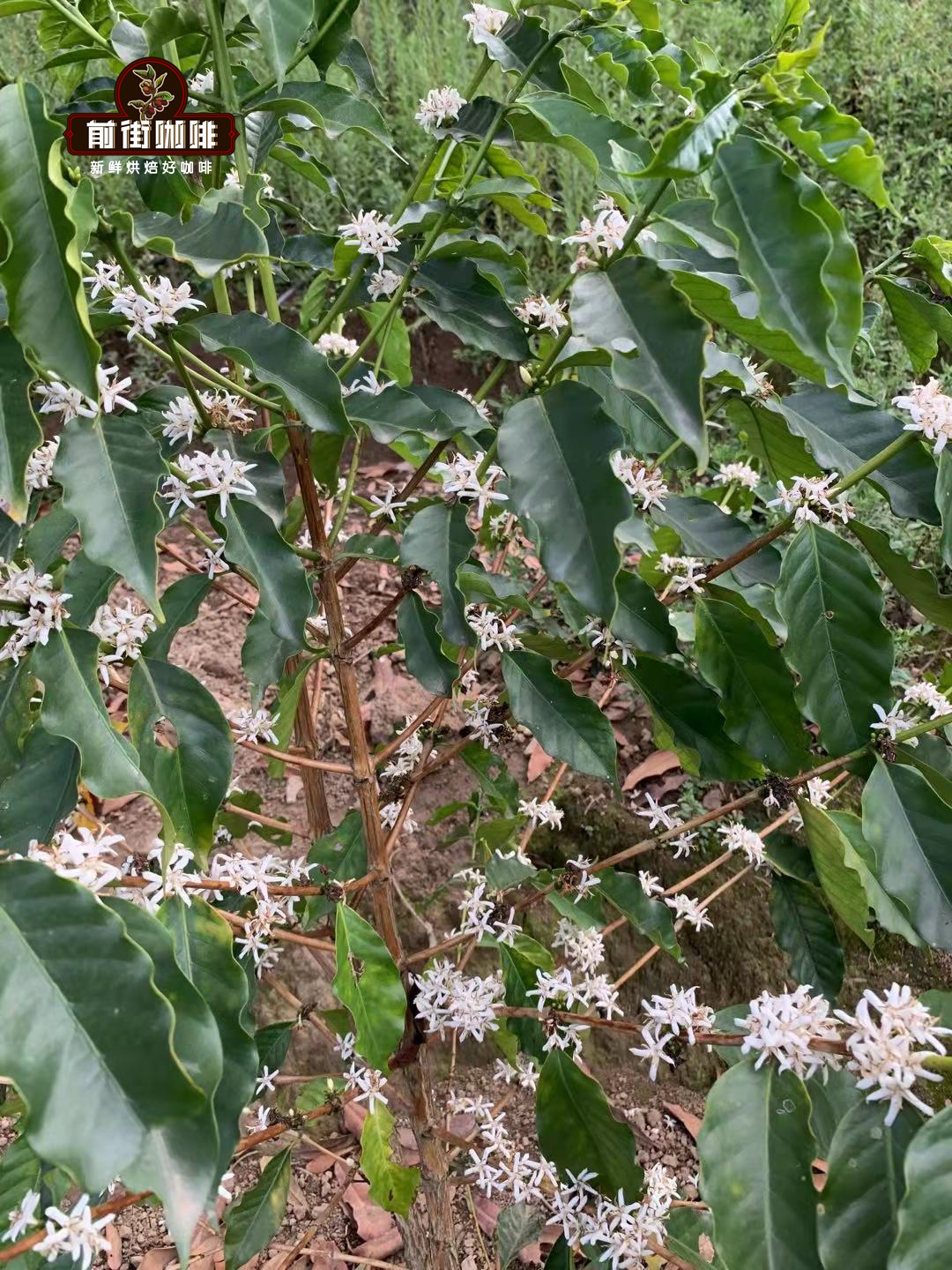
Not to mention that the forms of various coffee trees vary greatly; just looking at the flowers produced by coffee trees, because the varieties differ, the morphology of coffee flowers also has its own characteristics. Below, let us learn what characteristics different varieties have.
How do you distinguish different coffee varieties?
There are hundreds of coffee varieties, but about 70% of global coffee production comes from Arabica. Although Arabica is more delicate than Robusta, its taste and aroma are more appealing to most consumers. Under Arabica there are many varieties, a few of which are common in specialty and commercial cultivation. Below, Front Street Coffee uses some physical characteristics, also called phenotypes, to identify plants, but this is for reference only and not an overall standard.
First, they can be understood and identified from the following aspects: stature, tall or compact; leaf tip color, green or bronze; plant shape, conical or round; leaf shape, elongated or broad; the shape and size of cherries and green beans, elongated, round, or other, and small, medium, large, or very large; cherry color, red, yellow, orange, or even pink; branching angle; distance between branches, short or long; and distance between nodes on the same branch, short or long.
It is not always necessary to use all of these characteristics to identify a variety, because some varieties have one very obvious feature.
Characteristics of the Typica coffee tree
Typica has distinctive characteristics and may be the easiest variety to recognize. The plant is conical, with a single vertical trunk that can grow to 5 meters. This height means the distances between branches and between nodes on the same branch are longer than in other varieties.
The side branches form an angle of 50 to 80 degrees with the vertical stem. Neither the trunk nor the branches are very thick. The leaves, cherries, and green beans are usually elongated, and the leaf tips are bronze when young. Compared with other Arabica varieties, the leaf surface is smoother and has fewer wavy edges. Typica cherries are bright red when ripe.
To buy Typica coffee, choose Front Street Blue Mountain No. 1, a legendary classic from Jamaica. It is medium-dark roasted, and you can experience the uniquely balanced tonality of Blue Mountain Typica, with aromas of nuts, chocolate, cream, and caramel.
Characteristics of the Bourbon coffee tree
Bourbon's tree shape and conical form are the same as Typica, but it is denser and has more secondary branches. The main trunk is larger, and the branches also look thicker, so the plant is sturdier than Typica. The distances between branches and nodes are also somewhat shorter. This increased density means Bourbon's fruit yield is about 30% higher than Typica's.
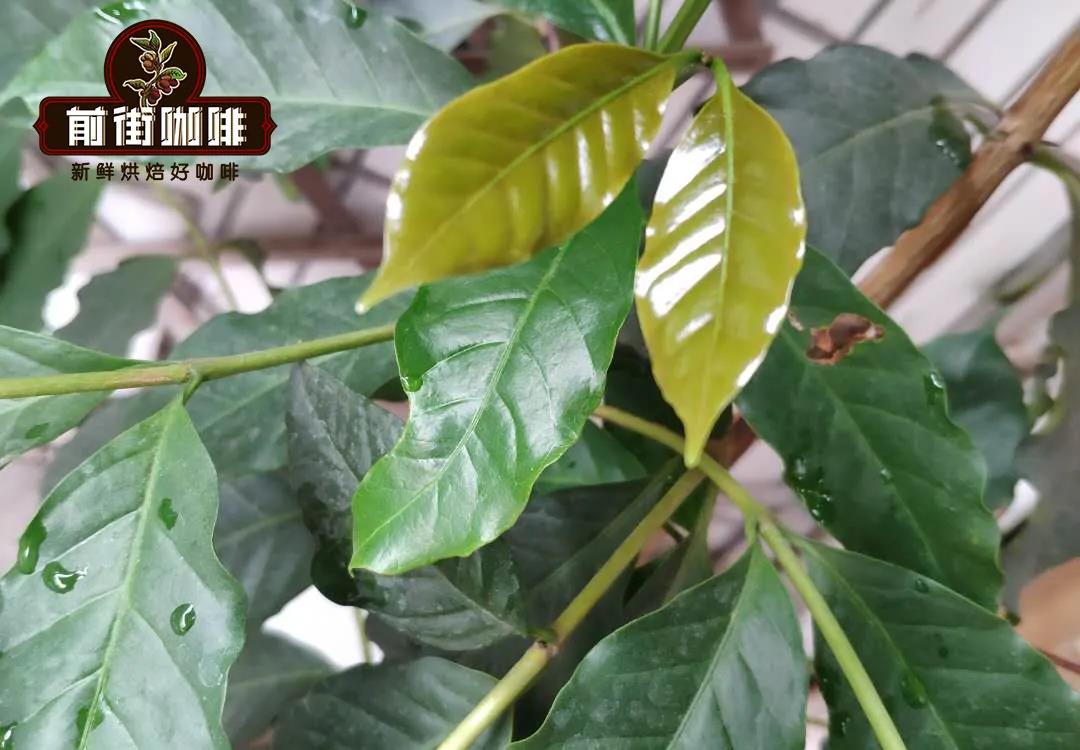
Bourbon leaves are wider than Typica's, with an uneven texture and wavy edges. Young leaves are usually green, but can sometimes have bronze tips. Cherries are round and turn red, orange, or yellow when ripe. To buy Bourbon coffee, Front Street Brazil Cerrado is the first choice, because it naturally has creamy nut and chocolate flavors, making it very suitable for moka pot coffee and espresso.
Characteristics of the Caturra coffee tree
Many varieties are descendants of Bourbon and Typica. Caturra is a natural mutation of Bourbon and is much shorter and much denser than its relative plants. It has smaller distances between the branches on the trunk and many secondary branches, making Caturra a denser plant than Typica or Bourbon.
Other than that, it has characteristics similar to Bourbon. Its large leaves have wavy edges and green tips. Cherries are also round, average in size, and ripen to red or yellow. For authentic Caturra, Front Street Honduras Washed is recommended. This single-origin coffee is also medium roasted and can be hand-brewed or made into SOE, with prominent chocolate and almond aromas.
Characteristics of the Catuai coffee tree
Catuai is a hybrid descendant of two varieties, Mundo Novo and Caturra. Just as Caturra is a natural mutation of Bourbon, Mundo Novo is a natural mutation of Typica. In Catuai, you can find characteristics from both Typica and Bourbon. The plant is relatively short, and the side branches form a close angle with the main branch. Secondary branches at the top of the plant are rarely seen, which gives the plant a more umbrella-like shape than Typica and Bourbon, which are conical.
Catuai leaves are wavy and usually have green tips. The fruit does not easily fall from the branches, which makes it a good choice in areas with strong wind and rain.
Characteristics of the Geisha coffee tree
From the angle of the upper branches and the shape of the plant, it is easy to identify this variety, which is very popular around the world. The branches of the Geisha coffee tree that point upward extend toward the sky at an angle of 45 to 50 degrees. Geisha is tall, with long distances between branches and nodes, and the trunk and branches are thin, somewhat like Typica. The leaves are smooth and elongated, and the cherries are also elongated in a way similar to Typica cherries. According to my experience, the main obvious difference between Geisha and Typica is that the former has an umbrella-like or flat top, while Typica has a conical shape.
Ripe Geisha tastes completely different from other varieties. They have citrus notes, sweetness, and jasmine-like floral elements. Different coffee varieties differ not only in flavor and profile; visually they are also different plants. Front Street has many Geisha offerings, among which the Panama producing region is the most popular. If you want to taste the highest-grade Geisha, be sure to buy Front Street Hacienda La Esmeralda Red Label and Front Street Hacienda La Esmeralda Green Label.
The above content is compiled by CoffeeHunters, a coffee news website.


