







Why Did Sidamo Coffee Become Known as Sidama?
Sidamo was the old provincial name given to the Sidama people, and it carried a somewhat derogatory tone after the area was incorporated into the Ethiopian Empire in the late 19th century. After the 1995 federal redrawing, the region was renamed Sidama, and the coffee name followed.
Coffee from this southern Ethiopian area is known for floral aroma and bright fruity notes. Huakui, a natural-process lot, won the 2017 TOH competition and comes from the Buku processing station in the Hambela sub-region, where selective picking and careful drying on raised beds shape its cup.
Among Ethiopia's many specialty coffee origins, Sidamo has long held an important place in the hearts of enthusiasts with its rich floral aroma and bright fruity notes. This article begins with the historical origins of the two names, Sidamo and Sidama, and then sorts through the region's cultivation patterns, flavor characteristics, and micro-lot management practices, with a focus on the much-talked-about Huakui coffee in recent years—from its 2017 TOH championship and appearance on the brewing competition stage, to the refined natural process at the Buku processing station in the Hambela sub-region. At the end, a Huakui 7.0 brewing recipe recommended by Front Street Coffee is included, covering water temperature, grind size, and three-stage pouring suggestions, for pour-over enthusiasts to reference.
As one of Africa's most eye-catching coffee origins, Ethiopia is home to several representatives of specialty coffee, and among them Sidamo coffee, with its rich floral aroma and fruity notes, has successfully "captured" the taste buds of coffee lovers in many countries over the years, becoming an origin that many coffee connoisseurs specifically ask to drink.
For a long period in the past, coffee lovers from around the world were accustomed to using the name Sidamo to refer to coffee from this region, but nowadays many people in the coffee circle have begun using Sidama to name it. Why is that?
Sidamo was once the name of an old province of Ethiopia before the administrative redrawing in 1995. Historically, the Sidama people settled in southern Ethiopia as early as the 9th century AD and had their own culture, religion, and language. At the end of the 19th century, because Emperor Menelik II of the Ethiopian Empire invaded, the Sidama were defeated and incorporated into the Ethiopian Empire. The name Sidamo was precisely the new name given to the Sidama people by the rulers of the Ethiopian Empire, and thus carried a somewhat derogatory connotation.
After 1995, Ethiopia adopted a federal system of administration, and at the same time, out of respect for the cultures of the various ethnic groups within its borders, the local government also carried out re-planning according to the residential areas and languages of the major ethnic groups. In this way, Sidama was placed under the administration of the new Southern Nations, Nationalities, and Peoples' Region, and the area also duly restored its original historical name: Sidama.
But it should be noted that before the administrative redrawing, Sidamo Coffee was already famous worldwide for its distinctive aroma, so compared with "Sidama," everyone was more accustomed to calling it Sidamo. In addition, when the Ethiopian government protected coffee from Sidama through trademark registration, it also chose the old name Sidamo® as the registered trademark for Sidama coffee. Even now, domestic consumers are still accustomed to calling the coffee here "Sidamo."
On the origin map drawn by the well-known specialty green coffee trader Trabocca, the so-called Sidamo coffee region does not entirely belong to today's Sidama State, but rather to the Oromiya Region and the SNNPR Region. In other words, what everyone calls Sidamo coffee actually refers to a coffee with "Sidamo flavor." From the traditional definition, Sidamo coffee flavor has bright citrus acidity, a smooth mouthfeel, and a profile fuller in body than Yirgacheffe.
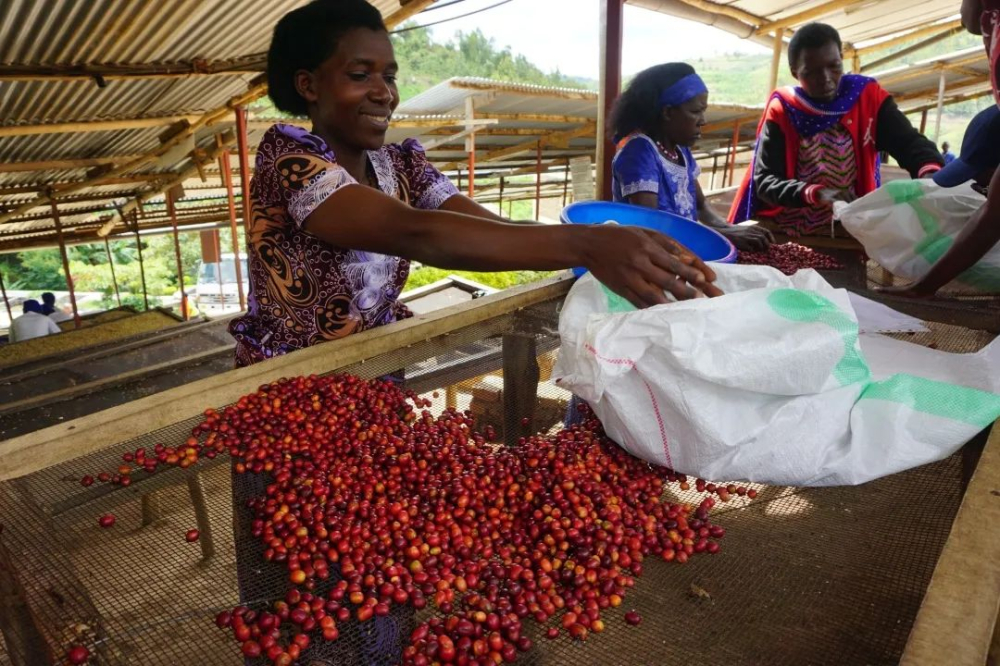
Similar to other origins in Ethiopia, Sidamo coffee is likewise mainly grown by smallholders. Coffee produced by smallholders is very limited in volume, and the area has coffee cooperatives and processing stations of various sizes, mainly responsible for processing green coffee in that region. Whenever the coffee cherries ripen, nearby farmers send the harvested coffee cherries to a nearby processing station (cooperative) built near a water source for unified processing, and finally sell it under the name of the processing station. Nowadays, with the development of specialty coffee, many producers also purchase directly from farmers, strengthening the management and traceability of coffee micro-lots, thereby further improving coffee quality and obtaining more finely processed micro-lots.
In China, whenever Sidamo coffee is mentioned, most people probably first think of the recently famous Huakui coffee, as well as the several same-series Sidamo natural coffees with suffixes.
In 2017, Ethiopia's DW company won the TOH (Ethiopia National Taste of Harvest competition) championship with a natural lot from the "Buku Abel" processing station, thanks to its rich strawberry and creamy aromas. In the same year, on the stage of the World Brewers Cup China region, Li Jianfei of Beijing CREMA Coffee Training used the coffee "Huakui" to defeat the Geisha competing on the same stage and won the national runner-up in the brewing competition. From then on, Huakui coffee from Sidamo began to appear frequently on everyone's bean lists.
In an interview, brewing runner-up Li Jianfei revealed that he believed this Ethiopian bean's outstanding performance could compete on the same stage with Panama's "Geisha," vying in beauty and fragrance, and at the same time he hoped this Ethiopian coffee could become the top-level "Geisha," so he named it "Huakui." The chief of a hundred flowers, graceful and enchanting—this is the origin of our bean's name. The English version of Huakui coffee is its production area, namely Hambella.
As one of Ethiopia's main specialty coffee origins, Sidamo is located in southern Ethiopia, spanning the highlands south of Lake Awasa in the East African Rift Valley, at an altitude of 1,500-2,200 m, with a significant temperature difference between day and night, which lengthens the time needed for coffee beans to mature and allows them to absorb more nutrients, so the fruit produced has a rich layered sense of acidity and sweetness. Moreover, the terrain here is diverse and the soil types vary, and there are also many microclimates, so Sidamo's coffee flavors are extremely diverse.
Hambella is a sub-region of the Guji production area. At present there are about 20 green bean processing stations of different scales, and Huakui coffee beans come from the Buku processing station in Guji. The Guji production area originally belonged to the administration of the Sidamo production area. Because the area was relatively remote and its development was also relatively backward, the rise and fame of Guji coffee came relatively late. At first its reputation was not as great as that of Yirgacheffe, Harrar, and other production areas, but later, because of the high-quality flavor of its coffee beans, it began to be separated out as a new production area.
This place has fertile black soil, with an average altitude of more than 1,800 meters, and its unique geographical features form terroir conditions very favorable for the growth of coffee trees. The Buku processing station is located in the village of Buku Abel at an altitude of 2,200 meters. In addition to the inherent favorable terroir conditions, the local farmers also take great care of each coffee tree. They plant shade trees beside the coffee trees so that Huakui gets full sunlight without consuming too many nutrients, preserving more of the essence and nutrients in the coffee fruit.
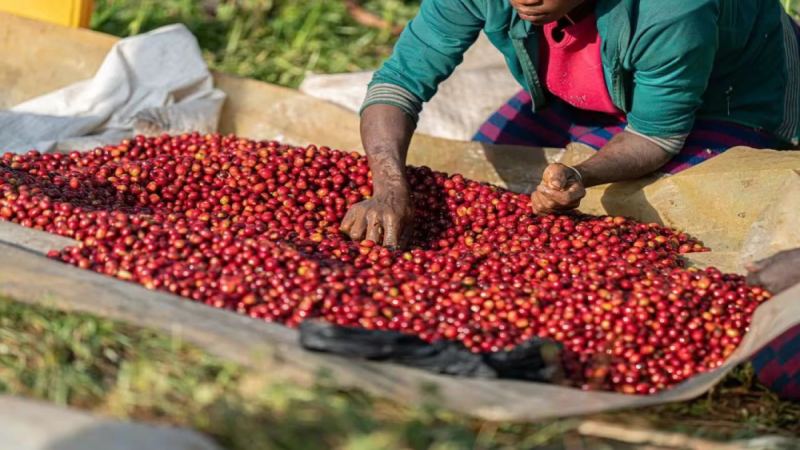
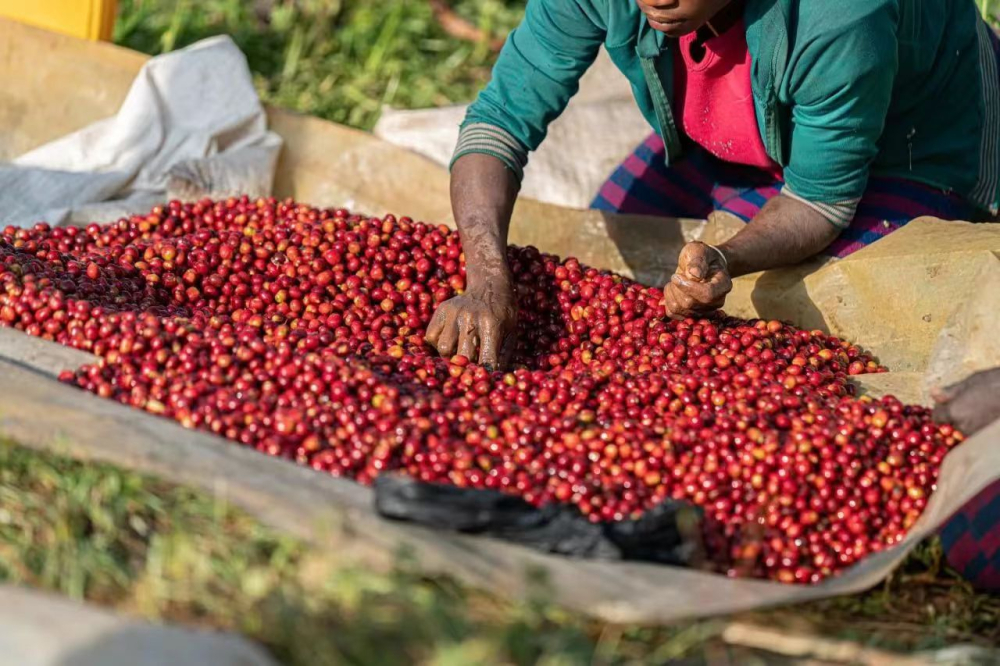
During the annual coffee harvest season (December to January of the following year), the Buku processing station organizes farmers to pick fully red coffee cherries, which must have a sugar content value of 30 or above. The selected coffee fruits are placed on African raised beds for drying. Because the local temperature difference between day and night is very large, the coffee farmers shade them at noon to avoid excessive fermentation caused by too high a temperature, and at night, to prevent sudden showers, they wrap them with plastic sheeting. They turn them continuously throughout the day and also ensure that the coffee fruits do not pile up too thickly, so that the fruits can dry evenly while also preventing sunburn or unpleasant fermentation flavors. After about 18 days of sun drying, until the moisture content of the green coffee is only 13%, the husks can be removed by machine and the coffee packed.
Front Street Coffee: Ethiopia Huakui 7.0
Origin: Sidamo Guji production area
Processing station: Buku Abel processing station
Altitude: 2250-2350m
Variety: local heirloom
Processing method: natural process
Flavor: strawberry, passion fruit, berries, citrus
Lightly roasted coffee beans are relatively hard, and Front Street uses high-temperature hot water of 92°C-93°C to bring out the floral and fruity notes in the coffee. For grind size, Front Street recommends a medium-fine grind (78% passing rate on China standard No. 20 sieve). Too coarse and the rich substances cannot be extracted, making the brewed coffee seem thin. Too fine and over-extraction is likely at high water temperature, making the brewed coffee prone to bitterness. For the brewing ratio, Front Street believes 1:15 to 1:16 are both acceptable. If you want a richer mouthfeel, use 1:15; if you want to perceive the floral sweetness more clearly, you can use 1:16, allowing the flavors to spread out more.
Pour-over suggestions for Huakui coffee beans from the Sidamo production area
Dripper: V60
Water temperature: 92-93°C
Dose: 15g
Coffee-to-water ratio: 1:15
Grind size: fine granulated sugar size (78% passing rate on No. 20 standard sieve)
Pouring technique: three-stage
Three-stage pouring: Wet the coffee bed with twice the amount of water as the coffee grounds, forming a dome and letting it bloom for 30s, then pour in a small stream in circles from the inside out until 125g, pausing at that stage. When the coffee bed drops to half the height of the dripper, continue pouring the third stage with the same fine stream until 225g, and after all the coffee liquid has filtered through, remove the dripper. The time is about 2 minutes.
For professional coffee knowledge exchange and more coffee bean information, please follow Coffee Studio (WeChat public account: cafe_style)
For more specialty coffee beans, please add the private WeChat of Front Street Coffee, WeChat ID: qjcoffeex
The above content is compiled by CoffeeHunters, a coffee news website.


