







What Grade Does Blue Mountain Coffee Carry?
Jamaica Blue Mountain coffee is graded under strict rules set by the Jamaica Coffee Industry Board: only Arabica coffee grown between 910 and 1,700 meters in the Blue Mountain range may carry the name. Beans from lower elevations fall into Jamaica High Mountain Coffee or Jamaica Prime Coffee instead, so altitude largely determines the grade.
The variety is Typica, an old and elegant Arabica coffee type, and processing is mainly traditional washed. The Blue Mountains sit in an island tropical rainforest climate with concentrated rainy-season rainfall, good drainage and nutrient-rich volcanic ash, so trees need little irrigation or fertilization. Washed processing gives Blue Mountain No. 1 its balanced, classic cup.
Blue Mountain Coffee is widely recognized as one of the world's top coffees, thanks to its clean, tranquil taste and lasting, unique aroma. It comes from Jamaica's Blue Mountain range, and the Jamaica Coffee Industry Board (CIB) sets strict standards: only Arabica coffee grown between 910 and 1,700 meters above sea level can bear the name "Jamaica Blue Mountain Coffee." The variety is the ancient and elegant Typica, and the processing method is primarily traditional washed, which gives Blue Mountain No. 1 its full, balanced, classic flavor. This article, from Front Street's perspective, covers the growing conditions, variety characteristics, washed processing, and grading standards of Blue Mountain Coffee, and includes Front Street's medium-dark roast approach and pour-over parameters for Blue Mountain No. 1, giving you a comprehensive understanding of this legendary coffee.
Blue Mountain Coffee, with its clean and tranquil taste and its lasting, unique aroma, stands as one of the world's top coffees. What is the refined flavor of Blue Mountain Coffee related to? Come with Front Street to learn about this world-famous coffee.
Top-grade Blue Mountain Coffee comes from Jamaica
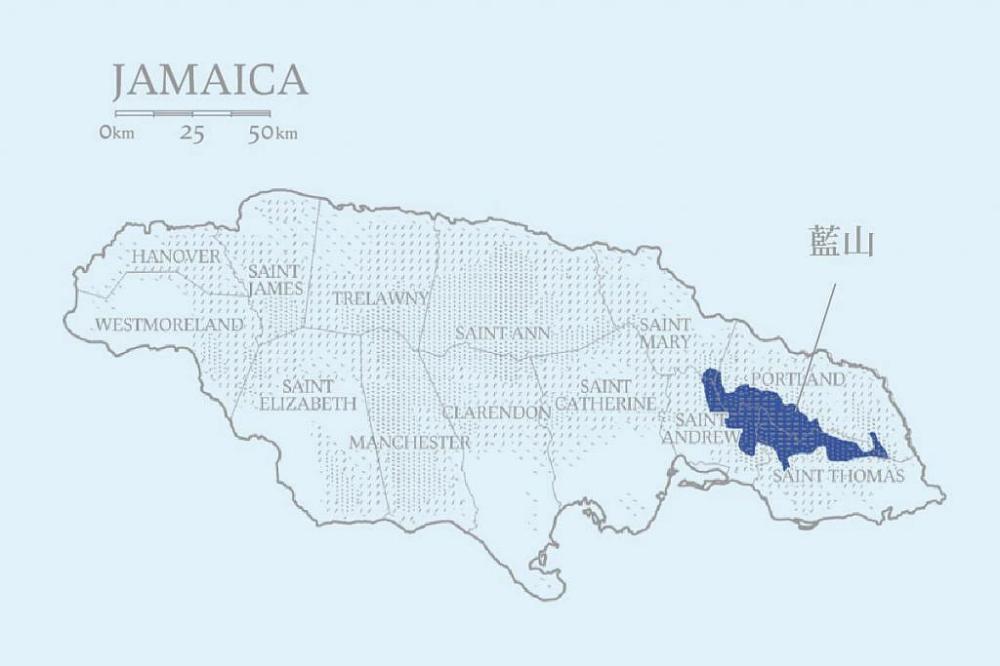
As the name suggests, Blue Mountain Coffee comes from Jamaica's Blue Mountain range, but not every coffee tree grown in the Blue Mountain region produces top-quality Blue Mountain coffee beans. The Jamaica Coffee Industry Board (CIB) has established strict production standards: only Arabica coffee grown between 910 and 1,700 meters can be called Jamaica Blue Mountain Coffee, while coffee from lower elevations is classified as Jamaica High Mountain Coffee and Jamaica Prime Coffee. Jamaica Blue Mountain Coffee has four major producing regions: St. Mary, St. Thomas, St. Andrew, and Portland.
The Blue Mountains are surrounded by the waters of the Caribbean Sea and have an island-type tropical rainforest climate. During the rainy season, rainfall is concentrated and drainage is good. Volcanic ash from active volcanoes enriches the soil with nutrients, so coffee trees need little irrigation or fertilization. Wrapped in mist and cool and comfortable, the high-altitude growing areas are ideal for all kinds of crops, and locals often plant coffee trees alongside banana trees on the slopes of the Blue Mountains.
What variety does Blue Mountain belong to?
The variety of Jamaica Blue Mountain Coffee is Typica, an ancient variety celebrated for its elegant, pure flavor. Anyone familiar with coffee varieties surely knows that Typica has the longest history; all the Arabica varieties we see today are descendants derived from Typica and Bourbon.
The reason Typica is no longer widely planted is its weak constitution, poor disease resistance, and very low yield per plant. Typica was introduced to the Blue Mountains in the 18th century and has been grown there for over two hundred years. Blue Mountain Typica has also adapted to the local island terroir and evolved relatively good disease resistance, particularly much stronger resistance to coffee berry disease than ordinary Typica. Front Street believes that Blue Mountain's refined, clean flavor is inseparable from Jamaica's commitment to carefully cultivating the Typica variety.
High-quality Blue Mountain coffee beans are processed using the traditional washed method
Keeping Blue Mountain Coffee clean in flavor benefits from the local commitment to the traditional washed process. During green bean processing, multiple steps remove coffee cherries that do not meet quality standards, greatly reducing the overall defect rate.
After the coffee cherries are harvested, a machine applies force to crush the cherries, removing the skin and pulp, and then they are placed in a tank to ferment overnight. The fermented beans are then put into a clean water tank and scrubbed back and forth, using the friction of the beans and the force of flowing water to wash the coffee beans until they are smooth and clean. Finally, the parchment beans are dried for 2 to 3 weeks until the moisture content reaches 12-14%. Because the coffee pulp and mucilage have already been removed before drying, there is no excessive fermented acidity to interfere, making the Blue Mountain beans' own aroma more balanced and clean.
Although, with the growing diversity of the coffee market, Blue Mountain Coffee has tried releasing small batches of natural-process coffee beans, the washed Blue Mountain flavor remains the most classic representation.
The refined flavor of Blue Mountain No. 1 Coffee
What made Blue Mountain flavor resound around the world is Jamaica's national treasure coffee bean — Jamaica Blue Mountain No. 1. It has a full, solid aroma, with acidity, sweetness, bitterness, and sweetness perfectly blended, and a soft, smooth, velvety, full-bodied mouthfeel.
In the 1950s, the CIB was officially established with the approval of the Jamaican government and formulated detailed coffee export grading guidelines, with strict requirements for the size, color, defects, and taste characteristics of exported green beans. Jamaica Blue Mountain coffee beans must meet a screen size of 17 or above, with a defect bean ratio not exceeding 2%, a moisture content of about 10-12.5%, and just the right acidity, sweetness, bitterness, body, and aroma. It is easy to imagine how few such refined, superior coffee beans there are. Front Street's regular bean list often keeps this Blue Mountain No. 1 coffee for fans of the classic Blue Mountain flavor. Front Street's Blue Mountain No. 1 comes from Jamaica's historic Clifton Estate.
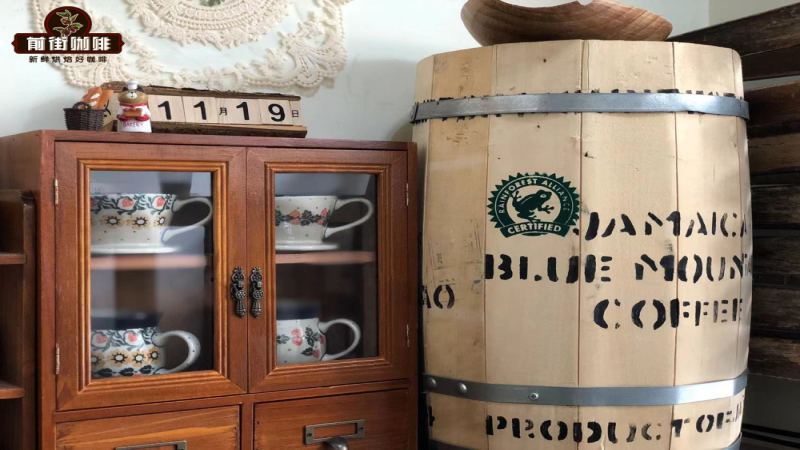
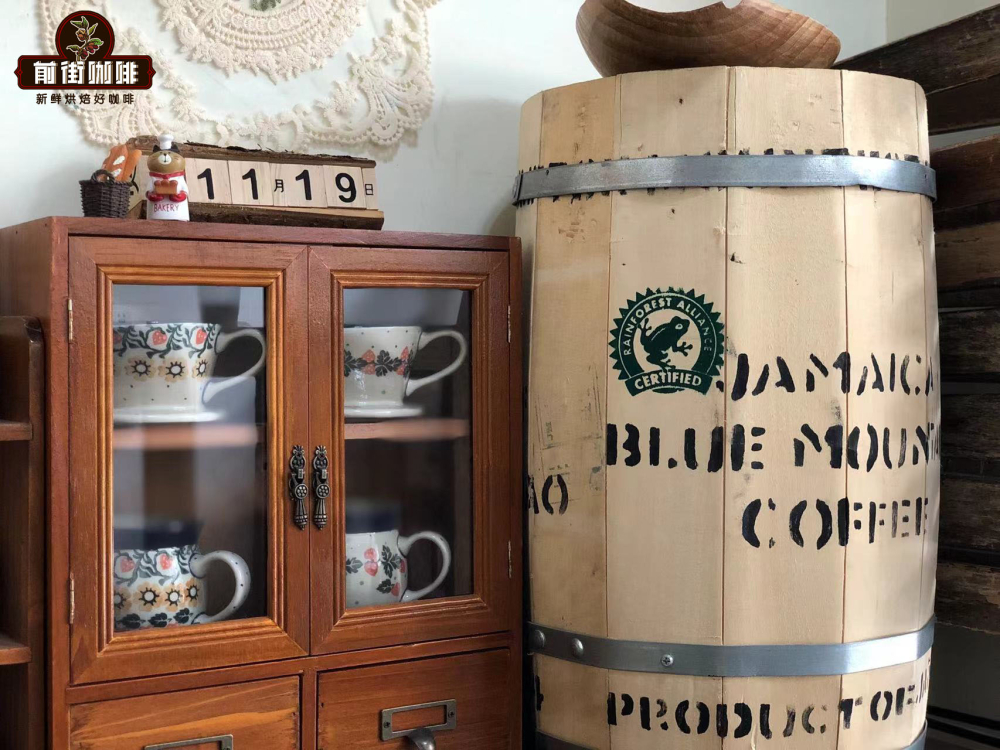
Clifton Estate is one of the estates certified by the Rainforest Alliance. It adheres to sustainable and environmentally friendly practices throughout its coffee production, minimizing all kinds of pollution, and the water used by the processing plant is also recycled. When Front Street receives Blue Mountain green beans, the wooden barrel is stamped with the green Rainforest Water Frog logo. When you visit Front Street's store for coffee, pay a little attention and you will notice this unique Blue Mountain wooden barrel.
Front Street hopes every customer can taste coffee within its full flavor window, so Front Street ensures the coffee beans shipped are freshly roasted within 5 days, so that when you receive them you can enjoy richly aromatic coffee beans.
To present the classic Blue Mountain flavor, Front Street uses a medium-dark roast, highlighting the chocolatey sweetness in the coffee while retaining some of the elegant acidity. For brewing, Front Street Coffee's baristas choose the Kono dripper, which emphasizes a full-bodied mouthfeel. Kono's ribs do not reach halfway up the dripper's height. This design is actually intended to ensure the filter paper hugs the dripper wall after being wet, restricting airflow, which increases the time for coffee grounds to absorb water, resulting in a more even extraction overall and enhancing the full-bodied mouthfeel.
In addition, considering that Blue Mountain No. 1 Coffee is medium roast, the internal structure of the beans is fluffier than light-roast coffee, so the water absorption effect is better. To avoid over-extraction, Front Street chooses a grind size with a 75% pass rate on a No. 20 standard sieve, along with a water temperature of 88°C, paired with Front Street's usual three-stage pouring method.
Coffee grounds: 15 grams. Coffee-to-water ratio: 1:15.
Front Street uses staged extraction, namely the three-stage pouring method, using 30g of water for blooming, with a blooming time of 30s. In the first stage, pour in a small stream in a circular motion until 125g, then stop. When the liquid level drops to just before exposing the coffee bed, continue the second stage of pouring until 225g to finish extraction. The total extraction time (including blooming) is 2'00.
The taste of hand-brewed Blue Mountain No. 1 Coffee: rich dark chocolate, nut, and caramel flavors, a creamy, smooth mouthfeel, medium body, a clean, sweet finish, and balanced flavor.
For professional coffee knowledge exchange and more coffee bean information, please follow Coffee Workshop (WeChat public account: cafe_style)
For more specialty coffee beans, please add the private WeChat of Front Street Coffee: qjcoffeex
The above content is compiled by CoffeeHunters, a coffee news website.


