








Can Huakui Coffee Beans Rival Geisha Coffee Beans?
Huakui is an Ethiopian natural coffee from Hambela in the Guji region of Sidamo, and it drew wide attention after Li Jianfei won the China region of the 2017 World Brewers Cup with it. That result broke the long-held spotlight on geisha coffee beans and gave the specialty world a second headline varietal to discuss.
The Chinese name Huakui does not match the English name Hambella, which comes from the Hambela growing area, and several versions of the bean now circulate. Beyond filter brewing, Huakui works as espresso and can be served as Americano or latte. Its vanilla and cream aromatics carry through milk, while acidity stays moderate in the cup.
Huakui coffee beans are an Ethiopian natural bean that has attracted much attention in the specialty coffee world in recent years, originating from Hambela in the Guji region of Sidamo. It once helped Li Jianfei win the China region of the 2017 World Brewers Cup, breaking the long-standing dominance of Geisha in the spotlight. This article will sort out the naming origins of Huakui coffee, its producing region background, and its natural processing method, explain the differences between the various versions of Huakui, and provide detailed answers on whether Huakui coffee beans can be used to make espresso, Americano, and latte, as well as the corresponding extraction parameters and flavor performance, helping coffee enthusiasts gain a comprehensive understanding of this bean.
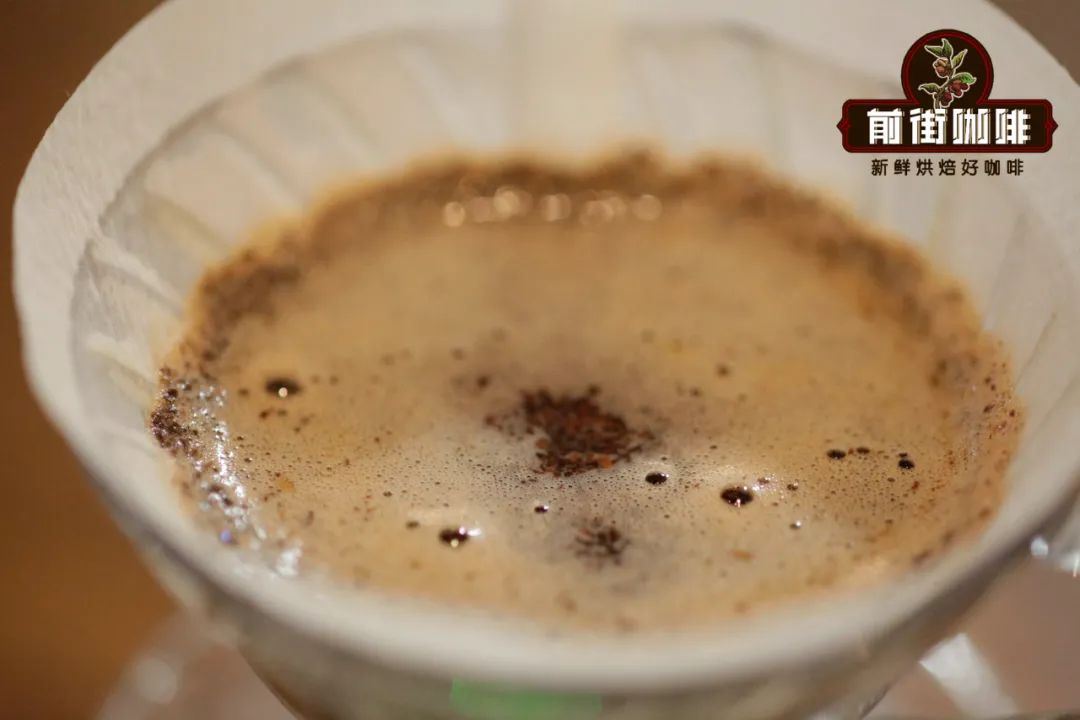
For more specialty coffee knowledge, please follow the WeChat official account: Front Street Coffee (FrontStreet Coffee)
In recent years, Geisha has maintained extremely high discussion heat in the specialty coffee field, and its English name Geisha also means "geisha" in Japanese. At the same time, Ethiopia's Sidamo region has also produced a coffee that is enough to be mentioned alongside Geisha, and that is Huakui.
In 2017, Li Jianfei won the China region of the World Brewers Cup precisely with a natural Huakui. Since then, Huakui's fame has risen all the way, and Front Street even believes it ranks among the top on specialty coffee lists. This bean broke Geisha's myth and became an existence able to stand on equal footing with Geisha.
In Chinese tradition, the top three places in the imperial examination were called Zhuangyuan, Bangyan, and Tanhua, and the naming idea of this Huakui from the Guji region of Sidamo also comes from the Chinese context. If you pay close attention, you will find that the Chinese name and English name of this bean do not correspond—the Chinese name is "Huakui," while the English name is more often written as "Hambella," literally "Hambela." Front Street will briefly talk below about how the name Huakui coffee came to be.
What is Huakui coffee?
Literally understood, Huakui means the chief of a hundred flowers. When Chinese green bean traders first encountered this bean from Hambela in the Guji region of Sidamo, they were attracted by its rich vanilla and cream aroma and believed that as long as the processing method continued to improve, this bean had every potential to become the next Geisha. So the Chinese green bean traders named this natural coffee from the Guji region "Huakui
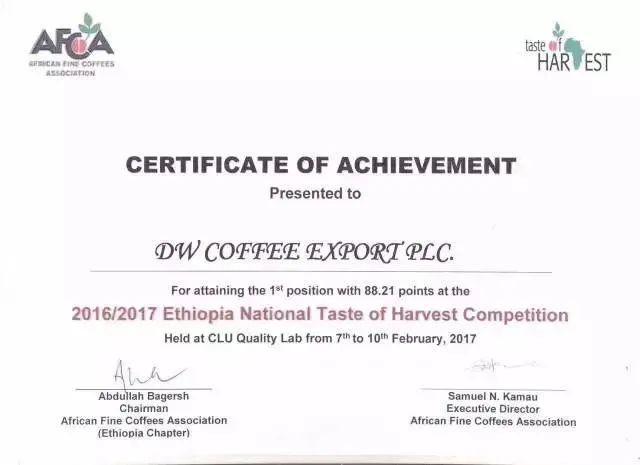
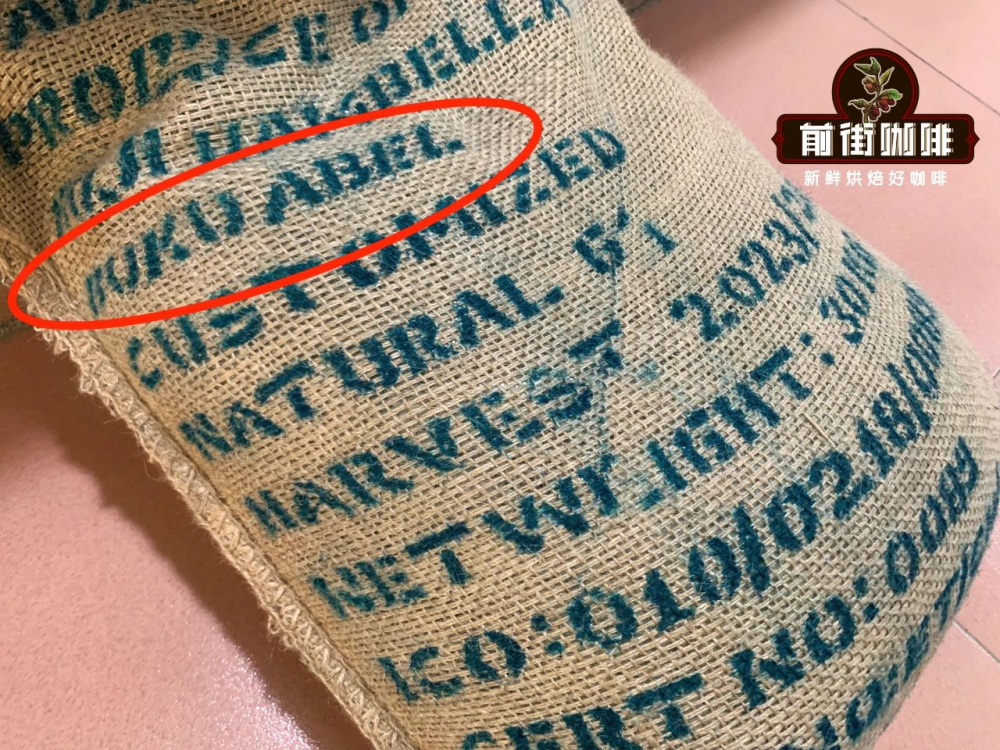
However, the baristas at Front Street Coffee need to remind everyone: not all sun-dried coffees from the Guji Sidamo region can be called Geisha. Typically, only the sun-dried coffee produced and processed at the Buku Abel estate qualifies as "Geisha," which is why Buku Abel estate is also known as the "Geisha estate." The Geisha coffee plants are surrounded by sugarcane and bananas, and under high-altitude climate conditions, this creates a smooth mouthfeel, with acidity reminiscent of passion fruit and a fermented wine aroma from the sun-drying process.
Unlike Geisha, the Yirgacheffe region, which has a high click-through rate at Front Street Coffee, features a lemon-citrus profile, while coffee beans from the Guji region have a more intense floral aroma. Combined with the local sun-drying method, this undoubtedly elevates Geisha's aroma and sweetness to another level. It is precisely because the flavors of these two regions are so distinctive that they have been separately classified by the Ethiopian Commodity Exchange.
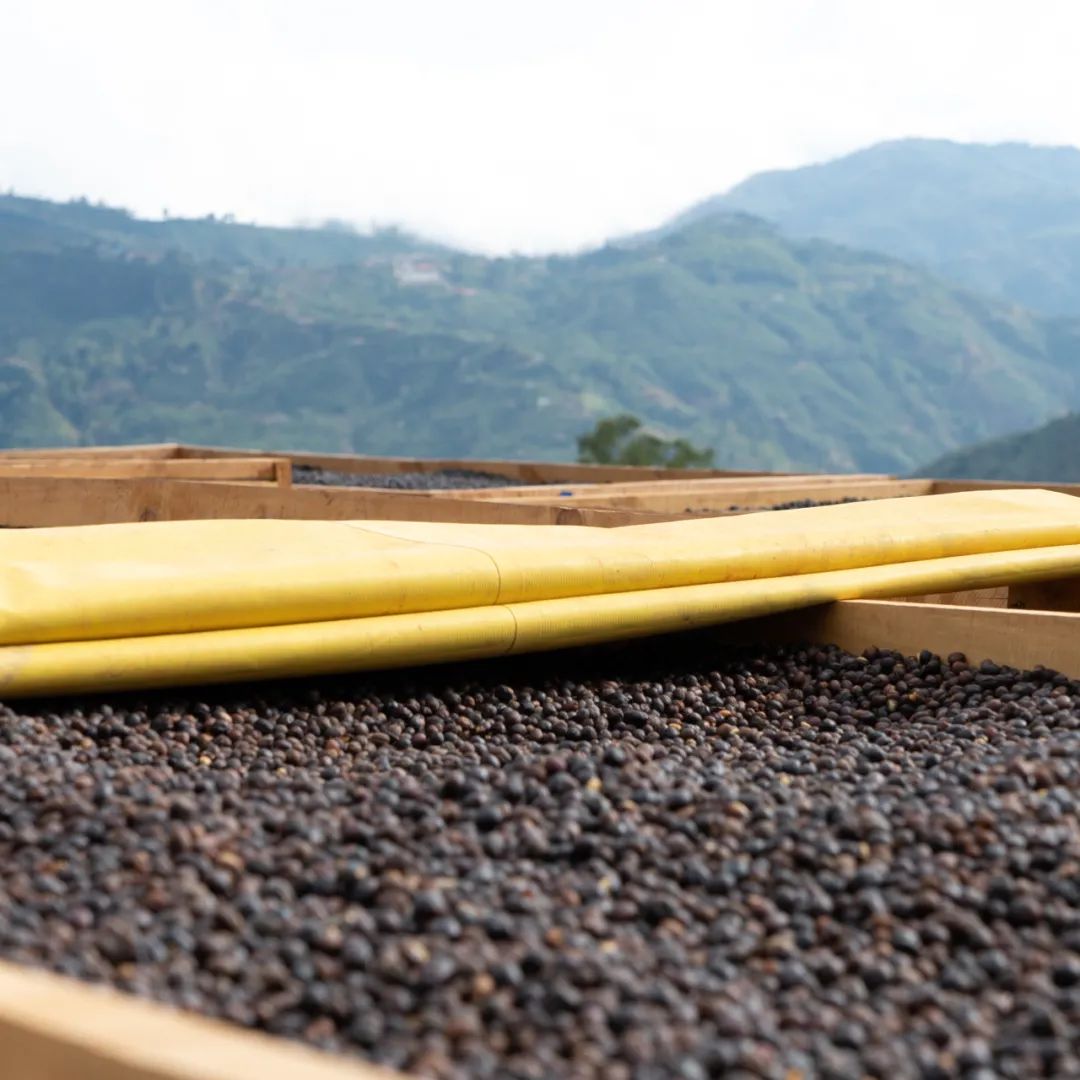
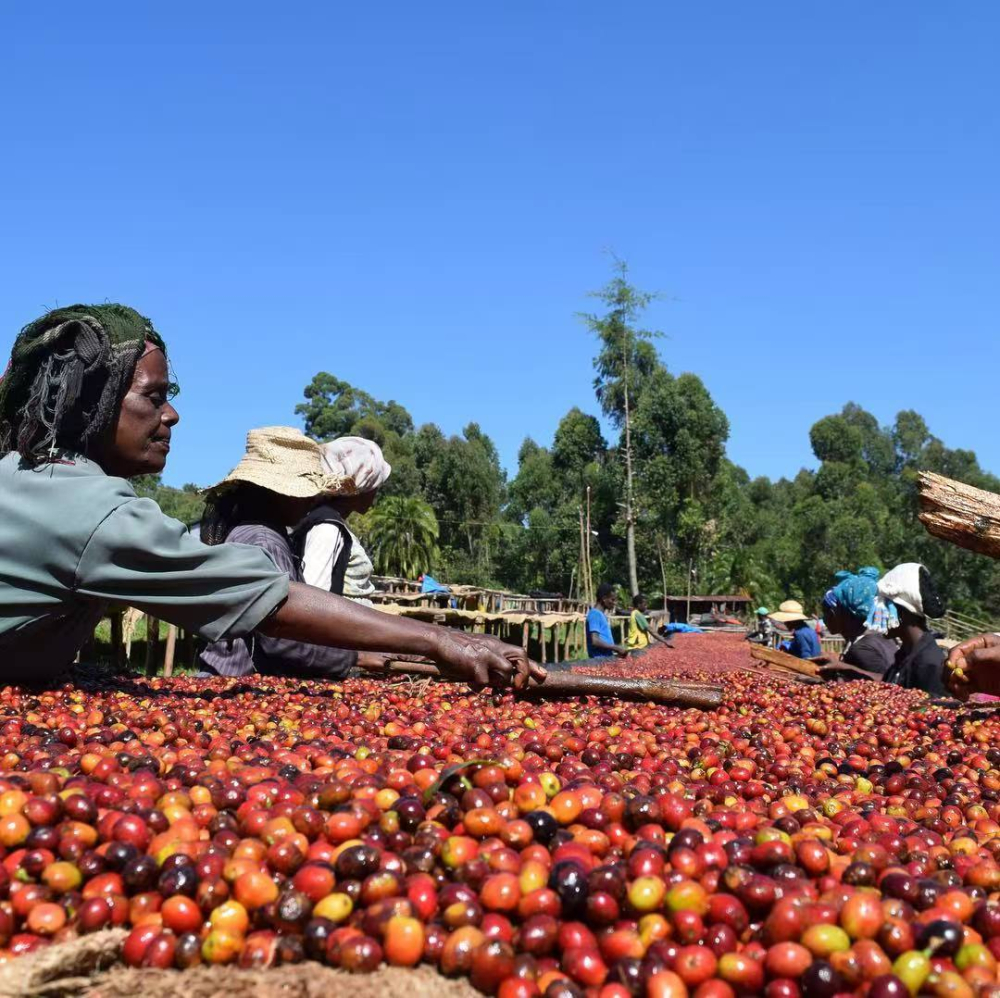
Geisha's unique flavor is inseparable from its sun-drying method. According to Front Street Coffee, coffee farmers harvest the coffee cherries from December to January each year, and the sugar content of the red cherries must reach over 30% before they can undergo sun-drying. The sun-drying process is quite meticulous: for the first two days, the humidity of the red cherries must be maintained to allow the fruit sugars to ferment fully; during the hotter midday temperatures, shade must be provided promptly to prevent the red cherries from sunburn, which would affect fermentation; at night, to prevent sudden rainfall, they must be wrapped in thick plastic sheeting.
The fermentation and dehydration of coffee cherries need to occur at lower temperatures. After the eighteenth day of sun-drying, the moisture content of the green coffee beans drops to around 13%, at which point sun-drying is stopped, and the beans are packed into jute sacks and stored in a warehouse. On this basis, the green beans continue to rest and undergo further dehydration for about fifty days. When the moisture content of the green beans reaches around 11%, they are then transported to the processing plant for hulling and other subsequent processing. It is clear that the choice of processing method is crucial to the formation of coffee flavor.
I wonder if anyone has noticed that the Geisha coffees listed at Front Street Coffee sometimes have numbers after their names, such as Geisha 2.0, Geisha 3.0, Geisha 3.1, and Geisha 4.0. Many people don't understand why there are so many versions of Geisha. The reason is that only the beans produced by the Buku Abel processing plant in the Guji region are truly Geisha; beans from other processing plants are referred to by Geisha version numbers.
Additionally, most of these Geisha varieties belong to Ethiopian local heirloom varieties. Some friends may not be familiar with what Ethiopian heirloom varieties are, so Front Street will briefly introduce them here. Ethiopia is the birthplace of coffee and can be considered coffee's gene bank, with an extremely diverse range of varieties. Moreover, the local economic conditions do not support large-scale verification of coffee varieties; on the other hand, the Ethiopian government, in order to protect native coffee tree species data, is also unwilling to disclose it. Therefore, these unnamed varieties are collectively referred to as Ethiopian local heirloom varieties.
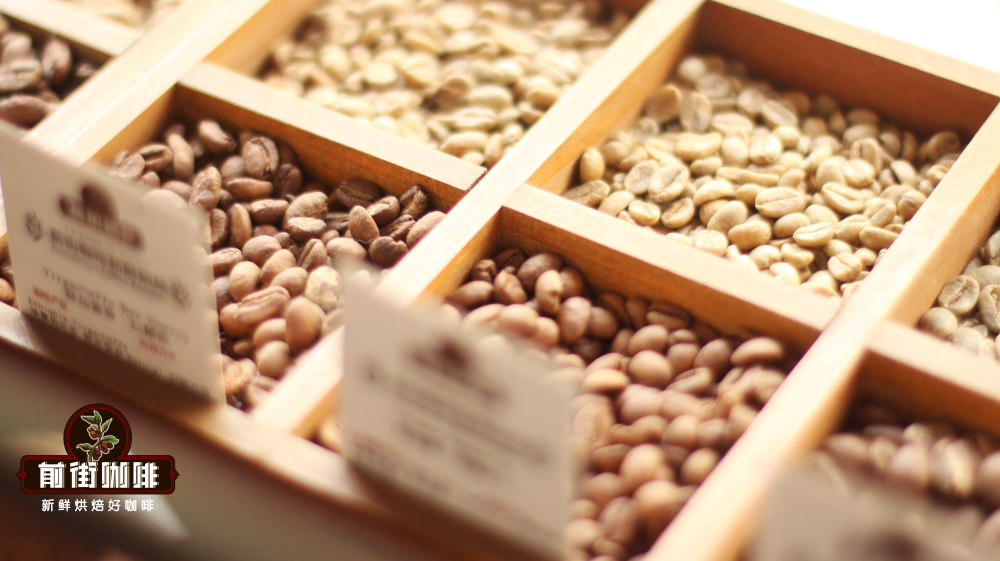
However, Front Street Coffee has also cupped these Geisha coffees and found that Geisha 3.1 differs significantly from the original Geisha flavor, and is instead closer to the Geisha from Panama's Hacienda La Esmeralda. The flavor of Geisha 4.0 is very close to the original Geisha, but through cupping, Front Street still feels that its aftertaste and body are not as good as the original Geisha.
Geisha's flavor changes every year, mainly because coffee is essentially an agricultural product, and it is impossible to grow exactly the same flavor every year. Agricultural products are highly susceptible to uncertain factors such as climate and rainfall. Therefore, it is normal for coffee bean flavors to differ from year to year, not just for Geisha but for every coffee listed at Front Street for this reason.
For example, even sun-dried coffee beans from the same Sidamo region can have very different flavors. Take the Sidamo Arsi coffee listed at Front Street, for instance. After cupping and comparing the two coffees, Front Street found that Arsi has a more intense juicy mouthfeel than Geisha, while Geisha leans more toward tropical fruit flavors and has a heavier fermented note than Arsi.
How to brew Geisha coffee?
Brewing a cup of pour-over coffee roughly requires these tools: a gooseneck kettle, a dripper, a server, a grinder, filter paper, a digital scale, and a thermometer.
Among these, the dripper and filter paper are responsible for filtering out coffee grounds and absorbing oils from the coffee, making the taste cleaner. Front Street Coffee's daily offerings use two types of drippers: the V60 and the Kono. The V60 is mainly used for light-roasted coffee beans, while the Kono is used for dark-roasted coffee beans.
The digital scale is used to weigh the coffee beans and the water poured; only by digitizing every parameter can it be replicated and ensure consistent output. The same goes for the thermometer—before each pour, the water temperature must be confirmed to be within the appropriate range. When brewing light-roasted coffee beans with a V60 dripper, choose a water temperature of 90 to 92 degrees Celsius; for dark-roasted coffee beans, choose 88 to 89 degrees Celsius.
The grinder is equally critical, as the coarseness of the coffee grounds directly affects the taste of a pour-over: too coarse, the taste is weak; too fine, the taste becomes bitter. Front Street Coffee recommends a medium-fine grind for pour-over coffee, with an 80% pass rate using a 0.85mm standard sieve.
Brewing pour-over coffee is actually quite simple; the key is to control several factors that affect the taste: the coffee-to-water ratio, grind size, water temperature, and extraction time.
When brewing at Front Street Coffee, first weigh 15 grams of coffee beans, with a ratio of 1:15, meaning pour 225 grams of hot water.
Before brewing, rinse the filter paper with hot water to make the dripper and filter paper fit better. Then grind the coffee beans to the desired degree, which is the medium-fine grind mentioned earlier.
Pour the ground coffee into the dripper, and once the water temperature reaches the brewing requirement, you can begin. The entire brewing process is divided into three pours: the first pour is 30 grams of water for blooming, ensuring all coffee grounds are saturated, and letting it bloom for 30 seconds to release carbon dioxide so that subsequent water can extract the coffee better; the second pour is up to 125 grams, then wait for the coffee liquid to drop halfway; the final pour is up to 225 grams, and again wait for the coffee liquid to finish filtering. The total extraction time is 2 minutes.
Can Geisha coffee beans be used for espresso?
To satisfy customers who enjoy Italian-style coffee, Front Street specifically adjusted the roasting profile of Geisha 8.0 coffee to make the crema more abundant, thereby giving the americano (after adding water) or latte (after adding milk) a fuller flavor.
When extracting espresso with Geisha coffee beans, Front Street's extraction parameters are: Galileo Q18 grind setting 1.4, dose 20 grams, yield 40 grams, brew ratio 1:2, time 28–32 seconds.
The Geisha SOE made this way has a fresh floral and fruity profile. When drinking the espresso directly, Front Street can perceive a balanced aroma of dark berries, dried apricots, caramel, and creamy chocolate; when made into an americano, you can taste fresh citrus-like fruit acidity; after adding milk to make a latte, it exhibits rich notes of butter cookies, plums, almonds, and chocolate biscuits.
How to make an americano with Geisha coffee beans?
For an americano, use a 200ml cup. Extract 40 grams of espresso from 20 grams of grounds, then add 160ml of warm hot water. The ratio of coffee liquid to water is 1:4.
A hot americano is not too acidic at high temperatures. What's surprising is its medium-temperature state: soft berry-like acidity, with a slight tropical fruit note, a mouthfeel similar to juice, and a finish of cream and caramel.
For an iced americano, start by extracting 40 grams of coffee liquid from 20 grams of coffee, then mix with 260 grams of ice water mixture. The first sip has a more pronounced citrus acidity and is refreshing, but the downside is no aftertaste and insufficient body. To solve this problem, the baristas at Front Street Coffee increased the amount of coffee grounds and readjusted the parameters, using 20 grams of coffee grounds to extract 40 grams of coffee liquid, with an extraction time of 28 seconds.
The readjusted iced americano is noticeably softer. Stir the coffee and ice water evenly. The first sip has a more lively acidity, a slightly fuller mouthfeel, with flavor notes reminiscent of dark berries and a juicy mouthfeel. In Front Street's view, when making iced americano and iced pour-over (extracted with hot water, then cooled and diluted with ice), the ice must be plentiful, and the coffee liquid must be sufficiently concentrated; otherwise, the ice will melt upon contact with heat, diluting the coffee to a bland and tasteless state.
What does a latte made with Geisha coffee beans taste like?
When the baristas at Front Street Coffee tried making a latte with Geisha coffee beans, they also chose a 300ml latte cup, using espresso parameters of 20 grams of coffee grounds to extract 40 grams of coffee liquid, with an extraction time of 30 seconds. Since Geisha itself is relatively lightly roasted, and a large amount of milk is added, the coffee flavor in the latte will be quite mild. The first sip is the sweetness of milk, dense and smooth, and only in the aftertaste can you detect Geisha's berry aroma.
The method for making an iced latte is the same as for an iced americano, just replacing the water with milk. The overall taste is light, with a slight berry flavor, but the downside remains insufficient body and a somewhat short aftertaste.
The above content is compiled by CoffeeHunters, a coffee news website.


