







How Should Panama Geisha Coffee Be Brewed at Home?
Panama Geisha coffee is a light roast, so it rewards careful brewing rather than heavy extraction. For pour-over, use a Hario V60 with 15 grams of coffee, a 1:16 ratio, 91°C water, and a fine grind. Bloom with 30 grams of water for 30 seconds, pour to 140 grams, pause, then finish at 240 grams in about two minutes total.
A French press works too, using the immersion principle with a coarser grind and a four-minute wait, which yields a fuller body and berry sweetness. The beans come from Hacienda La Esmeralda in Panama, and Red Label Geisha is picked under strict standards and slow sun-dried, which is part of why these geisha coffee beans are scarce and costly.
Geisha coffee is hailed as the new king of coffee, expensive yet irresistible. If you are lucky enough to get a bag of Geisha beans, how should you brew them to do justice to their value? Starting from the light roast characteristics of Front Street Panama Geisha, this article shares in detail two brewing methods: pour-over and French press. The pour-over uses a V60 dripper, 91°C water temperature, and a 1:16 coffee-to-water ratio, expressing white floral and citrus notes through staged pouring; the French press simplifies operation with the immersion principle, using a coarser grind and a 4-minute wait to deliver a full body and rich berry sweetness. At the same time, the article provides an in-depth analysis of Panama Geisha's terroir advantages, the discovery history of Hacienda La Esmeralda, and the strict standards of Red Label Geisha and its slow sun-dried processing, leading you to a comprehensive understanding of this top-tier coffee's unique charm.
In the past, Kopi Luwak was regarded as the top coffee, with beans so scarce they were hard to find; today, Geisha coffee has become the new king of coffee, equally in short supply. The root cause of Geisha's scarcity lies in its high price. A friend once remarked to Front Street with a sigh: Geisha is so expensive it makes you want to kneel. If you really did buy a bag of Geisha coffee beans, you would naturally treasure them even more. However, for coffee enthusiasts who have just started out, the principles of extraction are still only half-understood; if improper brewing leads to poor flavor, wouldn't that be a waste of such fine beans?
The Front Street Panama Geisha coffee beans on the FrontStreet Coffee menu are a light roast, so when Front Street produces this Front Street Geisha, it usually chooses a Hario V60 dripper, paired with a finer grind and a higher water temperature for brewing.
Dripper: Hario V60
Water temperature: 91 degrees Celsius
Coffee dose: 15 grams
Coffee-to-water ratio: 1:16
Grind size: fine granulated sugar (80% passing through a Chinese standard No. 20 sieve)
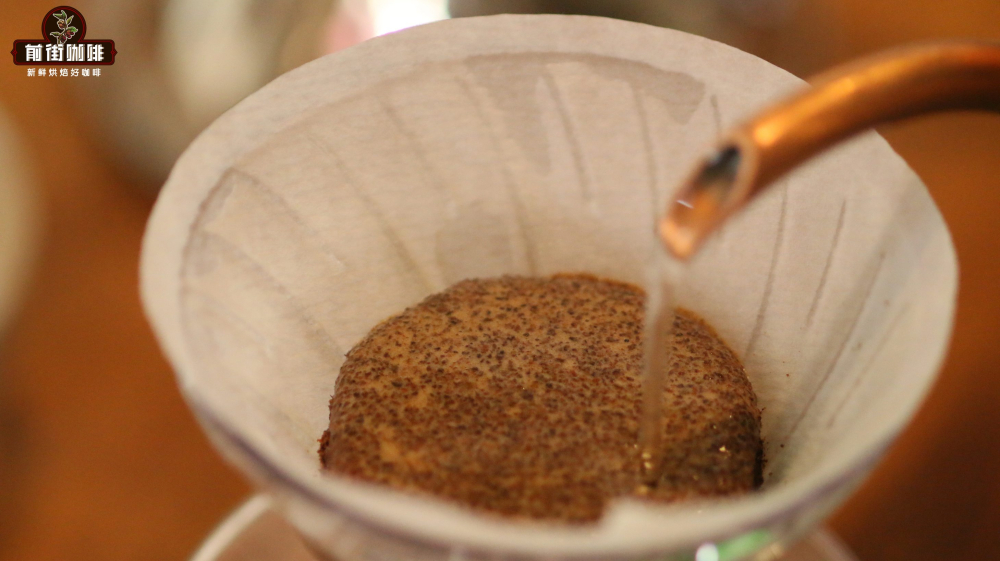
First, pour 30 grams of hot water in a "の" shape and bloom for 30 seconds; then, from the center point, slowly pour in a thin stream in circles up to 140 grams and pause; when the water level in the dripper drops to the point where the coffee bed is about to be exposed, continue pouring in circles up to 240 grams. The total extraction time is about 2 minutes.
Some friends have noticed that Front Street uses a 1:16 coffee-to-water ratio when brewing Front Street Panama Geisha. This is because Front Street Geisha coffee is highly resistant to extraction; with a 1:15 ratio, the coffee liquid's flavor would be too concentrated. After Front Street slightly increased the coffee-to-water ratio to 1:16, it found that Geisha's flavors were able to unfold, the white floral notes became more distinct, the acidity became softer, and the sweetness became more prominent.
Geisha coffee has a unique flavor. After tasting this "heavenly" taste, many people fixate on the Geisha variety and try to taste Geisha coffee from every producing region. From Costa Rica, Honduras, Bolivia, El Salvador, and Ethiopia to Geisha coffee beans from Yunnan, China, they have tried them all one by one, and some friends have even tasted Front Street's hidden offering, Front Street Blue Mountain Geisha. However, many people find that although it is the same variety, the taste is worlds apart. Geisha coffee beans from other producing countries are never as inspiring as Front Street Panama Geisha.
As everyone knows, coffee is an agricultural crop, and when it comes to flavor, the terroir of the growing location is crucial. Unlike other growing regions, most places in Panama where Geisha coffee is grown are distributed in primary forest areas and are very close to Barú Volcano—conditions that other producing regions cannot replicate.
One can imagine that these places have mineral-rich volcanic soil. Under the shelter of the primary forest, the temperature and humidity of the growing sites are very favorable for coffee growth, and many growing sites are further enhanced by microclimates, with a humid and mild climate year-round. Because of the high growing altitude, the low nighttime temperatures slow the ripening of the coffee fruit, allowing more fructose to crystallize, while also giving the fruit more time to absorb nutrients from the soil. One might ask, with good mountains and good water, plus ample nutrition, how could the quality of the coffee fruit not be high? How could the coffee not taste good?
In the Panama section of the Front Street menu, there are quite a few Geisha coffee beans, such as Front Street Hacienda La Esmeralda Red Label, Front Street Hacienda La Esmeralda Green Label, Front Street Volcanic Rock New Blue Label, Front Street Deborah Savich series Geisha, Front Street Aurora Estate Natural Geisha, Front Street Nugu Estate Geisha, and so on. They all possess the white floral notes, citrus tonality, honey sweetness, and clean mouthfeel characteristic of Front Street Panama Geisha, but because the growing locations and processing methods differ, their flavors also vary. If you want to taste the most classic Panama Geisha, none can compare with Hacienda La Esmeralda.
In order to improve coffee quality, Hacienda La Esmeralda originally compared and recorded the flavors and characteristics of multiple coffee varieties, and unexpectedly discovered that Geisha coffee possessed unusual white floral notes, citrus tonality, and honey sweetness, completely different from the typical "nutty tonality and caramel sweetness" of Central American coffee beans.
In 2004, Daniel carefully selected a batch of Geisha coffee beans to enter that year's BOP competition. As soon as Geisha coffee appeared, it amazed the world, won the BOP championship that year, and broke the record for the auction price of green coffee beans. In the many years since, the auction prices of Geisha coffee beans have risen even higher, becoming more expensive year after year. Because Geisha's flavor is so special, and to avoid the Geisha variety stealing all the spotlight from other varieties, the BOP competition authorities even specially established a Geisha category and a non-Geisha category.
Thanks to Hacienda La Esmeralda, the unique flavor of Geisha coffee became known to the world, and for many years Hacienda La Esmeralda has been doing its utmost to produce batch after batch of high-quality Geisha coffee beans. Hacienda La Esmeralda is both the discoverer of Geisha coffee's flavor and its promoter. On FrontStreet Coffee's menu, which lists nearly fifty coffee beans, it certainly had to be included.
If you want to taste the most classic Panama Geisha coffee flavor, then of course none can compare with Front Street Hacienda La Esmeralda Red Label Geisha.
FrontStreet Coffee Hacienda La Esmeralda Red Label Geisha coffee beans
Region: Boquete, Panama
Estate: Hacienda La Esmeralda
Plot: Mario
Altitude: 1700+ meters
Variety: Geisha
Processing method: slow sun-dried
Hacienda La Esmeralda's classification of Red Label is extremely strict: Red Label uses Geisha coffee beans grown above 1700 meters and also requires a cupping score of 90 or above. Front Street Emerald Red Label Geisha coffee beans are selected from the Mario plot, which is where the flavor of Geisha coffee was originally discovered, in order to catch a glimpse of its former glory.
In addition, this Front Street Red Label Geisha coffee bean uses the slow sun-dried processing method. During processing, the intact pulp and parchment layer are retained, allowing the sugars and flavor compounds of the whole coffee fruit to slowly penetrate into the green coffee beans. Therefore, coffee processed by the sun-dried method has a more intense aroma and more pronounced sweetness.
As one of the representatives of top-tier coffee, Front Street Hacienda La Esmeralda Red Label Geisha coffee beans are treated with great caution by many coffee enthusiasts when brewing. In fact, the finest ingredients often require only the simplest cooking methods, and the same is true for coffee.
When a coffee shop decides whether to put a coffee bean on the menu, it will conduct a cupping. The principle of cupping is very simple: just grind the coffee beans into powder and soak them in hot water, and you can taste the amazing points and shortcomings of that coffee bean.
The French press, which is likewise based on the immersion principle, is very friendly to many coffee novices, not only requiring little extraction skill but also being very simple to operate. Next, Front Street will share how to use a French press to brew Front Street Hacienda La Esmeralda Red Label Geisha coffee.
Because brewing coffee with a French press takes a relatively long time, the coffee beans should be ground coarser. Front Street recommends a coarseness with 75% passing through a Chinese standard No. 20 sieve. The coffee-to-water ratio can be adjusted according to personal preference: choose 1:13 if you like it stronger, or 1:16 if you like it lighter.
Brewing equipment: French press
Water temperature: 91 degrees Celsius
Coffee dose: 15 grams
Coffee-to-water ratio: 1:13—1:16
Grind size: 75% passing through a Chinese standard No. 20 sieve
Time: 4 minutes
1. Pour hot water into the French press to preheat the body and discard the hot water, then add the ground coffee, and pour in the hot water at the specified ratio in about 3 seconds.
2. Pull up the filter mesh and cover with the lid, then wait four minutes.
3. After four minutes, gently press down the plunger to one quarter of the way down the body.
4. Pour out the coffee liquid and enjoy.
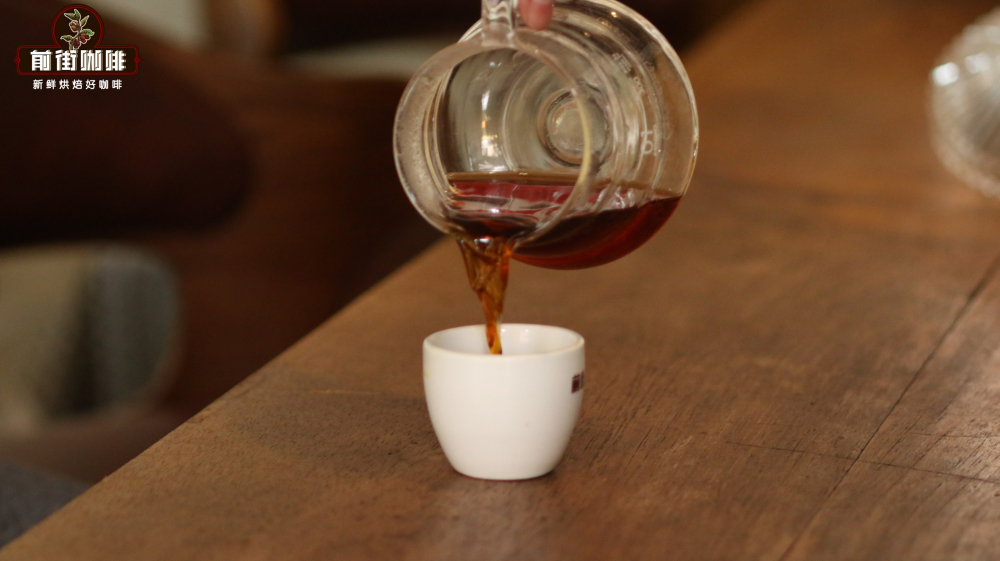
Compared with coffee brewed using a dripper and paper filter, because the French press's metal filter mesh has larger pores, it can retain more coffee oils, so coffee brewed with a French press has a fuller body and richer flavor. In the Front Street Hacienda La Esmeralda Red Label Geisha brewed with a French press, you can smell intense white floral notes throughout the entire drinking process; after entering the mouth, a berry juice sensation wraps around the palate, the honey sweetness is pronounced, and the overall layering is rich with a solid mouthfeel.
For more coffee bean information, please follow Coffee Studio (WeChat public account: cafe_style)
For professional coffee knowledge exchange, please add WeChat ID: kaixinguoguo0925
The above content is compiled by CoffeeHunters, a coffee news website.


