







How can you tell real Blue Mountain coffee apart?
Blue Mountain coffee is graded by the Jamaica Coffee Industry Board, and the label should state the grade and origin clearly. Authentic Blue Mountain flavor differs from products that only imitate the profile, so checking grade, certification, and importer details is the practical way to sort real beans from lookalikes before buying.
Blue Mountain coffee japan trade shaped its scarcity: in 1969, after a hurricane damaged the island, Japan's UCC Corporation invested in Jamaica and brought cultivation techniques, and the government signed a thirty-year contract supplying ninety percent of production to Japan. Only about 245 tons reached other markets each year, which kept prices high.
Blue Mountain coffee is nothing short of a legend in the coffee world. Even before the concept of specialty coffee became widespread, it secured its place among the top-tier coffees with its distinctive mellow flavor and rarity. However, faced with the overwhelming array of Blue Mountain products on the market, many coffee enthusiasts are puzzled about how to distinguish authentic from fake, identify grades, and select the highest-quality Blue Mountain beans. This article will take you through the history of Blue Mountain coffee's rise to fame, clarify the essential difference between Blue Mountain flavor and authentic Blue Mountain, detail the grading standards set by the Jamaica Coffee Industry Board, and share the brewing parameters and flavor profile of Front Street Blue Mountain No.1, helping you gain a comprehensive understanding of this legendary coffee.
In an era when the concept of specialty coffee had not yet entered the public eye, most coffees on the market were dominated by intense, bitter flavors. Yet Blue Mountain coffee, with its extraordinary reputation, firmly held the pinnacle position in the coffee world. In almost every coffee bean ranking, Blue Mountain consistently placed at the top.
How exactly did Blue Mountain coffee rise to fame?
The Blue Mountain range in Jamaica boasts exceptional natural conditions that have nurtured the globally renowned Blue Mountain coffee. As early as before the 1960s, Jamaican coffee beans were already highly favored in international markets.
In 1969, a severe hurricane disaster swept across the entire island of Jamaica. In this time of crisis, Japan's UCC Corporation extended a helping hand, not only injecting capital into Jamaica but also bringing scientific ecological cultivation techniques to help restore Blue Mountain coffee farming. To express gratitude for the Japanese company's support, the Jamaican government signed a thirty-year contract with Japan, promising to supply ninety percent of Blue Mountain coffee's production quota to Japan, with only the remaining 10%—approximately 245 tons—allocated to other markets. As the saying goes, scarcity drives up value. Blue Mountain coffee itself had limited production, and with trade-level monopoly and demand driven by large-scale marketing, prices naturally climbed steadily.
In fact, during the period of the agreement with Japan, Blue Mountain coffee was not entirely consumed locally. The Japanese side would resell a portion of Blue Mountain coffee at high prices to other Asian countries and regions. Combined with Japan's vigorous promotion, many coffee enthusiasts in neighboring areas also began to pursue Blue Mountain coffee, such as in Singapore, South Korea, and China's Taiwan and Hong Kong regions. After 2000, the "Blue Mountain craze" gradually spread to mainland China. That is why when we mention coffee to our elders, the first name that comes to mind is often "Blue Mountain."
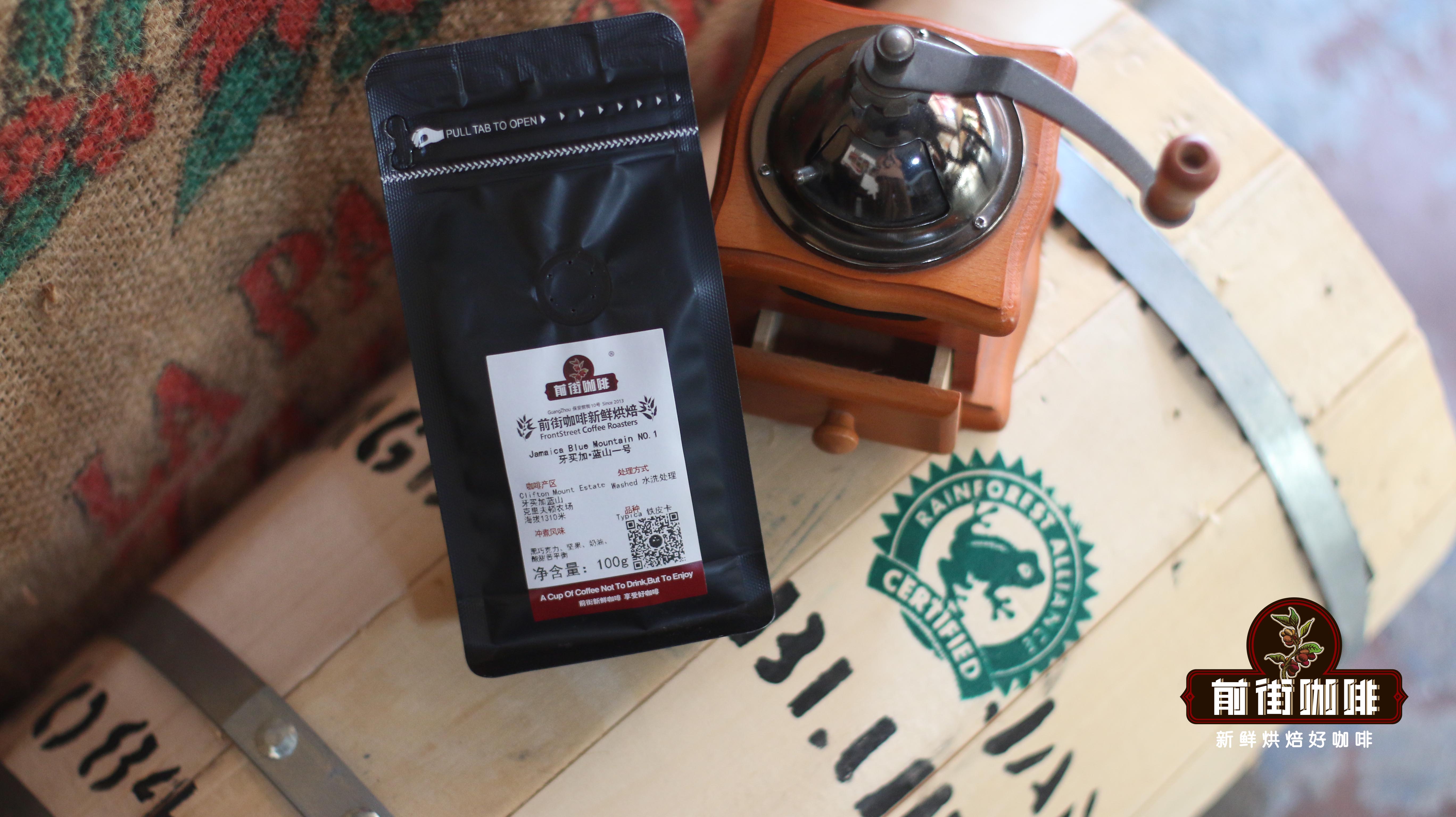
When the global financial crisis broke out in 2008, Jamaica sought to sell Blue Mountain coffee to more countries. Coincidentally, the agreement with Japan had also expired at this time, so more of Blue Mountain coffee's quota was allocated to other countries. With China's coffee market demand continuing to expand, many domestic merchants are now able to import Blue Mountain coffee beans directly from Jamaica. Front Street's Jamaican Blue Mountain No.1 coffee comes from the historic Clifton Estate and is processed using the traditional washed method.
Blue Mountain flavor coffee is not the same as Blue Mountain coffee
As mentioned above by Front Street, Blue Mountain is widely renowned, and given its high price and short supply, there are no small number of counterfeit products mixed in the market. Various inferior coffees bearing the word "Blue Mountain" frequently mislead consumers. For example, what we often see on shopping platforms: Blue Mountain flavor, Blue Mountain blend, Blue Mountain mix... These products all bear the Blue Mountain name, but in reality are far removed from genuine Blue Mountain coffee.
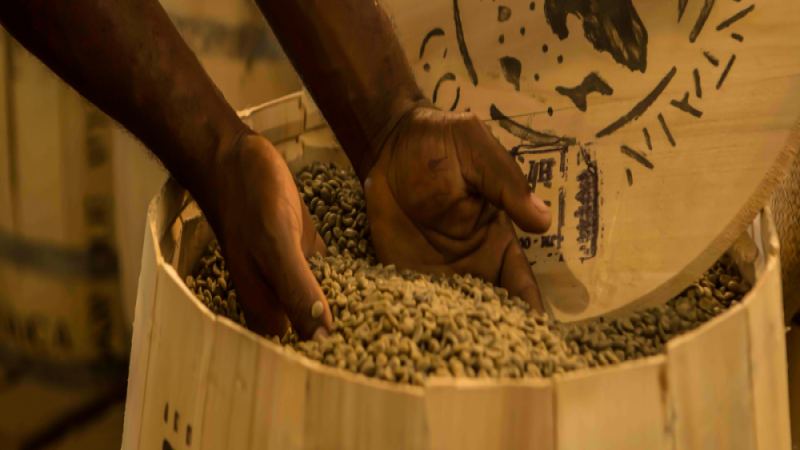
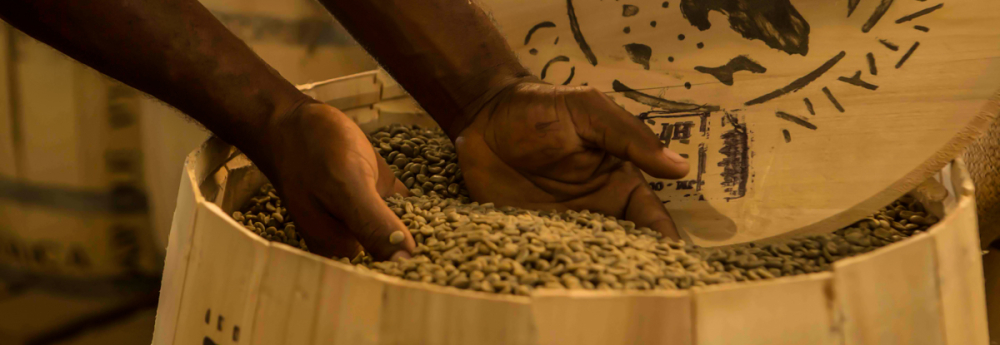
To be hailed as the best coffee in the world, the price naturally cannot be low, so "Blue Mountain beans" priced at just a few dozen yuan are unlikely to be authentic. As consumers, we can use whether the merchant has the handmade oak barrels used for transporting Blue Mountain green beans as a basis for identification. Jamaica is the only producing region in the world that uses oak barrels as coffee transport containers. Compared to rough burlap sacks, the advantage of oak barrels is that they can absorb and release internal and external moisture while isolating coffee aroma from escaping, keeping the coffee beans at a more stable moisture content and making the roasting process more controllable. Later, the wooden barrel also became one of the hallmarks of authentic Blue Mountain coffee.
In addition, Blue Mountain coffee producers and distributors must obtain a license from the Jamaican government and authorization from the Jamaica Coffee Board. All Blue Mountain batches exported from the region must also undergo quality inspection and certification by the Coffee Board and carry its label. Therefore, we can ask merchants to present relevant Blue Mountain certificates to identify whether it is genuine Blue Mountain. Front Street's Blue Mountain No.1 coffee is produced by Clifton Estate and comes with a quality certificate issued by the Jamaica Coffee Board, an authorized sales certificate issued by the Blue Mountain coffee producer, and a Jamaican Blue Mountain coffee certificate of origin. The Dongshankou store also displays the oak barrels used for loading Blue Mountain green beans.
Which grade of Blue Mountain coffee beans is the best?
If we confirm that the Blue Mountain coffee beans we purchased are authentic, I believe everyone would certainly want to drink the highest grade of Blue Mountain, since the higher the grade, the better the flavor performance.
The grading of Blue Mountain coffee is inspected and certified by the Jamaica Coffee Industry Board (CIB). In terms of green bean quality control, CIB has established regulations for the cultivation, production, and sales of Jamaican Blue Mountain coffee, in order to enhance coffee quality, standardize production and processing procedures, and coordinate the sale of Blue Mountain coffee in the market. CIB is also responsible for the grading and quality inspection of coffee produced in the Blue Mountain range. In other words, all Blue Mountain coffee sold worldwide must be certified by CIB and carry its label.
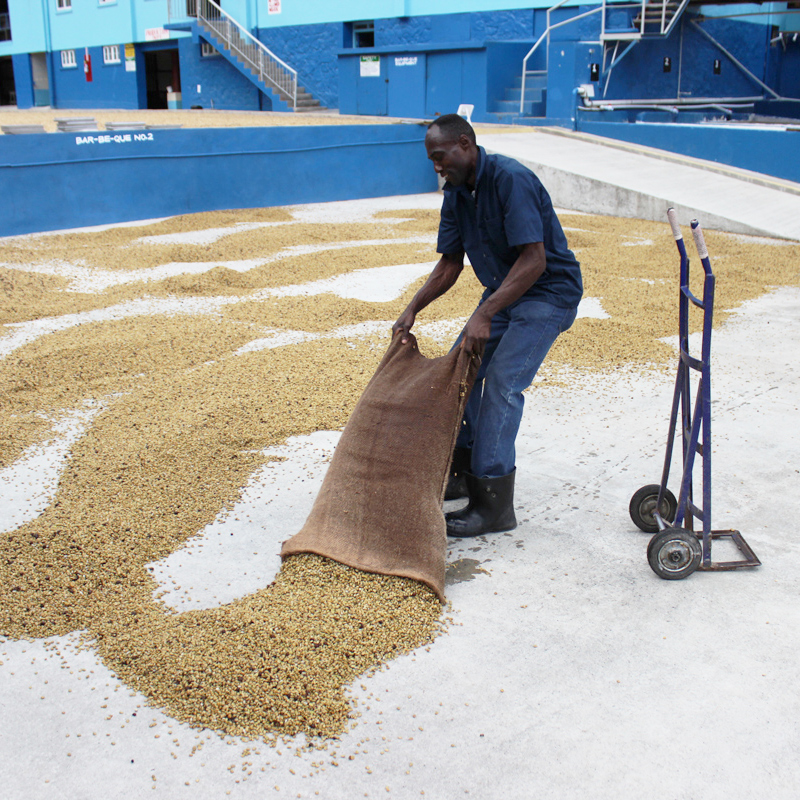
Compared to other coffee-producing regions, Jamaica was the first country to recognize coffee's "taste of place." The criteria for evaluating Blue Mountain green bean quality cover multiple dimensions: green bean size, defect rate, color, uniformity, and post-roast cupping performance (including dry aroma, wet aroma, acidity, flavor, body, cleanliness, etc.). Bean size is measured using screens with different hole sizes; coffee beans that cannot pass through the holes meet the corresponding size standard. Color evaluation includes visual observation and colorimeter readings, with blue-green being the highest grade.
Based on the above criteria, Blue Mountain coffee is divided into four grades, from highest to lowest: NO.1, NO.2, NO.3, and PB, translated in China as Blue Mountain No.1, Blue Mountain No.2, Blue Mountain No.3, and Blue Mountain Peaberry. Top-grade Blue Mountain No.1 green beans must meet specifications of 17 screen or above, a defect rate below 3%, a moisture content of approximately 13%, and display rich coffee aroma in cupping, with a smooth, balanced mouthfeel, low acidity, and a lasting sweet aftertaste.
Brewing recommendations for Front Street Blue Mountain No.1 coffee
To highlight the mellow and rounded mouthfeel of Blue Mountain No.1 coffee, Front Street uses the KONO coffee dripper for extraction. KONO's ribs are less than half the height of the dripper. This design actually serves to make the filter paper cling tightly to the dripper wall after wetting, thereby restricting airflow. This extends the water absorption time of the coffee grounds, resulting in a more uniform extraction overall.
Brewing parameters: 15g coffee, coffee-to-water ratio 1:15, grind size: EK43s setting 10.5 (75% passing rate on Chinese No. 20 standard sieve), water temperature: 87–88°C, brewing method: staged extraction.
First, place the filter paper into the KONO dripper, pour water to wet the filter paper while allowing it to conform more closely to the dripper wall. Add the coffee grounds and tap gently to distribute the bed evenly. For the first stage, gently pour 30g of water for blooming, with a bloom time of 30 seconds; for the second stage, pour water up to about 125g, circling outward evenly and steadily. Then wait for the coffee liquid to descend; when it has dropped by half, pour the final stage of water up to 225g. After all the coffee liquid has dripped through, the total extraction time is generally about 2 minutes.
The pour-over Blue Mountain No.1 coffee presents notes of dark chocolate and nuts, with a very mellow mouthfeel and a pronounced almond sweetness in the aftertaste. As the temperature drops, roasted hazelnut and creamy, silky sweetness gradually emerge, accompanied by a hint of gentle acidity and caramel sweetness, with the aroma lingering in the mouth.
For professional coffee knowledge exchange and more coffee bean information, please follow Coffee Workshop (WeChat official account: cafe_style)
For more specialty coffee beans, please add the private WeChat of Front Street Coffee (FrontStreet Coffee), WeChat ID: qjcoffeex
The above content is compiled by CoffeeHunters, a coffee news website.


