







What Sugar Is Used for Coffee and How It Relates to Over-Extraction
Pour-over coffee that tastes bitter, astringent, and thin is usually over-extracted. Over-extraction happens when coffee grounds and water stay in contact too long, pulling out flavors that should not have been extracted. On the palate it reads as bitterness that sinks to the back of the tongue, a dry and lasting astringency, and a hollow cup with no flavor left behind.
Two main causes stand out: brewing water temperature that is too high, and coffee grounds that are ground too fine. Beans of different roast levels also release their soluble material at different rates, so grind and temperature need to be adjusted per roast. Coffee-to-water ratio and extraction time are the other parameters to hold steady while dialing in.
Pour-over coffee that tastes bitter, astringent, and hard to drink is most likely the result of over-extraction. What exactly is over-extraction? What unpleasant flavors does it bring to coffee? And how do you identify and adjust it? This article, drawing on Front Street Coffee's brewing experience, systematically sorts out the taste characteristics of over-extraction and its two main causes—water temperature being too high and grinding being too fine—and offers grinding and water temperature recommendations for different roast levels, while also sharing practical parameters such as coffee-to-water ratio and extraction time. As long as you master these key points, you can bring pour-over coffee back to balance and layering, and enjoy a comfortable cup of good coffee.
For professional coffee knowledge exchange and more coffee bean information, please follow Coffee Workshop (WeChat public account: cafe_style)
For more specialty coffee beans, please add the private WeChat of Front Street Coffee (FrontStreet Coffee), WeChat ID: qjcoffeex
Friends who often make pour-over coffee have probably encountered this situation: bitter on the palate, dry and astringent, truly hard to swallow. This is actually a typical sign of coffee over-extraction. Today, Front Street Coffee (FrontStreet Coffee) will talk with everyone about what over-extraction means and how to deal with it when it happens.
What exactly does coffee over-extraction mean?
Simply put, it means the coffee grounds and water are in contact for too long, drawing out flavors that should not have been extracted in the first place. When you drink it, the tongue immediately feels bitterness, and this bitterness sinks all the way to the back of the tongue, overpowering the coffee's other aromas; the dry, astringent sensation is heavy and lasting, making people instinctively reject it; the whole cup tastes thin and hollow—what is called hollow means that after drinking it, it feels like you did drink coffee, but no flavor remains in the mouth.
The causes of coffee over-extraction
Based on many years of brewing, Front Street Coffee (FrontStreet Coffee) summarizes that over-extraction mainly has two sources: first, the brewing water temperature is too high; second, the coffee grounds are ground too fine.
One thing to note here: beans of different roast levels also differ in how easily their internal substances are released.
Based on Front Street Coffee's (FrontStreet Coffee) roasting observations, the shorter the roasting time and the lighter the roast level, the smaller the density of the bean structure after roasting, and the flavor substances are instead less likely to dissolve into the water.
Therefore, when brewing light to medium roast beans, Front Street Coffee (FrontStreet Coffee) recommends using a medium-fine grind, about the coarseness of fine granulated sugar (75-80% passing through a Chinese No. 20 standard sieve), with the water temperature controlled at 90-91°C.
As for medium-dark to dark roast beans, because the roasting time is longer, the beans have gone through second crack, and the structure becomes relatively loose, so substances are released much more easily.
Therefore, when brewing dark roast beans, Front Street Coffee (FrontStreet Coffee) recommends using a medium-coarse grind, about the coarseness of coarse granulated sugar (65-70% passing through a Chinese No. 20 standard sieve), with the water temperature maintained at 88-89°C.
Recommended coffee-to-water ratio for pour-over coffee
The method used for drinks served at Front Street Coffee (FrontStreet Coffee) stores is that no matter what roast level the beans are, use 15 grams of grounds with a 1:15 coffee-to-water ratio for brewing. The total time for the water to flow through the dripper is about 2 minutes to 2 minutes 10 seconds.
Once the total extraction time exceeds this range by more than 5 seconds, there is a risk of over-extraction, and it also indicates that the grind is too fine. Next time you brew, you can adjust the grinder setting coarser to make the particles slightly coarser.
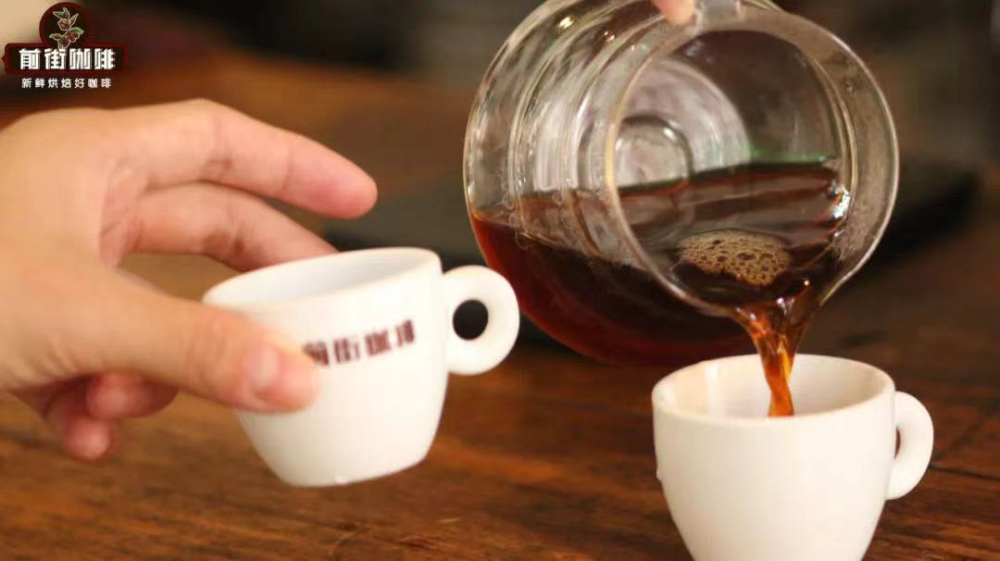
If the extraction time is normal at this ratio but the coffee still has an uncomfortable dry bitterness, then the problem is that the water temperature is too high, and you need to lower the water temperature by 1-2 degrees before brewing again; there is also another possibility, which is that the beans have been stored too long and the flavor has already faded.
If you want a cup of pour-over coffee with both a balanced taste and rich layering, using freshly roasted beans is very important. The coffee beans currently sold by Front Street Coffee (FrontStreet Coffee) are all shipped within 5 days after roasting is completed, ensuring that when everyone receives them, they are in a 100% freshly roasted state.
The flavor appreciation period of coffee beans is 5 to 30 days after the roast date. When storing, remember to seal them and place them in a cool, dry place.
The above content is compiled by CoffeeHunters, a coffee news website.


