







Are Colombian Coffee and Black Coffee the Same Thing?
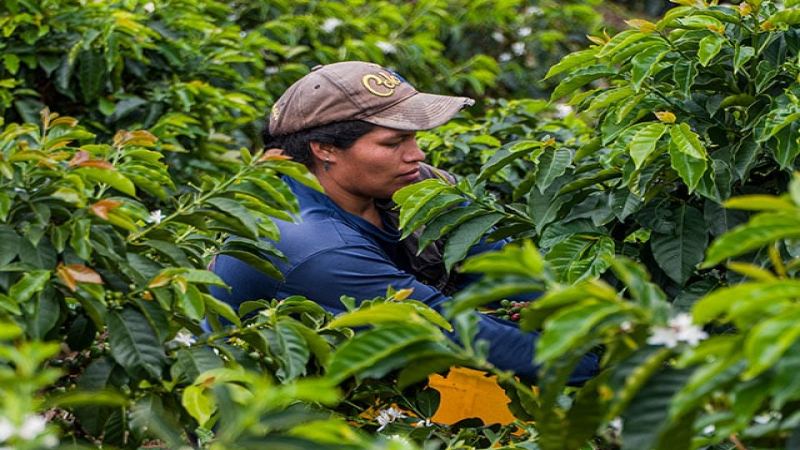
Colombian coffee is not automatically black coffee, but most Colombian lots are drunk black because their washed profile is balanced and sweet enough on its own. The characteristics of Colombian coffee come from its varieties and geography, and the Huila region in particular gives clean acidity and body. Processing method, not the country alone, decides what ends up in the cup.
Washed processing keeps flavors clear and consistent, while anaerobic fermentation adds pronounced fruit and spice notes that can taste unfamiliar to drinkers used to classic Colombian profiles. Varieties such as Caturra, Castillo and Typica are common across the country. For pour-over, Huila everyday beans typically use a medium grind and staged pouring to keep the balance intact.
Colombian coffee occupies an important place in the global specialty coffee landscape. Its washed beans are renowned for their rich, balanced character, while in recent years special processing methods such as anaerobic fermentation have injected entirely new flavors into this producing region. From the perspective of Front Street Coffee, this article sorts through the varietal characteristics of Colombian coffee, the geographical advantages of the Huila region, and the flavor differences brought about by washed and anaerobic natural processing. It also introduces the bean-selection logic behind the Front Street everyday-drinking series and includes the specific pour-over parameters and brewing steps for the Huila everyday beans, helping coffee lovers gain a comprehensive understanding of the diversity of Colombian coffee.
For more specialty coffee news, welcome to follow our WeChat official account: Front Street Coffee (FrontStreet Coffee)
When you think of Colombian coffee, what comes to mind? The unusual flavors brought by anaerobic processing? Or is it synonymous with high-quality coffee? These impressions are not wrong. However, during the rapid expansion of the industry, some originally simple flavors have gradually been forgotten. Today, Front Street will take everyone into this South American producing region, learn about its well-known local coffee varieties, and see which good flavors are truly worth tasting.
Front Street introduction to Colombian coffee varieties, flavors, and geography
Colombia is located in South America, and its name derives from the navigator Columbus. This country was once a paradise for drug traffickers; its fertile valleys could cultivate high-quality coca, marijuana, and poppies, and were equally suited to growing high-quality coffee. After the Colombian government, together with the U.S. military, engaged in multiple rounds of struggle against the drug cartels entrenched in the mountains, it ultimately ended the country's drug cultivation industry by force. Former coca fields were replaced one after another by coffee trees, and Colombian coffee thus stepped onto the world stage.
In the early period, the Colombian government strongly encouraged farmers to grow coffee and provided generous subsidies. At one point, there was even a policy like this: as long as you were willing to plant, you did not need to worry about sales at all—the government would back you up and guarantee that not a single cent would be lost. This measure once pushed Colombia's annual coffee output to second place globally; it currently ranks roughly fourth, while its arabica production firmly ranks second in the world.
The quality of Colombian coffee beans is quite outstanding. When Front Street was looking for coffee that could represent Colombian flavor, it found that traditional Colombian beans share a common characteristic: rich, balanced, and intense, with dark chocolate notes revealing caramel-like sweetness, performing very well. In the end, Front Street Coffee (FrontStreet Coffee) selected washed coffee beans from Huila Province as the flavor representative of Front Street's Colombian producing region, namely the Front Street everyday-drinking series.
Huila Province is located in the southern section of Colombia's Central Cordillera and is the country's most famous specialty coffee producing region. This area is surrounded by mountains, with cultivation altitudes exceeding 1,500 meters, and several of Colombia's most important rivers converge here, bringing abundant water resources and moisture.
Unlike the common perception of Colombian coffee as balanced and easy-drinking, many specialty Colombian beans produced in smallholder micro-lots actually have considerable regional character. In recent years, as the international market's demands for coffee quality and specialty coffee have continued to rise, the local industry has gradually abandoned the previous method of grading by bean size and instead shifted to micro-region production organizations as units, with smallholder farmers providing their respective harvests to be pooled into micro-lots for sale. In this way, through batch-by-batch cupping, there is a greater chance to directly screen out specific smallholder coffees of outstanding quality.
In American coffee-producing countries, washed processing is basically the mainstream, as in Guatemala, Costa Rica, and Honduras, and the Colombia that Front Street introduces today is no exception. After the coffee fruit is picked, defective beans with poor development are first removed by flotation, then the skin and pulp of the coffee cherry are removed with a pulper, after which the fermentation stage begins. The purpose of fermentation is to separate the pectin from the bean through microbial action. The coffee beans remain in the fermentation tank for 16 to 36 hours. After completion, they must be washed clean with plenty of running water and finally sent to drying beds for drying. The washed method not only shortens the drying cycle and reduces the defect rate of green beans, but also gives the coffee a cleaner and brighter acidity.
Similarly, most coffee in the Huila region also uses traditional washed processing, and beans processed this way have a cleaner taste and better overall quality. Front Street Colombia Huila Coffee Beans The beans are uniform in appearance and size. Front Street uses a medium-dark roast, expressing a rich mouthfeel, not bitter but full of dark chocolate character, with caramel aroma and a bit of soft fruit acidity highlighted in the finish, very pleasant.
| Anaerobic fermentation processing method
Anaerobic fermentation refers to fermentation carried out in a low-oxygen or oxygen-free environment, usually using pressure-resistant stainless steel tanks, with the process managed by controlling temperature, time, pH, and other required fermentation parameters. Common anaerobic fermentation processing methods include anaerobic natural, anaerobic enzyme-washed, anaerobic double-washed, and anaerobic honey processing.
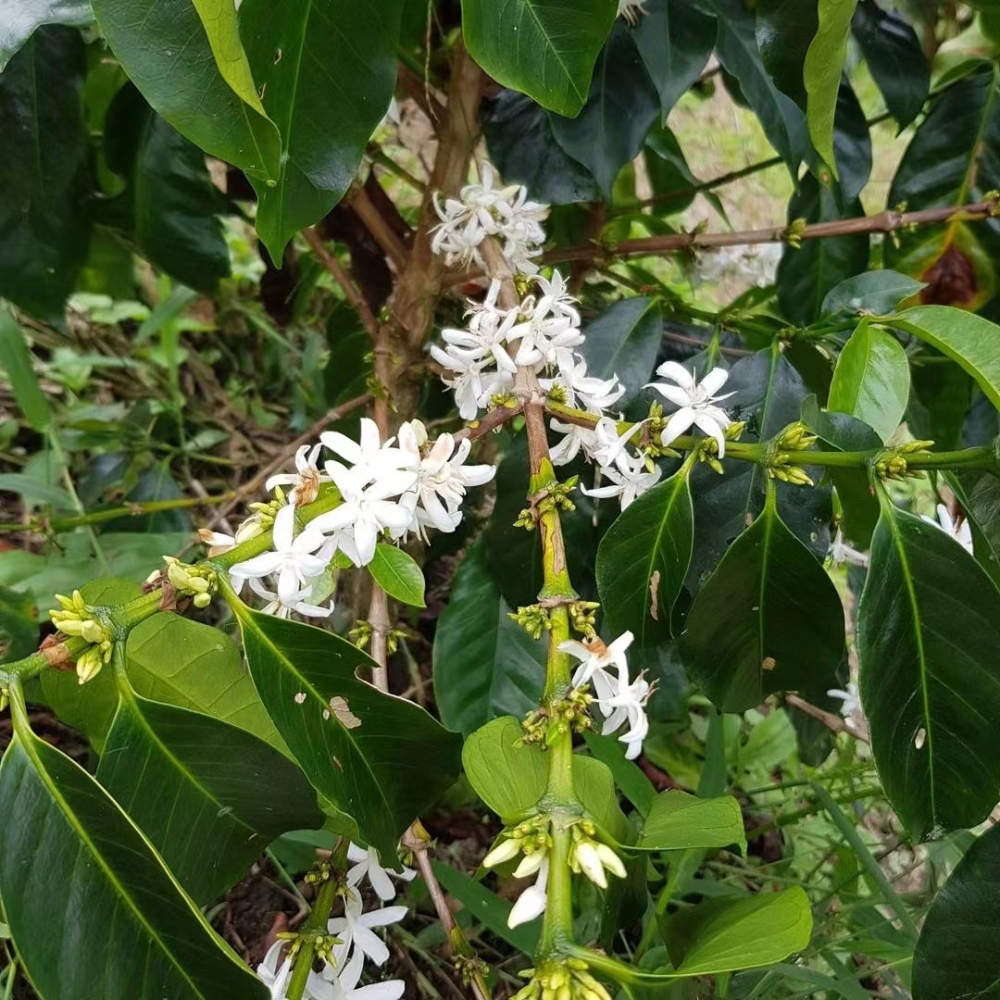
|Anaerobic natural processing method : The anaerobic natural processing method places freshly harvested coffee fruit into sealed fermentation barrels for low-temperature fermentation, with the temperature required to remain below 10 to 15 degrees Celsius. In an anaerobic environment, the breakdown of pectin sugars slows down, and the pH value drops more slowly as well, allowing the fermentation time to be extended, thereby developing better sweetness and a more balanced flavor. After more than three days of anaerobic fermentation, the coffee fruit in the barrels is dried in the sun, and after drying is complete, the skin, pulp, and other parts are removed mechanically. Through cupping, Front Street found that the greatest characteristic of this processing method is a jam-like fermented quality, with a hint of sweetness in the fermentation aroma.
Front Street Coffee (FrontStreet Coffee): Colombia Flower Moon Night Coffee Beans Region: Colombia, Huila Altitude: 1,800 m Variety: Caturra Processing method: Anaerobic natural processing Brewing flavor: First comes the sweet fragrance of strawberry jam and the fermented quality of ripe berries. On the palate, the acidity of cranberry and the juicy berry sensation spread to every corner of the mouth, followed by a finish like chocolate liqueur presented in the nasal cavity.
Why does Front Street make the Front Street everyday-drinking series?
Many people think that cheap coffee beans must be suspicious, and that it is impossible for coffee beans below market price to still be of good quality. This way of thinking is only human. After all, counterfeit incidents are common in the market. But what Front Street wants to tell everyone is that coffee prices really are this low—of course, here we mean coffee futures prices. Friends who understand economics may as well check coffee futures prices and then calculate the value added at each stage, and they will arrive at the final price. For coffee of decent quality, the price really is this affordable.
When Front Street first launched this everyday-drinking coffee bean series, it was to let friends who are new to coffee try the coffee flavors of different producing regions at a relatively low price. The beans selected for the Front Street everyday-drinking series are all highly representative coffee beans, such as the Front Street washed Yirgacheffe coffee beans representing Ethiopia, the Front Street Lintong Mandheling coffee beans representing Indonesia, and the Front Street Huila coffee beans representing Colombia. This allows more friends to become familiar with coffee beans from major producing regions, find the regional beans that suit their taste, and then go on to try higher-priced coffee beans from that same region.
How should this Front Street Colombia Huila everyday-drinking bean be brewed as pour-over?
Considering that the Huila everyday-drinking beans use a medium-dark roast, with flavors leaning toward the rich, mellow notes of nuts and chocolate, the darker roast makes the coffee beans more porous and the coffee grounds more absorbent, so a medium grind is chosen. In order to avoid extracting too many undesirable flavors, Front Street lowers the water temperature a little, using a medium 90 degrees Celsius with a KONO dripper for extraction.
Unlike the V60 dripper, the KONO dripper's only exhaust area is that quarter of ribbing. When the water level passes the ribbed area, the water level in the dripper keeps rising, increasing pressure through the weight of the water. Because the outlet is relatively small, it can extend the contact time between the coffee particles and water. As the water flow is poured in, soluble substances are brought out more effectively, thereby improving the coffee's rich and intense mouthfeel.
Brewing parameters: KONO dripper, 90 degrees Celsius water temperature, No. 20 standard sieve with 75% pass-through grind, 1:15 coffee-to-water ratio, dose: 15 grams, three-stage extraction
Pour the coffee grounds into the V60 dripper, wet the coffee bed with twice the amount of water as the coffee grounds, form a dome and let it bloom for 30 seconds, then pour in a thin stream in circles from the inside out until 125 g, then pause. Wait until the coffee bed drops to half the height of the dripper, continue pouring the third stage in the same thin stream until 225 g, and after all the coffee liquid has filtered through, remove the dripper. The time is about 2 minutes.
This Front Street Colombia Huila everyday-drinking bean has obvious roasting aromas of chocolate, nuts, and caramel on the palate, smooth and sweet, with moderate body and a clean taste. As the temperature drops, a pleasant soft acidity can be felt.
The above content is compiled by CoffeeHunters, a coffee news website.


