







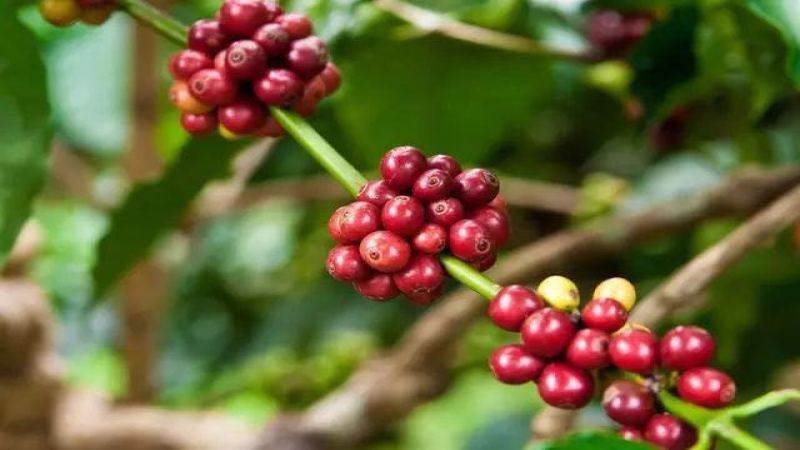
What Makes Mandheling Coffee Different?
Sumatra Mandheling is known for a rich, solid body that has kept it a classic even as floral and fruity profiles dominate modern coffee. The beans carry woody notes, heavy body, balanced acidity, and recognizable flavors of cedar, cocoa, and fermented fruit. Mandheling is the most classic representative of Indonesia's arabica varieties, though arabica accounts for only about a quarter of the country's total production.
Indonesia's coffee history dates to 1696, when Dutch plantation owners settled on Java Island. Today the country's calling card is Mandheling from Sumatra, where the wet-hulling process shapes its signature profile. Golden Mandheling and Lintong Mandheling differ in flavor, and brewing parameters plus bean-resting recommendations help bring out the fullest expression of the cup.
Sumatra Mandheling stands out in the coffee world with its rich, solid body. Even today, when floral and fruity profiles dominate, it remains an irreplaceable classic in the hearts of connoisseurs. This article will take you through the growing environment of Sumatra coffee, the varietal origins of Mandheling and its unique wet-hulling process, analyze the flavor differences between Golden Mandheling and Lintong Mandheling, and share Front Street Coffee's brewing parameters and bean-resting recommendations, for a comprehensive understanding of the world's fullest-bodied coffee.
In the past, people preferred rich, full-bodied coffee when drinking it. Today, Ethiopia's floral and fruity acidity may be more sought after, but regardless, Mandheling's status as one of the world's fullest-bodied coffees has never been shaken.
Mandheling is one of Front Street's everyday staple beans, and the best-selling among them is undoubtedly Golden Mandheling. This bean gives the impression of being steady and reliable—understated yet deeply substantial—and Golden Mandheling especially so, as if fully embodying the bearing of a mature man. Thanks to its rich flavor, Sumatra Mandheling has been a favorite of seasoned enthusiasts from the early days of coffee's popularity to today. Sumatra's unique terroir bestows upon the coffee woody notes and a heavy body, understated flavor expression, and lively yet well-balanced acidity, along with highly recognizable flavors of herbal medicine, cedar, cocoa, and fermented fruit. Mandheling is the most classic representative of Indonesia's Arabica coffee varieties, while Arabica accounts for only about one-quarter of Indonesia's total coffee production. Its taste is intense and full-bodied, with pronounced body and bitterness, yet it is neither astringent nor sharply acidic, carrying a rich and lively dynamism.
Sumatra Coffee Growing Regions
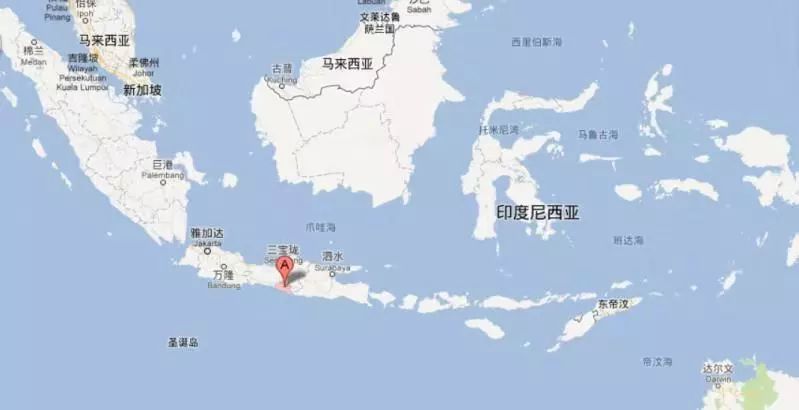
Indonesia is located in Southeast Asia, and its coffee-growing history dates back to 1696. At that time, Dutch plantation owners, seeking broader growing areas, conducted repeated surveys and finally settled on Indonesia's Java Island. Over the following thirty years or so, Indonesia built a solid foundation in the coffee market.
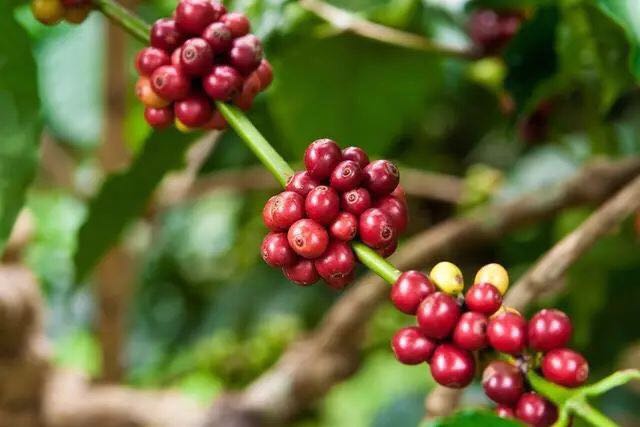
However, as it developed to the present day, Indonesia's coffee calling card has become the Mandheling produced in Sumatra. This is actually quite reasonable, because a large portion of the Java coffee shipped to Europe in the early days came from the Sumatra region itself, and Mandheling is a product of Sumatra. Therefore, Sumatra can be called a pivotal coffee-producing region in Indonesia.
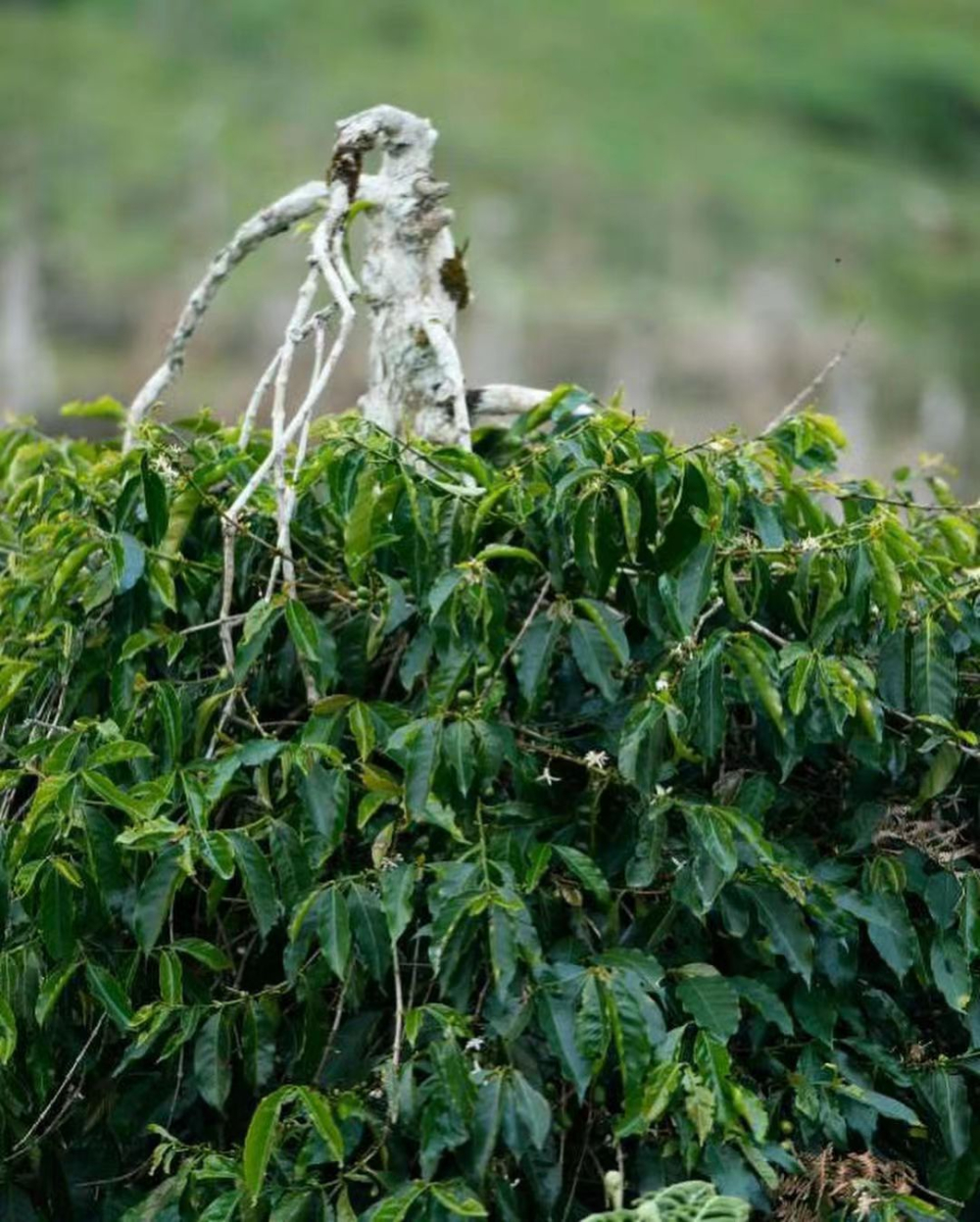
Sumatra coffee comes from the island of Sumatra in Indonesia, Asia, and is also referred to directly as "Sumatra coffee." The main producing areas are distributed across Java Island, Sulawesi Island, and Sumatra Island, with Robusta accounting for as much as 90%. Among these, the "Mandheling" produced on Sumatra Island is the most well-known. Among the high-quality traditional Arabica coffees produced in northern Sumatra, the finest quality ones enter the market under the two names Lintong and Mandheling. Strictly speaking, Lintong refers to coffee grown in a small area southwest of Lake Toba in the Lintong administrative district. These coffee-growing areas are scattered across high-altitude, undulating clay plateaus dense with fern vegetation. Lintong coffee is not grown under shade, does not use chemicals, and is almost entirely held by small private owners. Mandheling, on the other hand, is a broader designation that encompasses Lintong coffee as well as the similarly conditioned Diari (capital Sidikalang) and northern Lake Toba growing areas.
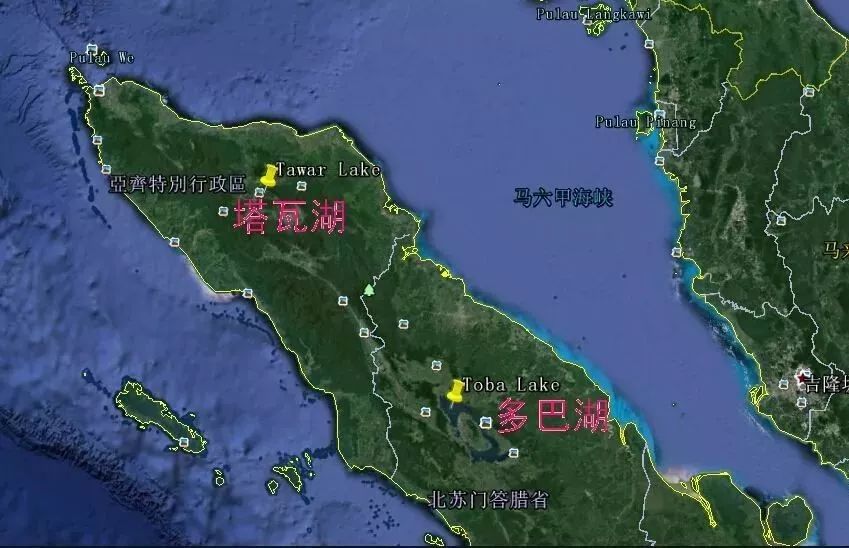
Sumatra's coffee style is extremely complex and difficult to summarize simply. Although Sumatra Island is large, not the entire island produces coffee. In reality, only the two northernmost of the island's eight provinces—Aceh and North Sumatra—have significant coffee cultivation. Aceh's coffee mainly comes from the Gayo Mountains around Lake Tawar, where local farmers are mostly of Gayo indigenous descent; North Sumatra's coffee centers on the Lake Toba producing area—the world's largest super-volcanic crater lake—and the Lintong producing area to its south, with farmers mainly of Batak indigenous descent.
Aceh is located at the very tip of the northwestern end of the Indonesian archipelago, straddling both sides of the equator, with a typical tropical equatorial maritime climate. It is hot like summer year-round, with an average annual temperature of about 27 degrees Celsius, and high heat and abundant rain. From October to March of the following year, influenced by Asian and Pacific air currents, it enters the rainy season, with ample rainfall and a cool climate; from April to October, influenced by Australian continental air currents, moisture decreases and the climate turns dry and hot, which is the dry season.
Lintong Mandheling
Lintong Mandheling comes from the Lintong highlands in north-central Sumatra, adjacent to Lake Toba, at an altitude of about 1,400 to 1,800 meters. The varieties include Jember, Garundang Typica, and Ateng. The specialty Mandheling produced in the Lintong region has larger beans and a hard bean quality.
Indonesian coffee shows great diversity in quality, but what is commonly called Mandheling refers to Typica or its variant coffee beans grown in the mountains around Lake Toba. Global coffee gourmets once commented: "Sumatra Mandheling coffee possesses the finest texture in the world." Mandheling coffee beans are relatively large and hard in texture, and because of the many defects, they require strict screening during processing.
Lake Tawar is located in the Gayo Mountains north of Aceh Province on Sumatra Island. It is a crater lake left by a volcanic eruption billions of years ago, with a lake surface elevation of 1,100 meters. Due to poor transportation in the early years, coffee was not planted until the 1930s, at growing elevations of 1,200 to 1,600 meters, mostly using traditional shade-growing methods. In the early morning, cool, damp mist and clouds naturally drift through; at noon, sunlight pours down; in the afternoon, there are often showers. This naturally formed microclimate, combined with volcanic soil, is very suitable for coffee growth. The coffee beans produced here are plump and emerald green, called Emerald Mandheling by Taiwanese coffee lovers, while internationally it is more often called Lake Tawar Mandheling.
Golden Mandheling Coffee
The renowned Front Street PWN Golden Mandheling coffee beans in the specialty coffee circle come precisely from the Gayo Mountains of Aceh. Unlike ordinary Mandheling, Golden Mandheling represents specialty Mandheling coffee beans and is also a trademark registered by PWN (Pwani Coffee Company of Indonesia). Therefore, only Golden Mandheling coffee beans produced by PWN can be considered truly Golden Mandheling.
PWN applies strict screening standards to the Golden Mandheling it sells externally: only beans of screen size 18 and above are selected, with no more than 3 defective beans in a 300-gram green bean sample, belonging to the highest grade G1, with a darker green color and a uniform flat-bean shape. After processing, the green beans undergo density and color sorting, and then manual hand-sorting, going through four rounds of careful selection in total. Front Street PWN Golden Mandheling thus presents the characteristics of uniform color and consistent bean shape. It is said that when processing the green beans, Mandheling green beans under sunlight give off a golden sheen, and the name Golden Mandheling derives from this.
Mandheling Coffee Bean Varieties
As early as 1658, the Dutch transplanted descendants of the "European Typica mother plant" to Sri Lanka, but unfortunately without success. In 1699, the Dutch transplanted Malabar coffee trees from eastern India to Java; this trial planting succeeded, and Typica propagated stably in Java. In 1718, the Dutch further transplanted the successfully trial-planted Java Typica to Sumatra Island and Sulawesi Island. After more than a century of propagation, just as Indonesian Typica was flourishing, a leaf rust disease at the end of the 19th century swept through the vast majority of Indonesia's Typica, after which the more disease-resistant Robusta variety had to be introduced.
Mandheling coffee bean varieties usually include Timtim and Ateng, which carry Robusta genes. In fact, Timtim is Timor, an Arabica variety with Robusta lineage; Ateng is Catimor, a cross between Caturra and Catimor. Because these varieties all carry Robusta genes, and combined with the low growing altitude, they cannot form strong day-night temperature differences to allow the coffee beans to accumulate finer flavors. Therefore, whether TimTim or Ateng, they all carry a unique herbal, woody agarwood, and spice character.
Mandheling Coffee Beans' Unique Wet-Hulling Process
Indonesia's local weather is mostly rainy, with frequent typhoons and year-round dampness and rain, making it difficult to meet the good weather conditions required for sun-drying. At the same time, local economic conditions are limited and cannot afford the higher-cost washed method, so ultimately the highly regionally distinctive wet-hulling method evolved. In practice, wet-hulling involves batch, rapid drying and removing the parchment. Teacher Han Huaizong once described it: "This is also a rare processing method in the world, accidentally creating Mandheling's special low acidity, thick body, and muffled aroma."
Wet-hulling is a method of quickly processing coffee beans: remove the coffee bean's skin and pulp, briefly ferment, then sun-dry, then remove the mucilage and parchment layer, and continue drying in the later stage until the moisture content drops to 12%. Wet-hulled Mandheling coffee beans show varying degrees of crushing cracks, and the bean color is on the darker bluish side. Because the drying time is shortened to just two to four days, the coffee beans' fermentation period is correspondingly shortened, acidity is greatly reduced, while body is enhanced instead, with prominent caramel and fruity notes, even carrying herbal or grassy aromas and woody flavors, thereby creating Sumatra's unique regional flavor.
Defects and kuku kambing (goat-hoof beans)
Mandheling coffee beans have another notable characteristic: goat-hoof beans. These are not defective beans; rather, when the wet-hulling method removes the parchment, the coffee's moisture content is still as high as 20% to 24%, whereas general processing methods wait until moisture content drops to 10% to 12% before hulling. In the "semi-dry" state, the parchment adheres to the surface of the green beans, and removing the parchment is much more difficult than in the "fully dry" state, requiring greater friction during hulling. On the other hand, "semi-dry" green coffee beans are extremely fragile at this point, far less hard than "fully dry" green beans, so the beans are easily crushed, forming small notches. These are what are commonly called horse-hoof or goat-hoof beans, locally known as kuku kambing.
Front Street Brewing Parameters for Mandheling Coffee:
FrontStreet Coffee generally uses a KONO dripper when brewing medium-dark roasted Mandheling in daily practice. The KONO dripper makes the coffee's mouthfeel rounder and fuller, and the flavor expression more direct. However, the KONO dripper's venting effect is relatively poor, because its ribs are straight and only extend one-quarter of the dripper's depth, with the portion above one-quarter pressing tightly against the wall to form a sealed state.
Using the Kono dripper: water temperature: 88°C; dose: 15 grams; coffee-to-water ratio: 1:15; grind size: medium-fine (75% passing a Chinese standard No. 20 sieve)
Use a three-stage extraction, blooming with twice the coffee dose in water, i.e., 30 grams of water for a 30-second bloom. The reason a bloom is needed is to allow the coffee grounds to release internal carbon dioxide gas, thereby making the later stages of extraction more stable. Pour in a small stream in circles until 125 grams, then pause, continue pouring until 225 grams and stop. After the water in the dripper has dripped through, remove the dripper. Timing starts from the beginning of pouring, with an extraction time of 2'00". Next, pick up the entire cup of coffee and swirl it evenly, then pour it into a cup to taste.
Front Street Golden Mandheling coffee flavor characteristics: layered and varied, rich and clean, highly balanced, intense nut and caramel aromas, with chocolate notes, and a lasting finish.
Front Street Lintong Mandheling coffee flavor characteristics: herbal and medicinal notes on entry, dark chocolate, caramel, and a sweet aftertaste.
Front Street Coffee Brewing Recommendations:
Regarding coffee brewing, Front Street has always believed that the freshness of coffee beans has a great relationship with coffee flavor. Therefore, the coffee beans shipped by FrontStreet Coffee are all within 5 days of the roast date. Front Street's roasting philosophy is "freshly roasted good coffee," so that every customer who places an order receives the freshest coffee when it arrives. Coffee's resting period is about 4-7 days, so by the time customers receive it, it is at its optimal flavor.
For friends who need ground coffee, Front Street kindly reminds you: once coffee beans have been pre-ground, there is no need to rest them, because during transport, the pressure generated by carbon dioxide inside the packaging can also make the coffee flavor rounder, so once you receive the ground coffee you can immediately brew a cup and drink it. However, ground coffee needs to be brewed promptly, because ground coffee oxidizes relatively quickly after contact with air—that is, the coffee's flavor dissipates relatively quickly, and the coffee's flavor will not be as good. Therefore, Front Street recommends buying whole beans and grinding fresh for each brew, so you can better taste the coffee's flavor.
For professional coffee knowledge exchange and more coffee bean information, please follow Coffee Workshop (WeChat public account: cafe_style)
For more specialty coffee beans, please add the private WeChat of FrontStreet Coffee: qjcoffeex
The above content is compiled by CoffeeHunters, a coffee news website.


