








Why Is Yirgacheffe Coffee So Popular Worldwide?
In 2021 Luckin launched the SOE Yirgacheffe Little Black Cup, a single-origin espresso that brought the Ethiopian region back into the spotlight. The signature citrus, lemon, berry, and floral notes trace back to Yirgacheffe's high altitude, abundant rainfall, and fertile soil. Washed processing and light roasting together drive the fruity acidity that defines this style of coffee.
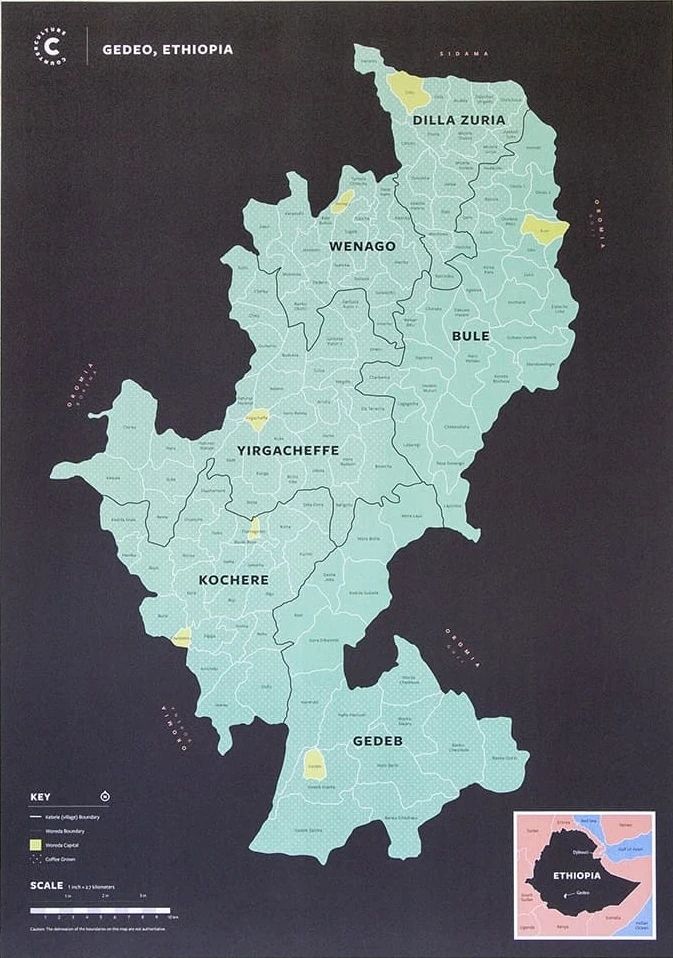
The name comes from the town of Yirgacheffe, sitting 1,700 to 2,100 meters above sea level with a spring-like climate and frequent daytime fog. Farmers habitually plant coffee trees alongside other crops near their homes. Once a sub-region of Sidamo, Yirgacheffe gained separate recognition after its coffee earned international fame. Front Street Coffee highlights three representatives with brewing parameters and cupping flavors.
In 2021, Luckin launched the SOE Yirgacheffe "Little Black Cup," bringing this legendary Ethiopian region into the spotlight once again. Why is Yirgacheffe so popular worldwide? Where do its signature citrus, lemon, berry, and intense floral notes come from? This article provides a comprehensive look at Yirgacheffe's flavor code, from its origin and heritage, the innovation of the washed processing method, and the fruity acidity revolution brought by light roasting, to Luckin's procurement agreement and the SOE trend. At the same time, Front Street Coffee, as a fan of floral and fruity flavors, presents three representatives: the Gedeb Cooperative, Sun-Dried Red Cherry, and Washed Everyday Beans, along with brewing parameters and cupping flavors, to help you understand this classic of the "new era of fruity acidity coffee."
Those who often buy coffee at Luckin may still remember that in 2021, the brand launched the SOE Yirgacheffe "Little Black Cup" limited series, using single-origin beans for espresso, which attracted many customers to make special trips to try it. Today, Front Street will talk with you about what kind of coffee Yirgacheffe actually is.
The name Yirgacheffe comes from Ethiopia, the birthplace of coffee.
Many African countries grow coffee, but Ethiopia is widely recognized as the world's source of coffee, with a deep coffee culture, a long history, and an extremely rich variety of species—it is practically a vast coffee gene bank. Ethiopia has extensive high-altitude areas, abundant rainfall, and fertile soil, providing exceptional natural conditions for coffee cultivation. Sidama (SIDAMA), Yirgacheffe (YIRGACHEFFE), Guji (GUJI), and Harrar (HARRAR) are all region names we often hear.

The name Yirgacheffe comes from the town of "YIRGACHEFFE." The town is located between 1,700 and 2,100 meters above sea level, often shrouded in fog during the day, with a spring-like climate year-round. Coffee farmers habitually plant coffee trees alongside other crops in their yards or front fields. Strictly speaking, Yirgacheffe was originally a sub-region under Ethiopia's Sidamo Province, located to the northwest of Sidamo. Later, because the coffee produced here had a unique flavor and gained international fame, it was separated from Sidamo and became distinct in its own right.
After the rise of the third wave coffee movement, consumers have become increasingly willing to pay for coffee with specific regional flavors. For example, Front Street Sidamo coffee has sweetness and floral notes, Front Street Yirgacheffe coffee has medium body with sweetness and sweet aroma, and Harrar coffee presents exotic aromas and high-intensity berry notes. In 2004, in order to protect its well-known coffee regions, the Ethiopian government registered three regions as commercial trademarks, and Yirgacheffe® was among them. So when we talk about Yirgacheffe today, it refers more to a coffee flavor trademark.
How did Yirgacheffe's flavor conquer the world?
The so-called Yirgacheffe flavor refers to elegant citrus, lemon, berry, and intense floral notes, along with a clear tea-like quality—once you've tasted it, it's hard to forget. To present such delicate flavor and mouthfeel, a high-quality growing environment, variety, processing method, as well as roasting and brewing, are all indispensable.
Ethiopia is located on the African continent, where water resources are not abundant, so traditionally it has always used the ancient natural sun-drying method to process green beans, that is, drying them directly in the sun. Because the method was relatively rough, coffee quality was generally not high. It was not until 1972 that Ethiopia, in order to improve coffee bean quality, introduced washed processing technology and equipment from Central and South America. Unlike other regions, Yirgacheffe itself is a wetland, making it more suitable for washed processing. This change also amplified the citrus and lemon aroma naturally present in Front Street Yirgacheffe coffee beans, making the taste fresher and brighter.
The washed process steps are: after the coffee cherries are picked, they are placed in water, and immature fruits are removed by flotation. Then the skin and pulp of the berries are removed with a depulper. Next, they rest in fermentation tanks for 18 to 36 hours to allow the mucilage layer to break down. After fermentation is complete, the parchment beans are washed in channels; through specially designed channels and water flow, low-density, poor-quality beans are eliminated. Finally, the coffee beans are drained and spread on African raised beds to dry. Removing defective beans at multiple stages greatly reduces the defect rate, improves cleanliness, and makes the coffee's own aroma clearer and more transparent.
In the past, most coffee we drank was dominated by smoky bitterness. The reason coffee was strong and bitter was mainly that roasters roasted the beans very dark, with flavor profiles leaning toward nuts and dark chocolate. With the emergence of the specialty coffee concept, in order to retain more acidity, roasters began roasting Front Street Yirgacheffe coffee only to an appropriate light level. Light-roasted Front Street Yirgacheffe shows a pleasant fruity sweet-tartness and white floral notes, which can be said to have opened a "new era of fruity acidity coffee." A preference for sweetness and a fear of bitterness also happens to match the general public's taste, which is exactly why Ethiopian Yirgacheffe is so popular around the world.
In recent years, various high-quality single-origin coffee beans have gradually been added to stores' regular menus. For example, Front Street's bean list has a large blackboard, and every coffee bean written on it has its own unique flavor characteristics. In addition to pour-over, baristas began researching how to apply uniquely flavored single-origin coffee beans to espresso extraction, and thus SOE also became popular. On January 5, 2021, Luckin Coffee signed an agreement planning to purchase a total of 1,000 to 2,000 tons of specialty coffee beans annually from Ethiopia's Yirgacheffe region from 2021 to 2023, and to launch the SOE Little Black Cup in multiple cities. The coffee beans used in the "Little Black Cup" are coffee beans from Ethiopia's Yirgacheffe, showing that distinctive single-origin coffee has gradually become a popular trend pursued by everyone.
What flavor is Front Street's own roasted Front Street Yirgacheffe ?
As a fan of floral and fruity coffee, Front Street has multiple Front Street Ethiopian Yirgacheffe coffee beans on its bean list, among which the most representative are Front Street Yirgacheffe Gedeb Cooperative, Front Street Sun-Dried Red Cherry, and the flagship representative of Ethiopian coffee, Front Street Washed Yirgacheffe Everyday Beans.
Among the guests who come to Front Street for coffee, if they want to drink a washed coffee with fruity notes, Front Street Coffee baristas will give priority to recommending Front Street Gedeb Cooperative from the bean shelf; if they want a fuller, rounder fruity sweetness, Front Street believes Front Street Sun-Dried Red Cherry is more suitable.
Front Street Gedeb Cooperative has 300 smallholder partner farmers and is known for growing some of Ethiopia's highest-quality coffee. Its processing method also follows the most traditional washed method, and it is called by many "the last pure land of Yirgacheffe." Front Street Yirgacheffe Red Cherry Sun-Dried coffee beans are made by sun-drying 100% ripe coffee cherries, preserving the whole coffee fruit, with more sugars from the pulp and mucilage permeating into the bean, so the flavor has richer sweetness and a fermented note.
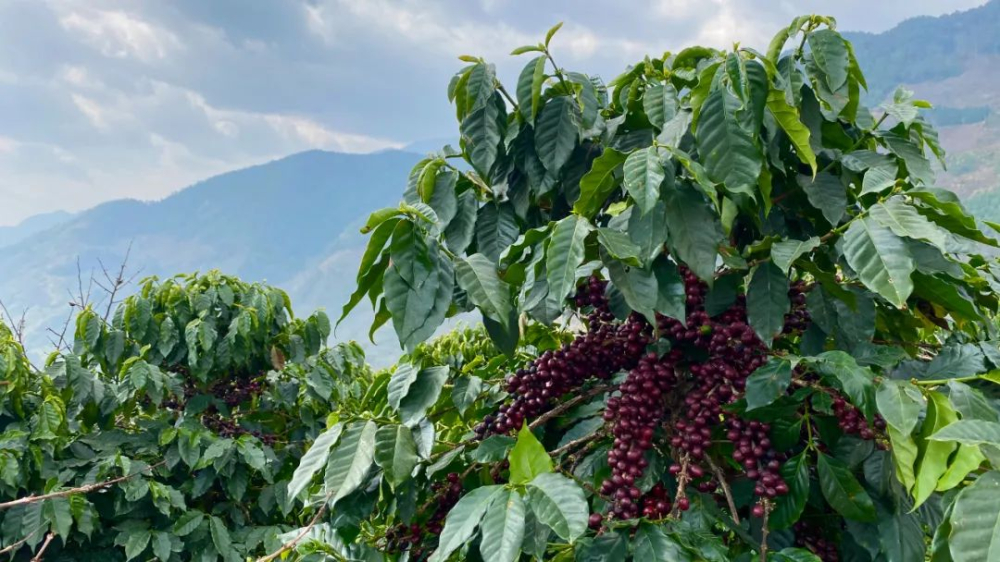
Front Street believes that Front Street Yirgacheffe is mainly represented by fruity acidity and is more suitable for medium-light roasting, preserving more of the acidic aroma in Front Street Yirgacheffe coffee beans.
Cupping flavor :
The dry aroma of Front Street Yirgacheffe Gedeb Cooperative coffee exudes fresh passion fruit, citrus, and berry acidity. The wet aroma is citrus and berries. On the palate, there is citrus acidity, berry sweetness, almond, tea-like quality, and a finish with honey sweetness. The body is low, the acidity is bright, and it is clean and refreshing.
The dry aroma of Front Street Sun-Dried Red Cherry coffee shows full berry sweet-tartness. When slurped at different temperatures, it reveals soft berry sweet-tartness, ripe fruit fermentation, obvious honey sweetness, and a black tea finish, with a smooth mouthfeel.
In addition, the Front Street Yirgacheffe Everyday Beans launched by Front Street use washed processing and medium-light roasting, carrying the classic Yirgacheffe flavor profile, and are suitable for pour-over, cold brew, French press, and many other brewing methods. The Front Street Everyday Beans series allows friends who are just getting into coffee to taste the basic flavors of different regions at an affordable price. The small-package design also avoids waste from being unable to finish a bag, making it suitable for coffee beginners. If you want to taste the classic aroma of Ethiopian Yirgacheffe, Front Street believes pour-over black coffee is most suitable.
Front Street Brewing Suggestions
After roasting, coffee beans have a 4-7 day degassing and resting period, and only then do they enter their optimal tasting stage. As storage time lengthens, the coffee's aroma accelerates its volatilization, and the flavor and mouthfeel are greatly reduced. In order to ensure that everyone drinks coffee at its best flavor period, Front Street ensures that only beans freshly roasted within 5 days are shipped. Fresh coffee beans are more conducive to extracting the high-quality flavor of Front Street Yirgacheffe.
Brewing parameters for Front Street Ethiopian Yirgacheffe :
Dripper: V60 Water temperature: 92-93°C Dose: 15g Coffee-to-water ratio: 1:15 Grind size: caster sugar particle size (78% passing through a No. 20 sieve)
Pour 30g of water in the first stage for a 30-second bloom, then pour 95g (electronic scale shows about 125g), finishing in about 1 minute. When the water level drops to 2/3 of the coffee bed, pour the remaining 100g (electronic scale shows about 225g), finishing in about 1 minute 35 seconds. Drip completion at 2'10", remove the dripper, and extraction is complete.
For professional coffee knowledge exchange and more coffee bean information, please follow Coffee Workshop (WeChat public account: cafe_style)
For more specialty coffee beans, please add the private WeChat of Front Street Coffee (FrontStreet Coffee), WeChat ID: qjcoffeex
The above content is compiled by CoffeeHunters, a coffee news website.


