







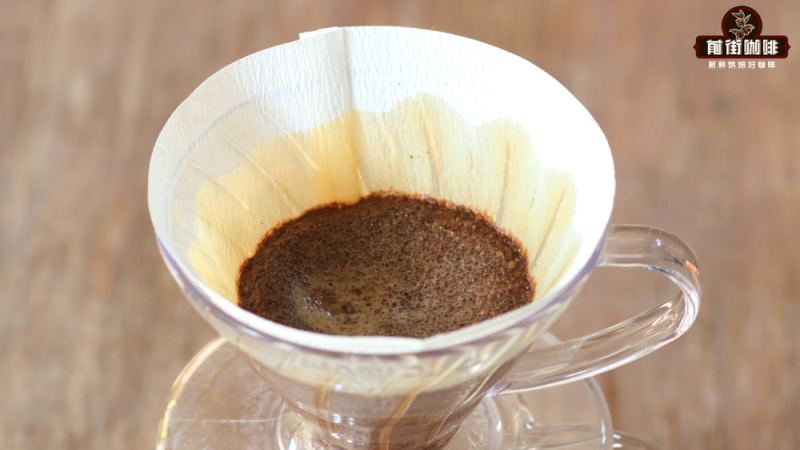
Why Does the Coffee Bed Sink After the Bloom in Hand Poured Coffee?
A pit forming in the middle of the coffee bed after blooming is normal, not a sign of stale beans. Expansion happens because the grounds are releasing gas, which widens the gaps between particles. Once most of that gas escapes, the structure turns loose and cannot support much weight on top, so the center sinks.
Three factors trigger the collapse: pouring too much water, pour technique, and grind size. In one comparison, 15 grams of light-roast beans bloomed with 30 milliliters poured in a small circle around the center held its puffed shape at 30 seconds, while other parameters changed the result. Adjusting water volume and pour keeps the coffee process on track.
The blooming phase in pour-over coffee is often seen as the first dialogue with the coffee grounds, and an ideal expansion state usually signals a smooth subsequent extraction. However, sometimes the coffee bed clearly puffs up, only for a pit to form in the middle moments later—is this actually normal? This article analyzes this phenomenon, first explaining the physical mechanism behind expansion followed by collapse, then investigating the causes one by one from three angles: water volume, pouring technique, and grind size. Front Street Coffee uses 15 grams of light-roast beans for a simulated comparison, showing the actual changes in the coffee bed under different parameters to help you quickly pinpoint issues in your daily brewing, adjust your technique and parameters, and get the blooming state back on track.

In the pour-over coffee process, blooming is often seen as our first "face-off" with the coffee grounds. If the coffee bed can puff up into a plump, even "hamburger," the subsequent brewing gets off to a good start. Conversely, if the coffee bed doesn't expand at all, it mostly makes people suspect the beans are no longer fresh, and the resulting flavor naturally won't be great either.
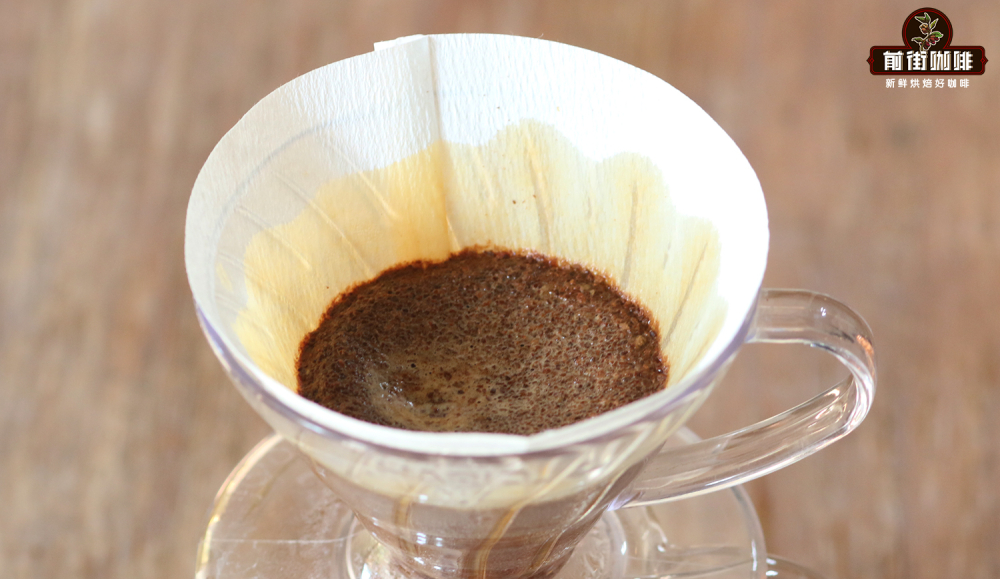
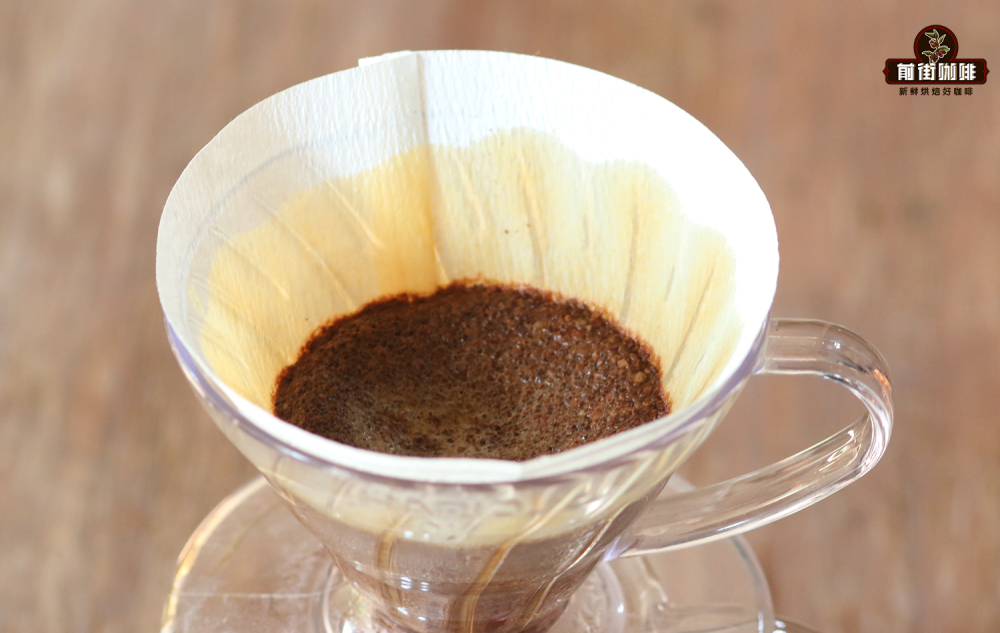
But there's another scenario: during blooming, the coffee bed does puff up, but before long, the middle section sinks down, caving into a pit. Is this state normal?
It expanded, but couldn't hold up
Let Front Street analyze the reasoning behind this picture first. The reason the coffee bed expands is that the coffee grounds are releasing gas, which rules out the possibility of stale beans. As for why it collapses after expanding, the reason is: when coffee grounds degas, they enlarge the gaps between particles, and once the gas has mostly escaped, these structures become loose. At this point, if the pressure on the center top is too great, the fluffy architecture can't hold up, and the middle naturally sinks in.
What factors trigger this situation?
-Too much water
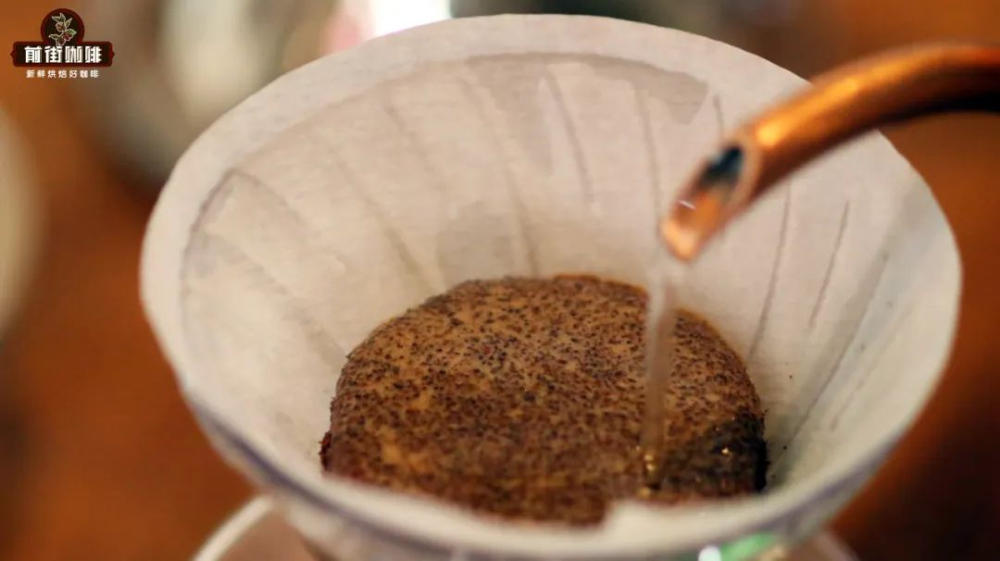
Normally, the water volume for blooming is controlled at around twice the coffee dose, but during operation, a shaky hand pouring a bit extra is unavoidable. For example, Front Street used a light-roast bean for a simulation: with 15 grams of grounds, pouring 30 milliliters in a small circle around the center, the coffee bed still maintained its puffed state at 30 seconds. With the same 15 grams of grounds, switching to pouring 40 milliliters in a small circle around the center, you can see the water level in the coffee bed rise, and by around 23 seconds, as the blooming liquid drains downward, the center of the coffee bed "hamburger" also shows slight sinking.
-Pouring too "aggressively"
Blooming water is generally poured in a circle from the center outward, and the coffee "hamburger" also slowly puffs from the center to the surroundings. With coffee grounds that are relatively fluffy, such as medium-dark roast beans, sometimes just pouring in a small circle at the center can make the "hamburger" expand from the middle all the way to the edges.
Looking at the result alone, there's actually not much difference between a small circle and a large circle—you can choose flexibly based on the actual situation. But whether the pouring is gentle or aggressive has a noticeably different impact on the state of the coffee bed.
Gentle pouring causes less disturbance to the coffee bed structure; whereas when the water stream is more intense and concentrated only in a small central circle, the spacing between particles in the coffee bed directly hit by the water flow gets stretched wider. The reason the center can still hold up is mainly that degassing blocks the water from descending. Once the gas has escaped, the water flows downward accordingly, leaving behind a hollow coffee bed, and collapse follows.
-Coffee grounds ground too coarse
If the coffee grounds are ground too coarse, the water flows into the server before it has a chance to seep into the particles. When coffee grounds first contact water, the surface releases gas, enlarging the gaps between particles—this is the expansion we see. But since the water escapes without entering the particles, these gaps get no support, and collapse becomes likely.
Sinking during blooming clearly cannot be considered normal—it shows that our parameters or technique have gone wrong. Therefore, whenever you encounter blooming collapse during brewing, you need to "treat the root cause," identifying the problem from both parameters and technique and correcting it.
The above content is compiled by CoffeeHunters, a coffee news website.


