







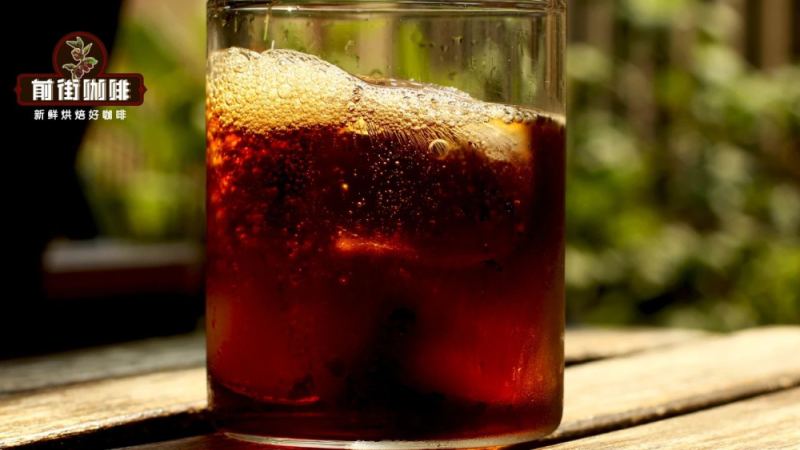
Why does ice drip coffee turn out bitter?
Bitterness in ice drip coffee usually comes from one small step going off course rather than from the method itself. Cold brew extracts at low temperature, so oils, acids, and sugars break down slowly, giving a smooth body and a sweeter cup than pour-over. When grind size, drip rate, coffee-to-water ratio, or bean choice drifts, the result turns bitter or drips too slowly.
Temperature decides flavor direction. Hot pour-over extraction releases tannic acid as pyrogallic acid, producing layered acidity, sweetness, and bitterness, but too much heat pulls out woody fiber notes. Cold brew avoids that risk. A blend of Honduras Lychee Orchid and Geisha Village Red Label, brewed cold, shows wine-like aroma and fruity acidity, with distilled coffee clarity.
Cold brew coffee has a rich, smooth mouthfeel with no bitterness or astringency, yet many people who make it at home often run into problems with bitterness or slow dripping. Starting from the principles of low-temperature extraction, this article explains why cold brew coffee is sweeter than pour-over, and breaks down key steps in detail, including bean selection, grind size, drip rate, coffee-to-water ratio, and drinking method. Front Street Coffee will also share a recipe for cold brew made from a blend of Honduras Lychee Orchid and Geisha Village Red Label, guiding you to a cup of cold brew coffee that is layered and rich, with wine-like aromas and fruity acidity.
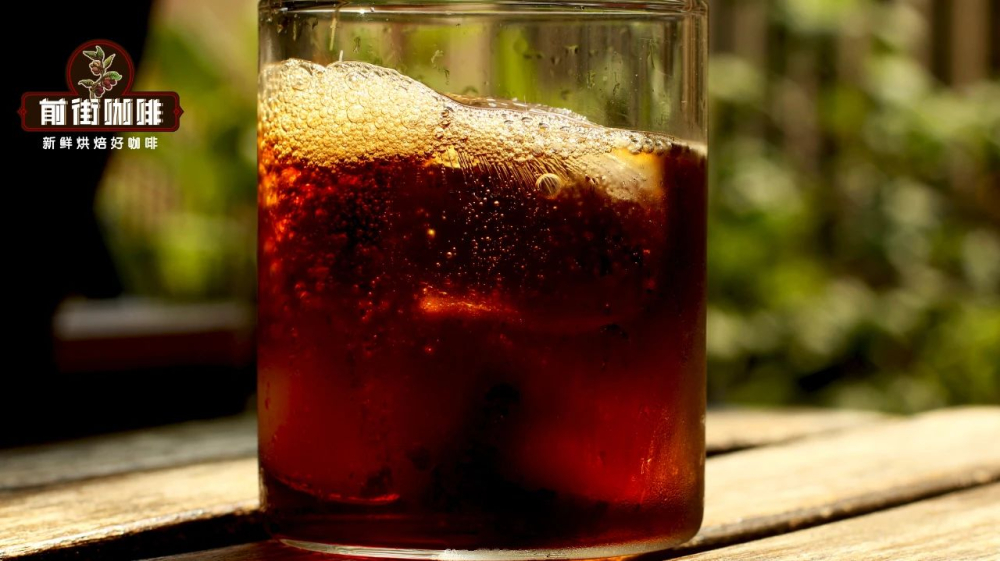
People often wonder: why does the cold brew coffee served in cafés taste so good, while the one they make at home always carries a bit of bitterness? It is very likely that just one small detail in a certain step went off course, and in the end the flavor turned out completely different. Cold brew coffee is one method of brewing coffee. Compared with pour-over coffee, its barrier to entry is not high, but even so, it still requires repeated practice to consistently make a satisfying cup of coffee.
Some say brewing coffee is similar to steeping tea. But Front Street believes that coffee brewing involves more complex variables than tea steeping, such as water temperature, time, and grind size. At different temperatures, the direction of coffee flavor is completely different. Temperature affects the decomposition rate of oils, acids, and sugars in coffee, and the speed of decomposition directly determines the final expression of aroma, taste, and mouthfeel. Therefore, Front Street recommends tasting coffee from hot all the way down to cold, to experience the flavor changes across different temperature ranges.
Pour-over belongs to high-temperature extraction. High temperatures prompt tannic acid in coffee to rapidly decompose into pyrogallic acid, bringing layers of sourness, sweetness, and bitterness—this is also what Front Street often calls the process of coffee flavor release. However, if the water temperature is too high or extraction is excessive, then after the coffee flavors have been fully released, the taste of the coffee bean's woody fiber begins to emerge, which is what we often call off-flavors, woody notes, and other unpleasant aromas.
Cold brew, on the other hand, belongs to low-temperature extraction. In a low-temperature environment, water and coffee grounds remain in contact for a long time, and only flavor substances with smaller molecules (such as floral and fruity aromas) can be extracted, while smoky and roasted notes with larger molecules are difficult to dissolve out. Therefore, cold brew coffee is better able to present the flavor of the coffee beans themselves, with a smooth mouthfeel and very obvious layering and sweet aftertaste.
People who prefer cold brew coffee are often drawn in by its rich, soft mouthfeel—acidity and sweetness just right, neither astringent nor bitter. If coffee beans with prominent fermented flavors are used to make it, the cold brew will also give off a rich wine aroma, as if drinking a glass of chilled fruit wine. Especially in summer, more and more people fall in love with cold brew coffee.
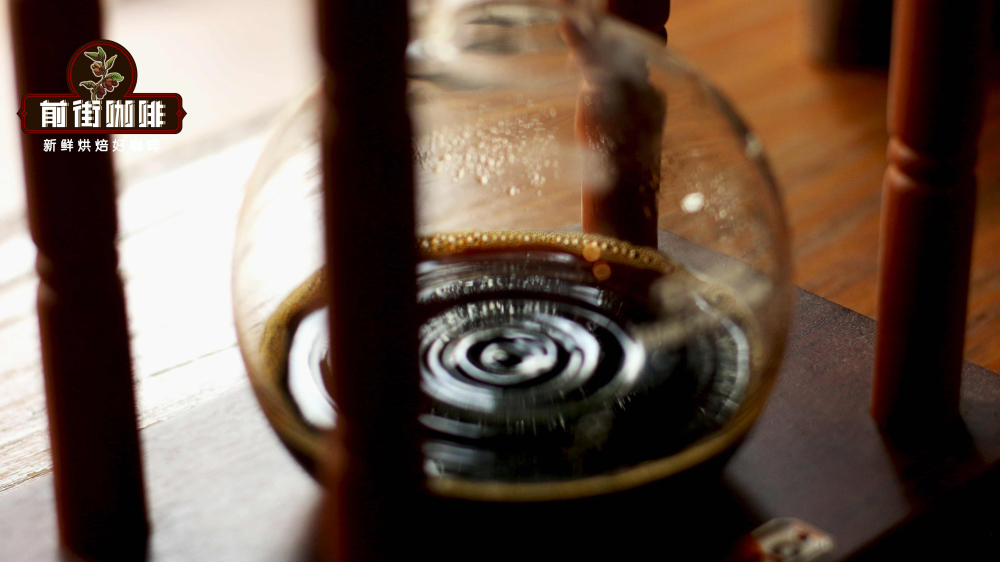
What Is Cold Brew Coffee
Cold brew coffee originated in Europe. Because the coffee distiller was invented by the Dutch, it is also called Dutch Coffee, distilled coffee, or water-drip coffee. As early as the 17th century, the Dutch were already drinking this kind of coffee; with Dutch colonial expansion, cold brew coffee spread to Korea and Japan and gradually became popular, so it also has another name: Dutch coffee.
Cold brew coffee makes use of the compatibility between coffee itself and water, mainly relying on condensed natural seepage water pressure, taking about 8 hours to complete extraction drop by drop. It is a coffee brewed with time. Choosing different water temperatures will also produce different flavors; and under low-temperature conditions, the astringent substances in coffee are even less likely to dissolve out. After a long extraction with ice water, it is then placed in the refrigerator to ferment. Lightly fermented cold brew coffee carries a faint fermented aroma, and the mouthfeel also becomes fuller. Front Street believes: put the coffee in the refrigerator at night, take it out the next morning and drink it, and you instantly wake up—that feeling is especially refreshing.
Cold brew coffee has not gone through a heating process, and the extraction time is long. Although many flavor molecules are extracted, they have not been fully released. Therefore, after extraction is complete, the cold brew coffee should be put into a sealed bottle and left to rest in the refrigerator for 12 to 24 hours, allowing the carbon dioxide pressure generated inside the bottle to force the flavor molecules out. This is also why the longer cold brew coffee sits in the refrigerator, the richer it tastes.
Extracting coffee with ice water can reduce the acidity in coffee and bring a red-wine-like fermented aroma, with a soft, mellow taste, balanced acidity and bitterness, and a good sweet aftertaste. It is also gentle on the stomach, has lower caffeine content, and can extract the rich mouthfeel and complete aroma of coffee beans. For friends who are sensitive to caffeine, cold brew coffee may be a good choice.
During the making of cold brew coffee, tannic acid almost completely fails to decompose in low-temperature ice water; although caffeine will decompose slightly in ice water, it is reduced by about 90% compared with hot-water extraction, while the other main components of coffee remain just the same. Precisely because there is absolutely no astringency in cold brew coffee, and bitterness, though present, is extremely slight, the mouthfeel appears especially pure.
The Basic Steps for Making Cold Brew Coffee
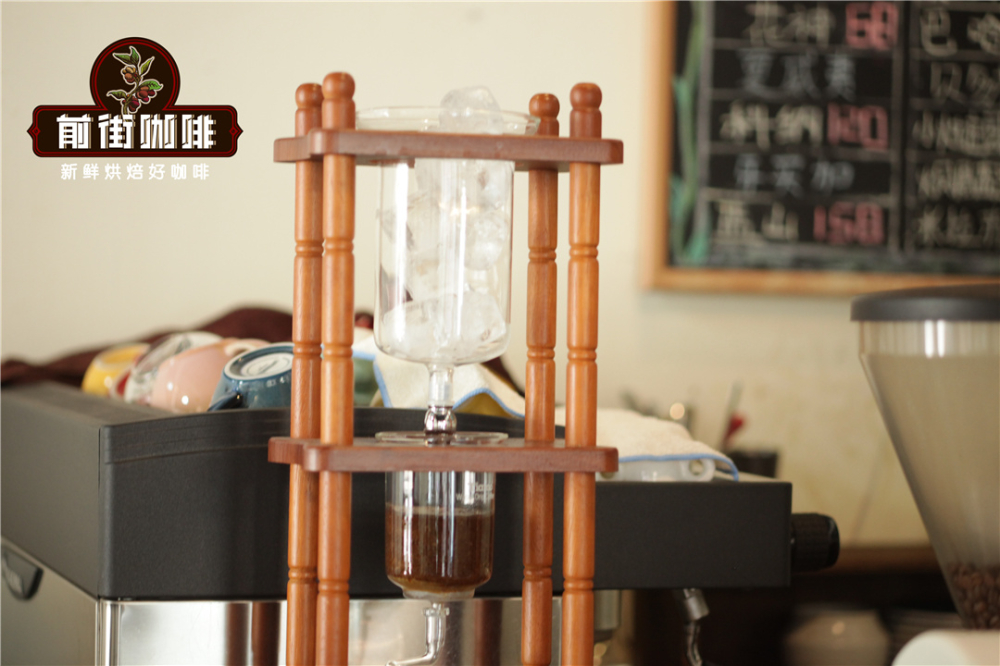
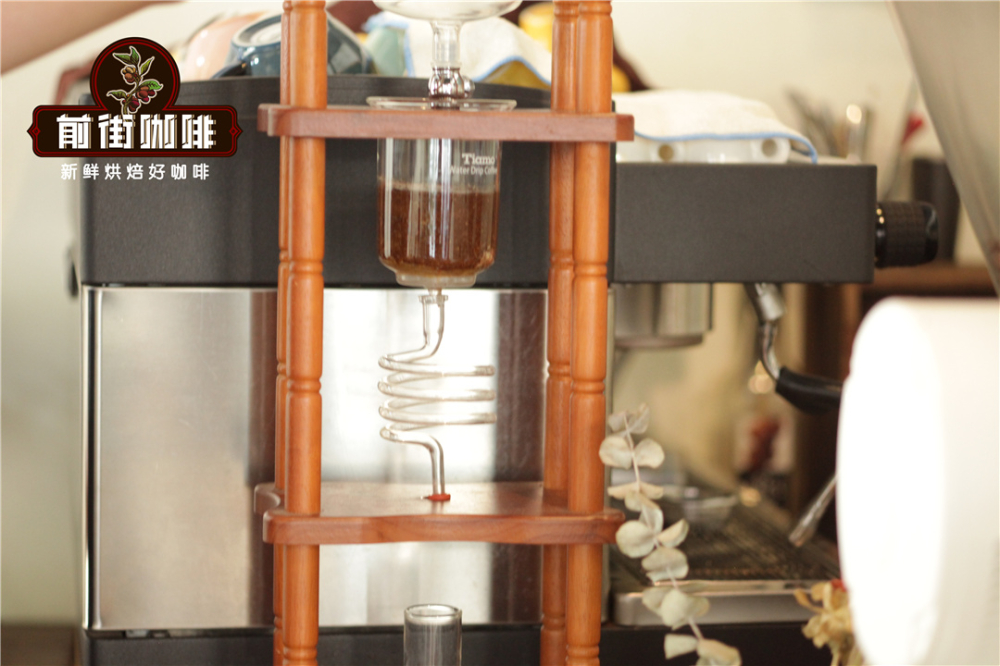
A cold brew coffee setup consists of three parts: the upper part holds ice water, the middle part holds coffee grounds, and the bottom part holds the coffee liquid.
Therefore, making cold brew coffee is very simple: put ice water in the upper part, put coffee grounds in the middle part, then control the ice water in the upper part so it drips into the coffee grounds drop by drop, completing extraction in about 6 hours. However, there are still many details that can influence whether the coffee flavor is good or bad.
1. Coffee Beans
Coffee beans are the most important factor, and different coffee beans produce completely different flavors when dripped. Therefore, choosing suitable coffee beans is the top priority in making cold brew coffee.
Generally, cold brew coffee is mostly made with light-roasted coffee beans, as the sweet-and-sour fruitiness feels more comfortable at icy temperatures. Some coffee beans with distinct, special flavors are also very suitable for making cold brew coffee, such as Front Street Strawberry Candy, Front Street Sherry, Front Street Mozart, Front Street Bach, Front Street Rose Valley, Front Street Flower Moon Night, and other coffee beans.
2. Grind Size
There are two points to note about coffee grind size: if it is too coarse, the resistance of the coffee bed is small, water passes through more easily and falls into the lower pot, and given the low extraction efficiency of cold water, this will make the coffee taste weak and not full enough; if it is too fine, the resistance is large, it easily clogs and causes water to accumulate, and soaking for too long will bring out bitter and astringent flavors.
So Front Street recommends using a grind size for cold brew coffee with 80% to 85% passing through a No. 20 standard sieve: if you want it richer, choose 85% passing rate; if you want it lighter and more refreshing, choose 80% passing rate.
3. Drip Rate
This is somewhat similar to the pouring speed in pour-over coffee. Some people like 1 drop per second, while others like 1 drop every 2 seconds, which directly leads to different completion times: the slower the drip, the longer the time required; the faster the drip, the shorter the time required. The drip rate Front Street habitually uses is 7 drops every 10 seconds, which you can also use as a reference.
4. Cold Brew Ratio
The ratio is equally important, and the key lies in balancing concentration and extraction yield. Front Street uses 60 grams of coffee grounds to extract 600 milliliters of coffee liquid when making cold brew coffee, that is, a coffee-to-liquid ratio of 1:10. According to Front Street's specification of 200 milliliters per cup of cold brew coffee, one batch of cold brew coffee makes exactly 3 cups.
Of course, a 1:10 ratio is on the richer side. Under normal circumstances, the coffee-to-liquid ratio for cold brew coffee is around 1:12 to 1:14.
5. Drinking Method
Freshly made cold brew coffee can be drunk immediately, but Front Street recommends putting it in the refrigerator to chill for 12 hours before drinking, so that the flavor of the cold brew coffee can reach its best.
Just as the cold brew coffee Front Street makes at a 1:10 ratio is very rich, when it is time to drink it, Front Street adds 40 grams of ice cubes to 200 milliliters of coffee liquid to dilute it and maintain the chilled effect.
How Does Front Street's Cold Brew Coffee Taste?
At Front Street Coffee, in order to make each cold brew coffee's flavor more prominent and balanced, baristas usually use a blend of two coffees to make cold brew, with the aim of making that coffee better highlight a certain flavor characteristic: one bean provides aroma, and one bean provides flavor.
20g [Front Street Coffee Honduras Lychee Orchid] + 40g [Front Street Coffee Geisha Village Red Label]
Rum-barrel-processed Lychee Orchid plus sun-dried Geisha Village Red Label: a faint brandy aroma, plum-like acidity paired with the sweetness of maple syrup.
The brandy-barrel-processed Lychee Orchid has a rich brandy aroma, a chocolate finish, and a honey aftertaste.
Sun-dried Geisha Village Red Label has the fruity acidity of plum and citrus, with the sweetness of maple syrup and a creamy, smooth mouthfeel. Made into cold brew, you will feel a faint brandy aroma, and the rich fruity acidity leads the honeyed sweetness and creamy smoothness.
Front Street's Coffee Brewing Suggestions:
No matter what kind of coffee you are brewing, the freshness of the coffee beans is very important. Front Street has always believed that the freshness of coffee beans has a great impact on coffee flavor, so the coffee beans shipped by Front Street Coffee are all within 5 days of the roast date. Front Street's roasting philosophy is "freshly roasted good coffee," so that every customer who places an order receives the freshest coffee. The resting period for coffee is about 4 to 7 days, so by the time customers receive it, it is exactly at its best flavor.
For friends who need ground coffee, Front Street warmly reminds you: once coffee beans are ground in advance, there is no need for further resting, because during transportation the pressure generated by carbon dioxide inside the package can also make the coffee flavor rounder, so as soon as you receive the ground coffee you can immediately brew a cup and drink it. But ground coffee needs to be brewed promptly, because after ground coffee contacts air it oxidizes relatively quickly; in other words, the coffee flavor will dissipate relatively quickly, and the coffee flavor will not be as good. Therefore, Front Street recommends buying whole beans and grinding fresh before brewing, so that you can better taste the coffee's flavor.
For professional coffee knowledge exchange and more coffee bean information, please follow Coffee Workshop (WeChat public account: cafe_style)
For more specialty coffee beans, please add the private WeChat account Front Street Coffee, WeChat ID: qjcoffeex
The above content is compiled by CoffeeHunters, a coffee news website.


