







What Makes Rose Valley Coffee Bean Processing Distinct?
Colombia Rose Valley comes from Finca El Roble in Santander and uses an anaerobic double enzyme washed method with the Caturra variety. Only fully ripe red cherries are picked, floated to remove defects, then fermented twice with an added enzyme group. The result is a coffee aroma and cup marked by peach, rose, and liqueur chocolate notes.
Santander sits in northern Colombia near the Magdalena River, with growing altitudes around 1,400 to 1,600 meters. It was the first province in Colombia to cultivate coffee and now holds about 5% of national production. Beans from the region tend to show intense flavor, a long finish, and fresh herbal notes. For brewing, grind calibration, water temperature control, and a three-pour method help release the peach and rose character.
In recent years, peach oolong tea-flavored beverages have become hugely popular, and many coffee lovers are searching for coffee beans with a honey peach aroma. Front Street Coffee's Colombia Rose Valley is exactly such a bean—one sniff and you're smitten. It comes from Finca El Roble in the Santander region of Colombia, processed with anaerobic double enzyme washed method, and the variety is Caturra. This article will comprehensively introduce the bean's regional background, estate processing methods, varietal characteristics, Front Street's roasting records and cupping performance, and provide grinding calibration, water temperature control, and three-pour brewing suggestions for anaerobic beans, helping you fully release its captivating flavors of peach, rose, and liqueur chocolate.
In the past two years, peach oolong tea-flavored products have become increasingly popular, and many friends who come to Front Street ask: are there coffee beans that taste like honey peach? Of course there are! Front Street Coffee's baristas will immediately bring out the Colombia Front Street Rose Valley. As soon as the can is opened, everyone's reaction is remarkably unanimous: "Wow, I want this!! It smells so good!" Today Front Street will talk about this sweet and alluring Front Street Colombia Rose Valley coffee bean.
This Front Street Rose Valley from Front Street Coffee comes from Finca El Roble in the Santander region of Colombia. Santander is located in northern Colombia, bordered by the Magdalena River to the west, with a growing altitude of approximately 1,400 to 1,600 meters and an area of 30,537 square kilometers. Santander Department holds an important place in Colombian coffee history yet is often overlooked—it was actually the first province in Colombia to begin cultivating coffee, and currently accounts for about 5% of national production. Through cupping, Front Street Coffee has found that coffee beans from this region are known for their intense flavor, long finish, and unique fresh herbal notes.
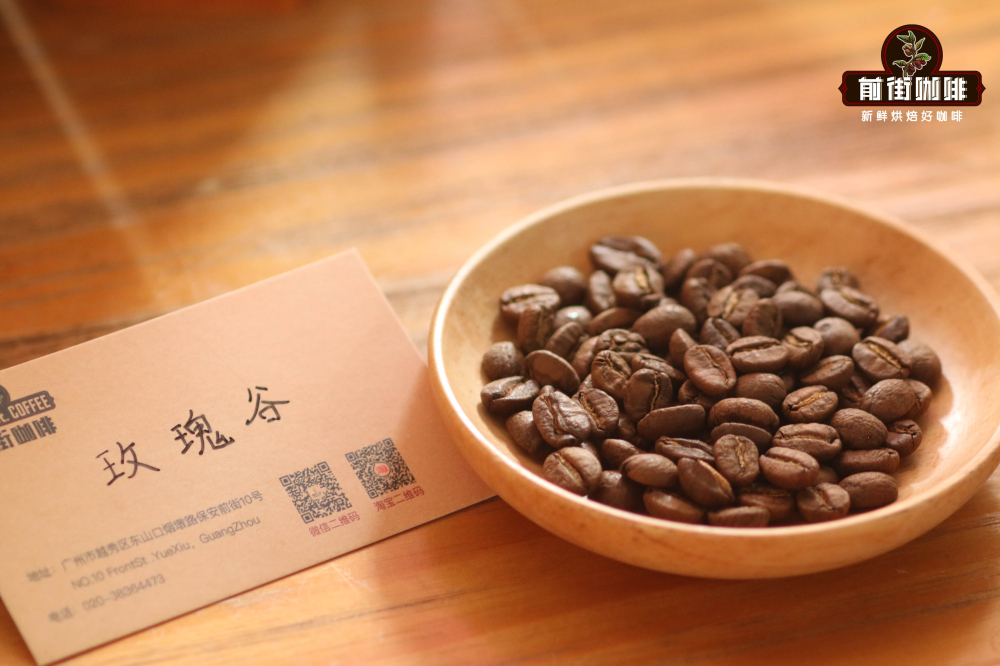
The owner of Finca El Roble, Vargas, has been operating the estate and growing coffee for 20 years. At Finca El Roble, only fully ripe coffee cherries with bright red skins are picked, then floated to remove defective beans through washing, followed by two rounds of anaerobic fermentation with a special enzyme group added. Meanwhile, the estate also places great importance on the drying process of the coffee beans, avoiding excessively high temperatures and adopting a slow drying method. Coffee Bean Processing Method
Earlier, when introducing Finca El Roble, Front Street briefly mentioned the double anaerobic enzyme fermentation process. Anaerobic fermentation is a processing method that has been widely applied in recent years. It draws on the approach used in red wine production: injecting carbon dioxide into a sealed container to expel oxygen, slowing down the decomposition rate of sugars in the coffee mucilage in an oxygen-free environment, with the pH value also dropping more slowly, thereby extending fermentation time and developing better sweetness and more balanced flavors.
Anaerobic double enzyme washed is, on the basis of anaerobic washed, adding special enzymes for a second round of anaerobic fermentation. After the coffee cherries are removed from the anaerobic environment, the skin and pulp are removed by machine, and then the coffee beans with mucilage are placed in plastic bags or other sealed containers for another round of anaerobic fermentation. The processing method that undergoes these two rounds of anaerobic fermentation is called double anaerobic fermentation. Coffee Bean Variety
Caturra is a natural mutation of the Bourbon variety, discovered between 1915 and 1918 on a plantation in Minas Gerais, Brazil. A group of genes in the Bourbon on the plantation mutated, causing the plant to grow smaller (similar to dwarfism). This variety is suitable for planting at low altitudes of 700 meters up to high altitudes of 1,700 meters, with strong altitude adaptability. The higher the altitude, the better the flavor, but the yield is relatively reduced.
Front Street Coffee Roasting Record
In order to bring out the sweet honey peach flavor in this Front Street Colombia Rose Valley, Front Street decided to use a medium-light roast. The roaster used was a Yangjia 800N with a 500g batch size. Charge temperature was 180°C, initial gas setting 130, air vent 3; at 140°C, gas remained unchanged, air vent opened to 4. During this stage, the beans slowly transitioned from raw green to yellow, the original grassy raw bean smell gradually disappeared, and the beans entered the dehydration state. At 6'25", the beans reached the yellowing point, at which point they exhibited a bread-like sweet aroma. At 180°C, the gas was reduced to 100, and the air vent was kept at 4.
At 9'38", ugly wrinkles and dark streaks appeared on the bean surface, and the bread-like aroma clearly turned into coffee aroma, which can be defined as the prelude to first crack. At this point, you need to listen carefully for the sound of first crack. At 10'20", first crack began, air vent opened to 4, and after first crack the beans developed for 1'50" and were dropped at 196°C. Because Front Street Colombia Rose Valley is an anaerobically processed bean, the dehydration time should be extended to about 9 to 9 minutes 30 seconds as much as possible, so that the beans are thoroughly roasted and avoid underdeveloped conditions. After first crack, development continued for 1'50" and the beans were dropped at 196°C. Front Street Coffee Cupping Report
Front Street Coffee conducts cupping within 8 to 24 hours after sample coffee beans are roasted. The cupping bowls generally used by Front Street Coffee baristas are 200ml ceramic bowls. The cupping water temperature is 94°C, and the grind size is controlled so that 70%-75% passes through a No. 20 standard sieve (0.85mm). The ratio is 11.1 grams of coffee grounds to 200 milliliters of hot water, i.e., 1:18.18, so that the extracted concentration falls right within the golden cup range of 1.15%-1.35%, with a steeping time of 4 minutes.
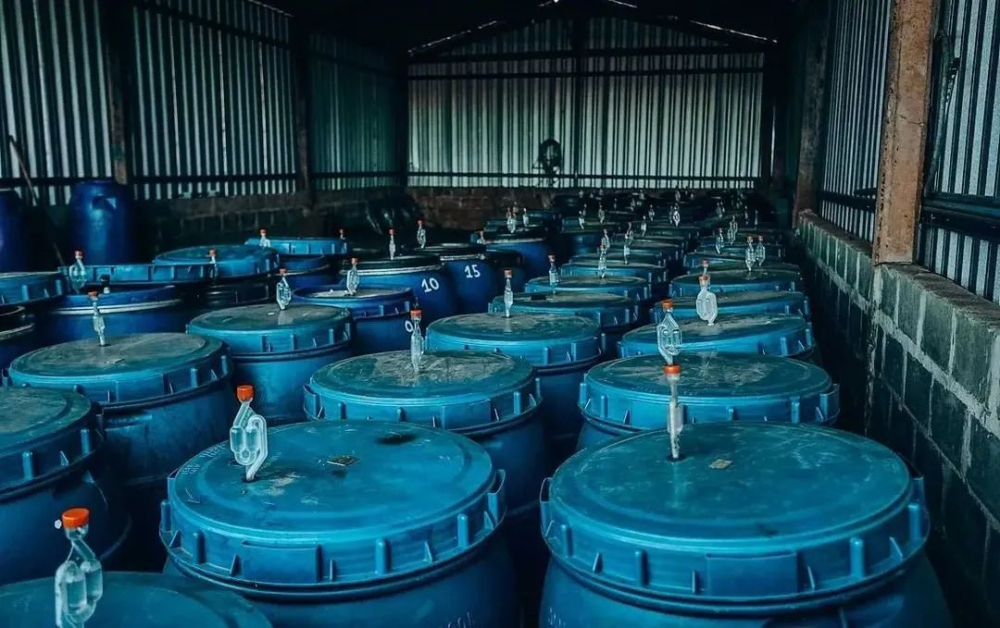
Dry aroma: rose, honey peach
Wet aroma: honey peach
Flavor: liqueur chocolate, rose, cranberry, honey peach, cream Front Street Coffee Brewing Suggestions
- Pay attention to grind size
Because Rose Valley is an anaerobically processed coffee bean, its grinding setting differs from traditionally processed coffee beans. If you are accustomed to using the grind setting for traditionally processed coffee beans to grind anaerobic beans, then the actual particle size produced will be coarser than for traditionally processed coffee beans.
For example, when Front Street uses an EK-43s at setting 10 to grind washed Front Street Colombia coffee beans, the passing rate measured with a No. 20 sieve is 80%. Using the same setting 10 to grind Front Street Rose Valley, the passing rate measured with a No. 20 sieve is 75%. If you want Front Street Rose Valley's grind size to reach a passing rate of 80%, you need to adjust the grind finer. So when brewing an unfamiliar coffee, never directly apply your usual grind setting—it's best to calibrate the grind size with a sieve, which is the most reliable approach.
- Water temperature issue
Front Street Rose Valley coffee beans have a relatively loose structure and good water absorption capacity, easily releasing coffee compounds. Therefore, Front Street recommends an initial water temperature of 90-91°C. Water that is too hot can easily cause the coffee to show noticeable bitterness, while water that is too cool makes the coffee flavor dull and insipid.
- How to brew
For brewing parameters, you only need to pay attention to grind size and water temperature; other parameters are the same as usual—15g of coffee grounds, ratio 1:15.
During the blooming stage, anaerobically processed coffee beans expand and degas quite noticeably when absorbing water, so it is also easy to over-bloom. The specific sign is that many holes appear on the surface of the blooming coffee bed. Therefore, the blooming time is not necessarily fixed at 30 seconds; you can observe the blooming state specifically. After the coffee bed expands and remains static for 3 seconds without change, you can begin pouring. The time is approximately 25-30 seconds.
For the pouring technique, Front Street recommends using a three-pour method: first pour 30ml of water for the bloom, then pour 120ml of water in the second pour, and 75ml of water in the third pour. The normal extraction time is about 1 minute 40 seconds.
【Front Street Colombia Finca El Roble Rose Valley】
Brewed flavor: stunning peach characteristics, accompanied by the aroma of rose and liqueur chocolate, fragrant and rich, tasting like drinking peach juice. It has both the high-quality sweet-tartness of black grapes and the silky mouthfeel of cream toffee.
For professional coffee knowledge exchange and more coffee bean information, please follow Coffee Workshop (WeChat public account: cafe_style)
For more specialty coffee beans, please add the private WeChat of Front Street Coffee: kaixinguoguo0925
The above content is compiled by CoffeeHunters, a coffee news website.


