







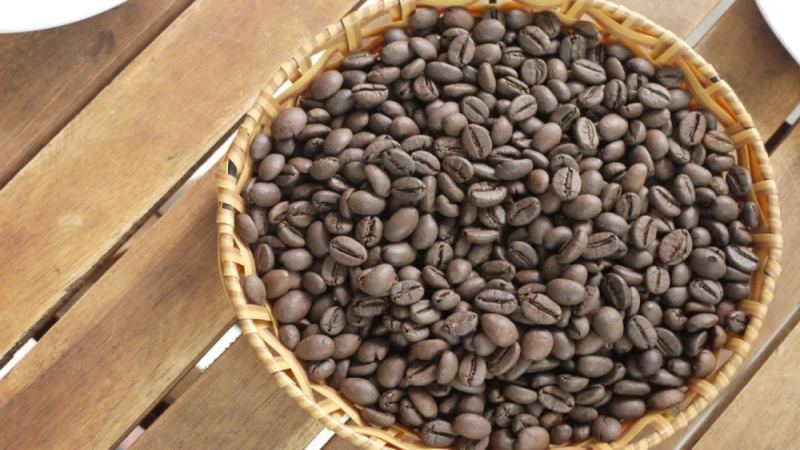
Are robusta coffee beans really lower in quality?
Robusta coffee beans carry a reputation for being cheap and inferior, but the picture is more nuanced. They make up about 40 percent of global coffee production, with Arabica supplying the other 60 percent. Robusta is grown mainly in Vietnam, and also in Brazil, Indonesia, India, and Uganda, because it tolerates a wide range of altitudes and resists disease.
Lower cultivation costs historically pushed Robusta into instant coffee. Its cup is full-bodied and low in acidity, and with better processing it shows barley tea, nut, and caramel notes, which is why it is increasingly re-examined for blending. As climate change affects Arabica quality stability, that comparison with the arabica coffee bean has become a serious talking point in specialty coffee.
Robusta coffee beans are often labeled as cheap and inferior, but are they really that bad? This article provides a comprehensive analysis of Robusta's true nature, from its share of production, major growing regions, and flavor characteristics to recent specialty trends. Robusta accounts for about 40% of global coffee production, mainly grown in Vietnam, Brazil, Indonesia, and other places. Due to its strong disease resistance and low cultivation costs, it was mostly used in instant coffee in the past. However, as climate change affects the quality stability of Arabica, the value of refined processing and blending of Robusta is being re-examined. It is full-bodied and intense, not acidic, and after improvement, it presents pleasant flavors such as barley tea, nuts, and caramel, and can also bring a solid mouthfeel to blended beans. This article will guide you to objectively understand the pros and cons of Robusta and its future prospects.
For professional coffee knowledge exchange and more coffee bean information, please follow Coffee Workshop (WeChat public account cafe_style)
For more specialty coffee beans, please add private WeChat Front Street Coffee (FrontStreet Coffee), WeChat ID: qjcoffeex
The market is full of coffee varieties, and the flavors produced by different origins and estates vary greatly, but fundamentally, the main choices are nothing more than two types: Robusta and Arabica.
Robusta and Arabica originate from different varieties of coffee trees, and there are obvious differences between the two in flavor and characteristics.
Robusta accounts for 40% of total global coffee production, while the remaining 60% is Arabica. Most Robusta comes from Vietnam, and it is also widely grown in Brazil, Indonesia, India, Uganda, and other places, while production in other regions is relatively limited. Arabica has a broader cultivation range, among which Brazil is the largest producer of Arabica coffee.
Robusta has higher production than Arabica and is not demanding on growing altitude and environmental conditions, so it is easier to cultivate and maintain, has outstanding disease resistance, and lower production costs. For this reason, the cost of Robusta coffee beans is significantly lower than that of Arabica, and in the past they were often used to make cheap coffee, such as instant coffee.
However, as the specialty coffee industry continues to evolve, and in recent years climate fluctuations have led to uneven quality of Arabica coffee beans, the cultivation and processing techniques of Robusta coffee beans have also begun to receive industry attention. Robusta, which once made people frown at the mention of it, is now gradually becoming a target of attention in the specialty coffee field.
One of the reasons Robusta coffee beans are unpopular is that their strong disease resistance comes from their own high content of chlorogenic acid, and the most notable characteristic of this substance is bitterness, extremely bitter, so pests and pathogens are unwilling to come near.
This bitterness is also directly reflected in the flavor of the coffee beans. Compared with the delicate and refined flavor of Arabica coffee beans, Robusta has almost no acidity, a strong taste, and a flavor performance that is not pleasant enough, often appearing dull and heavy, and even carrying a rubbery or burnt aroma.
But in recent years, people have begun to pay attention to the cultivation and processing methods of Robusta, and its flavor has improved significantly. In addition to retaining its original full-bodied and intense characteristics, it also shows pleasant tastes such as barley tea, nuts, and caramel, and these flavors can remain stable for a long time and are not easily affected by climate and environment.
For ordinary consumers, whether coffee can remain stable for a long time and whether the taste is full-bodied and rich is often more important than delicate and rich flavors. In recent years, the instability of the quality and flavor of Arabica coffee beans has also made the specialty coffee industry re-recognize the value of Robusta and use it in coffee bean blending.
Although Robusta is inferior to Arabica in flavor, it has extremely strong body and can bring a solid and full mouthfeel to coffee. If brewed directly, it may not be delicious, but when used in blending, Robusta can be called an excellent "partner."
Although more and more people are beginning to pursue the acidity levels of coffee, there are still many mass consumers who cannot accept the obvious sourness in coffee, and coffee with high body and balance is the mainstream of consumption. Although Robusta's flavor is not excellent, adding a small amount can appropriately enhance the coffee's mouthfeel and body.
Blended coffee beans will also become a trend in the future of specialty coffee. Because mass consumers are the key to supporting the development of the industry, and what they need is products with stable quality and balanced flavor, which is difficult for single-origin coffee beans to achieve over the long term.
Therefore, Robusta coffee beans are not as bad as everyone imagines~As long as they are used reasonably, appropriately mixing Robusta into coffee beans can elevate the overall performance of a coffee~
The above content is compiled by CoffeeHunters, a coffee news website.


