







Espresso Flavor and Mouthfeel Explained, with Tasting Notes from Front Street Coffee Beans
Espresso characteristics start with pressure, short extraction time, and a concentrated dose. The result is a syrupy body, dense crema, and flavors that shift from bright fruit to deep chocolate as the roast darkens. Grind size, water temperature, and brew ratio all change how those notes land on the palate.
Blending coffee gives roasters room to balance sweetness, acidity, and body in one shot. A well-built blend can taste rounder than a single origin, with consistent crema and a long finish. Front Street coffee beans show how layering origins can lift the cup while keeping the espresso easy to dial in daily.
Espresso, with its heavy body and intense aroma, has become the ultimate challenge for coffee lovers. Starting from the definition of Espresso and the principles of extraction, this article explains in detail the crema, the balance of acidity, sweetness, bitterness, and body, and the lingering finish that an ideal shot of espresso should possess. It also explains the flavor differences between traditional dark-roast Italian-style beans and modern specialty espresso blends. At the same time, combining two products—Front Street Sunflower Warm Sun Blend and Front Street Specialty Blend—it introduces the complete process from smelling the aroma, stirring, to tasting, helping readers understand the source of espresso's flavor and the correct way to drink it.
Although espresso has never been listed on the menu at Front Street's shop, some customers who prefer intense flavors will directly speak up: "Give me an Espresso." After drinking it, they sigh, "That's really strong." So what kind of flavor does this heavily flavored espresso actually present? Today Front Street will talk about how espresso should really be drunk.
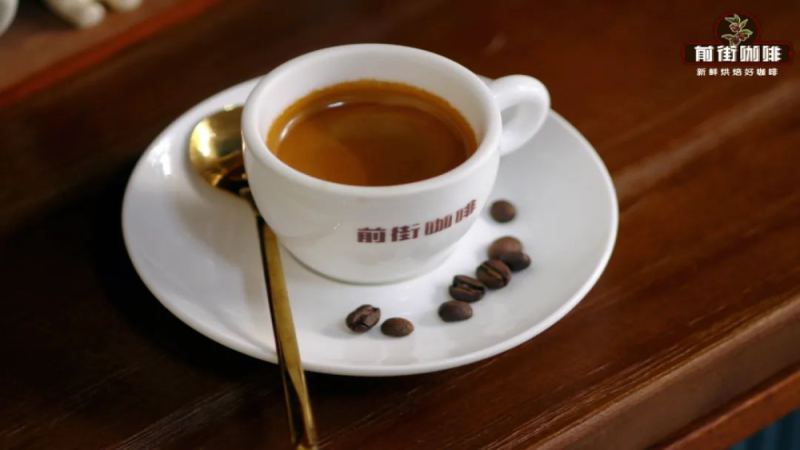
A cup of high-quality espresso
Espresso refers to the liquid extracted by using an espresso machine, under suitable conditions (high temperature and high pressure), allowing hot water to pass through finely ground coffee powder driven by strong pressure. It has a rich crema, intense aroma, and a full-bodied mouthfeel. Such a strong taste is not acceptable to everyone, so when an espresso is served, the barista generally provides a glass of water so the customer can rinse their mouth and reduce the impact on the palate.
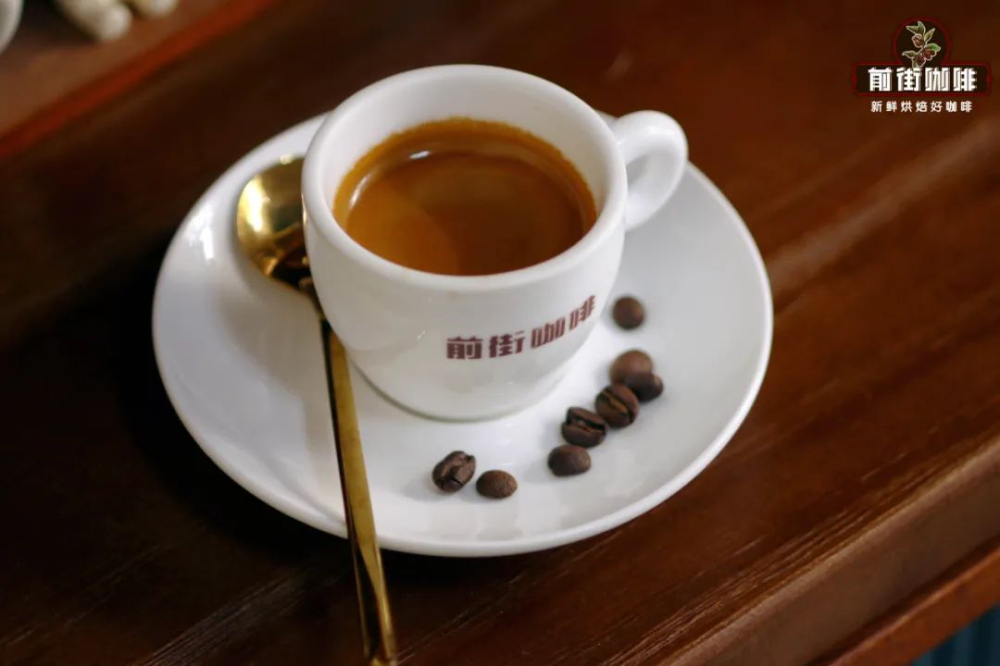
An ideal espresso should have a rich and dense golden-brown crema; on the palate, the acidity, sweetness, bitterness, and body should each be intense yet balanced; the aroma should be full, and the finish clean. Espresso is the soul of a coffee shop. In order to make all kinds of espresso drinks show their best flavor, the barista's daily job is to adjust and produce an ideal espresso as much as possible.
What does espresso taste like?
Espresso was born in the early nineteenth century and was invented by Italians to extract a strong cup of coffee in a short time. Traditional espresso, because it uses extremely dark-roasted coffee beans and adds Robusta beans rich in oils, tastes burnt-bitter and intense, and needs to be drunk slowly in several sips. In recent years, with the rise of specialty coffee, the quality of coffee beans and extraction techniques have continued to improve, and the coffee-drinking crowd has also placed higher demands on flavor and mouthfeel. Therefore, today's espresso is no longer only burnt and bitter.
Front Street believes that no matter which extraction method is used, the flavor direction of coffee depends on the coffee beans used. Espresso beans are mainly divided into blends and single-origin coffees. Espresso is different from pour-over coffee: under high temperature and rapid extraction at a pressure of 9 bar or above, finely ground coffee powder yields a high-concentration coffee liquid that brings together various flavors in the coffee. If a light-roasted, acidic coffee is used to make espresso, it easily shows a sharp and piercing acidity, so the vast majority of coffee shops choose medium-dark roasted blend beans, using the complementary fusion of flavors from different origins to balance the taste while also ensuring extraction stability.
For example, the self-roasted Front Street Sunflower Warm Sun Blend currently used by Front Street is made by blending Front Street Honduras Sherry Barrel coffee and Front Street Natural Yirgacheffe Red Cherry coffee in a 7:3 ratio, and choosing a medium-dark roast.
The extracted espresso has a dense layer of crema, which we call Crema, giving off a rich whisky aroma. Espresso is extracted under high pressure. The carbon dioxide in the coffee powder becomes supersaturated due to excessive pressure. Because it cannot be released, the carbon dioxide merges into the coffee liquid. After extraction is complete, atmospheric pressure returns to normal. When this carbon dioxide remaining in the coffee liquid is about to return to the air, it encounters the oils in the coffee liquid, and so it is wrapped by the oils and flows into the cup, then gradually returns to the air.
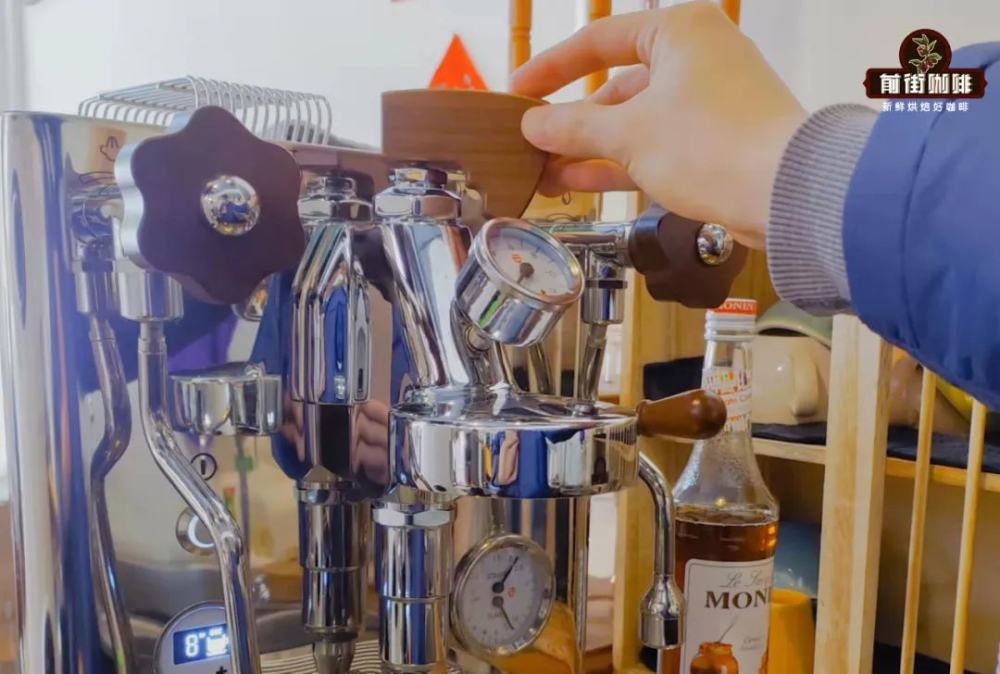
After smelling the aroma, gently stir the thick espresso in the cup with a small spoon to make it even, then you can begin tasting and experience the sensory experience the coffee brings to the mouth and tongue. On the palate, Front Street can feel the flavors of vanilla, nuts, and tropical fruits, a creamy foam layer, full aromas, a solid mouthfeel, and a finish showing the aroma of fermented wine. After taking a sip of water, you can feel an obvious sweet aftertaste.
When Front Street uses another Front Street Specialty Blend coffee bean for production, it is made by blending coffee from the Brazil region and coffee from the Colombia region in a 7:3 ratio. The extracted espresso has a full-bodied aroma of dark chocolate, caramel, and roasted hazelnut, is sweet and clear, has a smooth mouthfeel, and a very long-lasting finish, suitable for daily cafe service.
For professional coffee knowledge exchange and more coffee bean information, please follow Coffee Workshop (WeChat public account cafe_style)
For more specialty coffee beans, please add the private WeChat Front Street Coffee (FrontStreet Coffee), WeChat ID: qjcoffeex
The above content is compiled by CoffeeHunters, a coffee news website.


