







Is Coffee Bitter and How Do You Taste Coffee Properly?
Espresso is among the least ordered drinks on its own in coffee shops, and some cafes keep it off the menu and pull it only when asked. A well-extracted shot is not simply bitter: it carries a golden-brown crema, a full body, and notes of nuts, chocolate, berries, and wine. Tasting it means smelling the aroma first, then sipping.
Before drinking, take a sip of water to rinse the mouth so it does not affect your taste. Stir the shot with a metal spoon, sip the crema and the liquid, and pause for water midway to catch the sweet aftertaste. Blends are preferred because they extract more stably; a bitter americano often comes from dark roasting and dilution rather than the beans alone.
Espresso is the least frequently ordered drink on its own in coffee shops, and many cafés even hide it off the menu, only making it when a customer specifically asks. This article explores several core questions about Espresso: Is it actually bitter? How should you savor it? What makes it unique? Why do most cafés prefer to use espresso blends for it? At the same time, Front Street Coffee has also compiled several espresso bean recommendations suitable for stable extraction, covering a delicate wine-aroma type, a slightly acidic full-bodied type, a balanced rich-aroma type, and a classic full-bodied type, for friends who want to recreate the espresso flavor at home.
For more specialty coffee knowledge, please follow the WeChat public account: Front Street Coffee
Espresso, in coffee shops, belongs to the category with the lowest frequency of being served on its own. For example, Front Street stores simply "hide" it off the menu, and it only "appears" when customers actively order it. Today, Front Street will talk about how this small cup of coffee tastes and how exactly it should be drunk.
Is Espresso very bitter?
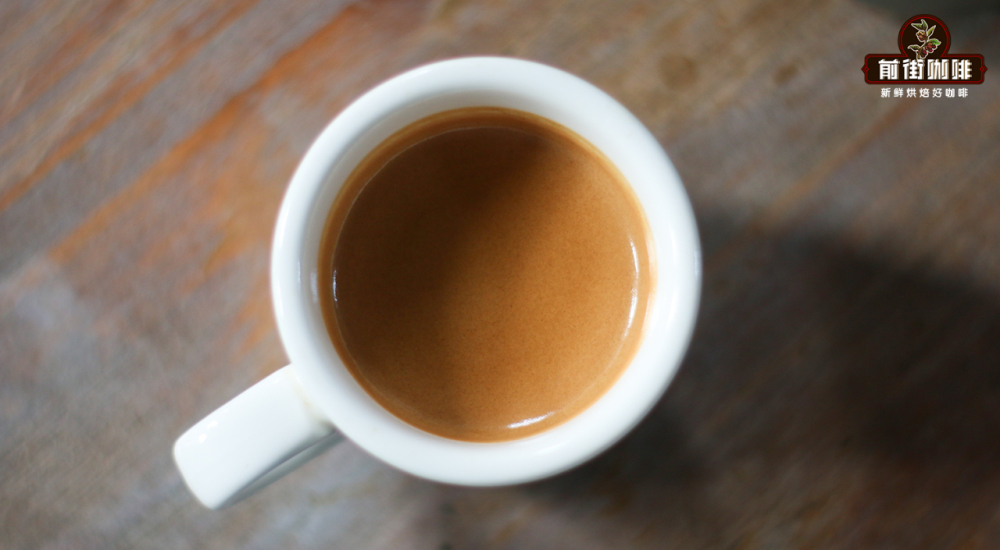
When a customer orders, "Give me an Espresso," the barista at Front Street Coffee will begin preparing it, and two minutes later serves a glass of water and a small cup of rich coffee liquid with a golden-brown crema layer. Before drinking Espresso, take a sip of water to rinse your mouth so it does not affect your taste. A standard Espresso has a rich crema and full-bodied mouthfeel, but each coffee shop's Espresso has its own distinctive selling point due to different coffee beans. The espresso beans used in Front Street stores are Front Street's own roasted "Sunflower Warm Sun Blend," made from 30% sun-dried Yirgacheffe Red Cherry and 70% Honduras Sherry.
To taste a freshly extracted Espresso, Front Street first smells the coffee's aroma. This coffee carries full aromas of whiskey, vanilla, nuts, and cream. It can be drunk directly, or with added sugar, milk, and other additions.
Use the prepared metal spoon to gently stir and blend the coffee liquid. The first sip brings the dense Cream (crema) and a full roasted aroma. Then comes the warm coffee liquid, where you can feel rich flavors of nuts, chocolate, berries, and wine. Take another sip of water midway to feel the sweet lingering aftertaste in the mouth. The bottom of the finished cup presents a strong caramel aroma that leaves people savoring it.
What are the characteristics of Espresso?
Espresso's Chinese name is Italian-style concentrated coffee, and as the name suggests, it comes from Italy. "Espresso" in Italian means "fast." From preparation to reaching the customer's hands, Espresso takes only a few quick minutes, so Italians named it with the word "Express" (fast).
The biggest difference from other extraction methods is that making Espresso uses an espresso machine with pressure-boosting capability. Common commercial espresso machines can provide stable atmospheric pressure of over nine bars and hot water above 90°C. The high pressure forces hot water quickly through finely ground coffee powder, extracting coffee liquid with rich crema, intense aroma, and a heavy mouthfeel. In order to extract an ideal cup of espresso, the barista's job is to master the various parameters that affect coffee flavor and then adjust them into the optimal extraction range.
In theory, making Espresso is not limited to a certain type or a certain roast level of coffee beans; as long as it is a type you like, it can be used to extract Espresso. However, because Espresso is extracted under fine grinding, high water temperature, and high pressure, espresso gathers multiple tastes, and various flavor compounds impact our tongue exponentially. Therefore, if we use light-roasted coffee beans for extraction, the elegant and sweet fruit flavor shown in pour-over may very likely become a sharp, strongly acidic taste in Espresso; the full-bodied mouthfeel of pour-over coffee becomes very burnt and bitter in espresso. Therefore, in order to extract an Espresso with excellent and stable taste, most coffee shops generally use espresso blend coffee beans.
Espresso blend coffee beans are roasted beans made by roasters carefully selecting coffee beans from different origins and with different flavor profiles for mixed roasting (or roasting separately and then blending in proportion). The purpose is to highlight Espresso's rich aroma, maintain balanced flavor, and at the same time make the espresso served by the shop more stable in taste. Front Street's understanding of blended beans is to maintain stable flavor and balanced taste, allowing blended coffee to show an effect greater than the sum of its parts. For example, if one coffee bean is smooth but lacks aroma, another aromatic bean can be added to make up for the shortfall in taste, thereby creating a richer new coffee taste.
Espresso bean recommendations for making Espresso
Many friends are fascinated by the unique charm of Espresso and want to recreate the deliciousness of espresso at home. Front Street here recommends several espresso beans that are helpful for stable extraction. Front Street hopes everyone can taste coffee with the fullest aroma, and will ensure that only coffee beans freshly roasted within 5 days are shipped. Because coffee beans just after roasting need to release a large amount of internal carbon dioxide gas (medium-dark roasting requires 7–10 days), when you receive them they are generally still in the resting period. You can first store them in a cool, dark place for a few days, which is more conducive to stable extraction.
Delicate wine-aroma type — Sunflower Warm Sun Blend coffee beans
Ethiopia sun-dried Red Cherry coffee beans (30%) + Honduras Sherry wine barrel coffee beans (70%)
This blended coffee bean is the formula for Front Street stores' daily service. Made into Espresso, it presents a very rich dark chocolate flavor with a strong caramel note. After swallowing, the whiskey aroma and tropical fruit sweet-tartness it releases are deeply loved by many of Front Street's customers. Whether it is an Americano diluted with water or a latte supported by milk, it presents layered aromas and mouthfeel.
Slightly acidic full-bodied type — the espresso moka pot coffee beans recommended by many baristas — Front Street Black Cocoa Blend coffee beans
Yunnan washed small-bean coffee beans (30%) + Brazil semi-washed coffee beans (70%)
Yunnan small-bean coffee with a soft acidity paired with the rich aroma of Brazil Cerrado coffee gives Espresso a taste of caramel, nuts, and gentle plum acidity.
Balanced rich-aroma type — Front Street specialty blend coffee beans
Colombia washed coffee beans (30%) + Brazil semi-washed coffee beans (70%)
Colombian coffee is added to the nutty notes of classic Brazilian coffee. The Espresso presents a dark chocolate flavor, caramel sweetness, and a full roasted aroma.
Classic full-bodied type — Front Street commercial blend coffee beans
Robusta washed coffee beans (10%) + Colombia washed coffee beans (30%) + Brazil semi-washed coffee (60%)
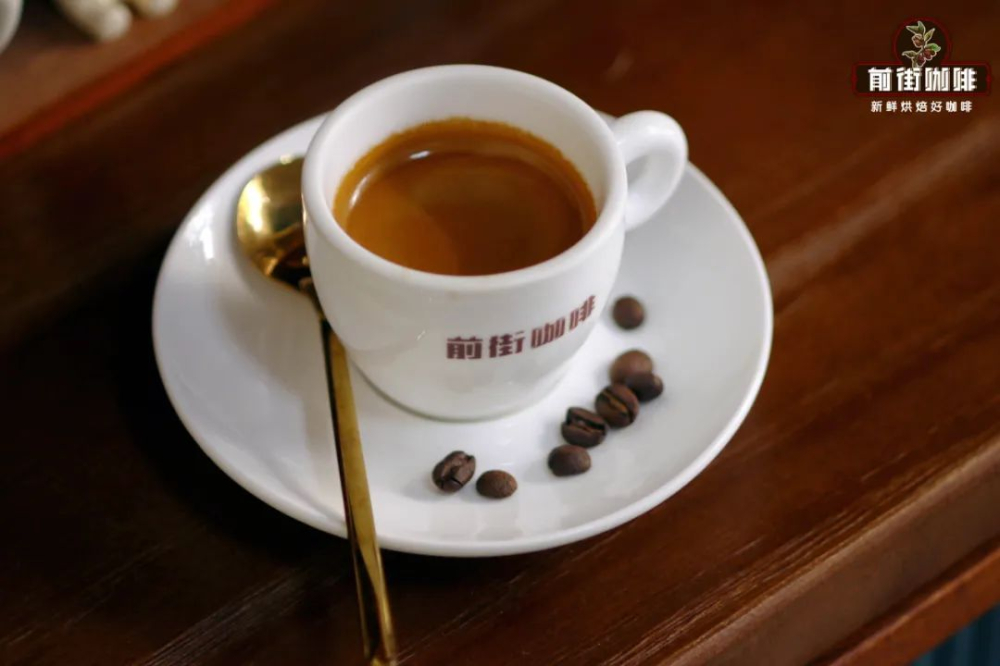
The espresso made has a rich golden crema and nutty aroma. When tasting, there is a roasted coffee bitterness, but accompanied by more of a creamy full-bodied mouthfeel. After swallowing, the bitterness also dissipates, leaving fragrance on the lips and teeth.
For professional coffee knowledge exchange and more coffee bean information, please follow Coffee Workshop (WeChat public account: cafe_style)
For more specialty coffee beans, please add the private WeChat Front Street Coffee, WeChat ID: qjcoffeex
The above content is compiled by CoffeeHunters, a coffee news website.


