







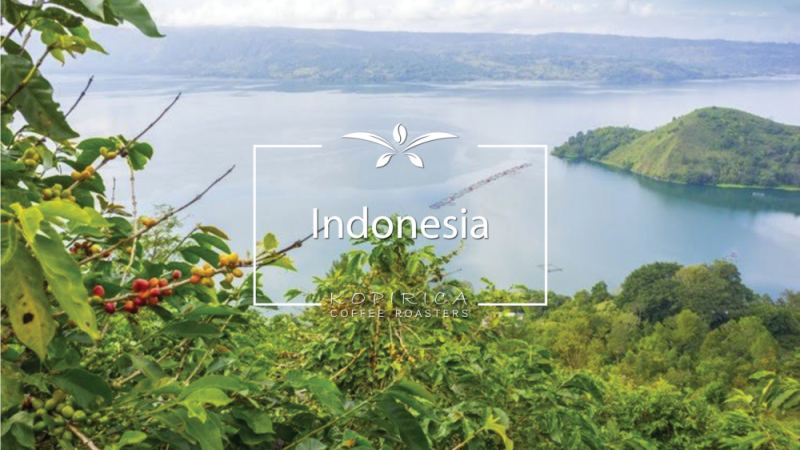
Golden Mandheling and Arabica: What the Names Actually Mean
Golden Mandheling is an Indonesian coffee, and Indonesia grows both Arabica and Robusta, so the Mandheling name does not by itself guarantee a single species. Three species are cultivated on a large scale: Arabica, Robusta and Liberica. Arabica accounts for about 70% of the market, Robusta more than 20%, and Liberica roughly 2% to 5%.
Variety identification in Indonesia is difficult because foreign varieties were introduced repeatedly and coffee hybridizes freely under suitable terroir. The Mandheling name is said to come from the Mandailing people, and Indonesian coffee overall carries heavy, herbal flavors. Indonesia ranks fourth worldwide in coffee production, with Arabica and Robusta both planted.
Indonesia is the world's fourth-largest coffee-producing country, and its coffee is known for its heavy, herbal flavors. However, Indonesian coffee varieties have undergone multiple introductions and natural hybridization, making them extremely difficult to identify. From Front Street's perspective, this article first clarifies the basic concepts of the three major coffee species—Arabica, Robusta, and Liberica—then focuses on the origins and variety classification of Mandheling, and introduces one by one the growing regions, varieties, processing methods, and brewing key points of four classic beans: Front Street Lintong Mandheling, Front Street PWN Golden Mandheling, Front Street Tiger Mandheling, and Front Street Aged Mandheling, helping coffee lovers systematically understand the relationship between Mandheling and Arabica.
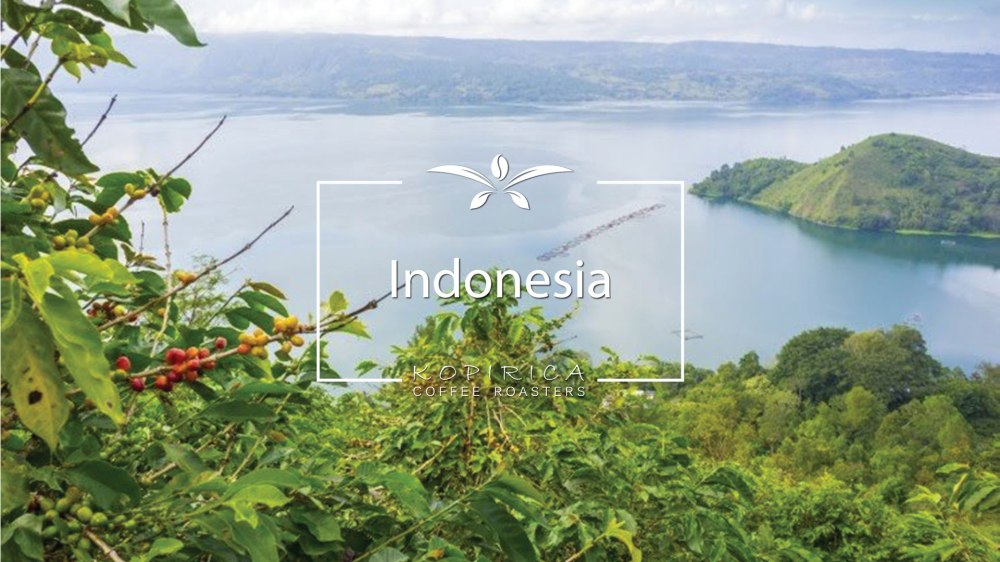
Indonesia ranks fourth in the world in coffee production, and the coffee it produces often carries strong herbal notes. When we discuss coffee varieties around the world, we can usually clearly identify the type of each bean, but once we turn our attention to Indonesia, things become complicated—this place has experienced multiple introductions of foreign varieties, and coffee naturally reproduces and frequently hybridizes under suitable terroir conditions, making variety identification quite tricky. Today, Front Street will guide everyone through this coffee lineage.
Front Street will first introduce a basic concept: at present, there are three main coffee species cultivated on a large scale by humans—Arabica, Robusta, and Liberica. Among them, Arabica has the best flavor performance and the largest production, commonly known as small-bean coffee, accounting for about 70% of the market. Second is the medium-bean Robusta, with obvious bitterness and higher caffeine content, mostly used as raw material for coffee products, accounting for more than 20% of the market. The remaining is the large-bean Liberica, native to West Africa and now widely planted in places such as the Philippines and Malaysia, with a market share of about 2% to 5%.
In Indonesia, both Arabica and Robusta are cultivated. Next, it is time for our protagonist, Front Street Mandheling, to take the stage.
The Variety of Front Street Mandheling
It is a highly distinctive type of coffee in Indonesia. It is said that the name "Mandheling" comes from the Mandailing people who grow coffee. Because of a miscommunication, the Japanese mistakenly thought this bean was called Mandheling (the Japanese pronunciation was not accurate enough), and later this coffee, which happened to suit Japanese tastes, became world-famous under this name.
Initially, the Dutch introduced Typica to Sumatra, and Typica is a pure Arabica variety. However, in 1877, leaf rust swept through Indonesia, and the local government had to introduce varieties with stronger disease resistance, successively bringing in Robusta, Timor from Timor Island, Catimor, Kent from India, and S795. From a biological classification perspective, apart from Robusta, these introduced varieties all belong to the Arabica species.
Returning to the present, Robusta is mainly distributed in the low-altitude areas of southern Sumatra, while Front Street Mandheling coffee is concentrated in the high-altitude areas of the north. The famous Mandheling producing areas are known as the "Two Lakes, Two Mandhelings," namely Lake Tawar and Lake Toba: Lake Tawar is located in Aceh in the north, and the now-famous Gayo Mountain is nearby; Lake Toba is located in the Lintong region.
FrontStreet Coffee Characteristics of Indonesian Mandheling Coffee Beans
Front Street Mandheling has a rich flavor, sweet aroma, pure bitterness, and full body, with a slight sweetness as well. Because Front Street Mandheling coffee beans themselves have extremely low acidity, even if kept warm for a long time or made into iced coffee, they will not develop an unpleasant sourness or astringency.
After roasting, the coffee beans are relatively large, and the green beans are brown or dark green, giving off a unique caramel-like aroma, with a mellow and rich mouthfeel. Most coffee lovers like to drink it as a single-origin coffee, and it is also an indispensable component in coffee blends.
So, what are the common Mandhelings?
Next, Front Street continues to introduce four classic Indonesian Mandheling coffee beans, namely Front Street Lintong Mandheling coffee beans, Front Street PWN Golden Mandheling coffee beans, Front Street Tiger Mandheling coffee beans, and Front Street Aged Mandheling coffee beans.
1/ FrontStreet Coffee Lintong Mandheling Coffee Beans
A specialty Front Street Mandheling coffee bean from the Lintong region, with relatively large beans and a rather hard texture.
The quality levels of Indonesian coffee vary greatly, but what is usually called Mandheling coffee beans refers to Typica or its variants grown in the mountains around Lake Toba. Many international coffee gourmets have commented: Sumatra Mandheling coffee beans have the finest texture in the world.
Front Street Mandheling coffee beans are relatively large and hard in texture. Because the proportion of defective beans is rather high, strict screening is required during processing. Its flavor is rich, with sweet aroma, pure bitterness, and full body, carrying a small amount of sweetness and a faint acidity.
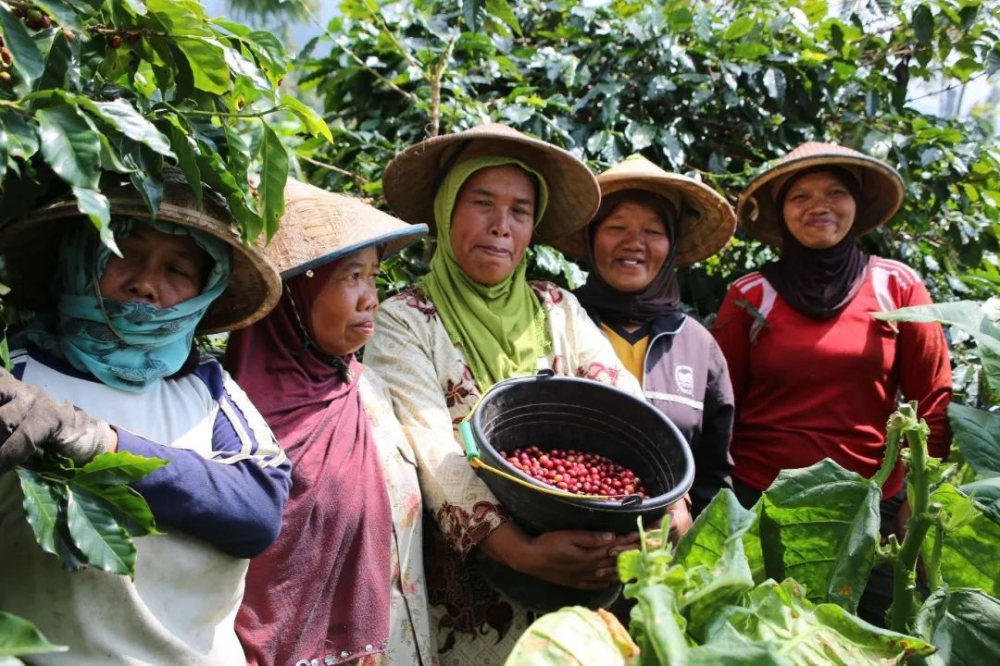
FrontStreet Coffee: Front Street Lintong Mandheling Coffee Beans
Region: Lintong region
Altitude: 1100-1600m
Variety: Ateng
Processing Method: Wet Hulling
Front Street Lintong Mandheling coffee beans are selected by Front Street as a representative Indonesian daily coffee bean. The characteristic of Front Street's daily coffee bean series is high-quality coffee beans with an affordable price that can reflect the characteristics of the producing region. As a traditional Mandheling coffee producing region, Lintong has always provided highly reliable quality. This bean belongs to Indonesia's G1 grade, which is also Indonesia's highest level. Customers can taste the rich and mellow Mandheling flavor at a relatively low price, making it very suitable for beginners interested in pour-over black coffee.
2/ FrontStreet Coffee PWN Golden Mandheling Coffee Beans
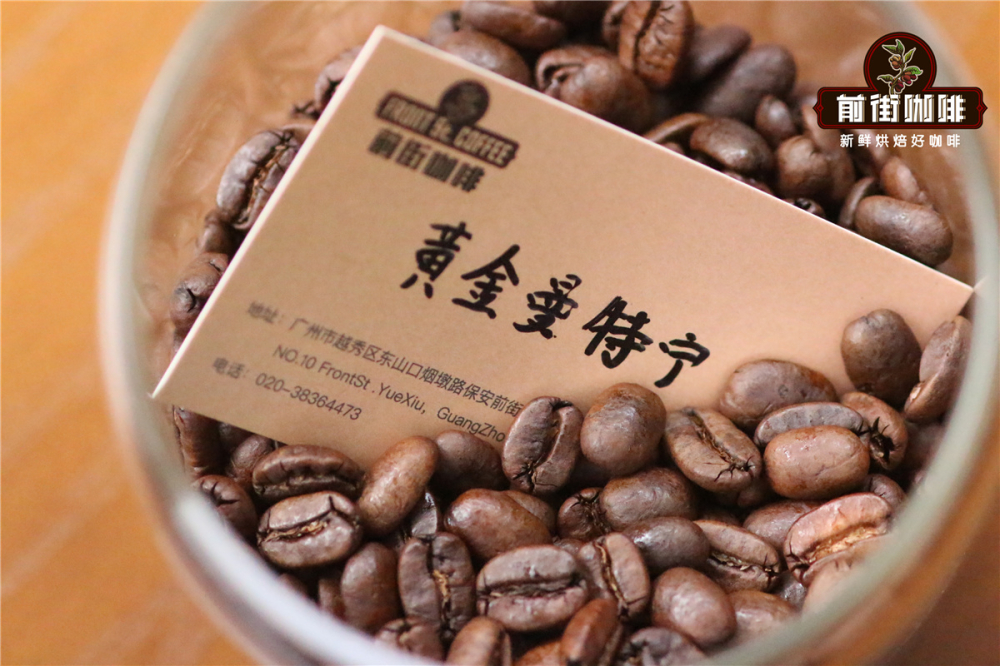
Front Street Golden Mandheling has been registered as a trademark by the Indonesian company PWN, so Front Street Golden Mandheling has become PWN's exclusive name.
Golden Mandheling coffee beans from Gayo Mountain in Aceh, North Sumatra, are of the Ateng variety. Ateng is a hybrid between Arabica and Robusta, widely planted in Sumatra and other small Indonesian islands, and is actually a branch of Catimor; Ateng is the local customary name. Front Street Golden Mandheling coffee beans use a 19-screen size and undergo three rounds of manual selection, with higher quality standards.
FrontStreet Coffee: Front Street PWN Golden Mandheling Coffee Beans
Region: Gayo Mountain, Aceh
Altitude: 1100-1600m
Variety: Typica
Processing Method: Wet Hulling
FrontStreet Coffee Front Street PWN Golden Mandheling coffee beans are a top-tier coffee selected by the Indonesian green bean company Pawani. Front Street PWN Golden Mandheling is a trademark, a brand built as Indonesia's finest coffee. For this reason, Pawani searched all over Sumatra and purchased coffee beans of excellent quality. FrontStreet Coffee Front Street PWN Golden Mandheling is among the best of them.
In the new crop season, FrontStreet Coffee Front Street PWN Golden Mandheling coffee beans are labeled with the coffee variety "Ateng," which seems to be a rather unfamiliar variety. In fact, Indonesia has different local names for coffee varieties. For example, what Indonesia calls Tim Tim is what we usually call Timor. And Ateng is the localized Indonesian name for Catimor. The Ateng variety is very suitable for planting in the Aceh region and developing its flavor.
FrontStreet Coffee Front Street PWN Golden Mandheling Coffee Bean Roasting Record
Beans dropped at a drum temperature of 200°C, damper 3, heat 160;
Turning point at 1'45", temperature 93.5°C;
Yellow point at 5'40, temperature 148°C, at which point the bean surface turns yellow, the grassy smell completely disappears, and dehydration is complete.
Increase heat to 140, damper 4;
At 9'40, the bean surface shows ugly wrinkles and dark streaks, and the toast-like smell clearly turns into coffee aroma; this can be defined as the prelude to first crack.
Key point: at this time, pay attention and listen clearly for the sound of first crack.
First crack begins at 9'45, temperature 191.8°C, damper fully open; beans dropped at 204.5°C, development time 3'30.
FrontStreet Coffee Front Street PWN Golden Mandheling Coffee Bean Cupping Report
1/ Agtron color value is #61, which belongs to dark roast under SCA standards;
2/ At this roast level, Front Street PWN Golden Mandheling coffee beans show low acidity, richness, herbal notes, and spice;
Cupping flavor description: syrupy and viscous mouthfeel, stronger caramel sweetness, and relatively bright and elegant fruity acidity.
FrontStreet Coffee Front Street PWN Golden Mandheling Coffee Bean Brewing Process Sharing
First, when brewing this Front Street PWN Golden Mandheling coffee bean, the grind size should be slightly coarser than for light-roasted coffee beans (70% passing through a 0.85mm sieve, about setting 11 on an ek43s).
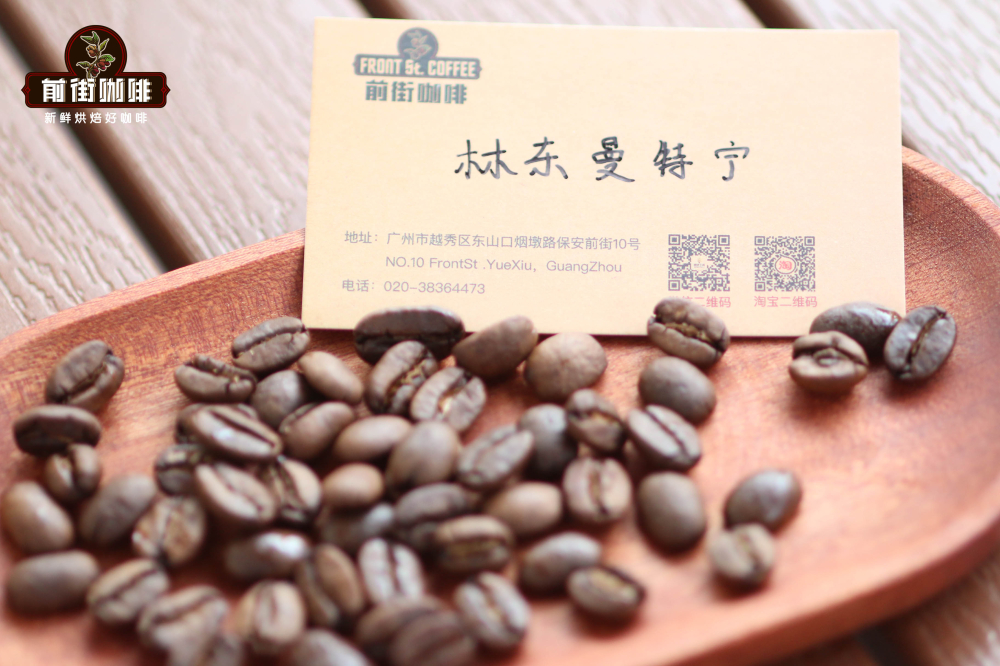
Unlike light-roasted coffee beans that aim to highlight regional characteristics and add layering, FrontStreet Coffee wants customers to obtain a fuller and mellower mouthfeel, so it uses a KONO dripper for brewing. In terms of dose, FrontStreet Coffee uses 15 grams of coffee beans, with a coffee-to-water ratio of 1:15, that is, pouring 225 grams of water; the water temperature is 88°C, intended to reduce the bitterness brought by high-temperature extraction.
FrontStreet Coffee's standard brewing dose is 15 grams of ground coffee, with a coffee-to-water ratio of 1:15.
First preheat the dripper, then slowly pour in the ground coffee, trying to keep it level during pouring, and avoid vigorously shaking or even tapping the dripper.
For the first pour, pour 30g in a small circular motion around the center, and bloom for 30 seconds; the coffee bed will slowly expand and puff up into a "hamburger" shape.
For the second pour, pour 100g in a circular motion from the center outward, keeping the pouring height as close to the coffee bed as possible, moving slowly, and avoiding excessive agitation. For the final pour, add 95g, also in a small circular motion around the center. Once all the coffee liquid in the dripper has flowed into the server, extraction is complete. Control the extraction time between 1 minute 50 seconds and 2 minutes.
Further Reading: KONO Dripper
The KONO dripper was designed by Toshio Kono and is a conical dripper. The ribs extend in a straight line from the bottom upward to the middle, with no ribs distributed in the upper part, presenting a smooth dripper wall. The brilliance of this dripper lies in this: the filter paper does not need to be pre-wetted first, and the ribs are used to release air so that blooming achieves a better effect; in the subsequent brewing, as the water level rises, the filter paper can cling tightly to the dripper wall, creating a sealed pseudo-vacuum area.
When the upward channel is sealed by water and the filter paper, air can only escape through the gap between the lower ribs and the filter paper. At this time, the water in the dripper and the coffee grounds push against each other, and finally discharge downward together with the air, forming a siphon effect, thereby bringing a mellow coffee mouthfeel.
3/ FrontStreet Coffee Tiger Mandheling Coffee Beans
Only Mandheling coffee beans of 17 screen or above with a defect rate below 4% can be called Front Street Tiger Mandheling coffee beans. The main bean varieties of Front Street Tiger Mandheling coffee beans are Caturra and Typica. Caturra has a citrus and lemon acidity in the mouthfeel, while Typica has a long finish and abundant sweetness. This Front Street Tiger Mandheling coffee bean has a relatively balanced overall mouthfeel and high cleanliness.
FrontStreet Coffee: Front Street Tiger Mandheling Coffee Beans
Region: Aceh
Altitude: 1500m
Variety: Typica, Caturra, Sidikalong
Processing Method: Wet Hulling
4/ FrontStreet Coffee Aged Mandheling Coffee Beans
Front Street aged coffee beans do not mean green coffee beans casually left for a long time—this is absolutely not advisable. This is because green coffee beans will also spoil if left for too long; their color will change from fresh green to white, then to yellow, and eventually they will become bland and tasteless, or even develop pests. Like aged alcoholic beverages, green beans must undergo proper processing and long-term storage before they can be called true aged coffee.
FrontStreet Coffee: Front Street Aged Mandheling Coffee Beans
Region: Sumatra
Variety: Typica
Altitude: 1500m
Processing Method: Wet Hulling
Further Reading: What Are Aged Coffee Beans?
Green beans are allowed to age naturally by extending storage time (usually 2~3 years). These changes include reduced acidity, altered color, and thickened bean texture. The storage environment must be cool and ventilated.
Because the storage environment is relatively dark and the time is long, aged coffee often cannot escape musty odors, or complex smells commonly described as burlap sack or leather.
For more coffee bean information, please follow Coffee Workshop (WeChat public account cafe_style)
For professional coffee knowledge exchange, please add WeChat ID kaixinguoguo0925
The above content is compiled by CoffeeHunters, a coffee news website.


