








What Does Costa Coffee History Tell Us About the Chopin Coffee Bean?
Costa Rica's coffee history rests on volcanic ash soil, high altitudes up to 2,000 meters, and ocean breezes that slow cherry ripening. The Musician Series Chopin coffee bean from Canet Estate expresses that terroir with a rose aroma and pronounced sweetness. It is a Yellow Catuai variety processed by the raisin honey method, and pour-over brewing with staged extraction brings its sweetness forward.
The country splits into a dry season from December to April that doubles as harvest, and a wet season from May to November. Micro-processing plants there use only about 5 percent of the water of traditional washed mills and skip large tanks or sun-drying grounds. Water temperature matters: 92°C draws out more sweetness and aroma than 90°C in cupping comparisons.
The Costa Rica Musician Series welcomes a new member—Chopin coffee beans. This bean from Canet Estate is known for its rose aroma and prominent sweetness. This article provides a comprehensive analysis of the flavor code of Chopin coffee beans, from the terroir of the producing region, the raisin honey processing method, and the characteristics of the Yellow Catuai variety to the roasting curve and cupping performance. At the same time, Front Street Coffee shares hand-brewing parameters and staged extraction techniques, and compares the flavor differences at water temperatures of 92°C and 90°C, helping coffee lovers find the best brewing method to enhance sweetness, allowing this Chopin's rose sweetness to bloom fully in the cup.

What intersection can there be between music and coffee? Probably just that both belong to the category of daily leisure enjoyment. However, you may not expect that someone actually directly named coffee beans after famous musicians, and used the names of four world-class musical masters in one go. This is the Musician Series coffee produced in Costa Rica. Has it already aroused your curiosity?
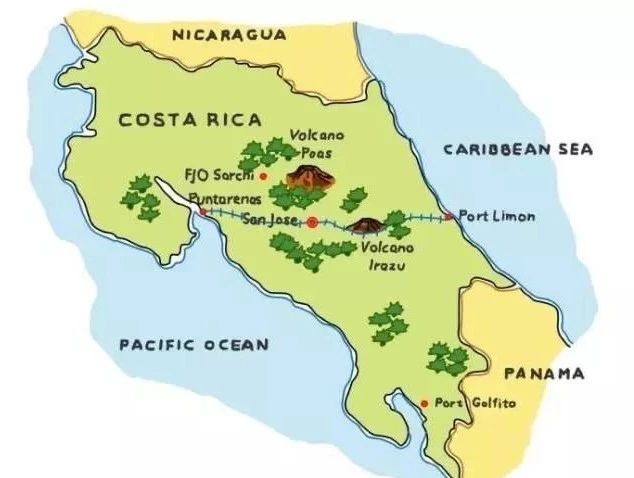
Costa Rica is located in the Central American isthmus. Ocean currents and sea breezes from the Pacific and Atlantic Oceans jointly regulate the local climate, and several volcanoes with elevations up to 2,000 meters rise within its territory. Coffee cherries grow slowly in fertile volcanic ash soil and a cool high-altitude environment, ultimately producing coffee beans with complete and rich flavors.
| Producing Region Introduction
Costa Rica is located in the Central American isthmus. Ocean currents and sea breezes from the Pacific and Atlantic Oceans jointly regulate the local climate, and several volcanoes with elevations up to 2,000 meters rise within its territory. Coffee cherries grow slowly in fertile volcanic ash soil and a cool high-altitude environment, ultimately producing coffee beans with complete and rich flavors.
Costa Rica can be divided into two seasons throughout the year. December to April of the following year is the dry season, which is also the coffee harvest period; May to November is the wet (rainy) season. In recent years, micro-processing plants have continued to emerge. These processing plants consume only 5% of the water used by traditional washed processing plants, and do not require large tanks or sun-drying grounds, so the investment threshold is relatively low. "Honey-processed coffee" with low acidity, high complexity, and rich sweet aroma has thus become an object pursued by the coffee world in recent years.
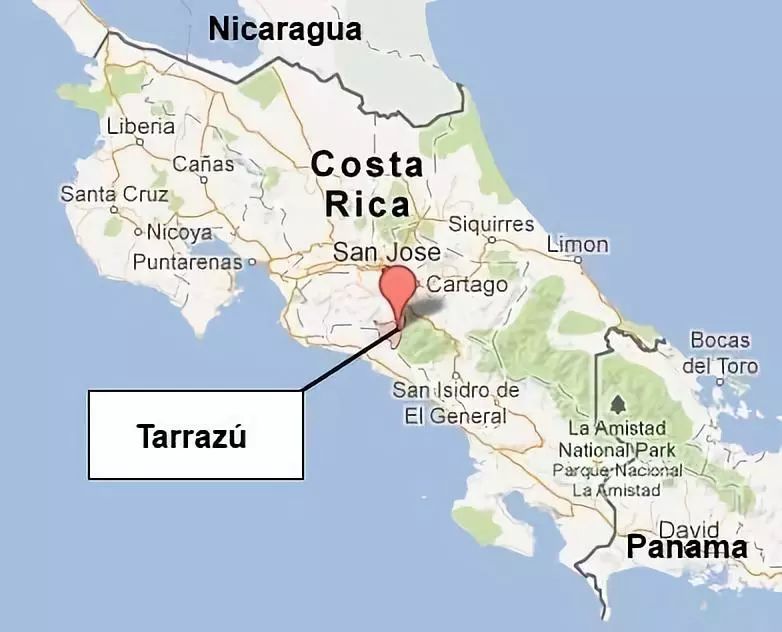
The history of coffee cultivation in Costa Rica can be traced back two hundred years. It was initially planted on the slopes of Poas and Barva volcanoes, which is now the Central Valley. At present, the country has eight main producing regions: West Valley, Central Valley, Tarrazu, Tres Rios, Orosi, Brunca, Turrialba, and Guanacaste.
Tarrazu is one of the important coffee producing areas here. Coffee cultivation in this region also has a long history, and it once gained the favor and recognition of the British royal family, and was even praised in a speech by the Pope.
| Canet Estate
Costa Rica Chopin also comes from Canet Estate. This estate mainly grows passion fruit and only sets aside a small area for coffee cultivation, so this portion of coffee receives especially careful care. Costa Rica Chopin exudes a rose-like sweet fragrance, has a balanced sweet-and-sour profile of raisins and white wine, and also faintly carries some flavors of Anxi Tieguanyin!
| Raisin Honey Processing Method
The raisin honey processing method can be regarded as a double-fermentation honey processing method. On the day the coffee cherries are harvested, the harvested fruit is poured into a large tank. Fully ripe and plump fruits will sink to the bottom, while underdeveloped or overripe fruits will float on the surface. These floating beans need to be removed. The selected coffee fruits are placed on raised beds to dry until they reach the raisin state, then the pulp and skin are removed, and the mucilage is retained for further drying.
In terms of flavor, this method has a stronger fermentation note and a richer, fuller flavor hierarchy, and the amount of retained mucilage is higher than in other honey processing methods. During the drying process, the coffee cherries need to be turned constantly to ensure even drying, but the frequency of turning must be properly controlled. The drying speed needs to proceed slowly to ensure the coffee fully ferments, but not so slowly that over-fermentation occurs.
| Variety (Yellow Catuai)
Yellow Catuai (Catuai Amarillo) is a hybrid variety of Mundo Novo and Caturra, first successfully bred by the Instituto Agronomico de Campinas in Brazil in 1949. Like Red Catuai (Catuai Rojo), Yellow Catuai has extremely strong disease resistance and is suitable for planting in high-altitude and windy areas. Both Catuai varieties also have a delicate and clean acidity. When observing the green beans, they appear blue-green, and they smell of strong tea aroma and a faint fermentation aroma.
The Costa Rica Canet Musician Series already includes Mozart, Beethoven, and Bach coffee. This year, a new coffee bean named Chopin has been added to the series. Different from the flavors of the other beans, this Chopin bean has an obvious rose aroma and a more prominent sweetness.
| Roasting Analysis
Roasting machine Yangjia 800N semi-direct fire (batch size 300g)
Preheat the drum temperature to 180°C and charge. Adjust the gas to 130, open the damper to 3, the turning point is 1'36", and maintain the gas; at 140°C, keep the gas unchanged and open the damper to 4. At 5'20", the beans turn yellow, the grassy smell disappears, and the dehydration stage begins. At 166°C, lower the gas to 110 and keep the damper at 4. At 176°C, adjust the gas to 80 and keep the damper unchanged.
At 8'15", dehydration is complete. Wrinkles and dark spots appear on the bean surface, and the toasted bread smell turns into coffee aroma. This is the prelude to first crack, so pay attention to listening for the sound of first crack. At 9'21", first crack begins. Open the damper fully to 5 and keep the gas unchanged. After first crack, the development time is 2'05", and the beans are dropped at 195.2°C.
The Agtron bean color value is 70.3 (above), the Agtron ground color value is 78.3 (below), and the Roast Delta value is 8.
| Cupping
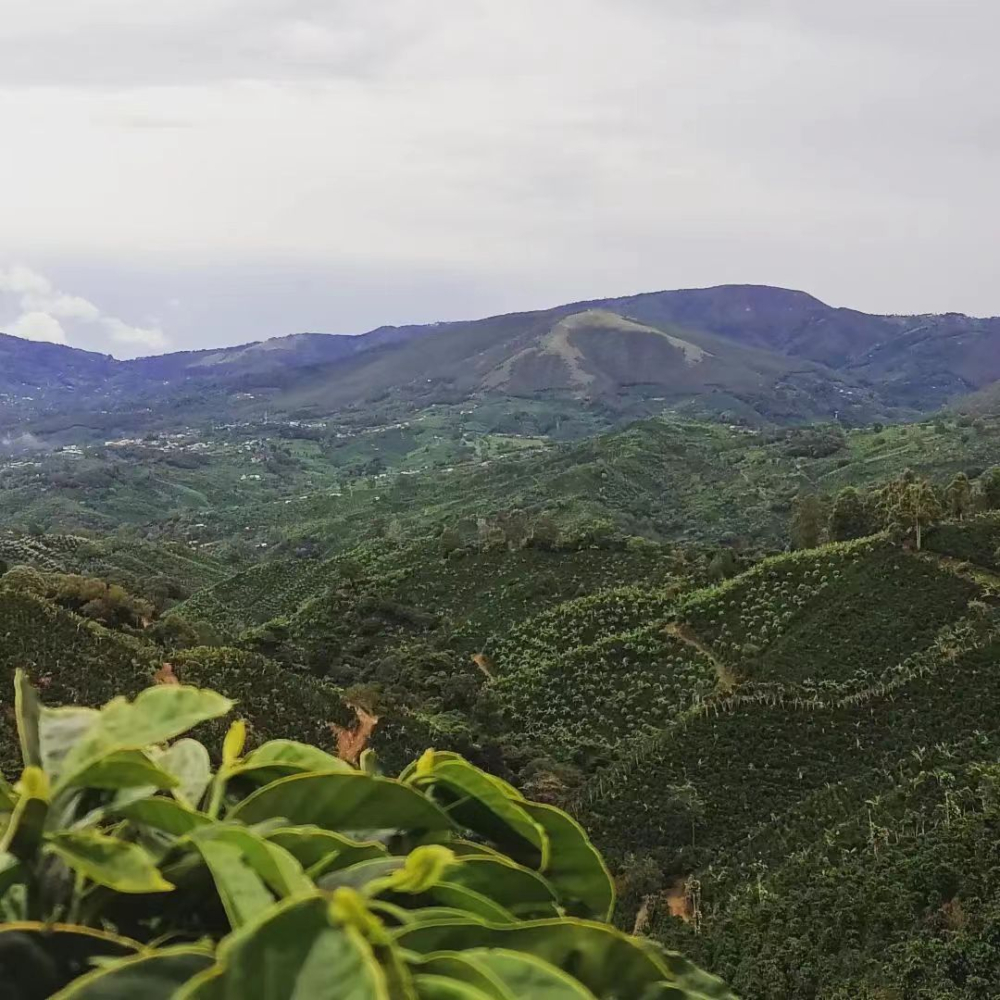
Flavor: rose, raisin, berry, fruit tea
| Brewing Suggestions
Regarding this bean, Front Street Coffee recommends hand brewing as the brewing method.
Front Street Costa Rica · Canet Estate Chopin
Producing region: Tarrazu
Variety: Yellow Catuai
Altitude: 1700m
Processing: raisin honey processing
Hand-brewing parameters
Dripper: Hario V60
Water temperature: 90-92°C
Coffee-to-water ratio: 1:15
Grind size: fine grind (80% passing through China standard No. 20 sieve)
Brewing method: staged extraction
Use 30 grams of water for a 30-second bloom, then pour in a small stream in a circular motion. When the water reaches 125 grams, pause for a staged pour. When the water level is about to expose the coffee bed, continue pouring until 228 grams and stop pouring. When the water level is about to expose the coffee bed again, remove the dripper. (Start timing from the beginning of the bloom.) The extraction time is 1'56".
Flavor: When brewed with 92°C water, this Chopin has more obvious citrus acidity and tea-like notes on entry, along with berries. As it cools slightly, there is a rich fermentation aroma, and the sweetness lingering between the lips and teeth is relatively long-lasting. When brewed with 90°C water, the rose aroma is more prominent, with raisins and tea-like notes on entry. As it cools slightly, there is a fermentation aroma, the mouthfeel is smoother, and the sweetness is also more obvious.
The above content is compiled by CoffeeHunters, a coffee news website.


