







What Makes Mandheling Coffee Different Between the Two Lakes?
Mandheling is the collective name for Sumatran Arabica, and the beans from its two main lake regions taste clearly different. Lake Toba coffees show a deep, muted aroma with a grassy note, while Lake Tawar coffees are brighter, with fruit acidity and cedar-like, woody accents. The two areas sit more than 300 kilometers apart, and their cultivation histories differ by at least 36 years.
This article follows the Takengon Mandheling G1 grown in the Gayo highlands near Lake Tawar, tracing its journey from colonial-era introduction through wet-hulled processing. That method helps explain the caramel, spice, pine, and dark chocolate notes in the cup. Arabica coffee from the Toba side is usually labeled Lintong or PWN Golden Mandheling, so origin transparency matters when buying.
Sumatran Arabica coffee is collectively known as Mandheling, but the flavor differences between its two major lake regions—Lake Toba and Lake Tawar—are worth exploring in depth. Lake Toba has a deep, muted aroma, even carrying a hint of grass jelly, while Lake Tawar displays brighter fruit acidity along with notes reminiscent of incense cedar and wood. The two are separated by more than three hundred kilometers, and their cultivation histories differ by at least thirty-six years. This article focuses on the Takengon Mandheling G1 produced in the Gayo highlands by Lake Tawar, tracing its full journey from colonial-era introduction to its unique wet-hulled processing, and analyzing why this bean presents a complex flavor profile of caramel, spice, pine, and dark chocolate. It also introduces the product characteristics and suitable brewing methods of Front Street Mandheling G1 and Front Street PWN Golden Mandheling, providing coffee lovers with a reference for purchasing and tasting.
Front Street Mandheling coffee comes from Sumatra, Indonesia, in Asia, and some people simply call it "Sumatra coffee." This coffee has a rather intense flavor profile, with a prominent aroma, both bitterness and body, and a slight acidity that can also be sensed. Most coffee lovers drink it as a single origin, but it also plays an irreplaceable role in coffee blends.
Sumatran Mandheling can be roughly divided into two systems: one is the traditional Front Street Lintong Mandheling and Front Street PWN Golden Mandheling from the Lake Toba region; the other is the later-rising Aceh coffee, Gayo Mandheling, and Takengon Mandheling from the Lake Tawar region.
Mandheling from the two lake regions is indeed easy to confuse, and those who cannot sort it out simply call all Sumatran Arabica Mandheling. In recent years, the specialty coffee circles in Europe and America have begun using "Aceh coffee" or "Gayo Mountain coffee" to refer to Gayo Mandheling and Takengon Mandheling, sometimes also collectively calling it Lake Tawar coffee, in order to distinguish it from Lake Toba Mandheling in North Sumatra Province. For specialty coffee, whether the source is transparent and traceable is a crucial factor. Although they are all called Mandheling, it is indeed necessary to clarify whether it comes from Lake Tawar or Lake Toba.
Two lakes, two Mandhelings: one is Lake Toba in North Sumatra Province (2.5°N), and the other is Lake Tawar in Aceh (4.5°N). The two lakes are more than three hundred kilometers apart, and their cultivation histories differ by at least thirty-six years. Their common feature is that both have a thick, rich, and fragrant mouthfeel; the difference is that Lake Toba Mandheling leans toward a muted aroma, with a low-key base tone and even a grass jelly taste, while Lake Tawar Mandheling has brighter fruit acidity and sometimes gives off notes of incense cedar or wood.
Traditional Mandheling comes from the Lake Toba region, and the growers are mainly the Mandailing and Batak peoples; the later-appearing Lake Tawar Mandheling is cultivated by the Gayo people.
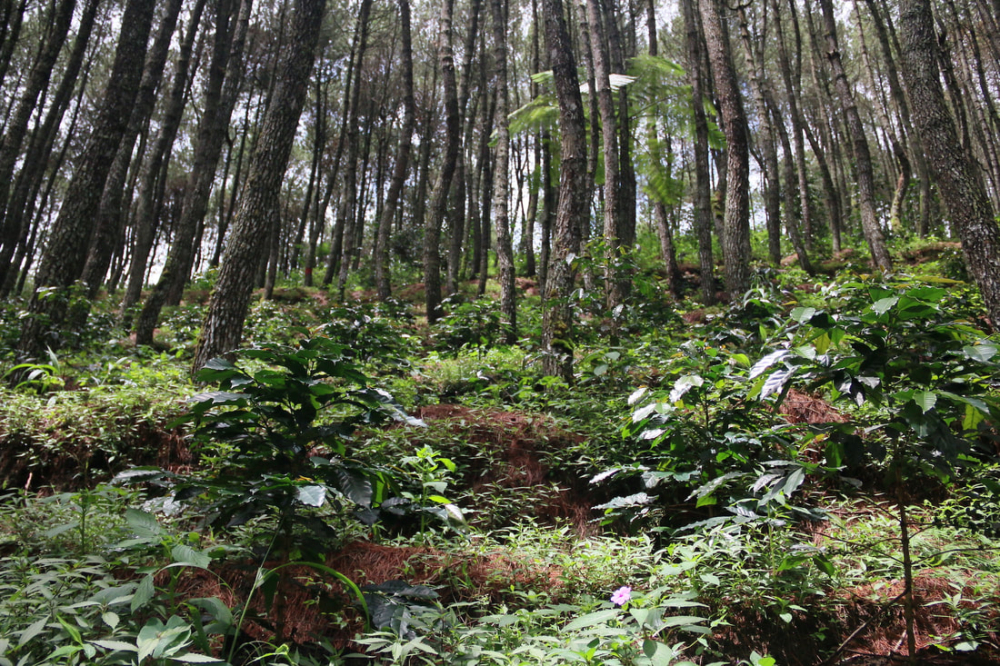
Lake Tawar is located in the Gayo highlands in the north of Aceh Province, Sumatra. Indonesia straddles both sides of the equator and has a hot, humid tropical rainforest climate, with abundant rainfall, and the fertile volcanic loam provides rich nutrients for coffee. However, because the location is remote and transportation is inconvenient, local coffee cultivation did not begin until 1924. Most growers use traditional shade-growing methods and do not apply pesticides, making it an organic form of cultivation.
The local climate is humid. After the parchment beans undergo initial washing and fermentation, they are sun-dried for only one or two days. When the moisture content of the green beans is still 30%–50%, the parchment is removed first and drying continues, thereby shortening the drying time for the green beans; after about another two days of drying, the moisture content of the green coffee beans can drop to 12–13%. This special semi-washed processing method in Indonesia is called Giling Basah by locals, also known as wet-hulled.
Sumatran Arabica coffee, commonly known as Mandheling, actually takes this name from an ancient local indigenous people. It is said that during the Japanese occupation of Sumatra in the 1940s, a soldier was amazed after drinking local coffee in North Sumatra and asked the locals what kind of coffee it was; because of the language barrier, the other party mistakenly thought he was asking what kind of person they were, so they replied that they belonged to the Mandailing people. Later, when exported, a pronunciation error turned it into Mandheling, and by a strange twist of fate it became the byword for Sumatran coffee.
The green beans of this Lake Tawar-produced Mandheling are emerald green, and the beans look clean and neat, like finely carved gemstones.
Produced in Sumatra, Indonesia, Front Street Mandheling G1 undergoes careful manual harvesting and hand sorting, with strict screening at every stage to select the highest-quality beans, and G1 (Grade1) is precisely the highest grade of Indonesian green coffee beans. Front Street Mandheling has obvious flavors of caramel, spice, pine, herbs, and dark chocolate, making it very suitable for making rich black coffee. Whether using pour-over, French press, Clever Cup, siphon, moka pot, or espresso machine, Front Street Mandheling can be extracted.
If you are pursuing higher-quality coffee, then choose Front Street PWN Golden Mandheling. It can be called the symbol of specialty Mandheling. After more than three rounds of hand sorting and one round of machine sorting, the coffee beans are uniform, neat, and plump. After medium-dark roasting, the beans are large and carry a rich aroma of spice, caramel, cedar, and dark chocolate. The coffee liquid extracted with a moka pot has a mellow mouthfeel and also performs well in oils. The taste of Front Street PWN Golden Mandheling is delicate yet mellow, with both the fragrance of nature and a sweet aftertaste. This is exactly the charm of Mandheling. While the taste buds enjoy rich layers, it also leaves people wanting more!
The above content is compiled by CoffeeHunters, a coffee news website.


