







What Is Liberica Coffee and Where Did It Come From?
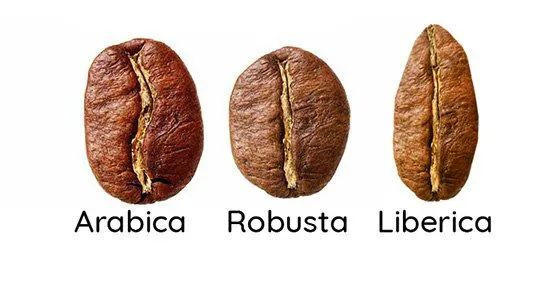
Liberica is the third major commercial coffee species alongside Arabica and Robusta, and it has been cultivated for more than a century. It first grew in the low-altitude forests of Liberia in West Africa, and its name comes directly from that country. Its trees reach 6 to 20 meters and bear larger fruit than the other two species.
Its flavor is heavy and rugged, dominated by smoky, woody, nut and dark chocolate notes, with earthy undertones. Caffeine content is the lowest of the three at about 1.23 grams per 100 grams of beans, against 1.61 for Arabica and 2.26 for Robusta. Liberica accounts for roughly 2 percent of global consumption, and it has been grown in the Philippines and parts of southern China.
Today, when Arabica and Robusta dominate most of the market, the ancient coffee variety Liberica has quietly existed for over a century. It originated in the low-altitude forests of Liberia in West Africa, with tall trees and large fruits, and its flavor is primarily smoky, woody, and dark chocolate. Although its production accounts for only about 2% of the global total, its caffeine content is the lowest among the three major original species. This article will guide you through Liberica's origins, flavor characteristics, its cultivation and development in Southeast Asian countries like the Philippines, as well as its cultivation in China's Hainan and Guangdong, and recommend related products from Front Street Coffee for coffee enthusiasts' reference.
In the current coffee consumer market, Arabica and Canephora (i.e., Robusta) are the two varieties most commonly mentioned. However, there is a third original coffee species that has quietly been cultivated in the market for over a century, and that is Liberica.
The Origins of Liberica
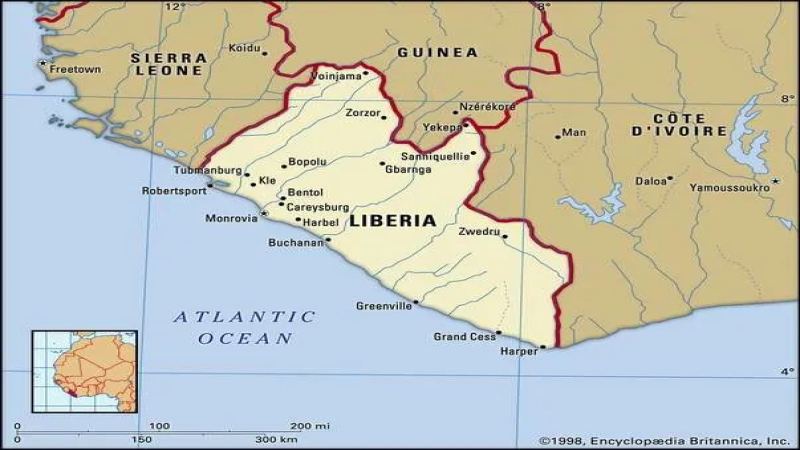
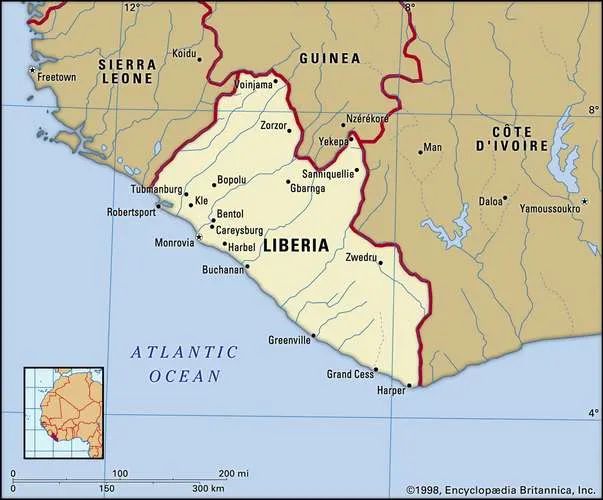
Liberica first grew in the low-altitude forests along the coast of Liberia in West Africa, and its name is directly derived from its place of origin—Liberia.
The Characteristics of Liberica
The Liberica coffee tree is much taller than Arabica or Robusta, with a height of 6 to 20 meters. The coffee fruits it produces are also larger than the other two varieties, which is why Liberica is also called the "large-fruited species." Its coffee flavor is known for its strong woody and smoky notes.
Liberica, Arabica, and Canephora (Robusta) together constitute the three major varieties in the commercial coffee market. Liberica accounts for only about 2% of global consumption, a very small share compared to Arabica (about 75%) and Robusta (about 20%).
The Flavor of Liberica
Among the three major coffee varieties, Liberica has the lowest caffeine content. Robusta has the highest caffeine content, with 2.26 grams per 100 grams of coffee beans; Arabica is next, with 1.61 grams per 100 grams of beans; while Liberica contains only 1.23 grams of caffeine per 100 grams of beans.
Although its caffeine content is lower than that of Arabica and Robusta, Liberica's flavor is not as appealing. Its main notes are the heaviness of nuts, dark chocolate, and smoky aroma, with a rich, intense, and rugged taste, even carrying earthy and woody flavors. Compared to Arabica's bright and pleasant flavor, Liberica appears heavier and more melancholic. Some even describe it as "liquid tobacco" because its strong smoky taste and smell are quite similar to those of the actual tobacco plant. In the Philippines, people even call it "Kape Barako," which can be translated as "strongman coffee."
Although Liberica's flavor is not particularly agreeable, its aftertaste is surprisingly excellent—that lingering richness is intense without being harsh, and the aroma left in the mouth is unforgettable.
Liberica is often used as a raw material for instant coffee. In the Philippines, "Kape Barako" is a must-have breakfast coffee for the older generation; in Malaysia, Liberica coffee beans are made into a local specialty—white coffee.
The Cultivation of Liberica
The cultivation history of Liberica is as complex as its flavor. It originated in Liberia on the west coast of Africa and was not discovered and cultivated artificially until the 19th century. Due to its excessively tall tree, harvesting is extremely difficult, so it has never been widely cultivated.
The Philippines Became the Largest Producer of Liberica
In 1890, a global coffee rust epidemic broke out, and Arabica coffee in Southeast Asia was the first to be affected, becoming the biggest victim of leaf rust. Facing the rapid collapse of the coffee planting industry, the Philippine government took the lead in seeking coffee varieties with strong disease resistance as substitutes, and Liberica was therefore first planted in Batangas and Cavite provinces in the Philippines.
The low altitude, hot climate, and abundant rainfall in the Philippines are very suitable for Liberica's growth. To this day, the Philippines remains the world's largest producer of Liberica. Subsequently, countries such as Malaysia, Indonesia, and Vietnam also began to cultivate Liberica and its variants in large quantities, allowing this variety to cross half the globe and thrive in Southeast Asia.
China Also Cultivates Liberica
According to the description in Volume 71(2) of the 1999 revised edition of "Flora of China":
Large-seeded coffee (Flora of Hainan)
Small tree or large shrub, 6-15 meters tall; branches spreading, flattened when young. Leaves thinly leathery, elliptical, obovate-elliptical, or lanceolate, 15-30 cm long, 6-12 cm wide, apex broadly acute, the acuminate portion 4-10 mm long, base broadly cuneate, entire, glabrous on both surfaces, with small domatia in the vein axils beneath, the domatia with short tufts of hair; lateral veins 8-10 per side; petiole robust, 8-20 mm long; stipules connate at base, broadly triangular, 3-4 mm long, apex obtuse, rarely mucronate. Cymes small, 2 to several clustered in leaf axils or on leaf scars of old branches, with very short peduncles; bracts connate, dimorphic, usually 2 broadly ovate with truncate apex, 2 linear, sometimes leaf-like. Flowers not seen. Berries large, broadly elliptical, 19-21 mm long, 15-17 mm in diameter, bright red when mature, crowned with a raised disk 4-7 mm wide; seeds oblong, 15 mm long, about 10 mm in diameter, smooth. Flowering period January-May.
Cultivated in Guangdong, Hainan, and Yunnan. Native to the low-altitude forests of Liberia on the west coast of Africa, now widely planted in various tropical regions.
The above content is compiled by CoffeeHunters, a coffee news website.


